What counts as academic dishonesty in student research
Princeton Journal of Pre-Collegiate Research

Most students who commit academic dishonesty do not set out to cheat. That is the uncomfortable truth that makes this conversation necessary. Understanding what counts as academic dishonesty in student research is not just about avoiding punishment. It is about protecting the integrity of work you have invested real effort into.
This guide covers every major category of academic dishonesty that appears in student research, from the obvious to the genuinely misunderstood. If you are preparing to submit original research for publication, this is required reading (not optional background).
Why Academic Integrity Matters in Student Research
Research is a cumulative enterprise. Every paper builds on the work of others. When one researcher falsifies data, fabricates citations, or presents borrowed ideas as original, the entire chain of knowledge becomes unreliable. This is not an abstract concern. Retracted studies have derailed medical treatments, wasted research funding, and misled policymakers.
For high school student researchers, the stakes are different but no less real. A finding that misrepresents data does not just affect your grade or your submission. It enters the academic record. At PJPCR (not affiliated with Princeton University), every accepted paper receives a DOI and becomes permanently findable by readers across six continents. That permanence is a privilege. It comes with responsibility.
Peer reviewers are trained to detect integrity violations. Submitting dishonest work wastes their time, damages your credibility, and closes doors that are difficult to reopen. The better path is to understand the rules clearly before you begin.
Plagiarism: The Most Recognized Form
Plagiarism means presenting someone else's words, ideas, or work as your own without proper attribution. Most students understand the obvious version: copying text from a source and pasting it into a paper. What many students miss are the subtler forms that reviewers catch just as readily.
Direct Plagiarism
This is the verbatim copying of text without quotation marks and without citation. It is the clearest violation and the easiest to detect with modern plagiarism-detection tools. Even a single paragraph lifted without attribution constitutes a serious breach.
Mosaic Plagiarism
Mosaic plagiarism involves taking phrases from a source and weaving them into your own sentences without quotation marks, even if you cite the source. Rearranging someone else's sentence structure while keeping their core language is not paraphrasing. It is plagiarism with extra steps.
Paraphrasing Without Citation
If you restate someone else's idea in your own words but do not credit the original author, that is plagiarism. The citation is not optional because you changed the wording. The idea still belongs to its originator. Proper paraphrasing requires both genuine restatement and a full citation.
Self-Plagiarism
Self-plagiarism occurs when a student submits the same work, or substantial portions of it, to more than one publication or assignment without disclosure. Recycling your own previous paper as a new submission is a violation. Academic publishing expects original, previously unpublished work (and that expectation is non-negotiable).
If you want to strengthen your writing before submission, review our guide on how to write clearly and concisely in academic research. Clear original prose is always the better choice over borrowed language.
Data Fabrication and Falsification
These are the most serious forms of research misconduct. They corrupt the scientific record directly and can have consequences that extend far beyond a single paper.
Fabrication
Fabrication means inventing data, results, or sources that do not exist. This includes making up survey responses, generating fictional experimental results, or citing papers that were never written. Even if the fabricated data supports a hypothesis you genuinely believe to be true, inventing evidence to support it is fraud.
Falsification
Falsification means manipulating real data to produce a desired result. This includes selectively removing data points that contradict your hypothesis, altering measurements, or adjusting graphs to misrepresent findings. Choosing which data to report and which to hide is also a form of falsification (sometimes called cherry-picking, and reviewers recognize it).
Understanding what constitutes legitimate evidence is foundational. Our resource on data vs evidence and what reviewers look for in student research explains how peer reviewers evaluate the relationship between your findings and your claims. Read it before you finalize your methodology section.
Improper Citation Practices
Citation errors exist on a spectrum. Some are honest mistakes. Others constitute academic dishonesty. Knowing the difference is essential.
Ghost Citations
A ghost citation is a reference to a source you did not actually read. Students sometimes cite a paper they found mentioned in another paper, without accessing the original. If the primary source said something different from what the secondary source claimed, your paper now contains a false attribution. Always read the sources you cite.
Citation Padding
Citation padding involves adding references that are not relevant to your argument in order to inflate your bibliography or appear more thoroughly researched. This misrepresents the scope of your literature review and misleads readers about the evidence base for your claims.
Misrepresenting Sources
Quoting a source out of context to make it appear to support a claim it does not actually support is a form of academic dishonesty. If the original author argued the opposite of what you are implying, selective quotation becomes misrepresentation.
Grammar and formatting errors in citations are different from dishonesty, but they still undermine credibility. Our post on common grammar mistakes in academic research papers covers the mechanical errors that weaken otherwise strong work.
Unauthorized Collaboration and Authorship Issues
Research often involves collaboration, and that is legitimate. The problem arises when the nature of that collaboration is misrepresented.
Ghost Authorship
Ghost authorship occurs when someone who made substantial intellectual contributions to a paper is not listed as an author. This is dishonest toward the person whose work is being used and misleads readers about who produced the research.
Gift Authorship
Gift authorship is the opposite problem: listing someone as an author who made no meaningful contribution to the research. Including a mentor, parent, or peer as a co-author as a courtesy or to add credibility violates authorship standards. Every listed author must have contributed substantively to the conception, execution, or writing of the research.
Undisclosed AI Assistance
The use of artificial intelligence tools in research writing is an evolving area with rapidly developing standards. What is clear across most academic publications is that undisclosed AI-generated content constitutes a form of misrepresentation. If AI tools contributed to drafting, analyzing, or structuring your work, that contribution must be disclosed according to the journal's specific policy. Submitting AI-generated text as your own original writing, without disclosure, falls within the scope of what counts as academic dishonesty in student research.
Ethical Violations in Research Design
Academic dishonesty is not limited to writing and citation. How research is conducted matters as much as how it is reported.
Research Involving Human Subjects
Conducting surveys, interviews, or experiments involving human participants without proper informed consent is an ethical violation. This applies to student researchers as much as to professionals. If your research involves collecting data from people, those participants must understand what they are agreeing to and must consent voluntarily.
Selective Reporting of Results
Reporting only the results that support your hypothesis while omitting contradictory findings is a form of falsification. Complete and honest reporting of all relevant results, including null results, is a core requirement of research integrity. Negative results are valid results (they are often more informative than positive ones).
Students pursuing research in fields like psychology or sociology should be especially attentive to these standards. Our guide on how to do psychology research as a high school student addresses ethical design from the ground up. Similarly, our resource on sociology research ideas for high school students includes guidance on responsible data collection from human communities.
The Gray Areas Students Most Often Misunderstand
Some integrity violations are clear. Others exist in territory that students genuinely find confusing. These deserve direct attention.
Over-Reliance on a Single Source
Structuring an entire argument around one source, even with proper citation, raises concerns about the originality of your intellectual contribution. Research requires synthesis across multiple sources. Leaning too heavily on one author's framework without critically engaging with it can approach the boundary of academic dishonesty, even when citations are present.
Improper Use of Generative Tools
Using AI to generate your literature review, write your analysis, or produce your conclusions, then submitting that output as your own work, is not a gray area. It is a clear violation of authorship standards. Using AI to check grammar or formatting is different. The line is whether the intellectual content is genuinely yours.
Translating Without Attribution
Taking a passage from a source in another language, translating it into English, and presenting it without citation is plagiarism. The language barrier does not change the ownership of the original idea or text.
How Peer Review Detects Dishonesty
PJPCR uses a rigorous double-blind peer review process. Reviewers do not know who you are, and you do not know who they are. This structure is designed to evaluate work on its merits alone. It also means reviewers approach every submission with professional skepticism (that is their job, and they are good at it).
Reviewers check citation accuracy, evaluate whether data supports conclusions, assess methodological soundness, and flag writing that appears inconsistent in voice or quality. Plagiarism detection tools are applied as part of the review process. Fabricated data often reveals itself through statistical anomalies. Ghost citations are caught when reviewers access the original sources directly.
The review process is not designed to catch cheaters. It is designed to ensure that published research is reliable. Dishonest submissions fail that standard, and they fail it transparently.
What Counts as Academic Dishonesty in Student Research: A Summary
The categories covered in this post represent the full landscape of what counts as academic dishonesty in student research. They include plagiarism in all its forms, data fabrication and falsification, improper citation practices, authorship misrepresentation, undisclosed AI use, and ethical violations in research design. None of these are technicalities. All of them undermine the credibility of research as a practice.
The good news is that every one of these violations is avoidable. Cite every source you use. Report all your data. List only those who genuinely contributed as authors. Disclose any tools you used. Design your study with ethical care from the beginning. These are not complicated rules. They are the foundation of work worth publishing.
Students who approach research with this level of integrity produce work that stands up to scrutiny, earns genuine recognition, and contributes something real to their field. That is what PJPCR exists to support (you leave a better researcher than you arrived).
Ready to Submit Original, Integrity-First Research?
PJPCR publishes original research by high school students across 50+ disciplines, with rigorous double-blind peer review and a DOI on every accepted paper. If your work is ready, submit it. If you are still building toward submission, explore our Blogs for guidance on research design, writing, and discipline-specific topics across STEM, humanities, and social sciences.
Your research deserves to be taken seriously. Start by taking its integrity seriously first.
Read More

Can high school students be peer reviewers
By
Princeton Journal of Pre-Collegiate Research
Read more

What reviewing other papers teaches you about your own
By
Princeton Journal of Pre-Collegiate Research
Read more
How to give useful feedback on a classmate's paper
By
Princeton Journal of Pre-Collegiate Research
Read more

Student editorial boards: how they work
By
Princeton Journal of Pre-Collegiate Research
Read more
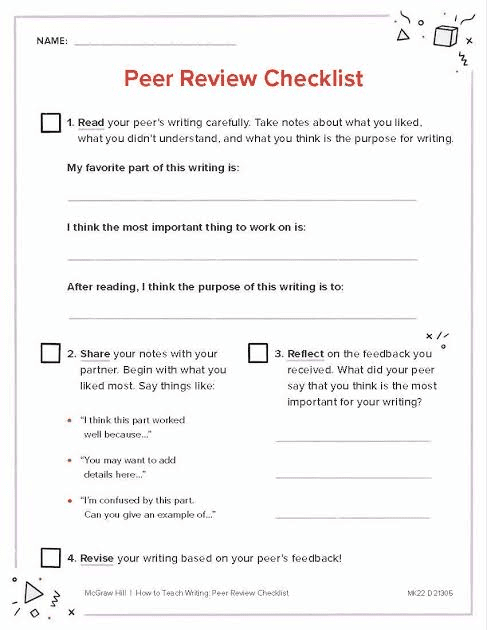
How to write a peer review as a student
By
Princeton Journal of Pre-Collegiate Research
Read more

Peer review etiquette: tone, structure, fairness
By
Princeton Journal of Pre-Collegiate Research
Read more

Version control for research documents
By
Princeton Journal of Pre-Collegiate Research
Read more

Digital vs paper lab notebooks for students
By
Princeton Journal of Pre-Collegiate Research
Read more

Data management basics for student researchers
By
Princeton Journal of Pre-Collegiate Research
Read more

How to keep a lab notebook that reviewers trust
By
Princeton Journal of Pre-Collegiate Research
Read more

How to organize research files across a year-long project
By
Princeton Journal of Pre-Collegiate Research
Read more

How to document your data so you can defend it
By
Princeton Journal of Pre-Collegiate Research
Read more

How to write a grant proposal as a student
By
Princeton Journal of Pre-Collegiate Research
Read more

Free resources that replace research funding
By
Princeton Journal of Pre-Collegiate Research
Read more
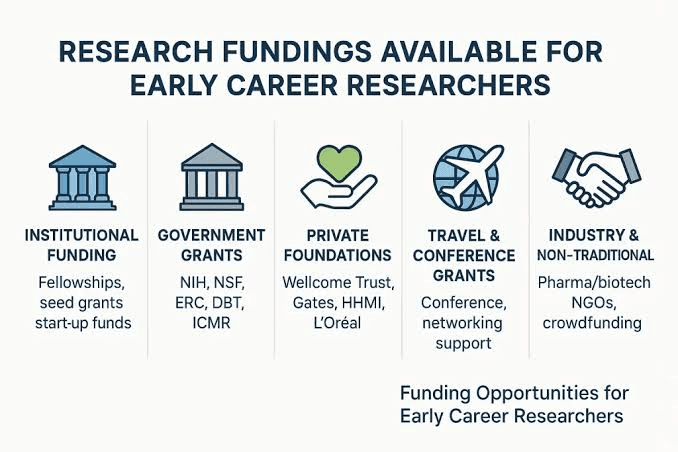
Corporate and nonprofit programs that fund student research
By
Princeton Journal of Pre-Collegiate Research
Read more

Science fair grants and material stipends explained
By
Princeton Journal of Pre-Collegiate Research
Read more

Crowdfunding a student research project: does it work
By
Princeton Journal of Pre-Collegiate Research
Read more

How much does a research project actually cost
By
Princeton Journal of Pre-Collegiate Research
Read more

How to ask your school to fund your project
By
Princeton Journal of Pre-Collegiate Research
Read more

Grants for high school research projects: what exists
By
Princeton Journal of Pre-Collegiate Research
Read more

How to start a research club at your school
By
Princeton Journal of Pre-Collegiate Research
Read more