How to restart a research project that has stalled
Princeton Journal of Pre-Collegiate Research

Every serious researcher hits a wall. Knowing how to restart a research project that has stalled is not a remedial skill, it is a core competency that separates researchers who finish from those who do not.
Stalled projects are not failures. They are diagnostic moments. The project stopped for a reason, and that reason is almost always fixable once you identify it clearly and act with intention.
Why Research Projects Stall in the First Place
Before you can restart, you need an honest diagnosis. Most stalled projects fall into one of four categories: scope problems, motivation collapse, structural confusion, or external disruption. Treating the wrong cause wastes time you do not have.
Scope problems are the most common. The original research question was too broad, too vague, or quietly shifted during early reading without anyone noticing. When the question drifts, the methodology stops making sense, and forward motion becomes impossible.
Motivation collapse looks like procrastination but runs deeper. It usually signals that the researcher has lost the thread connecting their effort to a meaningful outcome. That thread can be restored, but not by forcing productivity. It requires reconnecting to purpose.
Structural confusion means the researcher does not know what the next concrete step actually is. The project feels enormous and undivided. No single action feels like enough, so no action gets taken. This is a planning failure, not a capability failure.
External disruption, such as school deadlines, illness, or a change in access to resources, can freeze a project mid-stride. These are real obstacles. But they are also the most recoverable, because the work itself is intact. It just needs to be reactivated.
Step One: Conduct an Honest Project Audit
Sit down with everything you have produced so far. Read it without judgment. The goal is not to evaluate quality. The goal is to locate exactly where the project stopped and understand why.
Ask three questions. What was the original research question? What evidence or data do you currently have? What was the next step you never took? Write the answers down in plain language. Clarity on these three points is the foundation of every successful restart.
If your research question no longer reflects what you actually investigated, revise it now. A refined question is not a retreat. It is precision (and precision is what peer reviewers reward). Researchers who chase a question that no longer fits their data produce incoherent papers. Researchers who align their question with their actual work produce publishable ones.
Step Two: Rebuild a Realistic Timeline
The timeline you built at the start of the project is almost certainly obsolete. That is fine. Build a new one based on where you actually are, not where you planned to be.
Break the remaining work into milestones that are specific, achievable, and time-bound. A milestone like "finish the literature review" is not specific enough. A milestone like "read and annotate five sources by Friday" is actionable. The difference matters more than it sounds.
If you need a structured approach to milestone-setting, the framework described in How To Set Milestones For A Long Term Research Project provides a practical method built specifically for student researchers managing complex, multi-week projects.
Build buffer time into the new timeline. Every task will take longer than expected. Accepting that reality in advance prevents the next stall from becoming permanent.
Step Three: Recommit to a Weekly Work Schedule
Momentum is not a feeling. It is a habit built through consistent, scheduled effort. Once you have a revised timeline, assign specific hours each week to research work and treat those hours as non-negotiable.
The question of how much time is realistic is one most students underestimate in both directions. Some overcommit and burn out. Others undercommit and produce too little to sustain progress. How Many Hours A Week Spend On Research Project addresses this directly with guidance calibrated to high school students balancing academic and extracurricular demands.
If your school schedule is the primary obstacle, plan around it deliberately. How To Plan A Research Project Around Your School Schedule offers concrete strategies for integrating research into weeks dominated by tests, assignments, and activities. The students who finish their projects are not the ones with the most free time. They are the ones who planned most carefully.
How to Restart a Research Project That Has Stalled: Addressing the Data Problem
Some projects stall because the data collection phase produced incomplete, confusing, or insufficient results. This is one of the most discouraging stall points, because it can feel like the entire project is invalidated. It rarely is.
First, assess what you actually have. Incomplete data is not the same as unusable data. Partial datasets can support narrower claims, and narrower claims are often stronger claims. Scope reduction is a legitimate methodological choice, not a concession of defeat.
Second, determine whether supplemental data collection is feasible within your remaining timeline. A targeted additional survey, a few more interviews, or a secondary dataset can often fill critical gaps without restarting from zero.
Third, revisit your analysis approach. Sometimes the data is adequate but the analytical method is wrong for it. How To Analyze Data In A High School Research Project walks through common analytical frameworks accessible to high school researchers and helps match method to data type. A mismatch between data and analysis is fixable. Walking away from the project is not necessary.
Rebuilding Motivation Without Pretending It Is Easy
Motivation is not a prerequisite for action. It is often a consequence of it. The most effective way to rebuild motivation is to take one small, concrete action and then notice that you did it. That cycle, action followed by evidence of progress, is what restores momentum.
But motivation also requires meaning. Reconnect to why this project matters. What question are you actually trying to answer? Who benefits from knowing the answer? What does publication mean for your academic trajectory? These are not rhetorical questions. Write the answers down.
Long projects test every researcher's commitment. The strategies in How To Stay Motivated During A Long Research Project address the psychological architecture of sustained effort, including how to manage the low points that every serious project produces. Reading it during a stall is not a detour. It is part of the work.
When the Stall Is Really a Signal to Pivot
Sometimes a stalled project is telling you something important: the original approach is not working, and continuing on the same path will not produce a publishable result. Recognizing this early is not failure. Ignoring it until the deadline is.
A pivot does not mean abandoning your work. It means redirecting it. If your original hypothesis was not supported by the data, that is a finding worth writing about. Null results are publishable. Unexpected findings often produce more interesting papers than confirmed hypotheses.
If your discipline shifted during the project, that is worth examining too. A student who started with a biology question and ended up investigating a psychological mechanism has not wasted time. They have discovered an interdisciplinary angle that many journals actively seek. Journals That Accept High School Research In Biology and Journals That Accept High School Research Psychology both outline publication pathways for students whose work crosses traditional disciplinary lines.
How to Restart a Research Project That Has Stalled: The Writing Phase
Many projects stall not during research but during writing. The researcher has data, has analysis, and has a clear argument, but cannot produce the paper. This is one of the most common and most solvable stall points.
The solution is to lower the bar for the first draft. The first draft does not need to be good. It needs to exist. Write the methods section first if the introduction feels impossible. Write the discussion before the results if that is where your thinking is clearest. Write anything. The structure can be imposed later.
Set a word count target for each writing session, not a quality target. Five hundred words of imperfect prose is infinitely more useful than zero words of perfect prose. Editing requires material. Writing sessions produce material. Keep them separate.
If you are uncertain whether your paper is better suited as original research or a literature review, Journals That Accept Literature Reviews Vs Original Research clarifies the distinction and identifies publication venues appropriate for each format. Knowing which category your work belongs to removes a significant source of writing paralysis.
The Publication Goal Keeps the Project Moving
Projects without a defined endpoint drift. Projects aimed at a specific publication target move with purpose. If you have not yet identified where you intend to submit, do that now. The act of choosing a target journal clarifies your scope, your format, and your audience in ways that nothing else does.
Princeton JPCR publishes original research by high school students across 50+ academic disciplines. Every submission goes through rigorous double-blind peer review. Every accepted paper receives a DOI, creating a permanent, indexed record of your work (it exists forever, findable by anyone). The review process is designed to teach, not just evaluate. Reviewers provide substantive feedback that makes your work stronger regardless of the outcome.
Princeton JPCR is not affiliated with Princeton University.
If you are unsure whether your topic fits, How To Find A Journal That Accepts Your Research Topic provides a systematic method for matching your work to the right venue. The right journal is not the most prestigious one. It is the one whose scope, standards, and audience align with what you actually produced.
The Final Push: Finishing What You Started
Knowing how to restart a research project that has stalled is ultimately about one thing: refusing to let the work disappear. Every hour you invested deserves a conclusion. Every question you asked deserves an answer, even a partial one. Every dataset you collected deserves to be analyzed and written up.
The researchers who publish are not the ones who never struggled. They are the ones who diagnosed the stall, rebuilt the plan, and kept moving. That is a skill that transfers far beyond any single project (you leave a better researcher than you arrived).
Restart the project today. Not tomorrow. Identify the stall point, take one concrete action, and build from there. The work is still there. So is the outcome it can produce.
When you are ready to submit, Princeton JPCR is ready to review your work.
Read More

Can high school students be peer reviewers
By
Princeton Journal of Pre-Collegiate Research
Read more

What reviewing other papers teaches you about your own
By
Princeton Journal of Pre-Collegiate Research
Read more
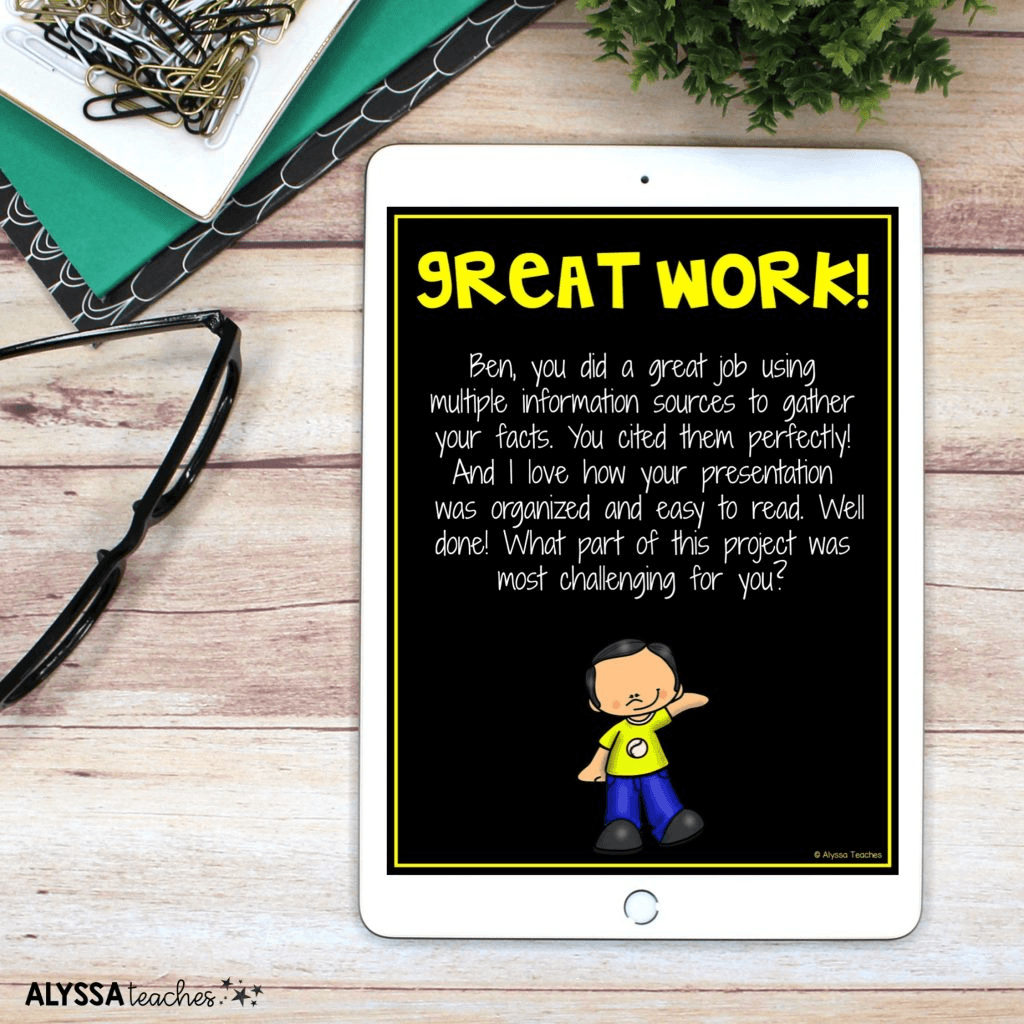
How to give useful feedback on a classmate's paper
By
Princeton Journal of Pre-Collegiate Research
Read more

Student editorial boards: how they work
By
Princeton Journal of Pre-Collegiate Research
Read more
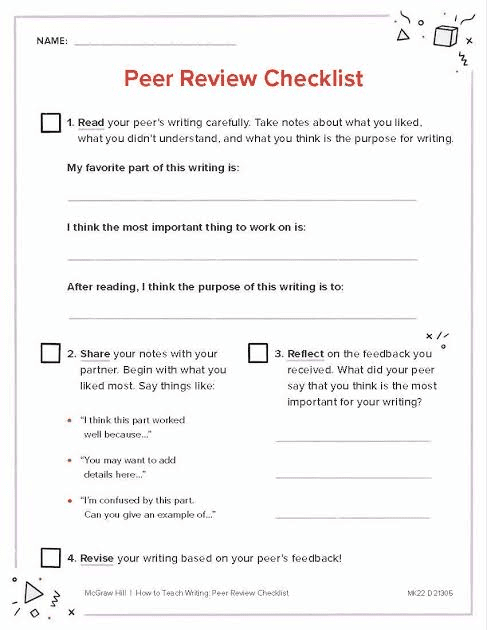
How to write a peer review as a student
By
Princeton Journal of Pre-Collegiate Research
Read more

Peer review etiquette: tone, structure, fairness
By
Princeton Journal of Pre-Collegiate Research
Read more

Version control for research documents
By
Princeton Journal of Pre-Collegiate Research
Read more

Digital vs paper lab notebooks for students
By
Princeton Journal of Pre-Collegiate Research
Read more

Data management basics for student researchers
By
Princeton Journal of Pre-Collegiate Research
Read more

How to keep a lab notebook that reviewers trust
By
Princeton Journal of Pre-Collegiate Research
Read more

How to organize research files across a year-long project
By
Princeton Journal of Pre-Collegiate Research
Read more

How to document your data so you can defend it
By
Princeton Journal of Pre-Collegiate Research
Read more

How to write a grant proposal as a student
By
Princeton Journal of Pre-Collegiate Research
Read more
Free resources that replace research funding
By
Princeton Journal of Pre-Collegiate Research
Read more
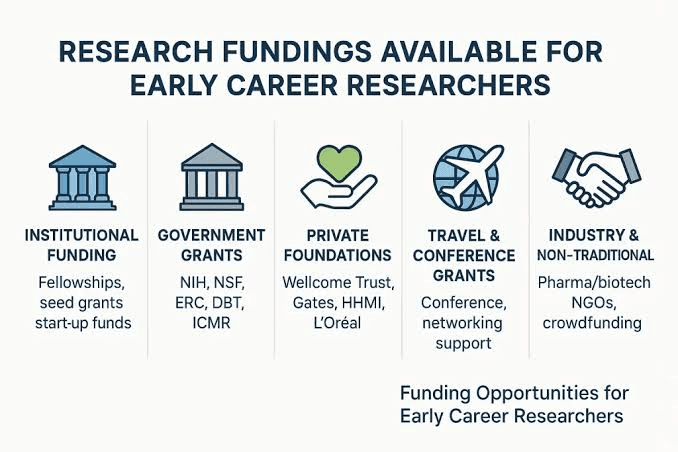
Corporate and nonprofit programs that fund student research
By
Princeton Journal of Pre-Collegiate Research
Read more

Science fair grants and material stipends explained
By
Princeton Journal of Pre-Collegiate Research
Read more

Crowdfunding a student research project: does it work
By
Princeton Journal of Pre-Collegiate Research
Read more

How much does a research project actually cost
By
Princeton Journal of Pre-Collegiate Research
Read more

How to ask your school to fund your project
By
Princeton Journal of Pre-Collegiate Research
Read more

Grants for high school research projects: what exists
By
Princeton Journal of Pre-Collegiate Research
Read more

How to start a research club at your school
By
Princeton Journal of Pre-Collegiate Research
Read more