How to write a strong title for a research paper
Princeton Journal of Pre-Collegiate Research

Your title is the first thing a reader, reviewer, or admissions officer sees. Get it wrong, and your research never gets the attention it deserves. Learning how to write a strong title for a research paper is not a minor stylistic concern. It is a foundational skill that shapes how your work is discovered, cited, and remembered.
Most students spend weeks on their methodology and minutes on their title. That is a mistake. A weak title buries strong research. A precise, compelling title does the opposite. It opens doors.
Why Your Title Does More Work Than You Think
Academic titles serve multiple functions simultaneously. They communicate the subject of your research. They signal your methodology. They attract the right readers and repel the wrong ones (which is actually useful). And in a peer-reviewed journal context, they influence whether your paper even gets read past the abstract.
Search engines index titles heavily. Databases like Google Scholar, JSTOR, and PubMed weight title keywords when returning results. A paper titled "A Study of Climate" will never surface the way "Microplastic Accumulation in Urban Stormwater Runoff: A Quantitative Analysis" will. Specificity is not pedantry. It is discoverability.
For high school researchers submitting to peer-reviewed journals, the title also signals academic maturity. Reviewers form an impression within seconds. A precise, well-structured title communicates that the researcher understands the conventions of scholarly communication. That impression carries weight throughout the review process.
The Core Principles of a Strong Research Title
Be Specific, Not Broad
Broad titles are the most common mistake. "The Effects of Social Media" tells a reader almost nothing. Which platform? Which population? Which effects, measured how? Every word in a title should narrow the scope, not expand it. A strong title answers the question: what exactly did you study, and what did you find or argue?
Specificity also protects you. A broad title invites reviewers to ask whether you addressed every dimension of a massive topic. A specific title sets clear expectations and lets your paper meet them. You are not writing an encyclopedia entry. You are reporting a focused investigation.
Include Your Key Variables or Concepts
If your paper examines the relationship between sleep deprivation and academic performance in adolescents, those three elements belong in your title. Readers searching for research on sleep and cognition need to find your work. Reviewers assessing your paper need to confirm the title matches the content. Both groups rely on the same thing: your title naming what the paper actually contains.
This principle applies across disciplines. A philosophy paper arguing against compatibilist theories of free will should name compatibilism in the title. A biology paper analyzing antibiotic resistance in E. coli should name the organism and the mechanism. Do not make readers guess what your paper is about. Tell them directly. (this is not dumbing it down. it is respecting the reader's time.)
Signal Your Methodology When It Matters
In empirical research, the methodology is part of the contribution. A quantitative analysis, a systematic review, a case study, a meta-analysis. These are not interchangeable. When your methodology is central to what makes your paper valuable, it belongs in the title. "A Systematic Review of Mindfulness Interventions in Secondary School Settings" is more informative than "Mindfulness in High Schools."
Not every title needs a methodology marker. Theoretical papers, philosophical arguments, and humanities essays often do not. Use judgment. If the method is the point, name it. If the argument is the point, foreground the argument.
Keep It Concise
Most style guides recommend titles between 10 and 15 words. That is a guideline, not a law, but it reflects a real constraint. Titles that run to 25 words become unwieldy. They lose focus. They suggest the researcher could not identify the core of their own work. Aim for precision over comprehensiveness. Your abstract and introduction carry the full context. Your title carries the essence.
Cut every word that does not add meaning. "An Investigation Into the Possible Relationship Between" can almost always become "The Relationship Between." Hedging language in titles weakens the signal without adding accuracy. If you conducted the study, you investigated it. You do not need to say so.
Common Title Structures That Work
Academic titles follow recognizable patterns. Understanding these structures gives you a toolkit to work from. None of them are formulas. All of them are options.
The Colon Structure
This is the most widely used structure in academic publishing. A broad conceptual phrase precedes the colon. A specific descriptive phrase follows it. The first part hooks. The second part specifies. Example: "Digital Surveillance and Adolescent Privacy: An Analysis of Parental Monitoring Applications in the United States." The colon structure lets you signal both the larger topic and the precise focus in a single title.
The Question Title
Some disciplines, particularly in the social sciences and humanities, use a direct question as the title. "Does Early Childhood Music Education Predict Mathematical Proficiency?" This structure works when the paper is organized around answering that specific question. It is direct. It creates immediate engagement. It works best when the question is genuinely answerable within the scope of the paper. (do not pose a question your paper cannot answer. reviewers notice.)
The Declarative Title
A declarative title states the finding or argument directly. "Increased Screen Time Correlates with Reduced Sleep Quality in Teenagers Aged 13 to 17." This structure is common in quantitative research where the finding is clear and significant. It is the most confident of the three structures. Use it when your results support it.
How to Write a Strong Title for a Research Paper: A Step-by-Step Process
Knowing the principles is one thing. Applying them to your own paper is another. Here is a practical process that works.
Draft your title last, or near last. Write the paper first. Your title should reflect what the paper actually argues or finds, not what you hoped it would when you started. Many researchers write a working title early and revise it after the paper is complete.
List your key terms. Write down the main variables, concepts, population, methodology, and discipline your paper addresses. This list becomes the raw material for your title.
Write three to five title candidates. Use different structures. Try the colon structure, the question structure, and the declarative structure. Write them all out without judging them yet.
Test each candidate against the paper. Does it accurately represent what the paper contains? Does it include the most important keywords? Is it specific enough to be useful? Does it fit within 10 to 15 words?
Read it aloud. A title that sounds awkward when spoken is usually too complex. Simplify until it reads cleanly.
Check it against your abstract. Your title and abstract should reinforce each other. If they describe different papers, revise one of them.
Mistakes That Undermine an Otherwise Strong Title
Vague or Filler Language
Phrases like "A Study of," "An Exploration of," or "Looking at" add length without adding meaning. Cut them. Your paper is a study by definition. You do not need to say so in the title. Every word should carry specific informational weight.
Jargon Without Context
Discipline-specific terminology is appropriate in academic titles. Unexplained acronyms and insider shorthand are not. If your title uses an abbreviation, ensure it is standard in your field and recognizable to any informed reader in that discipline. When in doubt, spell it out.
Misleading Scope
A title that promises more than the paper delivers is a credibility problem. If your paper examines one school district, do not title it as though you studied national education policy. Reviewers will flag the mismatch. Readers will feel misled. Accuracy in your title is not modesty. It is integrity.
Ignoring Search Keywords
Academic publishing is increasingly digital. Papers with DOIs are indexed and searchable. A title that does not include the terms researchers actually search for will receive fewer citations, regardless of the paper's quality. Think about how someone would search for your topic. Include those terms naturally. This is not manipulation. It is communication. (your research exists to be found. help people find it.)
Title Writing Across Disciplines
Title conventions vary by field. Knowing your discipline's norms matters.
In the sciences, precision and methodology markers are standard. In the humanities, more interpretive or evocative titles are acceptable, often followed by a clarifying subtitle. Social science titles typically name variables, populations, and methods. In computer science, titles often name the system, algorithm, or problem being solved directly.
If you are writing a biology paper, a philosophy paper, a computer science paper, or a political science paper, the structural expectations for your title differ. Reading published papers in your target journal is the fastest way to calibrate. Look at ten recent titles in your discipline. Identify the patterns. Then apply them to your own work.
For guidance on discipline-specific writing conventions, the following resources on this site are directly relevant. If you are working in the sciences, How To Write A Biology Research Paper For High School covers structural expectations that inform title construction. For technology-focused research, How To Write Computer Science Research Paper High School addresses the naming conventions common in that field. Students working in political science will find How To Write Political Science Research Paper High School useful for understanding how argument-driven titles differ from empirical ones.
How Your Title Connects to the Rest of Your Paper
Your title does not exist in isolation. It is the entry point to a system of connected components. The title sets the expectation. The abstract fulfills it in 250 words. The introduction fulfills it in full. Every section of your paper should be traceable back to the promise your title makes.
This is why title revision often triggers revision elsewhere. If you sharpen your title and realize the paper does not fully deliver on it, that is useful information. It tells you where the paper still needs work. A strong title is diagnostic as much as it is promotional.
For students building the full architecture of a research paper, the connections between title, thesis, introduction, and discussion are worth understanding in sequence. How To Write A Strong Thesis Statement Research Paper addresses the claim that your title implicitly promises to support. How To Write An Introduction For A Research Paper covers how to build from that title into a full opening argument. And How To Write A Discussion Section In A Research Paper explains how to close the loop your title opened.
Strong Titles Signal Serious Research
A title is not decoration. It is the first argument you make about the value of your work. When a reviewer opens your submission, when an admissions officer scans your research portfolio, when a peer searches for literature in your area, your title is what they encounter first. It either earns the next read or it does not.
Knowing how to write a strong title for a research paper means understanding that every word carries weight, that specificity beats breadth, that structure serves meaning, and that your title is a promise your paper must keep. That is not a high bar. It is a clear one.
If you are ready to put that title on a paper worth publishing, Princeton JPCR publishes original research by high school students across 50+ academic disciplines through rigorous double-blind peer review. Every accepted paper receives a DOI, permanent indexing, and feedback that makes you a stronger researcher. (not affiliated with Princeton University.) Explore submission guidelines and additional writing resources at the Blogs section, or visit the Princeton JPCR homepage to learn more about publishing your research with a journal that takes student scholarship seriously.
Read More

Can high school students be peer reviewers
By
Princeton Journal of Pre-Collegiate Research
Read more

What reviewing other papers teaches you about your own
By
Princeton Journal of Pre-Collegiate Research
Read more
How to give useful feedback on a classmate's paper
By
Princeton Journal of Pre-Collegiate Research
Read more

Student editorial boards: how they work
By
Princeton Journal of Pre-Collegiate Research
Read more
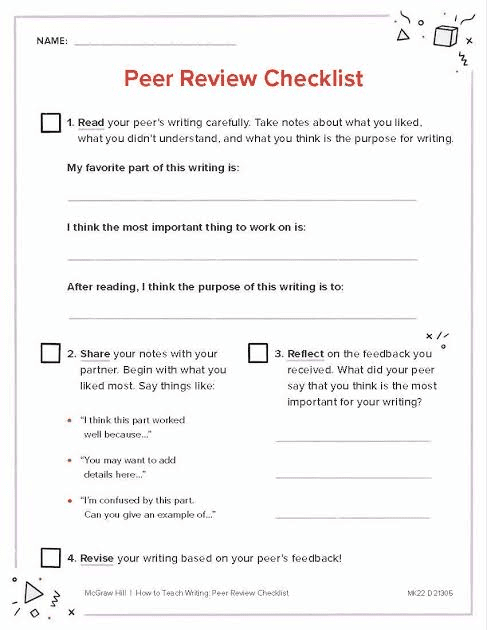
How to write a peer review as a student
By
Princeton Journal of Pre-Collegiate Research
Read more

Peer review etiquette: tone, structure, fairness
By
Princeton Journal of Pre-Collegiate Research
Read more

Version control for research documents
By
Princeton Journal of Pre-Collegiate Research
Read more

Digital vs paper lab notebooks for students
By
Princeton Journal of Pre-Collegiate Research
Read more

Data management basics for student researchers
By
Princeton Journal of Pre-Collegiate Research
Read more

How to keep a lab notebook that reviewers trust
By
Princeton Journal of Pre-Collegiate Research
Read more

How to organize research files across a year-long project
By
Princeton Journal of Pre-Collegiate Research
Read more

How to document your data so you can defend it
By
Princeton Journal of Pre-Collegiate Research
Read more

How to write a grant proposal as a student
By
Princeton Journal of Pre-Collegiate Research
Read more

Free resources that replace research funding
By
Princeton Journal of Pre-Collegiate Research
Read more
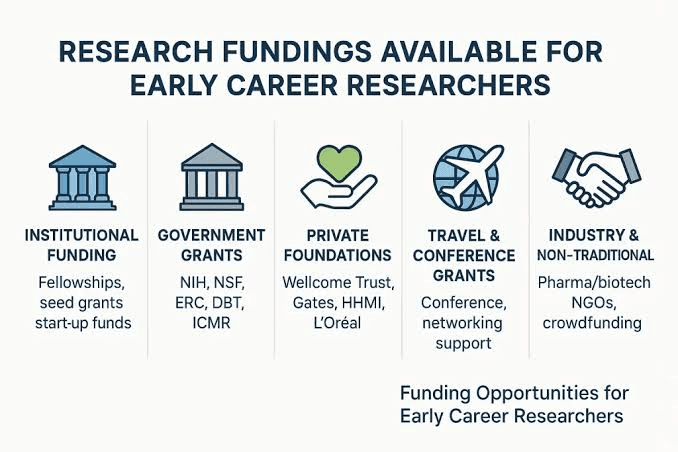
Corporate and nonprofit programs that fund student research
By
Princeton Journal of Pre-Collegiate Research
Read more

Science fair grants and material stipends explained
By
Princeton Journal of Pre-Collegiate Research
Read more

Crowdfunding a student research project: does it work
By
Princeton Journal of Pre-Collegiate Research
Read more

How much does a research project actually cost
By
Princeton Journal of Pre-Collegiate Research
Read more

How to ask your school to fund your project
By
Princeton Journal of Pre-Collegiate Research
Read more

Grants for high school research projects: what exists
By
Princeton Journal of Pre-Collegiate Research
Read more

How to start a research club at your school
By
Princeton Journal of Pre-Collegiate Research
Read more