How to write clearly and concisely in academic research
Princeton Journal of Pre-Collegiate Research

Most research papers fail not because the ideas are weak, but because the writing buries them. Learning how to write clearly and concisely in academic research is the single most transferable skill you will develop as a young scholar.
This guide gives you a direct, practical framework. No vague advice about "finding your voice." Just the techniques that separate publishable work from a paper that stalls in peer review.
Why Clarity and Concision Matter in Academic Writing
Academic writing has a reputation for being dense, jargon-heavy, and difficult to read. That reputation is earned. But it is not a standard to aspire to. It is a failure mode to avoid.
Reviewers, editors, and readers come to your paper with a specific goal: to understand what you found and why it matters. Every sentence that slows them down is a sentence working against you. Clarity is not a stylistic preference. It is a functional requirement.
Concision matters for a different but related reason. Padding signals uncertainty. When a writer cannot commit to a direct claim, they surround it with qualifiers, restatements, and filler. Reviewers notice. Editors notice. A tight, confident paper communicates that you understand your own argument.
High school researchers often assume that longer sentences and complex vocabulary signal sophistication. The opposite is true. The most respected academic writers say exactly what they mean in as few words as the idea requires (no more, no less).
The Core Principles of Clear Academic Writing
Lead with the Subject and Verb
Every sentence has a subject doing something. Put that subject near the beginning and follow it immediately with an active verb. This structure is the foundation of clear prose.
Compare these two versions:
Weak: "The data collected from the experiment, which was conducted over a six-week period, suggests a correlation."
Strong: "Six weeks of experimental data suggest a correlation."
The second version is faster, cleaner, and just as accurate. Active constructions keep the reader oriented. Passive constructions obscure who is doing what, which creates confusion even when the underlying logic is sound.
One Idea Per Sentence
Compound sentences that chain multiple ideas together force the reader to hold too much in working memory at once. Break complex thoughts into sequential sentences. Each sentence should advance the argument by exactly one step.
This does not mean all your sentences should be short. Sentence variety improves rhythm and readability. But when a sentence requires a second or third reading to parse, it needs to be split.
Define Before You Use
Academic research introduces specialized terms. Every technical term you use should be defined the first time it appears. Do not assume shared knowledge, even in a field-specific paper. A reader encountering an undefined term either stops to look it up (losing momentum) or continues with a misunderstanding (losing accuracy).
Definitions do not need to be lengthy. A single parenthetical clause is often enough. The goal is to create a shared vocabulary between you and your reader before you build on it.
How to Write Clearly and Concisely in Academic Research: Structural Strategies
Clarity is not just a sentence-level problem. It is a structural one. A paper with clear sentences but a disorganized structure will still confuse its readers. These structural strategies work at the paragraph and section level.
Use Topic Sentences That Do Real Work
Every paragraph should open with a topic sentence that states the paragraph's central claim. Not a transition. Not a question. A direct declarative statement of what the paragraph will demonstrate.
A reader who skims only your topic sentences should be able to reconstruct your argument in outline form. If they cannot, your topic sentences are not doing their job. Revise them until each one stands alone as a meaningful claim.
Signpost Your Argument
Academic papers are long. Readers need reminders of where they are in your argument. Use signposting language to orient them: "This section examines...", "The following analysis demonstrates...", "As established in the previous section..."
Signposting is not repetition. It is navigation. It tells the reader how each section connects to the larger argument, which prevents them from losing the thread across multiple pages.
Paragraphs Have One Job
A paragraph that tries to do two things does neither well. If you find yourself writing a paragraph that covers two distinct points, split it. Disciplined paragraph structure is one of the clearest markers of an experienced academic writer.
Each paragraph should follow a simple arc: state the claim, provide evidence, explain how the evidence supports the claim. That three-part structure applies across disciplines, from a biology research paper to a philosophy research paper.
Eliminating the Language That Weakens Your Writing
Concision is largely an editing problem. Most writers produce wordy first drafts. The skill is in knowing what to cut.
Cut Throat-Clearing Phrases
These phrases add words without adding meaning. Cut them on sight:
"It is important to note that..."
"As previously mentioned..."
"Due to the fact that..." (use "because")
"In order to..." (use "to")
"It can be seen that..."
Every phrase on that list exists to delay the actual claim. Delete them and move directly to the point.
Replace Nominalization with Verbs
Nominalization is the habit of turning verbs into nouns. It is one of the most common sources of unnecessary wordiness in academic writing.
Nominalized: "The implementation of the protocol resulted in an improvement of outcomes."
Revised: "Implementing the protocol improved outcomes."
The revised version uses fewer words and reads more directly. Train yourself to spot the telltale suffixes: -tion, -ment, -ance, -ity. When you see them, ask whether a verb would serve better.
Audit Your Qualifiers
Qualifiers like "somewhat," "rather," "quite," and "very" weaken claims without adding precision. If a finding is significant, say it is significant. If it is marginally significant, specify the margin. Vague hedging reads as uncertainty. Precise qualification reads as rigor.
This applies to your hypothesis as well. A well-constructed hypothesis is specific and testable (not hedged into meaninglessness). If you need guidance on building that foundation, the guide on how to write a research hypothesis walks through the process directly.
Section-Specific Clarity Challenges
Different sections of a research paper present different clarity challenges. Knowing where writers typically struggle helps you target your revision efforts.
The Introduction
The introduction must establish context, identify the gap in existing knowledge, and state your research question. Many student writers spend too much of the introduction on background and not enough on the gap. The reader needs to understand why your research was necessary, not just what field it belongs to.
A strong introduction is focused and forward-moving. For a detailed breakdown of how to structure it, the guide on how to write an introduction for a research paper covers each component with examples.
The Methods Section
The methods section must be precise enough that another researcher could replicate your study. The clarity challenge here is specificity, not brevity. Do not cut detail in the name of concision. Cut ambiguity instead.
Every procedural step should be described in the order it occurred. Every measurement should include its unit. Every instrument should be identified. The guide on how to write a research methods section provides a structured approach to hitting that standard.
The Discussion Section
The discussion is where writers most often lose clarity. It requires you to interpret your results, connect them to existing literature, and acknowledge limitations, all at once. The temptation is to write in circles, restating findings without advancing interpretation.
Discipline yourself to make one interpretive claim per paragraph. State what the finding means, not just what it is. The resource on how to write a discussion section in a research paper is worth reviewing before you draft this section.
The Abstract
The abstract is the highest-stakes test of your ability to write clearly and concisely. You have roughly 250 words to convey your research question, methodology, key findings, and significance. Every word must earn its place.
Write the abstract last. Only after you have written the full paper will you know exactly which elements are essential. The guide on how to write an abstract for a high school research journal offers a template that keeps you within scope.
The Revision Process: Where Clarity Is Actually Built
First drafts are not supposed to be clear. They are supposed to exist. Clarity is a product of revision, not inspiration. If you are trying to write clearly and concisely in your first pass, you are slowing yourself down for no gain.
Write the draft. Then revise with these specific passes:
Structural pass: Read only topic sentences. Does the argument progress logically? If not, reorder paragraphs before touching the prose.
Sentence pass: Flag every sentence over 30 words. Break or simplify each one.
Word pass: Search for nominalization suffixes, throat-clearing phrases, and vague qualifiers. Replace or delete each one.
Read-aloud pass: Read the paper out loud. Your ear catches awkward constructions your eye misses.
Four targeted passes produce better results than one unfocused read-through. Treat revision as a technical process, not an intuitive one.
Discipline-Specific Considerations
The principles of clear, concise writing apply across all fields, but the application varies. A computer science paper structures its methods differently than a political science paper. A public health paper uses different conventions for presenting data than an engineering paper.
If you are working in a specific discipline, it is worth studying the conventions of that field alongside these general principles. The guides on how to write a computer science research paper, how to write a political science research paper, and how to write a public health research paper each address field-specific conventions directly.
General clarity principles do not override disciplinary norms. They work within them. Know your field's conventions, then apply these techniques inside that framework.
How to Write Clearly and Concisely in Academic Research: A Final Standard
Here is the test to apply to every sentence before you submit: could a reader misunderstand this? If yes, rewrite it. Could it be shorter without losing meaning? If yes, cut it.
That standard sounds simple. Applying it consistently across an entire paper is the actual discipline. Most writers apply it to the sentences they suspect are weak and leave the rest. Apply it everywhere.
Clear, concise academic writing is not a gift. It is a practiced skill. Every paper you write and revise builds it. Every round of peer review sharpens it further.
Publish Research That Reflects Your Best Work
Knowing how to write clearly and concisely in academic research is what separates papers that get accepted from papers that get returned for major revision. The ideas matter. The execution determines whether those ideas reach an audience.
At the Princeton Journal of Pre-Collegiate Research, every submission undergoes rigorous double-blind peer review. Reviewers evaluate both the quality of the research and the quality of the writing. A paper that communicates its findings with precision and clarity stands a fundamentally stronger chance of acceptance.
If you have research worth sharing, write it with the clarity it deserves. Then submit your work to PJPCR and put it in front of an international academic audience. Your findings should not sit in a folder. They belong in the scholarly record.
Read More

Can high school students be peer reviewers
By
Princeton Journal of Pre-Collegiate Research
Read more

What reviewing other papers teaches you about your own
By
Princeton Journal of Pre-Collegiate Research
Read more
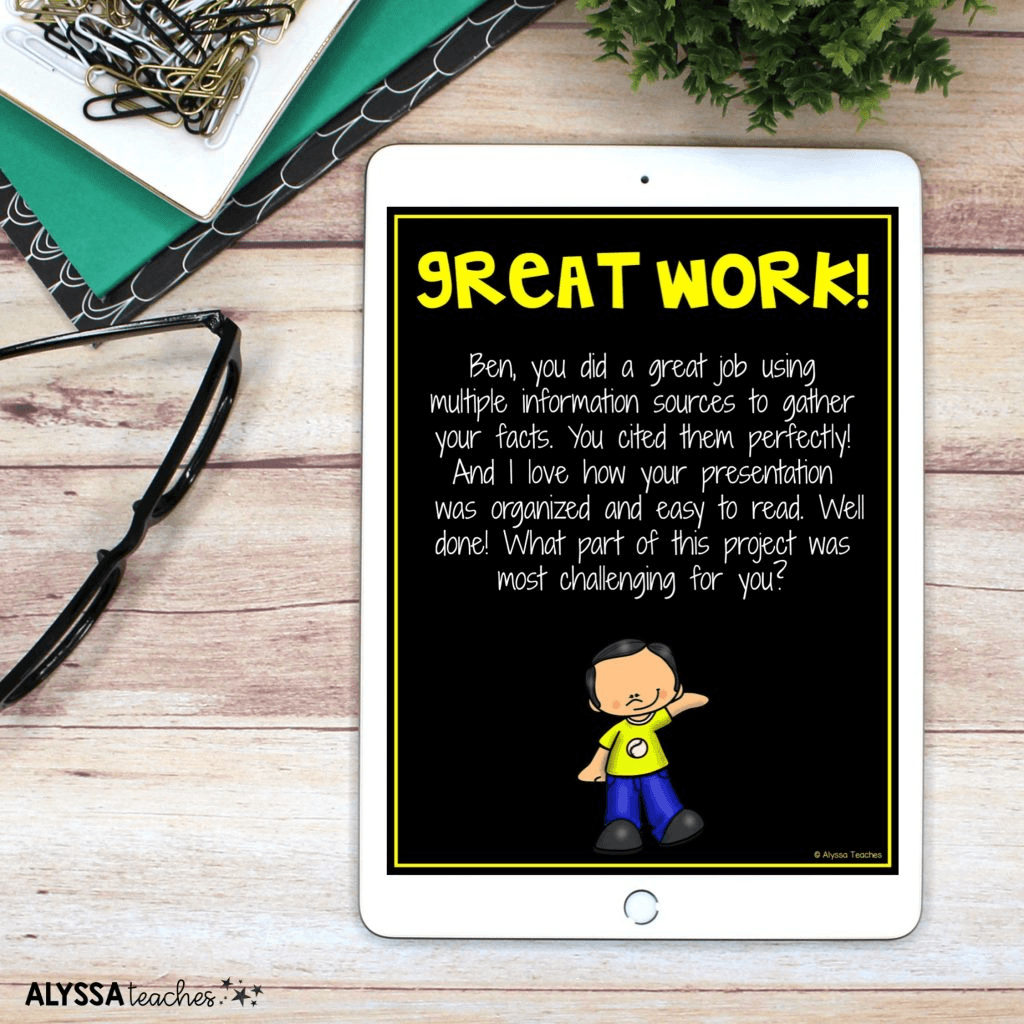
How to give useful feedback on a classmate's paper
By
Princeton Journal of Pre-Collegiate Research
Read more

Student editorial boards: how they work
By
Princeton Journal of Pre-Collegiate Research
Read more
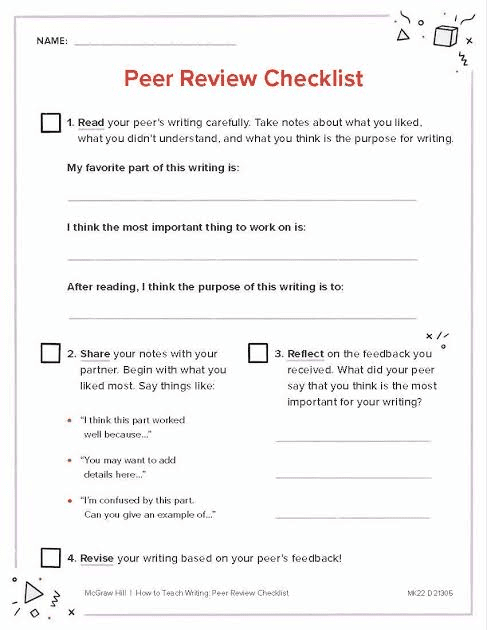
How to write a peer review as a student
By
Princeton Journal of Pre-Collegiate Research
Read more

Peer review etiquette: tone, structure, fairness
By
Princeton Journal of Pre-Collegiate Research
Read more

Version control for research documents
By
Princeton Journal of Pre-Collegiate Research
Read more

Digital vs paper lab notebooks for students
By
Princeton Journal of Pre-Collegiate Research
Read more

Data management basics for student researchers
By
Princeton Journal of Pre-Collegiate Research
Read more
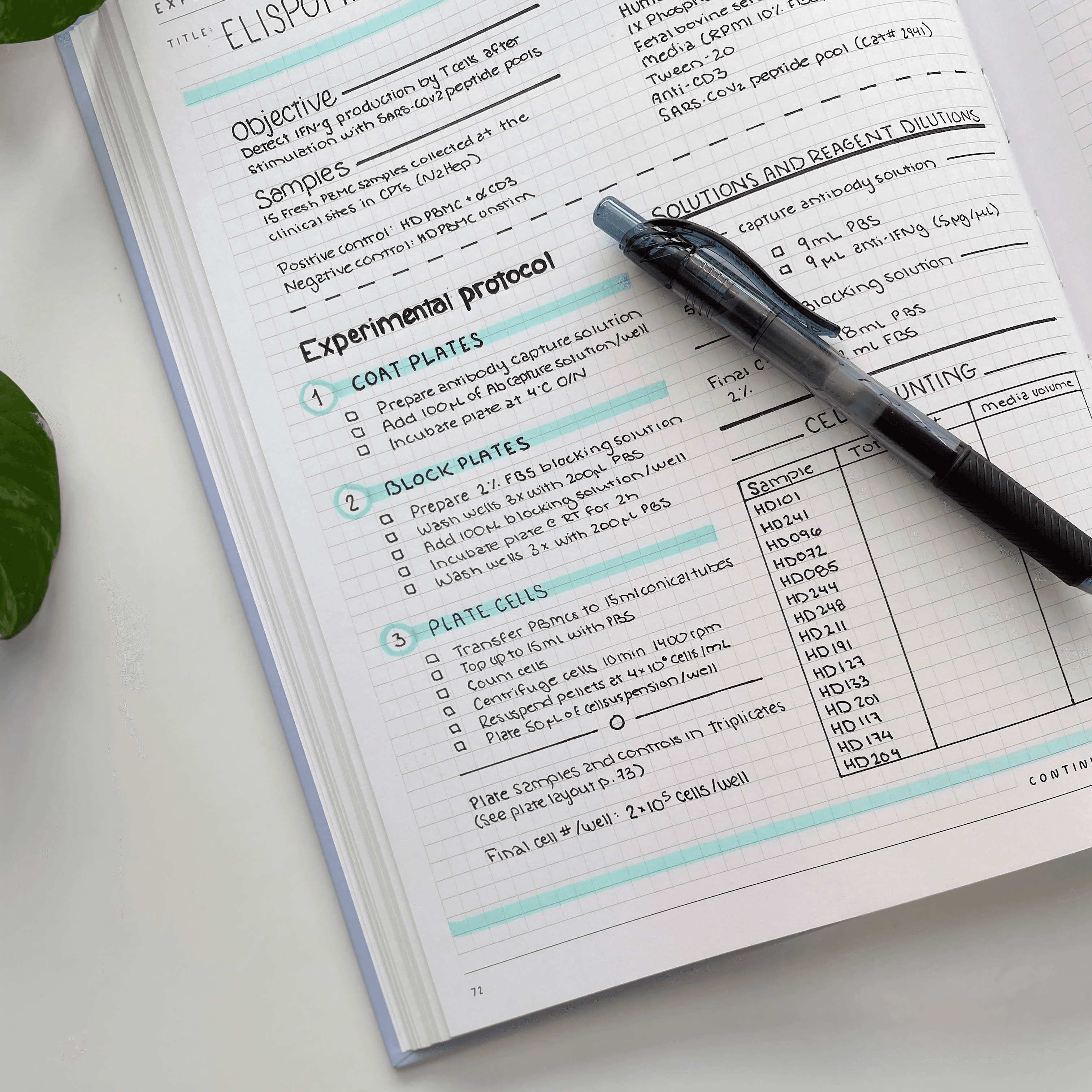
How to keep a lab notebook that reviewers trust
By
Princeton Journal of Pre-Collegiate Research
Read more

How to organize research files across a year-long project
By
Princeton Journal of Pre-Collegiate Research
Read more

How to document your data so you can defend it
By
Princeton Journal of Pre-Collegiate Research
Read more

How to write a grant proposal as a student
By
Princeton Journal of Pre-Collegiate Research
Read more

Free resources that replace research funding
By
Princeton Journal of Pre-Collegiate Research
Read more
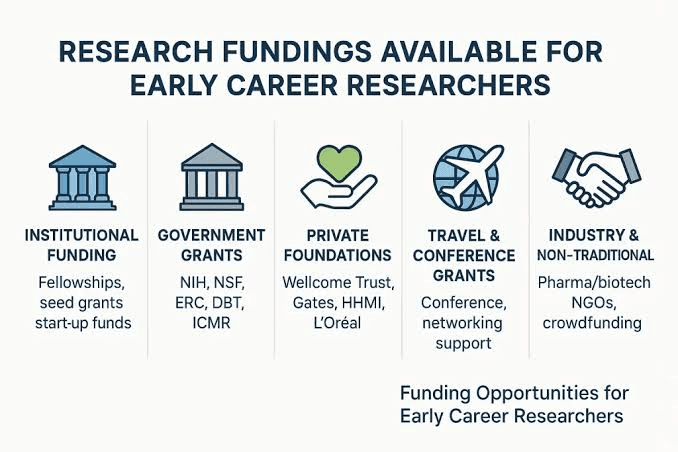
Corporate and nonprofit programs that fund student research
By
Princeton Journal of Pre-Collegiate Research
Read more

Science fair grants and material stipends explained
By
Princeton Journal of Pre-Collegiate Research
Read more

Crowdfunding a student research project: does it work
By
Princeton Journal of Pre-Collegiate Research
Read more

How much does a research project actually cost
By
Princeton Journal of Pre-Collegiate Research
Read more

How to ask your school to fund your project
By
Princeton Journal of Pre-Collegiate Research
Read more

Grants for high school research projects: what exists
By
Princeton Journal of Pre-Collegiate Research
Read more

How to start a research club at your school
By
Princeton Journal of Pre-Collegiate Research
Read more