How to handle conflicting data in your research honestly
Princeton Journal of Pre-Collegiate Research

Conflicting data does not mean your research is broken. It means your research is real. Knowing how to handle conflicting data in your research honestly is one of the most important skills a young scholar can develop, and most students are never taught how to do it.
This post walks you through exactly what to do when your findings do not line up, when your sources contradict each other, or when your own results pull in two different directions. You will not find any advice here about hiding the problem. You will find advice about facing it, explaining it, and turning it into a strength.
Why Conflicting Data Is Normal in Research
Real research rarely produces clean, perfectly aligned results. Variables interact in unexpected ways. Data sets collected at different times reflect different conditions. Secondary sources disagree because researchers used different methodologies, different samples, or different definitions of the same term. This is not failure. This is the nature of inquiry.
The problem is that many student researchers treat inconsistency as something to be ashamed of. They either ignore the conflicting data entirely or spend paragraphs apologizing for it. Neither approach serves the reader, and neither reflects well on the researcher. Reviewers at peer-reviewed journals (including ours) notice omissions immediately. A paper that pretends contradictions do not exist reads as incomplete at best and dishonest at worst.
The researchers who earn the most credibility are the ones who surface tension in their data and engage with it directly. That is the standard this post holds you to.
Step One: Identify the Conflict Precisely
Before you can address conflicting data, you need to describe it with precision. Vague phrases like "the results were mixed" or "some sources disagreed" do not help your reader understand what actually happened. You need to name the conflict exactly.
Ask yourself these questions when you encounter conflicting data:
Which specific data points, variables, or sources are in conflict?
Is the conflict internal (within your own data) or external (between your findings and existing literature)?
Is the conflict a matter of degree, or is it a direct contradiction?
Does the conflict appear across all conditions, or only under specific circumstances?
Write out the conflict in one or two plain sentences before you try to explain it. If you cannot state the conflict clearly, you do not yet understand it well enough to address it. Clarity here is not optional. It is the foundation everything else rests on.
If your data analysis process is still in progress and you are unsure how to interpret what you are seeing, it helps to revisit the fundamentals. Our guide on How To Analyze Data In A High School Research Project covers the core techniques that help you distinguish real conflict from data handling errors.
Step Two: Rule Out Errors Before Calling It a Conflict
Not every inconsistency in your data is a genuine conflict. Some inconsistencies are the result of errors you can correct. Before you frame something as a meaningful tension in your findings, you owe it to your research to check whether the discrepancy has a simpler explanation.
Common sources of false conflict include:
Data entry errors or formula mistakes in spreadsheets
Inconsistent variable definitions across sources
Sampling differences that make two data sets non-comparable
Outdated sources that reflect conditions that no longer apply
Measurement units that were not standardized across data collection points
If you are working with spreadsheets or digital data tools, a careful audit of your formulas and inputs often resolves apparent conflicts before they become a writing problem. Our resource on How To Use Excel Google Sheets Research Data walks through the most common technical errors student researchers make when organizing their data.
Once you have ruled out errors, what remains is genuine conflicting data. Now the intellectual work begins.
How to Handle Conflicting Data in Your Research Honestly: The Writing Approach
Honest engagement with conflicting data happens in two places in your paper: the Results section and the Discussion section. Each section has a different job.
In the Results Section: Report Everything
The Results section is not the place for interpretation. It is the place for transparency. Every data point you collected belongs here, including the ones that do not support your hypothesis. Selective reporting is a form of academic dishonesty, and it undermines the entire purpose of peer-reviewed research (which exists precisely because independent verification matters).
When you encounter conflicting results in your own data, report them with the same level of detail you give to your supporting findings. Use tables, figures, or descriptive statistics to present the conflict clearly. Do not editorialize in this section. Simply show what you found.
In the Discussion Section: Engage With the Conflict Directly
The Discussion section is where you earn your credibility as a researcher. This is where you explain, contextualize, and honestly assess what the conflicting data means for your conclusions.
There are several legitimate approaches to discussing conflicting data, and the right one depends on the nature of the conflict:
Acknowledge and explain: If you can identify a plausible reason for the conflict (different sample populations, different time periods, different methodological assumptions), state it clearly and explain why it matters.
Acknowledge and limit your claim: If the conflict is unresolved, narrow the scope of your conclusion. Instead of claiming a broad finding, claim a more specific one that your data can actually support.
Acknowledge and call for further research: If the conflict points to a genuine gap in current knowledge, say so. Identifying what is not yet known is a legitimate scholarly contribution.
Acknowledge and weigh the evidence: If two conflicting sources are both credible, explain which body of evidence you find more persuasive and why. This is not bias. This is reasoned judgment, and it is what researchers do.
What you should never do is pretend the conflict does not exist. Reviewers are trained to look for exactly this kind of omission. Our post on Data Vs Evidence What Reviewers Look For Student Research explains the distinction between raw data and the evidence you build from it, which is directly relevant to how you frame conflicting findings.
Conflicting Secondary Sources: A Special Case
Sometimes the conflict is not in your own data but in the literature you are drawing on. Two peer-reviewed studies reach opposite conclusions. Two credible experts disagree. This is common in fields where research is still developing, and it requires a specific approach.
First, do not pick a side arbitrarily. Read both sources carefully and assess the quality of each study's methodology, sample size, and context. A study with a larger, more representative sample generally carries more weight than one with a narrow or self-selected sample. A more recent study may supersede an older one, but not always (especially if the older study used a more rigorous design).
Second, present both perspectives in your literature review before you explain where your own research fits. This signals to the reader that you are aware of the debate and that your work is entering it with full knowledge of the existing tensions. It is a sign of scholarly maturity, not indecision.
Third, use your own findings to inform which position your paper ultimately supports, if your data allows you to do so. If it does not, say that explicitly. A conclusion that acknowledges the limits of what your study can resolve is more credible than one that overclaims.
Language That Works: Phrases for Addressing Conflict
Academic writing has a vocabulary for handling conflicting data, and using it correctly signals that you understand the norms of scholarly communication. These are not euphemisms. They are precise formulations that honest researchers use regularly.
"These findings are inconsistent with [Source X], which reported..."
"The discrepancy between [Variable A] and [Variable B] may reflect..."
"While [Finding X] supports the hypothesis, [Finding Y] complicates this interpretation."
"This conflict in the data suggests that the relationship between [X] and [Y] is more nuanced than previously assumed."
"The current study cannot resolve this tension definitively, and further research using [specific method] would be valuable."
These constructions are direct, honest, and professionally appropriate. They show a reader that you are in control of your argument, even when your data is not perfectly cooperative. Before you submit, review your language carefully. Our guide on How To Edit Your Own Research Paper Before Submission includes specific checks for whether your discussion section is handling complexity honestly and clearly.
What Reviewers Actually Think When They See Conflicting Data
Many student researchers assume that conflicting data will cause reviewers to reject their paper. This assumption is wrong. What reviewers actually penalize is the mishandling of conflicting data, not its existence.
A paper that presents conflicting findings openly, engages with them thoughtfully, and draws appropriately limited conclusions demonstrates exactly the kind of intellectual rigor that peer review is designed to reward. It shows that the researcher understands the difference between what the data can support and what it cannot (a distinction that separates careful scholarship from wishful thinking).
A paper that ignores conflicting data, selectively reports results, or overstates conclusions raises red flags that are difficult to recover from. Reviewers ask themselves whether the researcher can be trusted. Omissions answer that question in the wrong direction.
If you want to understand what the review process looks like from the inside, our post on What Happens After You Submit Your Research Paper walks through each stage of evaluation and what reviewers are assessing at every step.
Conflicting Data as a Contribution, Not a Weakness
The most sophisticated reframe available to you is this: conflicting data, handled well, is itself a contribution to your field. When you document a genuine inconsistency in existing knowledge and present it clearly, you are giving future researchers a more accurate map of the terrain. You are identifying a question that still needs answering. That is valuable work.
Some of the most important papers in any field are the ones that disrupted a previously clean consensus by introducing evidence that did not fit. The researchers who wrote those papers did not apologize for the disruption. They documented it carefully, explained it honestly, and let the evidence speak.
You can do the same thing at the pre-collegiate level. The standard is the same. The scale is different, but the intellectual obligation is identical.
How to Handle Conflicting Data in Your Research Honestly: A Final Checklist
Before you submit your paper, run through this checklist to confirm that you have handled any conflicting data with the honesty and rigor your work deserves:
Have you reported all data points, including those that do not support your hypothesis?
Have you ruled out data entry errors, measurement inconsistencies, and definitional differences as the source of any apparent conflict?
Have you named the conflict precisely in your Discussion section rather than describing it vaguely?
Have you offered at least one substantive explanation or interpretation of the conflict?
Have you adjusted your conclusions to reflect what your data can and cannot support?
Have you used precise academic language to frame the conflict, rather than apologetic or dismissive language?
Have you identified what further research would be needed to resolve the conflict?
If you can answer yes to each of these, your paper is handling conflicting data honestly. That is a higher standard than many published papers meet (and it will show).
Publish Research That Reflects Your Actual Work
At Princeton JPCR, we review original research by high school students across more than 50 academic disciplines. Our double-blind peer review process evaluates papers on the quality of their reasoning and the honesty of their methodology, not on whether the results are clean or convenient. A paper that engages seriously with conflicting data is a paper that demonstrates genuine scholarly thinking.
If you are preparing a submission and want to make sure your paper is as strong as it can be before it reaches our reviewers, explore the resources in our Blogs section. You will find guidance on writing, analysis, and the full submission process. And when your paper is ready, we are ready to review it. (not affiliated with Princeton University.)
Read More

Can high school students be peer reviewers
By
Princeton Journal of Pre-Collegiate Research
Read more

What reviewing other papers teaches you about your own
By
Princeton Journal of Pre-Collegiate Research
Read more

How to give useful feedback on a classmate's paper
By
Princeton Journal of Pre-Collegiate Research
Read more

Student editorial boards: how they work
By
Princeton Journal of Pre-Collegiate Research
Read more
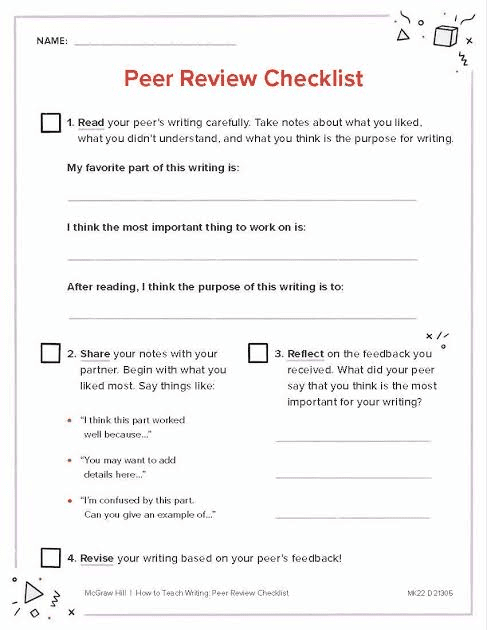
How to write a peer review as a student
By
Princeton Journal of Pre-Collegiate Research
Read more

Peer review etiquette: tone, structure, fairness
By
Princeton Journal of Pre-Collegiate Research
Read more

Version control for research documents
By
Princeton Journal of Pre-Collegiate Research
Read more

Digital vs paper lab notebooks for students
By
Princeton Journal of Pre-Collegiate Research
Read more

Data management basics for student researchers
By
Princeton Journal of Pre-Collegiate Research
Read more

How to keep a lab notebook that reviewers trust
By
Princeton Journal of Pre-Collegiate Research
Read more

How to organize research files across a year-long project
By
Princeton Journal of Pre-Collegiate Research
Read more

How to document your data so you can defend it
By
Princeton Journal of Pre-Collegiate Research
Read more

How to write a grant proposal as a student
By
Princeton Journal of Pre-Collegiate Research
Read more

Free resources that replace research funding
By
Princeton Journal of Pre-Collegiate Research
Read more
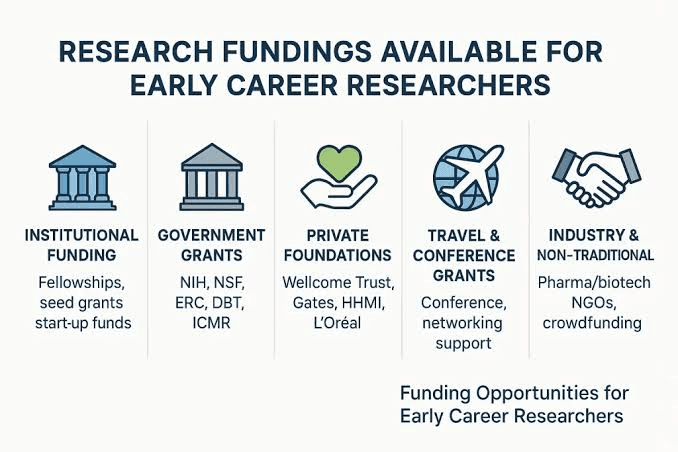
Corporate and nonprofit programs that fund student research
By
Princeton Journal of Pre-Collegiate Research
Read more

Science fair grants and material stipends explained
By
Princeton Journal of Pre-Collegiate Research
Read more

Crowdfunding a student research project: does it work
By
Princeton Journal of Pre-Collegiate Research
Read more

How much does a research project actually cost
By
Princeton Journal of Pre-Collegiate Research
Read more

How to ask your school to fund your project
By
Princeton Journal of Pre-Collegiate Research
Read more

Grants for high school research projects: what exists
By
Princeton Journal of Pre-Collegiate Research
Read more

How to start a research club at your school
By
Princeton Journal of Pre-Collegiate Research
Read more