Data vs Evidence: What Reviewers Look for in Student Research
Princeton Journal of Pre-Collegiate Research
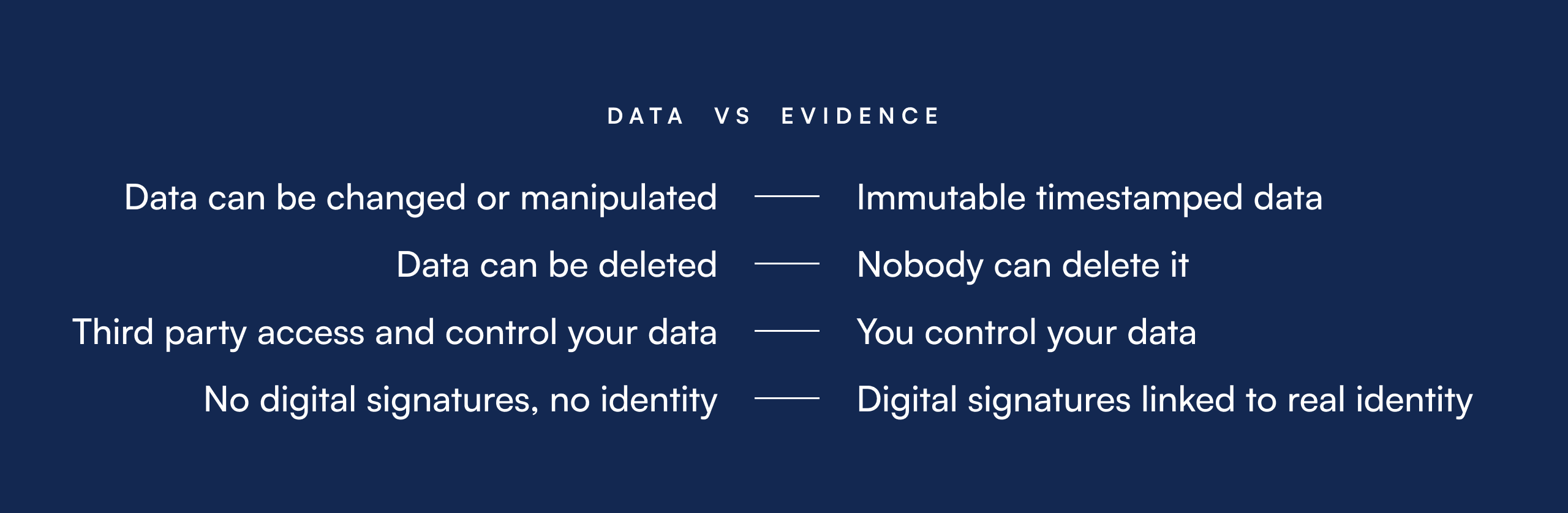
TL;DR: Many student researchers collect data but never transform it into evidence. This post explains the difference, why it matters to peer reviewers, and what you need to do before your paper is ready for publication. It covers the most common mistakes students make when presenting findings, and what a strong, reviewable paper actually looks like. Students who have completed original research and want a credible publication venue should review the submission guidelines at the Princeton Journal of Pre-Collegiate Research.
Why most student papers stall at data and never reach evidence
Data and evidence are not the same thing. This distinction is the single most common reason peer reviewers return student papers without acceptance. A survey with 200 responses is data. A survey that demonstrates a statistically significant relationship between two variables, interpreted in the context of existing literature, and used to support or refute a specific claim: that is evidence. The gap between the two is where most student research papers break down.
Understanding the difference between data vs evidence is not a minor technical point. It is the foundation of what makes research publishable. Reviewers are not looking for impressive data collection. They are looking for a coherent argument built on that data. If you have conducted original research and your paper is not gaining traction with reviewers, this distinction is almost certainly where the problem lives.
What is the difference between data and evidence in research?
Data is any raw information you collect: measurements, survey responses, observations, interview transcripts, or experimental results. Evidence is data that has been analyzed, interpreted, and connected to a specific claim within your research argument. Data becomes evidence only when you explain what it means, why it matters, and how it supports or challenges your hypothesis.
This is not a semantic distinction. It has direct consequences for how reviewers evaluate your work. Peer reviewers at academic journals, including those who evaluate submissions to student-facing publications, are trained to ask one question above all others: does this paper make a claim, and does the data actually support it? Raw data presented without interpretation does not answer that question. It shifts the analytical burden onto the reader, which is the author's job, not the reviewer's.
Consider a concrete example. A student conducts an experiment measuring plant growth under different light conditions and records daily height measurements over four weeks. That is data. If the student then calculates mean growth rates per condition, applies a statistical test to determine whether differences are significant, and argues that the results support or contradict a specific hypothesis about photosynthetic efficiency, the data has become evidence. The transformation happens through analysis and interpretation, not through collection alone.
Three elements convert data into evidence in a research paper. First, the data must be analyzed using an appropriate method, whether statistical, thematic, comparative, or interpretive depending on the discipline. Second, the analysis must be connected explicitly to the research question or hypothesis stated in the introduction. Third, the interpretation must be situated within the existing literature: what does your finding add to, confirm, or complicate in what researchers already know?
Without all three elements, reviewers will note that the paper presents findings without making an argument. That is the most common single point of feedback on student submissions across all disciplines.
What do peer reviewers actually look for when evaluating student research?
Reviewers evaluate five things in order: clarity of the research question, appropriateness of the methodology, quality of the analysis, strength of the evidence-based argument, and accuracy of the conclusion. Data collection quality matters, but it is evaluated third, not first. A paper with modest data and a rigorous argument will outperform a paper with impressive data and no coherent claim.
Reviewers read introductions to understand what claim the paper is making. They read the methods section to assess whether the data collection was appropriate for that claim. They read the results section to see whether the analysis was conducted correctly. They read the discussion to determine whether the author has drawn defensible conclusions from the evidence. Every section is evaluated in relation to the central argument. If that argument is absent or unclear, the rest of the paper cannot compensate for it.
One specific thing reviewers check in student papers is whether the discussion section does interpretive work or merely restates results. Restating results is not analysis. Saying "the data showed that Group A scored higher than Group B" is a result. Saying "the higher scores in Group A suggest that spaced repetition may be more effective than massed practice for vocabulary retention in adolescents, which is consistent with findings reported by Kornell and Bjork (2008)" is evidence used in an argument. The second version is what reviewers are looking for.
Reviewers also assess whether limitations are acknowledged honestly. A paper that presents findings without naming the constraints of the study, sample size, measurement validity, potential confounds, signals to reviewers that the author has not thought carefully about what the data can and cannot show. Acknowledging limitations is not a weakness. It is a sign of intellectual honesty and methodological awareness, both of which reviewers weight heavily.
What are the most common mistakes students make when presenting data as evidence?
The four most frequent errors in student research papers, based on patterns across peer-reviewed student journals, are: presenting data without interpretation, overstating what the data shows, disconnecting findings from the original research question, and omitting limitations entirely.
The first mistake is presenting data without interpretation. Students describe what their tables and graphs show but do not explain what those findings mean in the context of their research question. The fix is straightforward: after every result you report, write one sentence that begins with "This suggests" or "This supports" or "This challenges," and complete it with a specific claim tied to your hypothesis.
The second mistake is overstating conclusions. A sample of 30 participants from one school cannot support a claim about "all high school students." Reviewers flag overgeneralization immediately. The fix is to scope your conclusions precisely: "among the participants in this study" or "in this context" rather than universal language. According to the American Psychological Association's publication manual, one of the most common reasons manuscripts are rejected is that conclusions exceed what the data can support.
The third mistake is disconnecting findings from the original research question. Students sometimes collect data, find something interesting that was not the original focus, and pivot to reporting that instead. This creates a structural incoherence: the introduction sets up one question and the results answer a different one. Reviewers notice this immediately. If your findings shifted your research focus, revise the introduction to reflect that shift before submitting.
The fourth mistake is omitting limitations. Every study has them. A paper that does not name them reads as either naive or incomplete. Identify at least two genuine constraints on your data, explain how they affect the conclusions you can draw, and suggest what future research would need to address them.
How to strengthen your evidence before submitting a research paper
Follow these steps before you submit your paper to any peer-reviewed journal. Each step addresses a specific gap between data and evidence.
Restate your research question at the top of your revision pass. Every paragraph in your results and discussion should connect back to that question. If a paragraph does not, either cut it or rewrite it so the connection is explicit.
Check that every result has an interpretation. Go through your results section line by line. For every figure, table, or finding you report, confirm that you have written a sentence explaining what it means for your argument. If you have not, write it now.
Locate your findings in the existing literature. Your discussion must cite at least two or three sources that your findings relate to. Are your results consistent with prior research? Do they contradict it? Do they extend it into a new context? Name this explicitly.
Scope your conclusions to match your data. Read your conclusion and ask: does the data I collected actually support this claim? If your sample was small, local, or non-random, your conclusions must reflect those constraints.
Write a limitations paragraph. Name at least two specific limitations. Explain their effect on your conclusions. Suggest what a follow-up study would need to do differently.
Read your discussion aloud. If it sounds like a list of results, it is not yet a discussion. A discussion makes an argument. It should sound like you are explaining to an informed reader why your findings matter and what they mean.
Review the submission guidelines for your target journal. Confirm that your paper meets the structural and formatting requirements before submitting. For original student research across all disciplines, review the submission guidelines at princeton-jpcr.org.
PJPCR accepts original research across all academic disciplines. If your research is ready and your evidence is clearly argued, review the submission guidelines at princeton-jpcr.org.
Frequently asked questions about data vs evidence in student research
What is the difference between data and evidence in a research paper?
Data is raw information collected through observation, experiment, or measurement. Evidence is data that has been analyzed and interpreted to support a specific claim within your research argument. Data becomes evidence when you explain what it means, connect it to your hypothesis, and situate it within the existing literature on your topic.
The distinction matters because peer reviewers evaluate arguments, not data sets. A paper that presents data without interpretation has not yet made a scholarly contribution. The analytical step, turning results into a claim, is what separates a class project from a publishable paper.
How much data do you need to publish a high school research paper?
There is no universal minimum. Reviewers evaluate the appropriateness of your data for your research question, not the volume of data collected. A qualitative study with eight in-depth interviews can be publishable if the analysis is rigorous. A quantitative study with 500 data points can be rejected if the analysis is superficial.
What matters is whether your data is sufficient to support the specific, scoped claim you are making. A small, well-analyzed study with honest limitations is more publishable than a large study with overreaching conclusions.
Do I need a mentor or supervisor to publish research as a high school student?
You do not need a mentor to submit research for publication. Many student journals, including the Princeton Journal of Pre-Collegiate Research, do not require institutional affiliation or faculty sponsorship as a condition of submission. What you need is original research that meets the journal's standards for rigor and argumentation.
That said, working with a mentor who can review your methodology and help you distinguish between data and evidence before submission will strengthen your paper significantly. Mentorship is a resource, not a requirement.
What makes a student research paper credible to peer reviewers?
Credibility comes from three things: a clearly stated research question, a methodology appropriate to that question, and conclusions that do not exceed what the data can support. Reviewers are not impressed by ambitious claims. They are persuaded by careful reasoning and honest acknowledgment of limitations.
A paper that identifies a specific gap in the literature, collects data to address it, analyzes that data rigorously, and draws scoped conclusions with named limitations will be taken seriously by reviewers regardless of the student's school or background.
Is PJPCR peer reviewed, and what kinds of research does it publish?
Yes. The Princeton Journal of Pre-Collegiate Research conducts genuine peer review. Submissions are evaluated by qualified reviewers and are not guaranteed acceptance. PJPCR publishes original research across STEM, humanities, social sciences, and interdisciplinary fields. It is open-access and free to submit.
Accepted papers receive a DOI, making them permanently citable and indexed. You can explore published issues and review the peer review process at princeton-jpcr.org. The journal does not accept pay-to-publish submissions and does not offer guaranteed publication.
What to do now
The difference between data and evidence is not a stylistic preference. It is the line between a paper that reviewers can evaluate and one they cannot. Before you submit your research anywhere, confirm that every finding in your results section has been interpreted, connected to your research question, and situated within existing scholarship. Confirm that your conclusions are scoped to what your data actually shows. Confirm that your limitations are named and explained.
Those three steps will do more to improve your chances of acceptance than any amount of additional data collection. Reviewers are reading for argument, not volume. If your research is complete and your evidence is clearly constructed, submit it to the Princeton Journal of Pre-Collegiate Research at princeton-jpcr.org. You can also explore the PJPCR blog for additional guidance on the research and submission process.
Read More

APA format for high school research papers: complete guide
By
RISE Research
Read more

MLA format for research papers: when and how
By
RISE Research
Read more

APA vs MLA vs Chicago: which to use for your paper
By
RISE Research
Read more

How to cite a dataset
By
RISE Research
Read more

In-text citations vs footnotes: how each works
By
RISE Research
Read more

What is a p-value, explained for high school researchers
By
RISE Research
Read more

What is regression analysis and when do you use it
By
RISE Research
Read more

What is standard deviation and why it matters
By
RISE Research
Read more

What is a t-test and when do you need one
By
RISE Research
Read more

What is effect size and why reviewers care
By
RISE Research
Read more

Common statistical mistakes in student papers
By
RISE Research
Read more

Research for biology majors: what to publish before applying
By
https://princeton-jpcr.org/
Read more

Research for economics majors
By
https://princeton-jpcr.org/
Read more

Research for political science majors
By
https://princeton-jpcr.org/
Read more

Research for English and humanities majors
By
https://princeton-jpcr.org/
Read more

Research for neuroscience majors
By
https://princeton-jpcr.org/
Read more

Undecided major: what research keeps your options open
By
https://princeton-jpcr.org/
Read more

Summer research timeline: June to August week by week
By
Princeton Journal of Pre-Collegiate Research
Read more

Research goals to set at the start of the school year
By
Princeton Journal of Pre-Collegiate Research
Read more

How to finish your research paper before finals season
By
Princeton Journal of Pre-Collegiate Research
Read more

New year research resolutions that actually stick
By
Princeton Journal of Pre-Collegiate Research
Read more