Common grammar mistakes in academic research papers
Princeton Journal of Pre-Collegiate Research

Grammar errors do not just look careless. They actively undermine the credibility of your research before a reviewer reads a single data point. If you are a high school student preparing your first submission to a peer-reviewed journal, understanding the most common grammar mistakes in academic research papers is not optional. It is the difference between a paper that advances through review and one that gets returned with a note about presentation.
This guide covers the errors that appear most frequently in student manuscripts. Each one is fixable. None of them require advanced linguistics training. What they require is attention, revision, and a clear understanding of what academic writing actually demands.
Why Grammar Matters More Than You Think
Peer reviewers are not grammar teachers. They are evaluating the quality of your methodology, the rigor of your analysis, and the validity of your conclusions. When grammar errors pile up, reviewers spend cognitive energy decoding your sentences instead of engaging with your ideas. That is a problem you created before they even reached your results section.
Academic writing operates under a specific contract with the reader: precision above all else. Every sentence should mean exactly one thing. Ambiguity is not stylistic. It is a failure of communication. The common grammar mistakes in academic research papers are almost always rooted in the same source: writing too fast and revising too little (you know who you are).
Before you submit, read our guide on how to edit your own research paper before submission. Grammar review should be the last pass, not the first.
Subject-Verb Agreement Errors
This is the most foundational grammar rule in English, and it is broken constantly in student manuscripts. The subject and verb of a sentence must agree in number. Singular subjects take singular verbs. Plural subjects take plural verbs. That sounds obvious until you encounter a sentence like this: "The results of the experiment was inconclusive."
The subject is "results," not "experiment." Results are. Experiment was. The prepositional phrase in the middle creates distance between the subject and the verb, and writers lose track. Academic sentences are often long and structurally complex. That complexity creates more opportunities for agreement errors, not fewer.
Watch especially for collective nouns ("data," "research," "evidence") and indefinite pronouns ("each," "every," "neither"). In formal academic writing, "data" is typically treated as plural ("the data show," not "the data shows"). Consistency matters more than the specific convention you choose, but know that many journals have strong preferences.
Misuse of Tense
Academic papers use different tenses in different sections, and mixing them up signals a writer who has not internalized the conventions. The literature review uses past tense to describe what previous researchers found ("Smith argued," "the study demonstrated"). The methods section uses past tense to describe what you did ("samples were collected," "participants completed"). The results section uses past tense for what you observed. The discussion and conclusion use present tense for what the findings mean and what is now understood.
The error most students make is drifting into present tense during the methods section ("we collect samples from three sites") or into past tense during the discussion ("these findings suggested" when the findings still stand). Tense is not arbitrary. It signals the temporal relationship between the reader, the research, and the knowledge it produces.
If you are uncertain about how tense functions across sections, our resource on how to write clearly and concisely in academic research addresses sentence-level precision in detail.
Comma Splices and Run-On Sentences
A comma splice occurs when two independent clauses are joined with only a comma. "The sample size was small, this limits generalizability." That is two complete sentences fused incorrectly. You can fix it with a period, a semicolon, or a coordinating conjunction ("but," "so," "and"). Each fix produces a slightly different meaning, so choose deliberately.
Run-on sentences are the related problem. They occur when independent clauses are joined without any punctuation at all, or when a sentence accumulates so many clauses that the reader cannot track the logical structure. Academic writing favors clarity over length. A sentence that requires three readings to parse is not sophisticated. It is broken.
The fix is almost always to break the sentence apart. Shorter sentences are not less academic. They are more precise. If you are working on how to structure your arguments clearly, see our guide on how to structure an argument in a research paper.
Dangling and Misplaced Modifiers
A dangling modifier is a phrase that does not logically connect to the subject it is supposed to modify. "After analyzing the data, the results were significant." The results did not analyze the data. The researcher did. The sentence should read: "After analyzing the data, the researchers found significant results."
Misplaced modifiers are placed too far from the word they modify, creating unintended meanings. "The researcher only studied participants who completed all sessions" could mean the researcher did nothing else, or it could mean only those participants were included. "Only" is one of the most commonly misplaced words in academic English. Place it immediately before the word it modifies.
These errors are especially common in papers that describe complex methodologies (the more steps you describe, the more chances for modifier drift). Read every sentence that begins with a participial phrase and confirm that the subject immediately following is the agent of that phrase. No exceptions.
Incorrect Use of Articles
Articles ("a," "an," "the") are a persistent source of error for native and non-native English writers alike. "A" and "an" are indefinite articles used when introducing something for the first time or referring to a non-specific member of a category. "The" is a definite article used when the referent is specific and known to both writer and reader.
The most common academic error is omitting "the" before a specific noun that has already been introduced. "Participants completed survey. Survey was administered online." Both instances need "the." The survey was introduced in the first sentence. By the second sentence, it is a known, specific entity.
Non-native English speakers often omit articles entirely, particularly writers whose first language does not use them (Russian, Japanese, Arabic, and many others). If English is not your first language, this is worth a dedicated proofreading pass. Read every noun phrase and ask: is this specific or general? Known or new?
Pronoun-Antecedent Disagreement
Pronouns must agree with their antecedents in number and gender. "Each participant submitted their questionnaire" is increasingly accepted in academic writing as a gender-neutral construction, but "each participant submitted their questionnaires" introduces a number inconsistency if only one questionnaire was submitted per participant. Precision matters at every level.
The more damaging error is vague pronoun reference. "The study examined stress and academic performance. It showed a significant correlation." What does "it" refer to? The study? The stress? The performance measure? When the antecedent is unclear, rewrite the sentence to name the referent explicitly. Academic writing does not reward elegant variation. It rewards clarity.
Passive Voice Overuse
Passive voice is not grammatically wrong. In academic writing, it serves a specific function: de-emphasizing the agent when the action or the object matters more. "Samples were collected from three sites" is appropriate when the identity of the collector is irrelevant. But passive voice becomes a problem when it is used habitually to avoid direct statements or to obscure weak reasoning.
"It was found that the hypothesis was supported" is weaker than "The results supported the hypothesis." The second version is direct, attributable, and clear. Over-reliance on passive voice produces writing that feels evasive (and reviewers notice). Use it intentionally, not reflexively. Our post on active vs passive voice in academic writing breaks down exactly when each construction is appropriate.
Apostrophe Errors
Apostrophes indicate possession or contraction. They do not indicate plurals. "The result's were significant" is wrong. "The results were significant" is correct. This error appears so frequently in student writing that it warrants its own section (it really does appear that often).
Possessives follow a clear rule: singular nouns take apostrophe-s ("the study's findings"), plural nouns ending in s take only an apostrophe ("the participants' responses"), and irregular plurals take apostrophe-s ("the children's scores"). Contractions are almost never appropriate in formal academic writing. "Don't" becomes "do not." "It's" becomes "it is." When in doubt, spell it out.
Inconsistent Parallel Structure
Parallel structure requires that items in a list or series use the same grammatical form. "The study aimed to identify risk factors, measuring outcomes, and the analysis of intervention effects" violates parallelism. The corrected version: "The study aimed to identify risk factors, measure outcomes, and analyze intervention effects." Three infinitives. Consistent form.
This error is especially common in research objectives, hypothesis statements, and methodology descriptions. Any time you write a list, check that every item uses the same grammatical structure. Parallelism is not just aesthetics. It signals logical equivalence between the items you are listing.
For a deeper look at how thesis statements and research objectives should be constructed, see our guide on how to write a strong thesis statement for a research paper.
Common Grammar Mistakes in Academic Research Papers: A Final Checklist
Before you submit, run through this list deliberately. Do not skim. Each item represents a category of error that appears in submitted manuscripts with regularity.
Subject-verb agreement: Check every verb against its true subject, not the nearest noun.
Tense consistency: Confirm that each section uses the correct tense for its function.
Comma splices: Identify every comma between two independent clauses and verify the construction is intentional.
Dangling modifiers: Check every participial phrase opener and confirm the subject follows logically.
Article usage: Audit every noun phrase for correct use of "a," "an," and "the."
Pronoun reference: Confirm every pronoun has a clear, unambiguous antecedent.
Passive voice: Flag every passive construction and ask whether active voice would be more direct.
Apostrophes: Remove apostrophes from all plurals. Expand all contractions.
Parallel structure: Verify that every list uses consistent grammatical form.
You can also review our page on common mistakes to avoid for a broader look at submission errors beyond grammar.
Conclusion
The common grammar mistakes in academic research papers are not exotic or obscure. They are predictable, patterned, and correctable. What separates a polished submission from a rough draft is not talent. It is the willingness to revise with the same rigor you applied to your research design.
Grammar is not a formality imposed on top of your ideas. It is the mechanism by which your ideas reach another mind intact. Every error is a place where that transmission breaks down. Fix the breaks before submission, and your research stands on its own merits.
Princeton JPCR publishes original research by high school students across 50+ academic disciplines through rigorous double-blind peer review. (Not affiliated with Princeton University.) If your manuscript is ready, visit our Blogs section for more writing resources, or explore published student work to see what strong academic writing looks like in practice. When you are ready to submit, your research deserves a presentation that matches its quality. Make sure the grammar does not get in the way.
Read More

Can high school students be peer reviewers
By
Princeton Journal of Pre-Collegiate Research
Read more

What reviewing other papers teaches you about your own
By
Princeton Journal of Pre-Collegiate Research
Read more
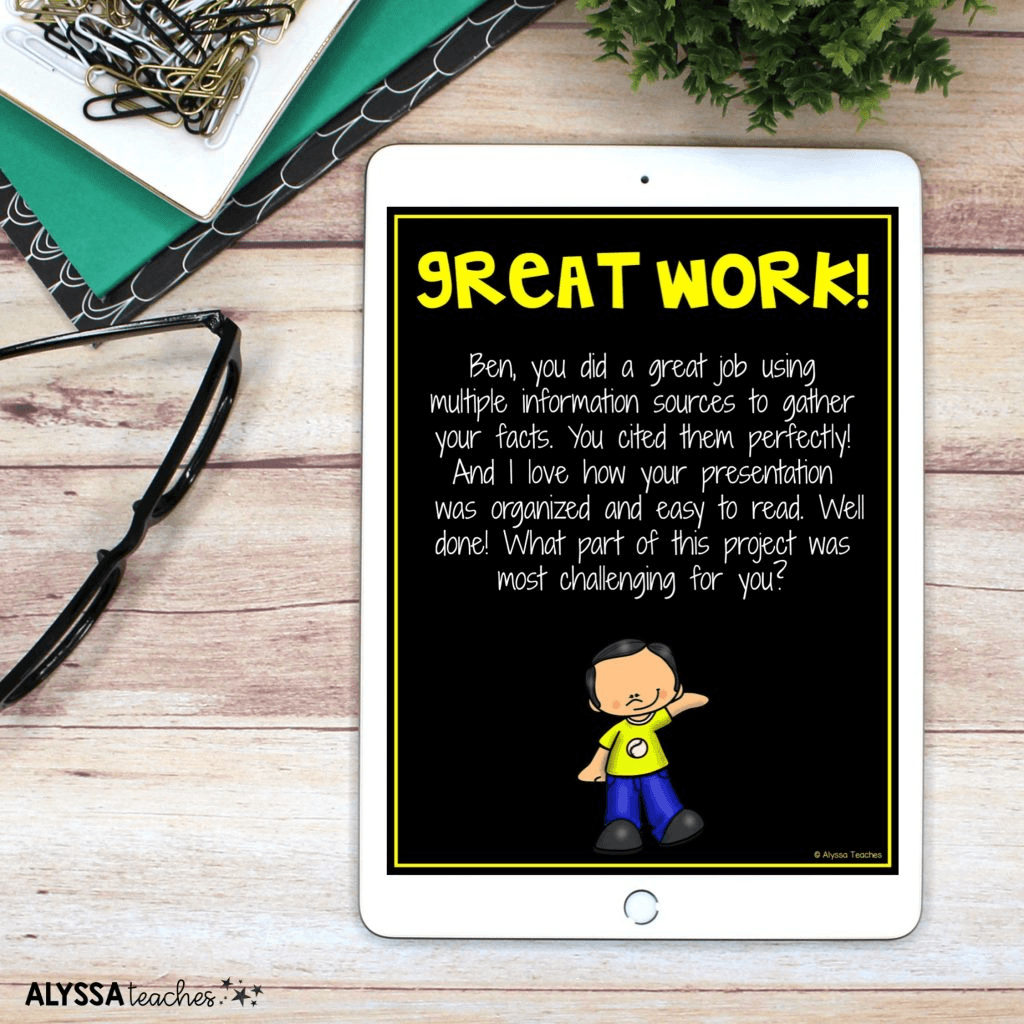
How to give useful feedback on a classmate's paper
By
Princeton Journal of Pre-Collegiate Research
Read more

Student editorial boards: how they work
By
Princeton Journal of Pre-Collegiate Research
Read more
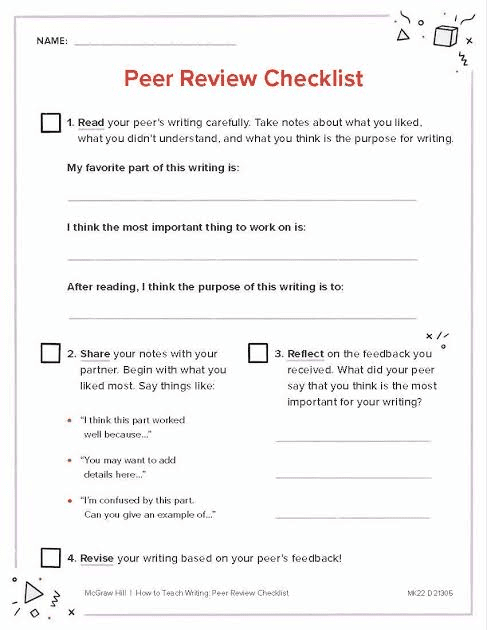
How to write a peer review as a student
By
Princeton Journal of Pre-Collegiate Research
Read more

Peer review etiquette: tone, structure, fairness
By
Princeton Journal of Pre-Collegiate Research
Read more

Version control for research documents
By
Princeton Journal of Pre-Collegiate Research
Read more

Digital vs paper lab notebooks for students
By
Princeton Journal of Pre-Collegiate Research
Read more

Data management basics for student researchers
By
Princeton Journal of Pre-Collegiate Research
Read more
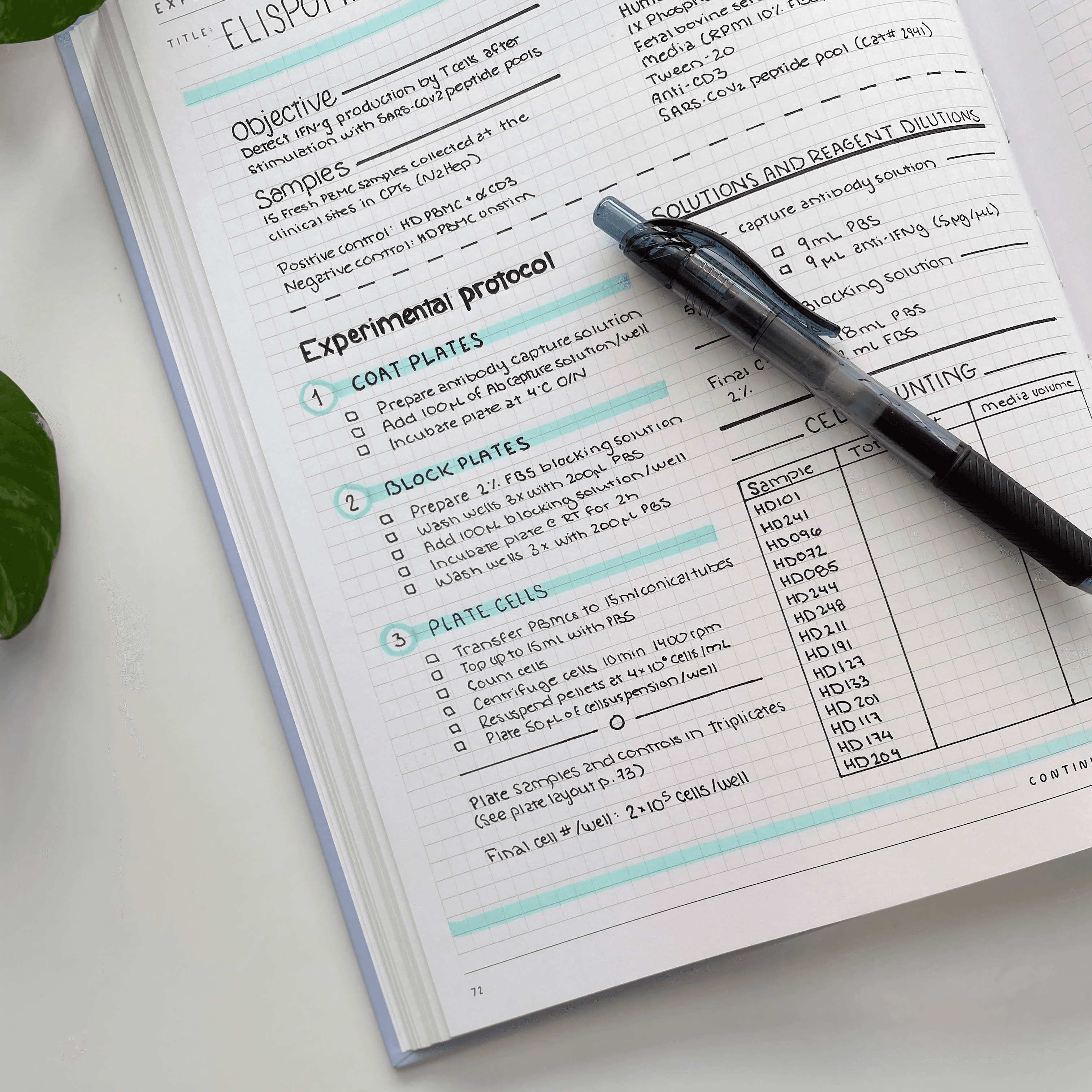
How to keep a lab notebook that reviewers trust
By
Princeton Journal of Pre-Collegiate Research
Read more

How to organize research files across a year-long project
By
Princeton Journal of Pre-Collegiate Research
Read more

How to document your data so you can defend it
By
Princeton Journal of Pre-Collegiate Research
Read more

How to write a grant proposal as a student
By
Princeton Journal of Pre-Collegiate Research
Read more

Free resources that replace research funding
By
Princeton Journal of Pre-Collegiate Research
Read more
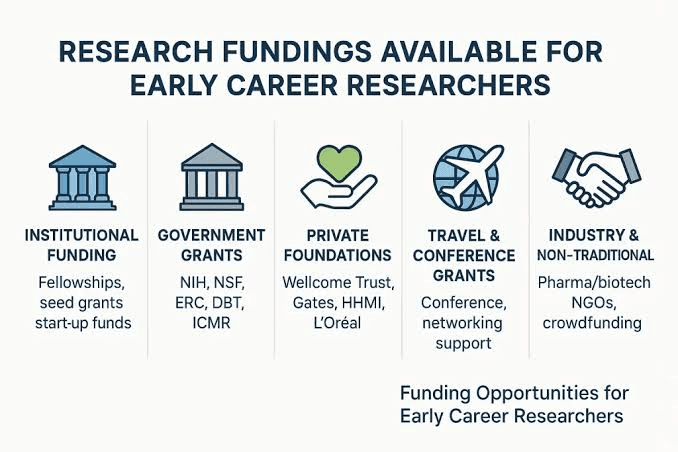
Corporate and nonprofit programs that fund student research
By
Princeton Journal of Pre-Collegiate Research
Read more

Science fair grants and material stipends explained
By
Princeton Journal of Pre-Collegiate Research
Read more

Crowdfunding a student research project: does it work
By
Princeton Journal of Pre-Collegiate Research
Read more

How much does a research project actually cost
By
Princeton Journal of Pre-Collegiate Research
Read more

How to ask your school to fund your project
By
Princeton Journal of Pre-Collegiate Research
Read more

Grants for high school research projects: what exists
By
Princeton Journal of Pre-Collegiate Research
Read more

How to start a research club at your school
By
Princeton Journal of Pre-Collegiate Research
Read more