What to do if your research results don't support your hypothesis
Princeton Journal of Pre-Collegiate Research

Your data came back, and it doesn't say what you expected. Before you panic, understand this: unsupported hypotheses are not failed research. Knowing what to do if your research results don't support your hypothesis is one of the most important skills you can develop as a young scientist or scholar.
This happens to professional researchers constantly. It happened to the teams behind some of the most consequential discoveries in history. The question is never whether your results match your prediction. The question is whether you respond with rigor, honesty, and intellectual courage.
First, Understand What a Hypothesis Is Actually For
A hypothesis is not a promise. It is a testable prediction grounded in prior reasoning. Its job is to give your study direction, not to guarantee an outcome. When results diverge from that prediction, the hypothesis has still done its work. It structured your methodology, focused your variables, and gave your analysis something to measure against.
Students often conflate a rejected hypothesis with a rejected study. These are entirely different things. A study that produces null or contradictory results, conducted with sound methodology, is publishable, credible, and genuinely valuable to the academic community. Null results prevent other researchers from wasting time on the same dead end. That is a contribution, not a failure.
If you are still building your hypothesis from scratch, read our guide on How To Write A Research Hypothesis to make sure your original prediction was structured in a way that supports meaningful analysis regardless of outcome.
Step One: Verify the Data Before Drawing Any Conclusions
Do not immediately conclude your hypothesis was wrong. First, audit your process. Data entry errors, measurement inconsistencies, and sampling problems can all produce misleading results that appear to contradict your hypothesis when the real issue is methodological.
Go back to your raw data. Check for transcription errors. Confirm that your instruments were calibrated correctly, that your survey responses were coded consistently, or that your sources were interpreted accurately. This is not about finding an excuse to salvage your prediction. It is about ensuring your conclusions rest on clean, verified evidence.
If you find an error, correct it, rerun your analysis, and document the correction transparently in your paper. If the data holds up under scrutiny, move forward with confidence. You have not made a mistake. You have made a discovery.
Step Two: Analyze Why the Results Diverged
This is where the intellectual work begins. Unsupported hypotheses almost always point toward something worth understanding. Your job is to figure out what that something is.
Ask These Questions About Your Methodology
Was your sample size large enough to detect a real effect?
Were there confounding variables you did not control for?
Did your measurement tools accurately capture what you intended to measure?
Was your study duration long enough to observe the effect you predicted?
These are not admissions of failure. They are the standard questions every honest researcher asks. Identifying a methodological limitation and naming it clearly in your paper demonstrates exactly the kind of critical thinking that peer reviewers and admissions readers respect.
Ask These Questions About Your Original Reasoning
Was the prior literature you relied on outdated or contested?
Did you misapply a finding from one context to a different population or setting?
Was your hypothesis too broad or too narrow to be meaningfully tested?
Did you overlook a competing theoretical framework?
Sometimes the hypothesis was simply wrong, and the literature will tell you why once you look more carefully. That is a legitimate finding. Document it.
Step Three: Reframe the Narrative Without Distorting the Evidence
Here is where many student researchers make a critical error. They try to spin their results to make it look like the hypothesis was partially supported, or they bury the contradiction in vague language. Do not do this. Peer reviewers catch it. Admissions readers recognize it. And it undermines the integrity of your work entirely.
What you can do, legitimately, is reframe the significance of your findings. Your results may not support your original hypothesis, but they may support a different, equally interesting claim. Write toward that claim directly and honestly.
For example: if you hypothesized that increased study time improves standardized test scores in a specific population and your data showed no significant correlation, that null result is itself a finding. It challenges an assumption. It opens a new question. It suggests that other variables, perhaps sleep, stress, or prior preparation, may be more predictive than raw study hours. That is a paper worth writing.
Before you finalize your framing, review our guide on How To Edit Your Own Research Paper Before Submission. The discussion and conclusion sections require particular care when your results diverge from your hypothesis.
Step Four: Write the Discussion Section with Precision
The discussion section is where you earn credibility. This is where you explain what your results mean, why they diverged from your hypothesis, what the limitations of your study are, and what future research should investigate. A strong discussion section on a null result is more impressive than a weak discussion section on a confirmed one.
Be specific about your limitations. Do not write vague statements like "further research is needed." Write: "Future studies should include a larger sample drawn from multiple geographic regions to test whether this null result holds across different demographic contexts." That is the language of a researcher who understands their work.
Acknowledge the gap between your prediction and your findings directly in the opening of your discussion. Do not make the reader hunt for it. Transparency here signals intellectual honesty, and intellectual honesty is what distinguishes real research from a school project dressed up in academic language.
For a deeper understanding of how gaps in existing knowledge shape research design, read What Is A Research Gap And How Do You Find One. Your null result may have just revealed one.
What to Do If Your Research Results Don't Support Your Hypothesis at the Submission Stage
If you are preparing to submit your paper to a journal, the question of what to do if your research results don't support your hypothesis becomes practical as well as intellectual. Many students assume journals only want positive results. This is a misconception.
Reputable peer-reviewed journals, including the Princeton Journal of Pre-Collegiate Research (not affiliated with Princeton University), evaluate submissions on the quality of the research process, not on whether the hypothesis was confirmed. A well-designed study that produces null or contradictory results, written up with rigor and honesty, meets the bar for publication.
What reviewers look for is clarity of methodology, honest reporting of results, and a discussion that situates the findings meaningfully within the existing literature. If your paper delivers those three things, the direction of your results is secondary.
To understand what happens once you submit, read What Happens After You Submit Your Research Paper. Knowing the review process helps you anticipate the feedback you may receive on a study with unexpected results.
How Unsupported Hypotheses Affect College Applications
If you are conducting research with college applications in mind, an unsupported hypothesis does not weaken your application. In many cases, it strengthens it. Admissions readers at selective universities are not looking for students who got the answer right. They are looking for students who engaged seriously with a hard question and responded to ambiguity with rigor.
The ability to sit with contradictory evidence, analyze it honestly, and draw measured conclusions is a graduate-level skill. Demonstrating it as a high school student is genuinely rare. Do not hide your null result in an interview or application essay. Explain it. Explain what you learned from it. Explain what you would do differently. That narrative is more compelling than a tidy confirmation of a hypothesis that was never seriously challenged.
For guidance on presenting your research in high-stakes conversations, read How To Explain Your Research In An Admissions Interview. The framing you develop there will serve you in every context where your research is evaluated.
For a broader view of how research is weighted in admissions decisions, What Colleges Actually Think About High School Research gives you the unfiltered picture.
A Note for Parents and Advisors
If you are supporting a student through this moment, resist the urge to frame unsupported results as a setback that needs to be fixed or explained away. The student has not failed. The student has done real research, which means they have encountered real uncertainty, and that is the whole point.
Your role is to help them see the intellectual value of what they found, encourage them to write it up honestly, and remind them that the research community depends on accurate reporting of all results, not just convenient ones. The students who learn this lesson early carry it into university, graduate school, and professional life.
If your student received a rejection at the submission stage, the guidance in Support Your Child Through Research Paper Rejection will help you navigate that conversation constructively.
What to Do If Your Research Results Don't Support Your Hypothesis: A Summary
The path forward is clear. Verify your data for errors. Analyze the divergence honestly. Reframe your findings without distorting the evidence. Write a discussion section that is specific, transparent, and intellectually serious. Submit your work to a journal that evaluates process over outcome. And present your experience in applications and interviews as evidence of genuine scholarly thinking.
Unsupported hypotheses are not the end of a research project. They are often the most interesting part of one. The researchers who change fields are rarely the ones whose first prediction was correct. They are the ones who looked at unexpected data and asked better questions.
You are not behind. You are exactly where research is supposed to take you.
Princeton JPCR publishes original research by high school students across 50+ academic disciplines through rigorous double-blind peer review. If you have conducted a study with honest, well-analyzed results, regardless of whether your hypothesis was supported, we want to read it. Visit our Blogs for more guidance on every stage of the research and publication process, or submit your work for review today.
Read More

Can high school students be peer reviewers
By
Princeton Journal of Pre-Collegiate Research
Read more

What reviewing other papers teaches you about your own
By
Princeton Journal of Pre-Collegiate Research
Read more
How to give useful feedback on a classmate's paper
By
Princeton Journal of Pre-Collegiate Research
Read more

Student editorial boards: how they work
By
Princeton Journal of Pre-Collegiate Research
Read more
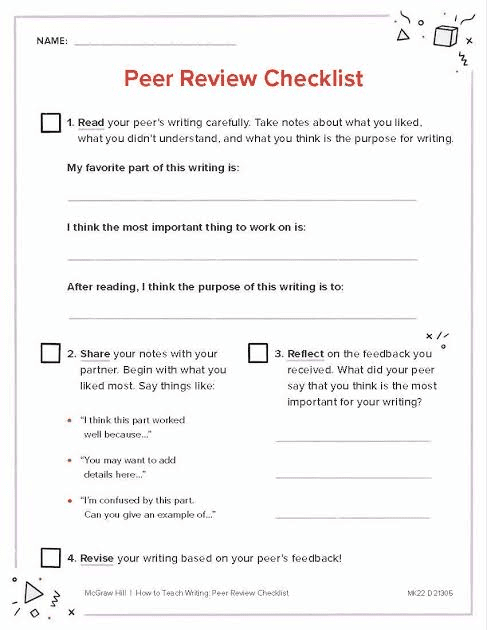
How to write a peer review as a student
By
Princeton Journal of Pre-Collegiate Research
Read more

Peer review etiquette: tone, structure, fairness
By
Princeton Journal of Pre-Collegiate Research
Read more

Version control for research documents
By
Princeton Journal of Pre-Collegiate Research
Read more

Digital vs paper lab notebooks for students
By
Princeton Journal of Pre-Collegiate Research
Read more

Data management basics for student researchers
By
Princeton Journal of Pre-Collegiate Research
Read more

How to keep a lab notebook that reviewers trust
By
Princeton Journal of Pre-Collegiate Research
Read more

How to organize research files across a year-long project
By
Princeton Journal of Pre-Collegiate Research
Read more

How to document your data so you can defend it
By
Princeton Journal of Pre-Collegiate Research
Read more

How to write a grant proposal as a student
By
Princeton Journal of Pre-Collegiate Research
Read more
Free resources that replace research funding
By
Princeton Journal of Pre-Collegiate Research
Read more
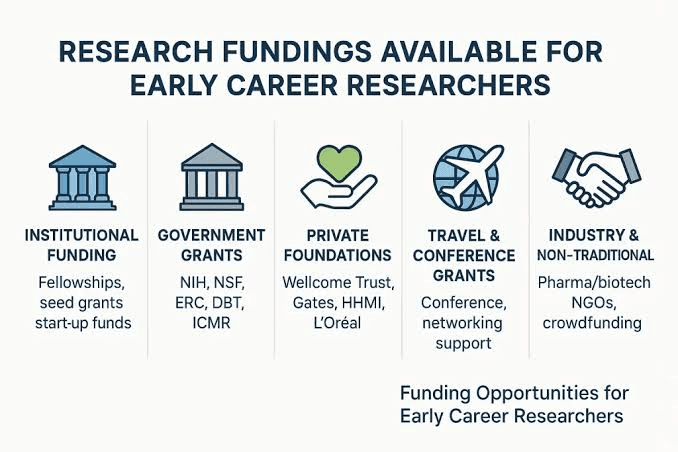
Corporate and nonprofit programs that fund student research
By
Princeton Journal of Pre-Collegiate Research
Read more

Science fair grants and material stipends explained
By
Princeton Journal of Pre-Collegiate Research
Read more

Crowdfunding a student research project: does it work
By
Princeton Journal of Pre-Collegiate Research
Read more

How much does a research project actually cost
By
Princeton Journal of Pre-Collegiate Research
Read more

How to ask your school to fund your project
By
Princeton Journal of Pre-Collegiate Research
Read more

Grants for high school research projects: what exists
By
Princeton Journal of Pre-Collegiate Research
Read more

How to start a research club at your school
By
Princeton Journal of Pre-Collegiate Research
Read more