How to disclose AI assistance in a research paper
Princeton Journal of Pre-Collegiate Research

AI tools are now part of how many students write, research, and edit. The question is no longer whether you used one. The question is whether you disclosed it correctly.
Knowing how to disclose AI assistance in a research paper is no longer optional. Journals, universities, and academic institutions are tightening their policies fast. If your disclosure is absent, vague, or wrong, your paper faces rejection, retraction, or worse. This guide tells you exactly what to say, where to say it, and why it matters.
Why Disclosure Is Not Optional
Academic integrity is built on one principle: readers must be able to trust what they are reading. When you use an AI tool to generate text, summarize sources, or refine your argument, you have introduced a non-human process into your work. That process must be visible.
Omitting it is not a gray area. Most peer-reviewed journals now treat undisclosed AI use as a form of misrepresentation (the same category as data fabrication and plagiarism). Admissions offices and academic programs are beginning to ask the same questions. The cost of getting this wrong is high. The cost of getting it right is a single, well-placed paragraph.
For high school researchers submitting to journals like Princeton JPCR, transparency is part of the evaluation. Reviewers are trained to assess the integrity of the research process, not just the output. Disclosure does not disqualify you. Concealment does.
What Counts as AI Assistance
Before you write your disclosure, you need to know what requires one. Not every digital tool triggers an AI disclosure obligation. The line is drawn at tools that generate, synthesize, or substantially transform content.
Disclosable Uses
Using a large language model (such as ChatGPT, Claude, or Gemini) to draft or expand any section of your paper
Using an AI tool to summarize or paraphrase sources
Using AI to generate research questions, outlines, or argument structures
Using AI-powered grammar tools that rewrite sentences rather than flag errors
Using AI image generators to produce figures or illustrations
Using AI coding assistants to write analysis scripts for your data
Generally Not Disclosable
Standard spell-check tools built into word processors
Reference management software such as Zotero or Mendeley
Search engine algorithms used to find sources
Statistical software that performs calculations without generating prose
When in doubt, disclose. Erring toward transparency costs you nothing. Erring toward concealment can cost you everything (including a publication record you worked hard to build).
Where to Place the Disclosure in Your Paper
Placement matters. A disclosure buried in a footnote on page eleven does not meet the standard of meaningful transparency. Reviewers and readers need to encounter it without searching.
The Acknowledgments Section
This is the most widely accepted location for AI disclosure. The acknowledgments section already exists to credit non-author contributions, including funding sources, institutional support, and editorial assistance. AI tools belong in the same category. Place your AI disclosure at the end of the acknowledgments, after any human acknowledgments.
The Methods Section
If you used AI to assist with data analysis, literature synthesis, or any step of your research methodology, the methods section is the appropriate place for a technical disclosure. This is separate from the acknowledgments disclosure. Both may be required if AI touched both the writing and the methodology.
A Dedicated AI Disclosure Statement
Some journals now require a standalone AI disclosure statement, formatted similarly to a conflict of interest statement. Check the submission guidelines of your target journal before you finalize your paper. Princeton JPCR and other rigorous pre-collegiate journals are increasingly adopting this format. If the journal requires it, it will appear after the abstract or before the references, depending on the style guide in use.
How to Write the Disclosure Statement
The statement itself does not need to be long. It needs to be specific, honest, and written in plain language. Vague disclosures are nearly as problematic as no disclosure at all (saying only that you used AI tools tells a reviewer nothing useful).
What to Include
The name of the tool: Identify the specific AI system you used. Do not write only AI writing assistant. Write ChatGPT-4, Claude 3, or Grammarly Premium, as applicable.
The version or date of use: AI models update frequently. Specifying the version or the approximate date of use allows readers to contextualize the tool's capabilities at the time of writing.
The specific purpose: Describe what you used the tool for. Did it help you draft the introduction? Summarize three sources? Identify grammatical errors in your final draft? Be precise.
Your role in reviewing the output: State clearly that you reviewed, edited, and take responsibility for all AI-generated content. AI cannot be listed as an author. You are accountable for everything in the paper.
Sample Disclosure Language
The following examples are models you can adapt. They are not scripts to copy verbatim (your disclosure must reflect your actual use).
For writing assistance: The author used ChatGPT-4 (OpenAI, accessed March 2025) to assist in drafting the introduction and discussion sections. All AI-generated text was reviewed, substantially revised, and verified by the author. The author takes full responsibility for the accuracy and integrity of the content as published.
For grammar and editing: Grammarly Premium's AI-powered suggestions were used during the final editing phase to identify grammatical inconsistencies. No substantive content was generated by this tool. The author reviewed and approved all accepted suggestions.
For literature synthesis: The author used Claude 3 (Anthropic, accessed February 2025) to assist in summarizing a subset of secondary sources reviewed during the literature review phase. All summaries were verified against the original sources by the author before inclusion.
Notice what each example does: it names the tool, states the purpose, and reasserts human accountability. That is the complete formula.
Understanding Journal-Specific Policies
No single universal standard governs AI disclosure across all academic publishing. Different journals operate under different frameworks, and those frameworks are evolving rapidly. Before you submit, read the author guidelines in full.
Several major publishers, including Elsevier, Springer Nature, and Wiley, have issued explicit policies prohibiting AI from being listed as an author and requiring disclosure of any AI use in writing or data preparation. Pre-collegiate journals are following the same trajectory. Submitting without checking the specific policy of your target journal is a preventable error (one that slows down your review timeline and signals carelessness to editors).
If a journal's guidelines are silent on AI, default to full disclosure. A disclosure that was not required does not harm your submission. A missing disclosure that was required can end it.
Common Mistakes to Avoid
Understanding how to disclose AI assistance in a research paper also means understanding where students most often go wrong. These are the patterns that lead to rejection or revision requests.
Disclosing Only What You Think Reviewers Will Notice
Some students disclose AI use in the introduction because they assume the methods section looks too original to scrutinize. This is a strategic error. Disclose every instance of AI use, regardless of how visible or invisible you believe it to be. Selective disclosure is still misrepresentation.
Using Generic Language
Statements like AI tools were used in the preparation of this manuscript tell a reviewer almost nothing. Which tools? For what purpose? To what extent? Generic disclosures often signal that the student is uncomfortable with the specifics (which raises more questions than it answers).
Treating Disclosure as Apology
A disclosure statement is not a confession. It is a standard academic practice, increasingly required by the same institutions that review your work. Write your disclosure in the same confident, professional register as the rest of your paper. Hedging language undermines both the disclosure and your credibility as a researcher.
Failing to Verify AI-Generated Content
This is not strictly a disclosure error, but it connects directly to what disclosure commits you to. When you write that you reviewed and verified all AI-generated content, that statement must be true. AI tools hallucinate sources, misrepresent data, and produce confident-sounding errors. If your disclosure claims verification and your paper contains fabricated citations, the disclosure itself becomes evidence of academic dishonesty. Before you finalize your paper, read our guide on how to edit your own research paper before submission to build a review process that catches these errors systematically.
AI Disclosure and the Broader Research Process
Disclosure is one part of a larger commitment to research integrity. If you are still building the foundational skills that reduce your reliance on AI tools for substantive content, there are specific areas worth developing first.
Strong thesis construction is one of them. A clear, arguable thesis reduces the temptation to use AI to generate your central claim. Our guide on how to write a strong thesis statement for a research paper walks through the process step by step. Similarly, understanding how to structure an argument in a research paper gives you the scaffolding to build your own reasoning without outsourcing it.
Grammar and language are another area where students frequently turn to AI. The distinction between using AI to learn from your errors and using AI to fix them without understanding them matters for your development as a writer. Reviewing common grammar mistakes in academic research papers helps you internalize the rules rather than delegate them.
And if you are navigating the submission process for the first time, understanding how to get feedback on a research paper before submitting will strengthen your work before it reaches reviewers, AI-assisted or not.
What This Means for College Admissions
High school researchers increasingly submit to peer-reviewed journals as part of a broader academic profile. A published paper carries weight in college applications precisely because it signals independent scholarly capability. Undisclosed AI use undermines that signal entirely.
If your paper is later found to contain undisclosed AI assistance, the damage extends beyond the journal. It reaches the application materials that cited the publication. Admissions readers are becoming more sophisticated about these questions. Transparent disclosure, by contrast, demonstrates exactly the kind of intellectual honesty that selective institutions value. For a fuller picture of how published research affects your application, see our analysis of whether a published research paper is worth it for college admissions.
How to Disclose AI Assistance in a Research Paper: A Final Checklist
Identify every AI tool you used and the specific purpose of each
Check your target journal's author guidelines for AI disclosure requirements
Write a specific, named disclosure in the acknowledgments section
Add a methods-section disclosure if AI assisted your research process
Add a standalone AI disclosure statement if the journal requires one
Verify all AI-generated content against original sources before submission
Write the disclosure in confident, professional language without hedging
Confirm that your disclosure accurately reflects everything you actually did
Conclusion
Knowing how to disclose AI assistance in a research paper is now a core research skill, not an afterthought. The students who get this right are not the ones who used AI the least. They are the ones who documented their process honestly, verified their content rigorously, and submitted work that could withstand scrutiny.
That is the standard Princeton JPCR holds. It is the standard serious academic publishing holds. And it is the standard that will follow you into every research environment you enter from here.
If you are ready to submit work that meets that standard, explore our research and writing guides to strengthen every stage of your paper before it reaches a reviewer's desk. You leave a better researcher than you arrived.
Read More

Can high school students be peer reviewers
By
Princeton Journal of Pre-Collegiate Research
Read more

What reviewing other papers teaches you about your own
By
Princeton Journal of Pre-Collegiate Research
Read more
How to give useful feedback on a classmate's paper
By
Princeton Journal of Pre-Collegiate Research
Read more

Student editorial boards: how they work
By
Princeton Journal of Pre-Collegiate Research
Read more
How to write a peer review as a student
By
Princeton Journal of Pre-Collegiate Research
Read more

Peer review etiquette: tone, structure, fairness
By
Princeton Journal of Pre-Collegiate Research
Read more

Version control for research documents
By
Princeton Journal of Pre-Collegiate Research
Read more

Digital vs paper lab notebooks for students
By
Princeton Journal of Pre-Collegiate Research
Read more

Data management basics for student researchers
By
Princeton Journal of Pre-Collegiate Research
Read more

How to keep a lab notebook that reviewers trust
By
Princeton Journal of Pre-Collegiate Research
Read more

How to organize research files across a year-long project
By
Princeton Journal of Pre-Collegiate Research
Read more

How to document your data so you can defend it
By
Princeton Journal of Pre-Collegiate Research
Read more
How to write a grant proposal as a student
By
Princeton Journal of Pre-Collegiate Research
Read more
Free resources that replace research funding
By
Princeton Journal of Pre-Collegiate Research
Read more
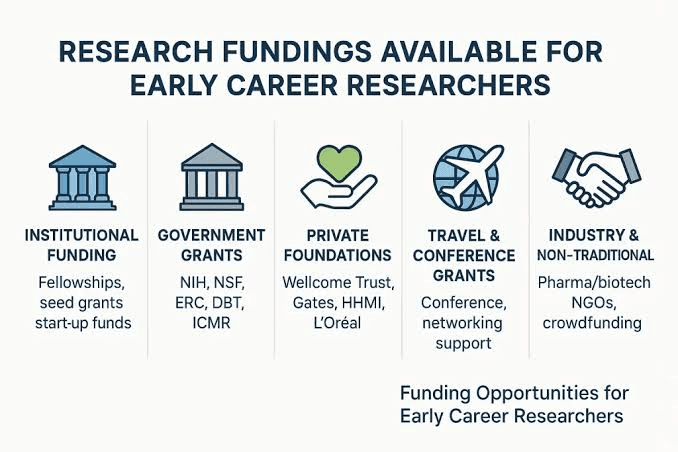
Corporate and nonprofit programs that fund student research
By
Princeton Journal of Pre-Collegiate Research
Read more

Science fair grants and material stipends explained
By
Princeton Journal of Pre-Collegiate Research
Read more

Crowdfunding a student research project: does it work
By
Princeton Journal of Pre-Collegiate Research
Read more

How much does a research project actually cost
By
Princeton Journal of Pre-Collegiate Research
Read more

How to ask your school to fund your project
By
Princeton Journal of Pre-Collegiate Research
Read more

Grants for high school research projects: what exists
By
Princeton Journal of Pre-Collegiate Research
Read more

How to start a research club at your school
By
Princeton Journal of Pre-Collegiate Research
Read more