How to edit your own research paper before submission
Princeton Journal of Pre-Collegiate Research

Most research papers are not rejected because the ideas are weak. They are rejected because the writing undermines the ideas. Learning how to edit your own research paper before submission is one of the most important skills a student researcher can develop, and most students skip it entirely.
This guide gives you a structured, stage-by-stage editing process built specifically for high school researchers preparing to submit to a peer-reviewed journal. Follow it in order. Each stage targets a different layer of your paper, from the architecture of your argument down to the punctuation in your citations.
Why Self-Editing Is a Skill, Not a Shortcut
Self-editing is not the same as proofreading. Proofreading catches typos. Self-editing interrogates every sentence, every claim, every structural decision you made during drafting. It asks whether your paper does what you intended it to do, whether your evidence actually supports your thesis, and whether a reader who knows nothing about your topic can follow your logic without confusion.
Peer-reviewed journals assign reviewers who are rigorous and anonymous (that is the point of double-blind review). They will find every gap in your reasoning. Your job, before submission, is to find those gaps first. The researchers who publish consistently are not necessarily the most gifted writers. They are the ones who edit most deliberately.
Stage One: Step Away Before You Start
This is not optional. After you finish your draft, put it down for at least 24 hours before you begin editing. Your brain will fill in what it expects to see rather than what is actually on the page if you edit too soon. Distance creates objectivity.
When you return to the paper, print it out if possible. Reading on paper engages your attention differently than reading on a screen. You will catch errors you missed digitally, and you will see the structure of your argument more clearly as a physical object in your hands.
Stage Two: Evaluate the Big Picture First
Before you touch a single sentence, read your paper from beginning to end without making any changes. Read it the way a reviewer would: as a complete argument, not as a collection of sections you wrote separately over several weeks. Take notes in the margins, but do not stop to fix anything yet.
After this read-through, answer these questions honestly:
Does your abstract accurately reflect what the paper actually argues and concludes?
Does your introduction establish a clear research question?
Does every section of the paper serve that research question directly?
Does your conclusion follow logically from your findings, without introducing new claims?
Is there any section that could be removed without weakening the paper?
If you cannot answer yes to the first four questions, structural revision comes before anything else. There is no point polishing sentences inside a section that should not exist, or that argues something your conclusion never returns to.
Check Your Thesis Against Your Evidence
Write your thesis statement on a separate piece of paper. Then, for each body section, write one sentence summarizing what that section argues. Now read those summaries as a list. Do they build toward your thesis? Do they contradict each other? Are there logical jumps between them that a reader would not be able to follow without additional explanation?
This exercise surfaces structural problems that feel invisible when you are reading the full paper. A thesis that is not supported by the evidence you actually present is the most common reason strong research ideas fail at the peer review stage.
Stage Three: Edit for Argument Clarity and Paragraph Structure
Once you are satisfied with the overall structure, move into paragraph-level editing. Every paragraph should do one job. It should make one claim, support that claim with evidence, and connect clearly to the paragraph before and after it.
Read the first sentence of each paragraph in sequence, skipping the rest. Those first sentences should tell a coherent story on their own. If they do not, your paragraph transitions need work. If they repeat the same point, you have redundancy that weakens the paper's momentum.
Cut What Does Not Earn Its Place
Academic writing has a tendency toward over-explanation. Students often include background information they researched but that the paper does not actually need. Ask this of every paragraph: does removing this paragraph make my argument weaker? If the answer is no, cut it. Lean papers are stronger papers. Reviewers respect concision. They do not reward volume.
This is also the stage to check that every claim you make is supported. Do not assert things without evidence. Do not use phrases like "it is widely accepted" or "many researchers believe" without a citation. Unsupported claims are the fastest way to lose credibility with a reviewer.
Stage Four: Edit for Sentence-Level Clarity
Now you move to the sentence level. This is where most students start their editing, which is why most students edit ineffectively. Sentence-level problems are much easier to fix once the structure and argument are solid.
Read each sentence aloud. This is not a metaphor. Read it out loud, slowly. Your ear will catch what your eye misses. Sentences that are too long, too tangled, or grammatically awkward become immediately obvious when spoken. If you run out of breath before a sentence ends, it is too long. Break it into two.
Eliminate Passive Voice Where It Weakens Your Writing
Passive voice is not always wrong in academic writing. In scientific methods sections, for example, passive constructions are standard ("samples were collected," "data were analyzed"). But passive voice used habitually throughout an argument makes your writing feel evasive and weak. Prefer active constructions wherever the agent of an action matters. "This study demonstrates" is stronger than "it has been demonstrated by this study."
Watch for Vague Quantifiers and Hedging Language
Words like "some," "many," "various," "several," and "numerous" are often used to avoid precision. Replace them with specific numbers or references wherever possible. "Three of the five studies reviewed" is more credible than "several studies." Precision signals rigor. Vagueness signals uncertainty about your own evidence.
Hedging is different from precision. Appropriate hedging ("this suggests," "the data indicate") is essential in academic writing. Excessive hedging ("it might possibly be the case that") makes your conclusions feel timid. Find the balance: confident claims where your evidence is strong, measured language where it is not.
Stage Five: Check Your Citations and References
Citation errors are more common than most students expect, and reviewers notice them immediately. A missing citation, an incorrectly formatted reference, or a citation that does not match the claim it supports signals carelessness. It raises questions about the reliability of the rest of your work.
Go through every in-text citation and verify three things: the source exists, the source says what you claim it says, and the reference list entry is formatted correctly according to the journal's style guide. Do not rely on citation management software alone. Check manually. Software makes formatting errors, and it cannot verify that you have cited the right source for the right claim.
If you are preparing a submission to an international peer-reviewed journal, reviewing a high school research journal submission guide can help you understand regional formatting expectations and submission standards that vary by institution.
Stage Six: Review Against the Journal's Submission Guidelines
Every journal publishes submission guidelines. Most students read them once at the beginning and never return to them before submission. This is a mistake. Read the guidelines again after you have finished editing your paper.
Check word count limits, abstract length requirements, heading format, figure and table labeling conventions, and any specific instructions about anonymizing your manuscript for blind review. A paper that does not comply with submission guidelines may be desk-rejected before it reaches a reviewer (desk rejection means it never gets read on its merits at all).
Understanding what happens after you submit your research paper can also help you prepare your manuscript more strategically, because knowing how reviewers evaluate submissions changes how you edit for them.
Stage Seven: Get a Second Reader
Self-editing has a hard limit. You wrote the paper, which means you know what you meant to say. That knowledge makes it almost impossible to see where your writing fails to communicate clearly to someone who does not share your context. A second reader solves this problem.
Ask someone who is intelligent but unfamiliar with your specific topic to read your paper. Ask them to tell you where they lost the thread of your argument, where they needed more explanation, and where they found the writing unclear. Their confusion is information. Do not defend your choices; revise them.
If your paper covers a specific discipline, it helps to have reviewed discipline-specific writing guides before your second reader sees the paper. Resources like the guide on how to write a biology research paper for high school or the guide on how to write a computer science research paper in high school give you discipline-specific standards to check your work against before you ask for external feedback.
A Final Read-Through: The Submission Checklist
Before you submit, run through this checklist. Every item should be confirmed, not assumed.
Your abstract accurately summarizes your research question, method, findings, and conclusion.
Your introduction states a clear, specific research question.
Every claim in your paper is supported by cited evidence.
Your conclusion does not introduce new claims not established in the body.
All citations are accurate, complete, and formatted to the journal's style guide.
Your paper meets the journal's word count and formatting requirements.
Your manuscript is anonymized correctly if the journal uses blind review.
You have read the entire paper aloud at least once.
A second reader has reviewed it and you have addressed their feedback.
What Happens If Your Paper Is Still Rejected
Rejection after thorough editing does not mean your research is without value. Peer review is rigorous and competitive. Reviewer feedback, even when it results in rejection, is one of the most useful developmental tools available to a student researcher. Read it carefully. Revise accordingly. Resubmit.
If you are a parent supporting a student through this process, the guide on how to support your child through research paper rejection provides concrete, constructive ways to help without undermining the learning process. Rejection handled well builds resilience. It also builds better researchers.
How to Edit Your Own Research Paper Before Submission: The Core Principle
Editing is not a single pass over a finished draft. It is a staged, deliberate process that moves from structure to argument to sentence to citation to compliance. Each stage requires a different kind of attention. Students who treat editing as one undifferentiated task miss the problems that matter most.
The researchers who publish consistently are not the ones who write perfect first drafts. They are the ones who edit with the same rigor they bring to their research. Your paper represents months of intellectual work. Give the editing process the time it deserves.
When you are ready to submit, PJPCR publishes original research by high school students across more than 50 academic disciplines through rigorous double-blind peer review. Every accepted paper receives a permanent DOI and is indexed for global discoverability. Your work, edited and submitted with this level of care, belongs in the permanent scholarly record. Learn more about submitting your research to PJPCR.
Read More

Can high school students be peer reviewers
By
Princeton Journal of Pre-Collegiate Research
Read more

What reviewing other papers teaches you about your own
By
Princeton Journal of Pre-Collegiate Research
Read more
How to give useful feedback on a classmate's paper
By
Princeton Journal of Pre-Collegiate Research
Read more

Student editorial boards: how they work
By
Princeton Journal of Pre-Collegiate Research
Read more
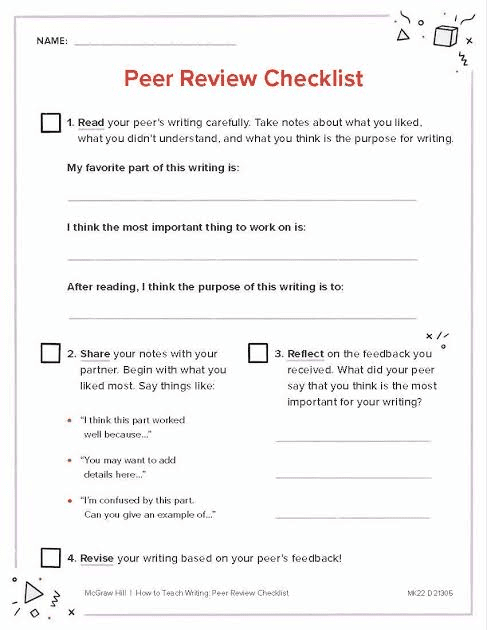
How to write a peer review as a student
By
Princeton Journal of Pre-Collegiate Research
Read more

Peer review etiquette: tone, structure, fairness
By
Princeton Journal of Pre-Collegiate Research
Read more

Version control for research documents
By
Princeton Journal of Pre-Collegiate Research
Read more

Digital vs paper lab notebooks for students
By
Princeton Journal of Pre-Collegiate Research
Read more

Data management basics for student researchers
By
Princeton Journal of Pre-Collegiate Research
Read more
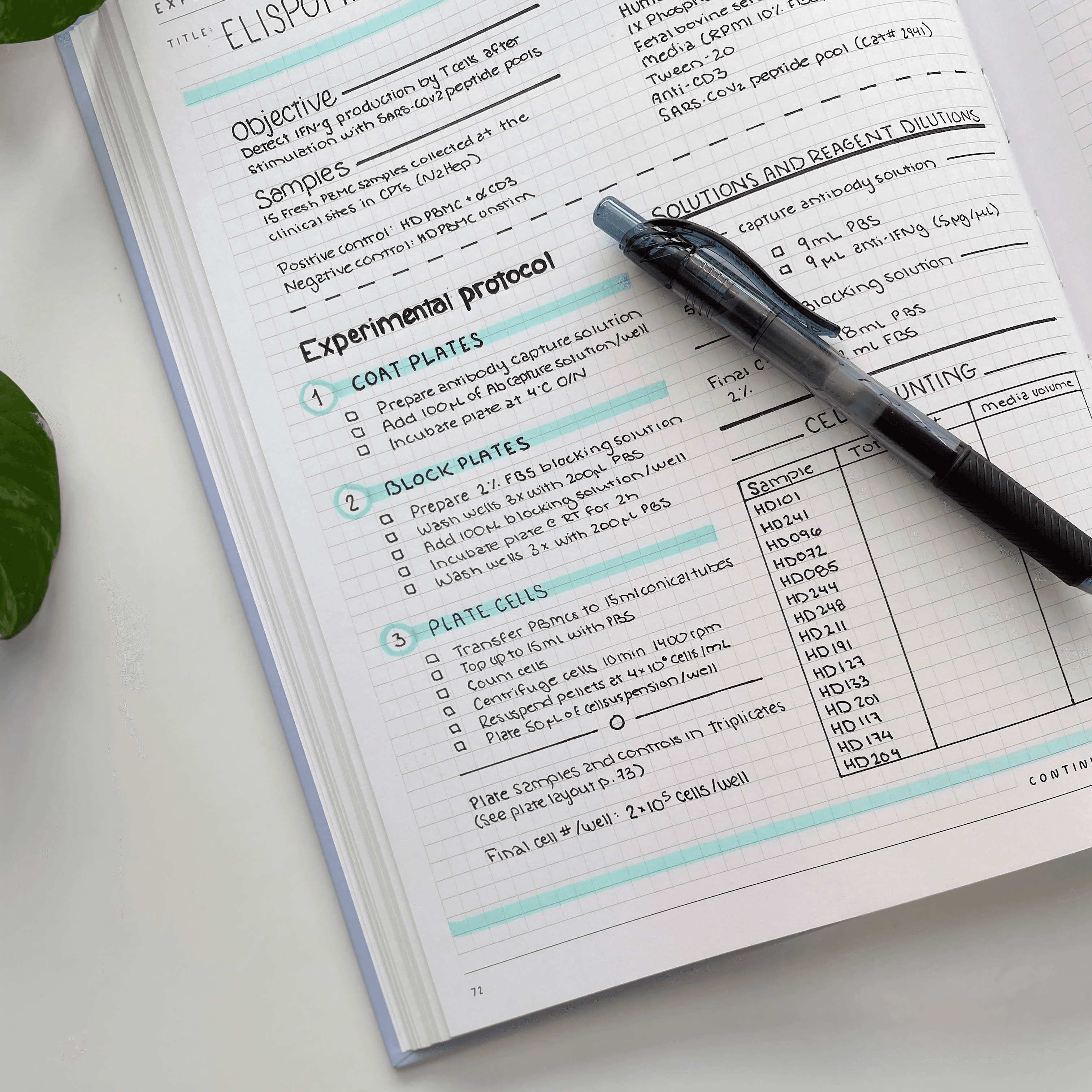
How to keep a lab notebook that reviewers trust
By
Princeton Journal of Pre-Collegiate Research
Read more

How to organize research files across a year-long project
By
Princeton Journal of Pre-Collegiate Research
Read more

How to document your data so you can defend it
By
Princeton Journal of Pre-Collegiate Research
Read more
How to write a grant proposal as a student
By
Princeton Journal of Pre-Collegiate Research
Read more

Free resources that replace research funding
By
Princeton Journal of Pre-Collegiate Research
Read more
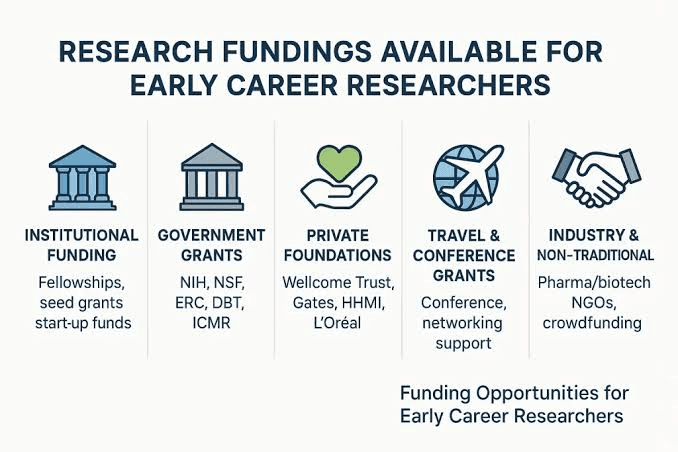
Corporate and nonprofit programs that fund student research
By
Princeton Journal of Pre-Collegiate Research
Read more

Science fair grants and material stipends explained
By
Princeton Journal of Pre-Collegiate Research
Read more

Crowdfunding a student research project: does it work
By
Princeton Journal of Pre-Collegiate Research
Read more

How much does a research project actually cost
By
Princeton Journal of Pre-Collegiate Research
Read more

How to ask your school to fund your project
By
Princeton Journal of Pre-Collegiate Research
Read more

Grants for high school research projects: what exists
By
Princeton Journal of Pre-Collegiate Research
Read more

How to start a research club at your school
By
Princeton Journal of Pre-Collegiate Research
Read more