How to convert a poster presentation into a full research paper
Princeton Journal of Pre-Collegiate Research

You built the poster, presented your findings, and answered the questions. Now the real work begins. Learning how to convert a poster presentation into a full research paper is one of the most valuable skills a young researcher can develop, and most students underestimate how much is already done.
A poster is a compressed argument. A research paper is that same argument, fully unpacked. The transition is not about adding filler. It is about expanding every claim with the evidence, context, and reasoning that the poster format forced you to cut. This guide walks you through that process, step by step.
Understand What a Poster Is and What a Paper Is Not
A research poster communicates the core of your study in a visual, scannable format. It prioritizes brevity. Every sentence earns its place by being either a finding, a method, or a takeaway. A full research paper operates differently. It must justify every decision, situate the work in existing literature, and walk the reader through your reasoning without the benefit of your verbal explanation.
The poster was designed for a live audience who could ask you questions. The paper must anticipate every question and answer it in writing. That shift in audience is the most important thing to internalize before you begin drafting. You are no longer presenting to someone standing in front of you. You are writing for a reader who has no access to you at all.
Audit Your Poster Before You Write a Single Word
Before opening a blank document, spend time cataloging exactly what your poster contains. List every section, every data point, every visual, and every claim. This audit becomes your skeleton. Most posters already contain the following components in compressed form: a research question, a brief literature context, a methods summary, key results, and a conclusion or implication statement.
Each of those components maps directly to a section of a standard research paper. Your audit tells you what you have and what you still need to build. (this step saves hours of aimless drafting later, so do not skip it.)
Map Poster Sections to Paper Sections
Here is a direct translation guide between poster elements and paper sections:
Poster title and research question maps to your paper's title, abstract, and introduction
Background or context panel maps to your literature review
Methods summary maps to your full methodology section
Results visuals and data tables map to your results section
Conclusions or implications panel maps to your discussion and conclusion sections
References list maps directly to your bibliography, though it almost certainly needs expansion
This mapping is not decorative. It is your actual writing plan. Every section of your paper already has a seed in the poster. Your job is to grow each one.
How to Convert a Poster Presentation into a Full Research Paper: Section by Section
Writing the Introduction
Your poster likely had two to four sentences establishing why your topic matters. Your introduction needs to do considerably more. It must establish the broader context of the problem, identify the specific gap in existing knowledge that your study addresses, and close with a clear statement of your research question or hypothesis.
A strong introduction earns the reader's investment before a single result is presented. If you are unsure how to frame your research question within existing scholarship, revisit the sources you cited on the poster and trace them backward to their own references. That chain of citations reveals the intellectual landscape your paper inhabits. For guidance on framing your paper's first impression, see our resource on how to write a strong title for a research paper, which also covers how title framing shapes the entire introduction.
Expanding the Literature Review
Poster presentations rarely include a true literature review. Space constraints mean most posters reference two to five sources and summarize the field in a sentence or two. A full paper requires a genuine engagement with the scholarly conversation your research enters.
Your literature review should do three things: establish what is already known, identify what remains unresolved or contested, and explain how your study contributes to resolving that gap. Aim for at least eight to twelve credible sources for a high school research paper, and more for interdisciplinary or complex topics. (the goal is not citation volume, it is intellectual positioning.)
Writing a Full Methodology Section
The methods panel on a poster is almost always the most compressed section. A reader standing in front of your poster can ask you clarifying questions about your procedure. A reader of your paper cannot. Your methodology section must be detailed enough that another researcher could replicate your study without contacting you.
Describe your research design, your data sources or participants, your data collection instruments, your analytical approach, and any limitations in your method. If you conducted a survey, describe how it was constructed and distributed. If you ran an experiment, describe every variable. If you performed a textual or archival analysis, describe your selection criteria. Precision here is not pedantry. It is what makes your paper credible.
Presenting Results with Full Context
Your poster's results section likely led with your strongest visual: a graph, a table, or a key statistic. In a paper, results must be presented systematically, not selectively. Walk the reader through every finding in a logical sequence, whether that is chronological, thematic, or by research sub-question.
Do not interpret your results in this section. Simply report what you found. Interpretation belongs in the discussion. Many student writers collapse results and discussion into a single section, which weakens both. Keep them separate and your paper will read with considerably more analytical clarity.
Writing the Discussion Section
The discussion is where your paper earns its place in the scholarly record. Here you interpret your findings, explain what they mean in the context of the literature you reviewed, address any unexpected results, and acknowledge the limitations of your study.
A strong discussion answers the question: so what? Your findings exist. Why do they matter? How do they confirm, complicate, or challenge what previous researchers found? What should future researchers examine next? These are not rhetorical questions. Answer each one directly. (students who skip the discussion or treat it as a summary of results miss the entire point of academic writing.)
Writing the Conclusion
Your conclusion is not a second abstract. It is a forward-looking statement that synthesizes your argument and points toward implications. Restate your research question, summarize your key findings in one to two sentences, and articulate what your study contributes to the field. Close with a statement about future directions or unanswered questions.
Keep the conclusion tight. Two to three paragraphs is sufficient for most high school research papers. If you find yourself repeating entire paragraphs from the discussion, you are summarizing rather than concluding.
Handling Visuals, Data, and Citations
Every graph, chart, or table from your poster can be included in your paper, but each one requires a caption, a reference within the text, and a clear explanation of what it shows. Do not assume a reader will interpret a visual correctly without guidance. Write one to two sentences in the body of your paper that direct the reader to the figure and explain its significance.
Your citation list will almost certainly need to grow. A poster bibliography is a minimum viable reference list. A paper bibliography reflects the full scope of your engagement with the literature. Audit your in-text citations as you draft each section and add sources wherever a claim needs support that you did not have space to cite on the poster.
If you used any AI tools during your research or writing process, disclose that clearly. Our guide on how to disclose AI assistance in a research paper explains the current standards for transparent disclosure in student academic work.
Common Errors to Avoid in the Transition
Students converting posters to papers make predictable mistakes. Knowing them in advance is the fastest way to avoid them.
Padding rather than expanding. Adding length by repeating claims in different words is not the same as developing an argument. Every added sentence should add new information or new reasoning.
Keeping poster-style bullet points. A research paper is written in full prose paragraphs. Convert every bullet point from your poster into complete sentences embedded in coherent paragraphs.
Neglecting transitions. A poster uses visual layout to signal section changes. A paper uses prose transitions. Each section must flow logically into the next.
Underwriting the literature review. The literature review is not optional or decorative. It is the intellectual foundation of your argument.
Ignoring grammar and mechanics. A paper submitted for publication will be evaluated on writing quality as well as research quality. Review our resource on common grammar mistakes in academic research papers before you submit.
Preparing Your Poster Research for Publication
If your poster was presented at a competition or conference, converting it into a full paper opens the door to academic publication. A published paper with a DOI is a permanent scholarly record. It is findable by researchers, admissions officers, and educators anywhere in the world. (it exists forever, findable by anyone.)
Before submitting to any journal, understand the peer review process. Your paper will be evaluated by reviewers who do not know your name or your school. That is the point. Double-blind peer review means your work is judged on its merits, not your credentials. If you want to understand what that process looks like from a student perspective, the Princeton Journal of Pre-Collegiate Research publishes original work by high school students across more than 50 academic disciplines.
If your paper is rejected during review, that is not the end of the process. It is part of the process. Our guide on what to do if your child's research paper gets rejected walks through how to interpret reviewer feedback and strengthen a submission for resubmission.
For students working in specific fields, discipline-specific writing guides can accelerate the drafting process significantly. Whether you are writing in social sciences, humanities, or STEM, the structural requirements of a research paper are consistent, but the conventions of evidence and argumentation vary. Our guides on how to write a gender studies research paper in high school and how to write a criminology research paper in high school offer field-specific frameworks that apply directly to the expansion process described here.
The Timeline Is Longer Than You Expect
Students who completed a poster in two weeks often assume a full paper will take the same amount of time. It will not. A rigorous research paper at the high school level typically takes several weeks to several months, depending on the depth of the literature review and the complexity of the methodology. If you are wondering whether that timeline is normal, it is. Our resource on whether it is normal for a first research paper to take months addresses this directly and explains why the timeline reflects rigor, not inefficiency.
Plan for at least three full drafts. The first draft gets the argument on paper. The second draft refines the structure and evidence. The third draft addresses precision, flow, and citation accuracy. Do not submit a first draft. (no shortcuts, no rubber stamps.)
Convert the Work You Already Did into Something Permanent
You already did the research. You already built the argument. You already stood in front of an audience and defended your findings. The poster was not the endpoint. It was the proof of concept. Now you convert that work into a full research paper that can survive peer review, earn a DOI, and enter the permanent scholarly record.
Knowing how to convert a poster presentation into a full research paper is a skill that distinguishes serious young researchers from students who simply completed an assignment. The paper is the version that lasts. Build it with the same rigor you brought to the research itself, and it will represent your intellectual contribution long after the poster has been taken down.
If you are ready to submit your completed paper for peer review and publication, Princeton JPCR welcomes original research from high school students across all disciplines. Every submission receives rigorous double-blind peer review and substantive editorial feedback. You leave a better researcher than you arrived.
Read More

Can high school students be peer reviewers
By
Princeton Journal of Pre-Collegiate Research
Read more

What reviewing other papers teaches you about your own
By
Princeton Journal of Pre-Collegiate Research
Read more
How to give useful feedback on a classmate's paper
By
Princeton Journal of Pre-Collegiate Research
Read more

Student editorial boards: how they work
By
Princeton Journal of Pre-Collegiate Research
Read more
How to write a peer review as a student
By
Princeton Journal of Pre-Collegiate Research
Read more

Peer review etiquette: tone, structure, fairness
By
Princeton Journal of Pre-Collegiate Research
Read more

Version control for research documents
By
Princeton Journal of Pre-Collegiate Research
Read more

Digital vs paper lab notebooks for students
By
Princeton Journal of Pre-Collegiate Research
Read more

Data management basics for student researchers
By
Princeton Journal of Pre-Collegiate Research
Read more
How to keep a lab notebook that reviewers trust
By
Princeton Journal of Pre-Collegiate Research
Read more

How to organize research files across a year-long project
By
Princeton Journal of Pre-Collegiate Research
Read more

How to document your data so you can defend it
By
Princeton Journal of Pre-Collegiate Research
Read more

How to write a grant proposal as a student
By
Princeton Journal of Pre-Collegiate Research
Read more
Free resources that replace research funding
By
Princeton Journal of Pre-Collegiate Research
Read more
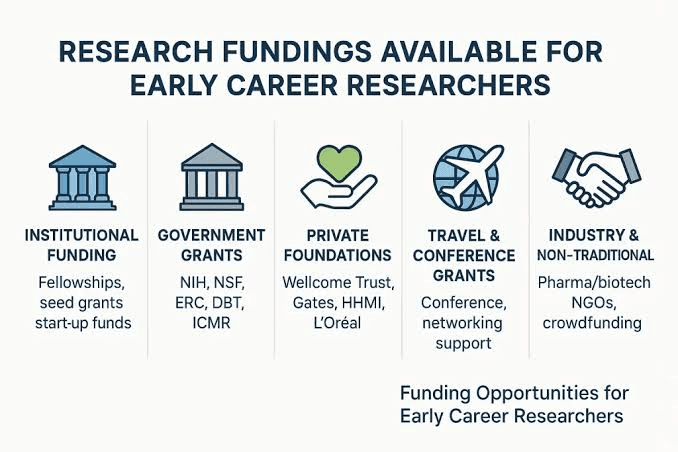
Corporate and nonprofit programs that fund student research
By
Princeton Journal of Pre-Collegiate Research
Read more

Science fair grants and material stipends explained
By
Princeton Journal of Pre-Collegiate Research
Read more

Crowdfunding a student research project: does it work
By
Princeton Journal of Pre-Collegiate Research
Read more

How much does a research project actually cost
By
Princeton Journal of Pre-Collegiate Research
Read more

How to ask your school to fund your project
By
Princeton Journal of Pre-Collegiate Research
Read more

Grants for high school research projects: what exists
By
Princeton Journal of Pre-Collegiate Research
Read more

How to start a research club at your school
By
Princeton Journal of Pre-Collegiate Research
Read more