Can you publish your IB Extended Essay in a research journal
Princeton Journal of Pre-Collegiate Research

You spent months on your IB Extended Essay. The question now is whether that work can go further than a grade. Can you publish your IB Extended Essay in a research journal? The short answer is yes, but the path requires more than simply sending the file to an editor.
This post breaks down exactly what is possible, what needs to change before you submit, and which journals are actually built to receive work from pre-collegiate researchers like you.
What the IB Extended Essay Actually Is
The Extended Essay is a 4,000-word independent research project completed as part of the International Baccalaureate Diploma Programme. Students choose a subject, develop a research question, gather evidence, and produce a structured academic argument. It is assessed by the IB and marked by an external examiner.
On paper, that sounds a great deal like academic research. In practice, the Extended Essay and a publishable research paper share significant overlap, but they are not identical documents (more on that in a moment). The IB itself does not publish Extended Essays in any journal. That step, if it happens, is entirely up to you.
Can You Publish Your IB Extended Essay in a Research Journal? Yes, With Conditions
No rule prohibits you from submitting an Extended Essay to a journal. The IB does not claim copyright over your work. You wrote it. You own it. What journals care about is whether the work meets their editorial standards, not where it originated.
The conditions that matter are these: the work must be original, it must not be simultaneously submitted elsewhere, and it must conform to the journal's formatting and scope requirements. If your Extended Essay meets those criteria, it is eligible for consideration. Whether it is accepted depends on peer review.
The Originality Question
Most journals require that submitted work has not been previously published. Your Extended Essay was assessed internally and externally by the IB, but it was not published in the academic sense. It does not carry a DOI. It does not appear in a searchable database. That means submitting it to a journal does not typically violate originality requirements.
However, if you posted your essay publicly online, uploaded it to a repository, or shared it on a platform that indexes content, some journals may flag that. Check the journal's prior publication policy before you submit. When in doubt, ask the editor directly.
The Revision Question
This is where most students underestimate the work involved. An Extended Essay written to satisfy IB criteria is not automatically formatted for academic publication. The IB has its own structural expectations, citation conventions, and word count limits. Journals have theirs.
You will almost certainly need to revise your essay before submission. That revision is not a sign that your original work was weak. It is simply the difference between writing for one audience and writing for another (two very different things, even when the research is identical).
What Needs to Change Before You Submit
Think of the revision process in four areas: structure, citations, scope, and framing.
Structure
Academic journals expect papers to follow a recognizable format. For empirical research, that typically means an abstract, introduction, methodology, results, discussion, and conclusion. For humanities and social science work, the structure is more flexible but still needs a clear argumentative arc with section headings that serve the reader, not the IB rubric.
Your Extended Essay may already have most of these elements. The revision task is often about reorganizing and tightening rather than rewriting from scratch.
Citations
The IB accepts several citation styles. Journals specify exactly which one they require, and they enforce it strictly. If your essay uses MLA and the journal requires APA or Chicago, every citation needs to be reformatted. This is tedious but non-negotiable (journals do not make exceptions for this).
Scope and Depth
The 4,000-word limit of the Extended Essay can work in your favor or against you depending on the journal. Some high school research journals publish papers in that range. Others expect longer work with more developed literature reviews or more detailed methodology sections.
If your research question is narrow and well-executed, 4,000 words may be exactly right. If reviewers feel the argument needs more evidence or the literature review is thin, you may need to expand. Be prepared for that feedback.
Framing
Extended Essays are often framed around a personal research question in a way that is appropriate for IB assessment. Academic journals prefer framing that situates the work within existing scholarship. Your introduction should explain what gap in the literature your research addresses, not simply what question you chose to investigate. That shift in framing is subtle but significant to peer reviewers.
Which Journals Accept High School Research?
This is the most practical question, and it is worth being direct about the landscape. Most university and professional journals do not publish work by high school students, not because the work is necessarily inferior, but because their submission criteria assume institutional affiliation and graduate-level research infrastructure.
A growing number of journals are specifically designed for pre-collegiate researchers. These journals maintain genuine peer review, assign DOIs, and publish work that is indexed and findable. They exist precisely because the gap between rigorous high school research and accessible publication venues was real and underserved.
Before you submit anywhere, read our guide on What To Look For In A High School Research Journal to understand what separates credible venues from predatory ones. The difference matters enormously for how your publication is perceived by college admissions officers and future academic programs.
You should also understand the difference between a journal and a repository. A repository stores papers. A journal publishes them through editorial selection and peer review. That distinction affects the credibility of the credential. Read more on that in our post on the Difference Between A Journal And A Research Repository.
How to Tell If a Journal Is Legitimate
Not every journal that accepts high school work is worth your time or your submission fee. Predatory journals exist. They charge fees, skip peer review, and publish anything. A publication in one of those venues does more harm than good on a college application or resume.
Legitimate journals have transparent editorial boards, documented peer review processes, clear acceptance rates, and indexed archives. Our detailed breakdown on How To Tell If A Research Journal Is Legitimate walks through exactly what to look for before you submit your Extended Essay anywhere.
A few quick markers of a credible journal: it assigns a DOI to every published paper, it uses double-blind peer review, it publishes rejection rates or selectivity data, and its published papers are accessible in a searchable archive. If a journal cannot confirm all four of those things, investigate further before submitting.
Is Publishing Your Extended Essay Worth It?
That depends on what you are trying to achieve. If your goal is to demonstrate genuine scholarly output to university admissions committees, a peer-reviewed publication with a DOI is a meaningful credential. It signals that your work was evaluated by experts who did not know your name or your school (that is what double-blind review means), and that it met the bar for publication.
If your goal is simply to have a PDF with a journal logo on it, that goal is achievable through far less rigorous means, and admissions readers know the difference. The credential only carries weight when the journal carries credibility.
For parents evaluating whether a publication fee is a reasonable investment, our post on Is It Worth Paying For My Child's Research To Be Published addresses the question directly, including what to look for in a journal's fee structure and what red flags signal a predatory operation.
For students thinking about admissions impact specifically, see our analysis of whether a published research paper is worth it for college admissions. The answer is nuanced, but the short version is that a legitimate publication in a selective, peer-reviewed journal is a strong differentiator.
Choosing the Right Journal for Your Extended Essay Topic
Extended Essays span every academic discipline. A student might write on the thermodynamics of climate feedback loops, the political economy of post-colonial trade agreements, or the semiotics of modernist poetry. The journal you target should match your discipline and your research type.
Our guide on How To Find A Journal That Accepts Your Research Topic is a useful starting point for narrowing down your options by field. Not every journal accepts every type of work, and submitting to the wrong venue wastes time for everyone.
You should also consider whether your Extended Essay is an original research paper or closer to a literature review. Those are different submission categories at many journals, and they are evaluated by different criteria. Our post on Journals That Accept Literature Reviews Vs Original Research clarifies the distinction and helps you identify where your work fits.
What PJPCR Offers IB Students
The Princeton Journal of Pre-Collegiate Research (not affiliated with Princeton University) publishes original research by high school students across 50+ academic disciplines. Every submission undergoes rigorous double-blind peer review. Accepted papers receive a DOI, are archived permanently, and are accessible to readers on six continents.
The journal accepts work across STEM, humanities, social sciences, and interdisciplinary fields. If your Extended Essay presents original analysis, a clear methodology, and a well-supported argument, it is within scope. The review process is the same regardless of your school, your country, or your background (blind to all of it, by design).
Reviewers provide substantive feedback on every submission. Even papers that are not accepted receive editorial commentary that helps students understand what stronger research looks like. You leave the process a better researcher than you arrived, regardless of outcome.
You can view published work in The Princeton Journal of Pre-Collegiate Research to get a clear sense of the standard we publish to and whether your Extended Essay is in the same range.
The Steps to Take Right Now
If you have completed your Extended Essay and want to pursue publication, here is the sequence that makes sense.
Confirm you own the rights to your work. You do. The IB does not claim copyright over student essays.
Identify whether your essay is original research or a literature review. This determines which journals and which submission categories apply to you.
Revise for journal format. Update your structure, citation style, and framing before you submit anywhere. A polished submission signals seriousness to reviewers.
Research journals carefully. Use the criteria in our legitimacy guide before committing to any venue.
Submit to one journal at a time. Simultaneous submissions violate the policies of most journals. Wait for a decision before submitting elsewhere.
Engage with reviewer feedback. Whether you receive a revision request or a rejection, the feedback is part of the education. Use it.
Can You Publish Your IB Extended Essay in a Research Journal? Final Answer
Yes. The IB Extended Essay is a legitimate starting point for academic publication. The work is original. The research question is real. The argument is structured. What separates a strong Extended Essay from a publishable paper is often revision, not reinvention.
The key decisions are which journal to target, whether your work meets their scope and standards, and whether the journal itself is credible enough to make the publication meaningful. Those decisions are worth making carefully.
If you are ready to take that step, explore our Blogs for more guidance on the submission process, or visit the Princeton Journal of Pre-Collegiate Research to review our submission guidelines and see the standard we hold student research to. Your Extended Essay may already be closer to publication than you think.
Read More

Can high school students be peer reviewers
By
Princeton Journal of Pre-Collegiate Research
Read more

What reviewing other papers teaches you about your own
By
Princeton Journal of Pre-Collegiate Research
Read more
How to give useful feedback on a classmate's paper
By
Princeton Journal of Pre-Collegiate Research
Read more

Student editorial boards: how they work
By
Princeton Journal of Pre-Collegiate Research
Read more
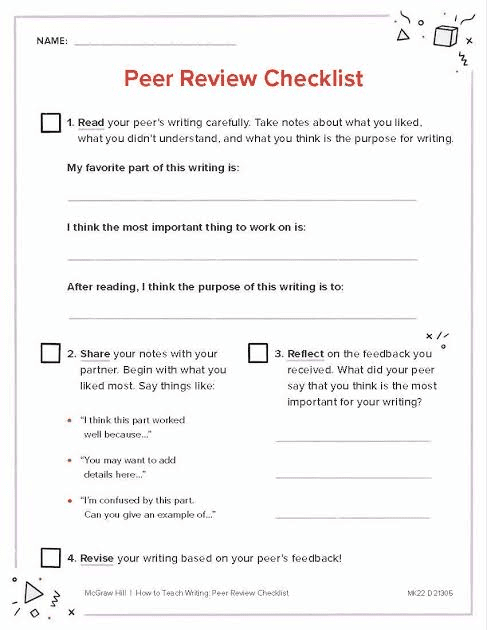
How to write a peer review as a student
By
Princeton Journal of Pre-Collegiate Research
Read more

Peer review etiquette: tone, structure, fairness
By
Princeton Journal of Pre-Collegiate Research
Read more

Version control for research documents
By
Princeton Journal of Pre-Collegiate Research
Read more

Digital vs paper lab notebooks for students
By
Princeton Journal of Pre-Collegiate Research
Read more

Data management basics for student researchers
By
Princeton Journal of Pre-Collegiate Research
Read more

How to keep a lab notebook that reviewers trust
By
Princeton Journal of Pre-Collegiate Research
Read more

How to organize research files across a year-long project
By
Princeton Journal of Pre-Collegiate Research
Read more

How to document your data so you can defend it
By
Princeton Journal of Pre-Collegiate Research
Read more

How to write a grant proposal as a student
By
Princeton Journal of Pre-Collegiate Research
Read more
Free resources that replace research funding
By
Princeton Journal of Pre-Collegiate Research
Read more
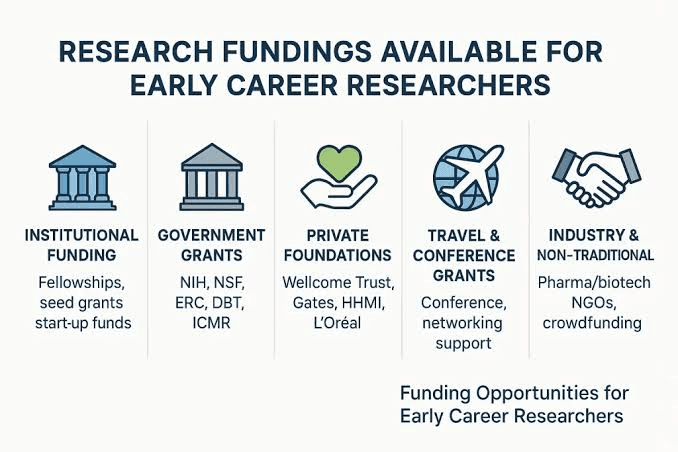
Corporate and nonprofit programs that fund student research
By
Princeton Journal of Pre-Collegiate Research
Read more

Science fair grants and material stipends explained
By
Princeton Journal of Pre-Collegiate Research
Read more

Crowdfunding a student research project: does it work
By
Princeton Journal of Pre-Collegiate Research
Read more

How much does a research project actually cost
By
Princeton Journal of Pre-Collegiate Research
Read more

How to ask your school to fund your project
By
Princeton Journal of Pre-Collegiate Research
Read more

Grants for high school research projects: what exists
By
Princeton Journal of Pre-Collegiate Research
Read more

How to start a research club at your school
By
Princeton Journal of Pre-Collegiate Research
Read more