Can middle school students publish research
Princeton Journal of Pre-Collegiate Research

The question surprises people. Most assume academic publishing is reserved for graduate students, professors, or at minimum, college undergraduates. But the answer is more nuanced than a simple yes or no, and understanding it matters if you are a driven young researcher, a parent, or a counselor advising an exceptional student.
Can middle school students publish research? Technically, yes. Practically, rarely. And the reasons why tell you everything about what serious academic publishing actually requires.
What Academic Publishing Actually Requires
Publishing in a peer-reviewed journal is not the same as submitting a school project or entering a science fair. It requires original research, a structured methodology, a literature review, and a written argument that can withstand expert scrutiny. Reviewers evaluate whether your findings are valid, your methods are sound, and your conclusions are supported by evidence.
Most middle school students, regardless of how gifted they are, have not yet developed the academic writing skills or the independent research capacity that peer review demands. That is not a criticism. It is a structural reality. Rigorous peer review exists to protect the integrity of published knowledge, not to gatekeep based on age (the bar is the bar, regardless of who is crossing it).
There are journals that publish younger students. Some accept work from students as young as twelve or thirteen. But the quality threshold at credible journals does not drop because the author is young. If anything, the scrutiny increases, because reviewers want to ensure the student, and not a parent or mentor, actually produced the work.
Can Middle School Students Publish Research? The Honest Answer
A small number of middle school students have published in legitimate academic or semi-academic venues. These cases share common traits. The student had sustained mentorship from a researcher or professor. The project was narrow in scope and methodologically manageable. The student had exceptional writing ability for their age. And the work went through genuine review, not a rubber-stamp process.
These cases are real. They are also rare. The more common scenario is that a middle school student completes a strong project, submits it to a publication that claims to be peer-reviewed, and receives an acceptance within days. That is not a credential. That is a predatory journal taking a fee (and the distinction matters enormously when a college admissions officer reads your application).
The more productive framing is this: middle school is the right time to build the foundations that make real publication possible by high school. Students who start developing research skills at twelve or thirteen are far better positioned to publish credibly at fifteen or sixteen than peers who begin at seventeen.
What Middle School Students Can Do Right Now
Building toward legitimate publication is active work. It is not waiting. There are concrete steps a middle school student can take today that directly strengthen their research capacity.
Learn How to Read Academic Papers
Most students never read a peer-reviewed paper before they try to write one. Start with abstracts. Move to introductions. Learn what a literature review is and why it exists. Understand how researchers structure arguments and cite sources. This skill alone separates students who can write credible research from those who cannot.
Identify a Genuine Question
Strong research begins with a question that does not already have an obvious answer. Middle school students often have access to unique observations, community data, or local phenomena that adult researchers overlook. A question about local air quality, reading patterns in your school, or the acoustics of a specific space can become a legitimate research project if pursued with rigor.
Find a Mentor
No serious young researcher works in isolation. Reach out to a teacher, a university professor, or a local professional in your field of interest. Many researchers are willing to advise motivated students. A mentor does not do the work for you. They help you ask better questions, avoid methodological errors, and understand where your project fits in the existing literature.
Practice Academic Writing
Academic writing is a distinct skill. It is precise, structured, and impersonal in ways that differ sharply from school essays or creative writing. Practice writing abstracts. Write literature summaries. Learn citation formats. The earlier a student internalizes academic writing conventions, the more naturally they will produce publishable work later.
Why High School Is the Realistic Target for First Publication
High school is where the preparation pays off. Students who have spent middle school reading research, identifying questions, and practicing academic writing arrive at high school ready to pursue original projects that meet the bar for legitimate peer review.
Journals like the Princeton Journal of Pre-Collegiate Research (not affiliated with Princeton University) are designed specifically for high school researchers. PJPCR publishes original research across 50+ academic disciplines, requires double-blind peer review for every submission, and assigns a DOI to every accepted paper. That means your work is permanently indexed and findable by anyone, anywhere (it exists in the scholarly record, not just on a certificate).
The transition from middle school preparation to high school publication is not a leap. It is a progression. Students who treat middle school as a research apprenticeship arrive at high school with the skills to complete that progression successfully.
Disciplines Open to Pre-Collegiate Researchers
One of the most common misconceptions is that student research only happens in STEM fields. That is not accurate. Legitimate research happens across every academic discipline, and high school students have published credibly in all of them.
STEM fields are the most familiar pathway. Physics, chemistry, biology, mathematics, and computer science all offer research opportunities that do not require expensive laboratory access. Our guide on Physics Research Paper Guide High School Students outlines exactly how students can approach original work in physics without institutional lab access. Similarly, Chemistry Research Paper Topics High School Students covers accessible entry points in chemistry research.
Humanities and social sciences are equally valid. Linguistics, anthropology, sociology, and history all reward careful analysis and original argumentation. Our resources on Linguistics Research Projects For High School Students, Anthropology Research Topics For High School Students, and Sociology Research Ideas For High School Students show how accessible these fields are for motivated pre-collegiate researchers.
Mathematics deserves special mention. Many students assume math research requires advanced graduate-level knowledge. It does not. There are open problems and exploratory questions accessible to high school students with strong foundational skills. Mathematics Research How High School Students Can Contribute walks through exactly how that works.
The Credential Question: Why Publication Matters
Students and families sometimes ask whether publication really matters for college admissions. The honest answer is that it depends on how the publication was obtained.
A paper published in a predatory journal, where acceptance is guaranteed for a fee and no real review occurs, adds nothing to an application. Admissions officers at selective universities are increasingly aware of these journals and treat such credentials with skepticism. A paper published through genuine peer review, with documented methodology, a DOI, and a real review process, is a different matter entirely.
Real publication demonstrates intellectual independence, sustained effort, and the ability to produce work that meets external standards. Those qualities are exactly what selective admissions processes are designed to identify. The credential is not the point. The demonstrated capacity is the point (the paper is evidence of who you are as a thinker, not a trophy to display).
Can Middle School Students Publish Research? A Path Forward
Returning to the original question: can middle school students publish research? Some can, under the right conditions, with the right mentorship, and with genuine rigor. But the more useful question for most students is not whether it is possible now. It is what you should be doing now to make it inevitable later.
Middle school is not too early to take research seriously. It is exactly the right time to start. Students who use these years to build skills, find mentors, and develop genuine intellectual questions arrive at high school ready to do work that actually clears the bar for legitimate publication.
If you are a student outside the United States, the pathway is the same. Our resources on High School Research Opportunities International Students and How Indian High School Students Can Get Research Published address the specific context of international researchers navigating this process.
If you attend a school without strong research infrastructure, that is not a barrier. High School Research Students Who Dont Attend Top Schools addresses exactly this situation. The research capacity lives in the student, not the institution.
What PJPCR Offers High School Researchers
The Princeton Journal of Pre-Collegiate Research publishes original research by high school students across all academic disciplines. Every submission undergoes double-blind peer review. Accepted papers receive a DOI, making them permanently part of the scholarly record. The review process provides substantive feedback regardless of outcome, because the goal is to develop researchers, not just to publish papers (you leave a better researcher than you arrived).
PJPCR is read across six continents. The journal is blind to background, meaning your school, your country, and your resources do not influence how your work is evaluated. The work is evaluated on its merits. That is what rigorous peer review means.
For students who are currently in middle school and reading this: start now. Read papers. Find questions. Practice writing. Build the skills that make publication possible. By the time you reach high school, you will not be asking whether publication is achievable. You will be deciding which project to submit first.
Take the Next Step
If you are ready to understand what serious pre-collegiate research looks like across disciplines, explore the full range of resources available on our Blogs page. If you are a high school student with a completed or in-progress research project, review the submission guidelines at Princeton JPCR and take the first step toward legitimate academic publication.
The bar is real. The process is rigorous. And for students who are ready, the credential is permanent.
Read More

Can high school students be peer reviewers
By
Princeton Journal of Pre-Collegiate Research
Read more

What reviewing other papers teaches you about your own
By
Princeton Journal of Pre-Collegiate Research
Read more
How to give useful feedback on a classmate's paper
By
Princeton Journal of Pre-Collegiate Research
Read more

Student editorial boards: how they work
By
Princeton Journal of Pre-Collegiate Research
Read more
How to write a peer review as a student
By
Princeton Journal of Pre-Collegiate Research
Read more

Peer review etiquette: tone, structure, fairness
By
Princeton Journal of Pre-Collegiate Research
Read more

Version control for research documents
By
Princeton Journal of Pre-Collegiate Research
Read more

Digital vs paper lab notebooks for students
By
Princeton Journal of Pre-Collegiate Research
Read more

Data management basics for student researchers
By
Princeton Journal of Pre-Collegiate Research
Read more
How to keep a lab notebook that reviewers trust
By
Princeton Journal of Pre-Collegiate Research
Read more

How to organize research files across a year-long project
By
Princeton Journal of Pre-Collegiate Research
Read more

How to document your data so you can defend it
By
Princeton Journal of Pre-Collegiate Research
Read more

How to write a grant proposal as a student
By
Princeton Journal of Pre-Collegiate Research
Read more
Free resources that replace research funding
By
Princeton Journal of Pre-Collegiate Research
Read more
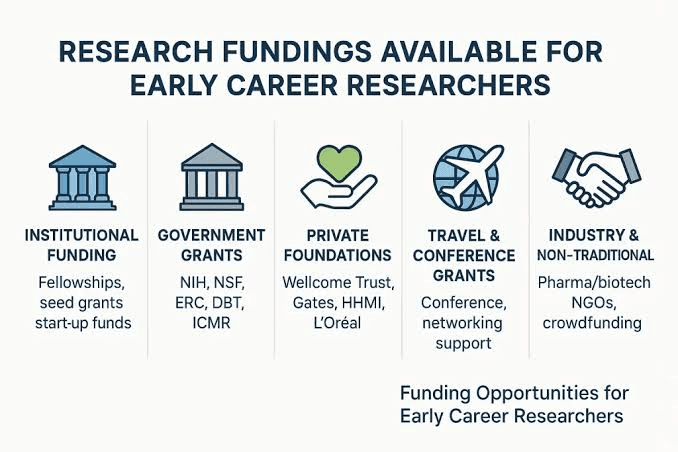
Corporate and nonprofit programs that fund student research
By
Princeton Journal of Pre-Collegiate Research
Read more

Science fair grants and material stipends explained
By
Princeton Journal of Pre-Collegiate Research
Read more

Crowdfunding a student research project: does it work
By
Princeton Journal of Pre-Collegiate Research
Read more

How much does a research project actually cost
By
Princeton Journal of Pre-Collegiate Research
Read more

How to ask your school to fund your project
By
Princeton Journal of Pre-Collegiate Research
Read more

Grants for high school research projects: what exists
By
Princeton Journal of Pre-Collegiate Research
Read more

How to start a research club at your school
By
Princeton Journal of Pre-Collegiate Research
Read more