What "accepted for publication" means and when you can claim it
Princeton Journal of Pre-Collegiate Research

You submitted your paper. You waited. Then the email arrived. But before you update your resume, your college application, or your LinkedIn profile, you need to understand exactly what "accepted for publication" means and when you can claim it with full accuracy. Getting this wrong is not a minor detail. It is the kind of error that can undermine your credibility with admissions officers and academic mentors who know the difference.
This post breaks down the full publication timeline, the precise language that applies at each stage, and the standards you are expected to meet when representing your work in academic and professional contexts.
The Publication Process Is Not a Single Moment
Most students treat publication as a binary: either you published or you did not. The reality is more layered. Academic publishing moves through distinct stages, and each stage carries its own legitimate language. Conflating these stages, whether intentionally or not, is a form of misrepresentation that serious reviewers will catch.
Here is the standard progression for a peer-reviewed academic journal submission:
Submission - Your paper enters the journal's system. Nothing has been evaluated yet.
Under Review - Peer reviewers are actively reading and assessing your work.
Revise and Resubmit - Reviewers have identified substantive issues. You must address them before a decision is made.
Conditionally Accepted - The paper is accepted pending specific revisions. This is not a final acceptance.
Accepted for Publication - Revisions are complete, editors have approved the final version, and the paper is queued for publication.
Published - The paper is live, assigned a DOI, and accessible to readers globally.
Each of these stages is real. Each deserves accurate representation. Jumping from stage two to claiming stage five is not ambition. It is inaccuracy.
What "Accepted for Publication" Actually Means
When a journal issues a formal acceptance, it means the editorial team has reviewed your paper through its complete peer review process and determined that it meets the journal's standards for publication. The paper has survived scrutiny. Reviewers have signed off. Editors have made a final decision in your favor.
This is a meaningful milestone (and one that most submissions never reach). Acceptance rates at rigorous journals are low precisely because the bar is high. Understanding what a selection rate is and how to read one gives you important context for why acceptance carries real weight.
A formal acceptance typically arrives as an official communication from the editor, not just a reviewer comment or an automated system update. It states clearly that your paper has been accepted. Some journals include language about next steps: formatting requirements, publication fees, or scheduling. That communication is your documentation. Keep it.
What "Conditionally Accepted" Does Not Mean
Conditional acceptance is not the same as acceptance. A conditional acceptance means the journal is prepared to accept your paper if you successfully complete the required revisions. Until those revisions are submitted and approved, you do not have an acceptance. Claiming otherwise is premature and inaccurate.
This distinction matters more than students often realize. A college application that says "accepted for publication" when the paper is actually conditionally accepted is making a claim that may not hold. If the revisions are not completed, or if the revised version is ultimately rejected, that claim becomes false. Admissions officers who follow up on these credentials do notice discrepancies.
What "Under Review" Does Not Mean
Submitting a paper and having it accepted are entirely different events. A paper under review has not been evaluated. It has not been accepted. It has not been published. Listing a paper as "under review" on an application is legitimate, provided you use that exact language. Inflating it to "accepted" or "published" is not.
When You Can Legitimately Claim Each Stage
Here is a clear framework for how to represent your work at each point in the process.
During Submission and Review
You may say: "I have submitted original research to a peer-reviewed journal, currently under review." That is accurate. It signals initiative, seriousness, and that your work has reached the stage of formal evaluation. Do not say "accepted" or "published" at this stage. Do not imply an outcome that has not been confirmed.
After Conditional Acceptance
You may say: "My paper has received conditional acceptance pending revisions." This is honest and still impressive. It tells the reader that peer reviewers found the work substantively sound, with specific improvements requested. It is a strong signal without overstating your position.
After Full Acceptance
This is the moment where "accepted for publication" becomes the correct phrase. You have received a formal acceptance letter or email. No further revisions are required. The paper is cleared for the publication queue. At this point, you may accurately state that your research has been accepted for publication in the journal by name.
If you want to understand what makes a journal's acceptance meaningful in the first place, read about what makes a journal worth submitting to beyond acceptance rates. The credibility of the journal matters as much as the fact of acceptance itself.
After Publication
Once the paper is live and assigned a DOI, you may say it has been published. You can cite the journal name, volume, issue, and DOI. At this stage, your work is permanently indexed, findable by anyone, and part of the scholarly record. That is a different level of credential than acceptance alone (and a stronger one).
Why This Precision Matters for College Applications
Admissions officers at selective universities read thousands of applications. Many of them have academic backgrounds and understand the publication process. When they see a student claim to have published research, they look for specifics: the journal name, the date, the DOI. If those details are missing or inconsistent, it raises questions.
More importantly, some admissions offices verify these claims. A student who claims publication when the paper is only under review risks a serious credibility problem at exactly the wrong moment. The risk is not worth it when accurate language is available and still compelling.
If you are thinking about when to begin building a research credential that will be ready before applications are due, the guidance on what grade you should start research for college applications is worth reading carefully.
How to Represent Your Research Accurately at Every Stage
Precision in language is not bureaucratic caution. It is a mark of intellectual integrity. Researchers are expected to represent their work accurately, and that expectation begins the moment you submit your first paper. Here is a working vocabulary for each stage:
Submitted: "I submitted original research to [Journal Name] in [Month, Year]."
Under Review: "My paper is currently under peer review at [Journal Name]."
Revise and Resubmit: "I received a revise-and-resubmit decision and am currently addressing reviewer feedback."
Conditionally Accepted: "My paper has received conditional acceptance pending minor revisions."
Accepted for Publication: "My research has been formally accepted for publication in [Journal Name]."
Published: "My paper was published in [Journal Name] in [Month, Year], DOI: [number]."
Each of these statements is honest. Each is also a legitimate credential at its respective stage. You do not need to inflate your position to impress. The process itself, when represented accurately, demonstrates serious academic engagement.
What Peer Review Actually Confirms
Understanding what peer review verifies helps you communicate the significance of your acceptance accurately. Peer reviewers evaluate methodological soundness, logical coherence, originality of contribution, and appropriate engagement with existing literature. They are not certifying that every finding is correct or that the paper is beyond criticism. They are confirming that the work meets the threshold for scholarly discourse.
This is why understanding what peer review actually verifies and what it does not is essential knowledge for any student researcher. When you claim that your paper was peer-reviewed, you are making a specific claim about the evaluation process it underwent. That claim should be accurate and defensible.
Common Mistakes Students Make When Claiming Publication
These errors appear more often than they should, and they are avoidable.
Claiming Publication Before the DOI Exists
A paper is not published until it has a DOI and is accessible to readers. "In press" or "forthcoming" are the correct terms for work that has been accepted but not yet live. If someone searches for your paper and cannot find it, your claim of publication is unverifiable and potentially misleading.
Naming the Journal Without Verifying Its Credibility
Not every journal that issues an acceptance is a credible one. Before you claim a publication credential, confirm that the journal is indexed in recognized academic databases. Knowing what it means for a journal to be indexed in Google Scholar or EBSCO is a baseline check every student researcher should perform before submitting anywhere.
Listing a Co-authored Paper as Sole-authored
If your paper has co-authors, including a faculty mentor or research supervisor, represent authorship accurately. Claiming sole authorship of collaborative work is a form of academic dishonesty. The standards around what counts as academic dishonesty in student research apply to how you represent your work publicly, not only how you produced it.
Treating Acceptance as Publication
Acceptance and publication are different milestones. Both are legitimate credentials. Neither should be inflated into the other. If your paper is accepted but not yet published, say it is accepted. If it is published, say it is published and provide the DOI.
The Standard That Defines Serious Student Researchers
The students who build lasting academic credibility are the ones who represent their work with precision at every stage. They do not claim more than they have earned. They also do not undersell what they have accomplished. Both failures cost them.
If you have received a formal acceptance from a rigorous, peer-reviewed journal, that is a real achievement. Say so, clearly and accurately. If your paper is under review, say that. If it has been published with a DOI, cite it fully and let the record speak for itself.
The Princeton Journal of Pre-Collegiate Research holds student research to the same standards applied in professional academic publishing (because anything less would not be worth claiming). Every paper goes through double-blind peer review. Every accepted paper receives a DOI. Every published paper becomes part of the permanent scholarly record, findable by anyone.
If you are ready to pursue a publication credential that means something, explore what the Princeton Journal of Pre-Collegiate Research offers student researchers. And if you want to understand the full landscape of what you are navigating before you submit, the PJPCR blog covers every stage of the research and publication process in detail.
What "accepted for publication" means is precise. When you can claim it is equally precise. Get both right, and your credential stands. Get either wrong, and it becomes a liability. The difference is knowing the process well enough to represent it accurately, which is exactly what serious researchers do.
Read More

Can high school students be peer reviewers
By
Princeton Journal of Pre-Collegiate Research
Read more

What reviewing other papers teaches you about your own
By
Princeton Journal of Pre-Collegiate Research
Read more

How to give useful feedback on a classmate's paper
By
Princeton Journal of Pre-Collegiate Research
Read more

Student editorial boards: how they work
By
Princeton Journal of Pre-Collegiate Research
Read more
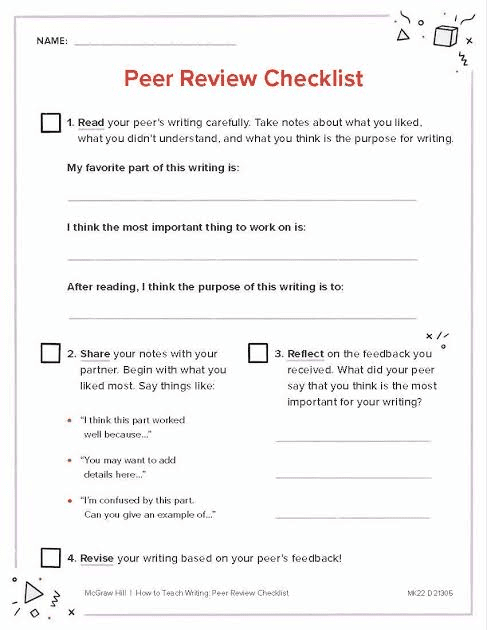
How to write a peer review as a student
By
Princeton Journal of Pre-Collegiate Research
Read more

Peer review etiquette: tone, structure, fairness
By
Princeton Journal of Pre-Collegiate Research
Read more

Version control for research documents
By
Princeton Journal of Pre-Collegiate Research
Read more

Digital vs paper lab notebooks for students
By
Princeton Journal of Pre-Collegiate Research
Read more

Data management basics for student researchers
By
Princeton Journal of Pre-Collegiate Research
Read more

How to keep a lab notebook that reviewers trust
By
Princeton Journal of Pre-Collegiate Research
Read more

How to organize research files across a year-long project
By
Princeton Journal of Pre-Collegiate Research
Read more

How to document your data so you can defend it
By
Princeton Journal of Pre-Collegiate Research
Read more

How to write a grant proposal as a student
By
Princeton Journal of Pre-Collegiate Research
Read more

Free resources that replace research funding
By
Princeton Journal of Pre-Collegiate Research
Read more
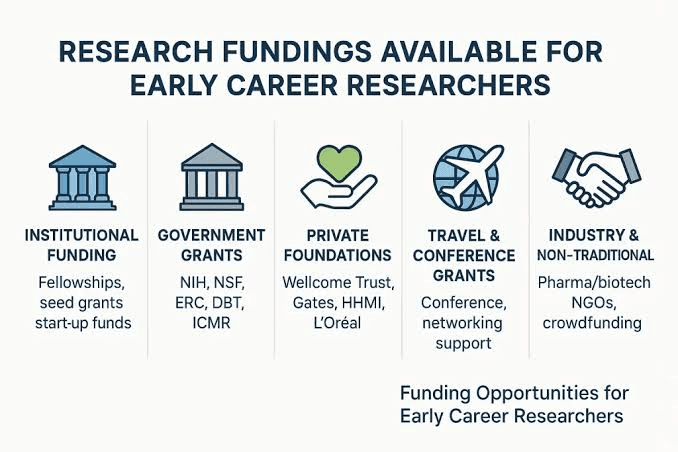
Corporate and nonprofit programs that fund student research
By
Princeton Journal of Pre-Collegiate Research
Read more

Science fair grants and material stipends explained
By
Princeton Journal of Pre-Collegiate Research
Read more

Crowdfunding a student research project: does it work
By
Princeton Journal of Pre-Collegiate Research
Read more

How much does a research project actually cost
By
Princeton Journal of Pre-Collegiate Research
Read more

How to ask your school to fund your project
By
Princeton Journal of Pre-Collegiate Research
Read more

Grants for high school research projects: what exists
By
Princeton Journal of Pre-Collegiate Research
Read more

How to start a research club at your school
By
Princeton Journal of Pre-Collegiate Research
Read more