How to write a mentor letter for a student journal submission
Princeton Journal of Pre-Collegiate Research

Understanding how to write a mentor letter for a student journal submission is an essential skill for faculty advisors, research supervisors, and academic mentors. When a student submits their work to a peer-reviewed or undergraduate research journal, many publications require a supporting letter from a faculty mentor or supervisor. This letter serves as a critical endorsement that validates the student's work, confirms their independent contribution, and assures editors that the submission meets basic scholarly standards. In this guide, we will walk you through every aspect of crafting an effective mentor letter that strengthens your student's submission and reflects well on both of you.
Why a Mentor Letter Matters for Student Journal Submissions
Before diving into the mechanics of how to write a mentor letter for a student journal submission, it helps to understand why these letters carry so much weight. Student journals — particularly undergraduate research journals — occupy a unique space in academia. They are designed to showcase emerging scholars, but editors must still ensure that submissions represent genuine intellectual work and meet minimum quality thresholds.
A mentor letter accomplishes several things at once:
Validates authenticity: It confirms that the work is genuinely the student's own and not ghostwritten or over-edited by the mentor.
Provides context: It gives editors background on the research environment, the course or project from which the work emerged, and any relevant constraints the student worked under.
Signals quality: A thoughtful letter from a credible mentor signals that the work has already passed at least one layer of expert review.
Supports the student's credibility: For students who are new to academic publishing, a mentor's endorsement helps establish their standing as a serious scholar.
Without a strong mentor letter, even a well-written student paper may struggle to gain traction with journal editors. Your letter is not a formality — it is a genuine advocacy document.
How to Write a Mentor Letter for a Student Journal Submission: Step-by-Step Structure
A well-organized mentor letter typically follows a clear structure. While you should adapt the format to suit the specific journal's requirements, the following framework works for most student journal submissions.
Step 1: Open with a Professional Salutation and Introduction
Begin your letter with a formal salutation addressed to the editor or editorial board. If you know the editor's name, use it. If not, "Dear Editor" or "Dear Editorial Board" is perfectly acceptable. In your opening paragraph, introduce yourself briefly — your name, title, institutional affiliation, and your relationship to the student. Keep this section concise; editors are busy and appreciate efficiency.
Example opening:
"Dear Editor, I am writing in support of [Student Name]'s submission, '[Article Title],' to [Journal Name]. I am an Associate Professor of Biology at [University Name] and served as [Student Name]'s research supervisor during the project described in this manuscript."
Step 2: Describe the Context of the Student's Work
The second paragraph should provide context for the research or writing project. Explain when and how the work was produced — was it part of a thesis, a capstone project, a summer research program, or an independent study? Mention any relevant constraints such as time limitations, resource availability, or the student's level of experience at the time. This context helps editors calibrate their expectations appropriately.
Step 3: Speak to the Student's Independent Contribution
One of the most important things editors want to know is how much of the work is genuinely the student's own. Be explicit about this. Describe the student's specific contributions: Did they design the study? Conduct the literature review? Collect and analyze data? Draft and revise the manuscript independently? Be honest and specific. Editors are experienced at detecting vague or overly effusive letters that obscure the actual division of labor.
Step 4: Assess the Quality and Significance of the Work
This is where you make your case for why the work deserves publication. Speak to the quality of the student's argument, methodology, writing, or analysis. You do not need to claim the work is groundbreaking — student journals understand they are publishing emerging scholars. Instead, focus on what makes this particular submission noteworthy: Is the argument original? Does it engage meaningfully with existing literature? Does it demonstrate strong critical thinking or methodological rigor for a student at this level?
Step 5: Address Any Weaknesses Honestly
This step surprises many mentors, but acknowledging limitations actually strengthens your credibility. If the work has scope limitations, methodological constraints, or areas that could be developed further, briefly acknowledging them — and explaining why the work is still valuable despite these limitations — demonstrates intellectual honesty. Editors appreciate mentors who are candid rather than promotional.
Step 6: Close with a Clear Endorsement and Contact Information
End your letter with a direct statement of support. Avoid hedging language like "I think this might be worth considering." Instead, use confident language: "I strongly recommend this manuscript for publication" or "I enthusiastically support this submission." Include your contact information and an invitation for the editors to reach out with any questions.
Tone, Length, and Formatting Best Practices
When thinking about how to write a mentor letter for a student journal submission, tone matters enormously. The letter should be professional but warm, authoritative but not arrogant. You are advocating for your student while also serving as a trustworthy voice for the editorial team.
Length: Most mentor letters run between 300 and 500 words. Longer is not necessarily better. A focused, well-organized letter that covers all the key points in 350 words is more effective than a rambling two-page document.
Format: Use standard business letter formatting on institutional letterhead if possible. Include the date, your full contact information, and a professional signature. If submitting electronically, a PDF on letterhead is typically preferred.
Tone: Avoid excessive superlatives. Describing every aspect of the student's work as "exceptional," "brilliant," or "extraordinary" quickly loses credibility. Choose specific, concrete language that shows rather than tells.
Personalization: Never use a generic template without customizing it substantially. Editors can spot form letters immediately, and they undermine the purpose of the mentor letter entirely.
Common Mistakes to Avoid
Even experienced mentors sometimes make avoidable errors when writing these letters. Here are the most common pitfalls:
Being too vague: Statements like "This student worked very hard" or "This is an interesting paper" provide no useful information to editors. Be specific about what the student did and why it matters.
Overstating the student's contribution: If the research was primarily your own and the student played a supporting role, be honest about that. Misrepresenting the student's contribution is an ethical violation.
Ignoring the journal's specific requirements: Some journals have explicit guidelines about what the mentor letter should address. Always read the submission guidelines carefully before writing.
Submitting late: A delayed mentor letter can hold up the entire submission process. Coordinate with your student well in advance of the deadline.
Writing in the student's voice: Your letter should sound like you, not like the student's abstract. Maintain your own scholarly voice throughout.
How to Write a Mentor Letter for a Student Journal Submission: A Sample Outline
To consolidate everything covered above, here is a practical outline you can adapt for your own use:
Header: Your name, title, institution, date, journal name and address
Salutation: Dear [Editor's Name] / Dear Editorial Board
Paragraph 1 — Introduction: Who you are, your relationship to the student, and the title of the submission
Paragraph 2 — Context: When and how the work was produced, the academic setting, relevant constraints
Paragraph 3 — Student's Contribution: Specific description of what the student did independently
Paragraph 4 — Quality Assessment: Your evaluation of the work's strengths and its significance for the field or discipline
Paragraph 5 — Honest Limitations (optional but recommended): Brief acknowledgment of scope or methodological limitations
Paragraph 6 — Closing Endorsement: Clear statement of support, contact information, invitation to follow up
Signature: Your full name, title, department, institution, email, phone
Special Considerations for Different Disciplines
The core structure of a mentor letter remains consistent across disciplines, but certain fields have specific norms worth noting. In the sciences, editors often want explicit confirmation that the student conducted the experiments or data analysis themselves and that the work has not been published elsewhere. In the humanities, mentors may be expected to speak more directly to the originality of the student's argument and their engagement with primary and secondary sources. In social science disciplines, methodology is often a central concern, so addressing the student's research design choices can be particularly valuable.
Always check whether the target journal has discipline-specific guidelines for mentor letters. When in doubt, err on the side of providing more context rather than less.
Final Thoughts
Knowing how to write a mentor letter for a student journal submission is one of the most practical and impactful skills an academic mentor can develop. A well-crafted letter does more than fulfill a submission requirement — it actively advocates for your student, provides valuable context for editors, and contributes to the integrity of the student publishing process. By following the structure and best practices outlined in this guide, you can write letters that are honest, compelling, and genuinely useful to everyone involved. Your student has done the hard work of producing a manuscript worthy of submission. A strong mentor letter ensures that work gets the serious consideration it deserves.
Read More

Can high school students be peer reviewers
By
Princeton Journal of Pre-Collegiate Research
Read more

What reviewing other papers teaches you about your own
By
Princeton Journal of Pre-Collegiate Research
Read more

How to give useful feedback on a classmate's paper
By
Princeton Journal of Pre-Collegiate Research
Read more

Student editorial boards: how they work
By
Princeton Journal of Pre-Collegiate Research
Read more
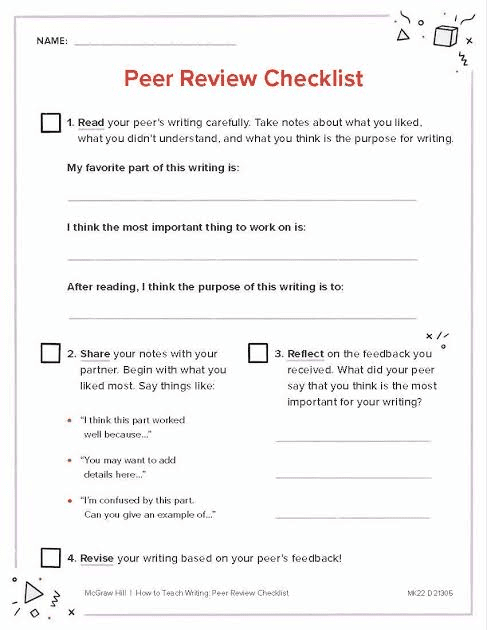
How to write a peer review as a student
By
Princeton Journal of Pre-Collegiate Research
Read more

Peer review etiquette: tone, structure, fairness
By
Princeton Journal of Pre-Collegiate Research
Read more

Version control for research documents
By
Princeton Journal of Pre-Collegiate Research
Read more

Digital vs paper lab notebooks for students
By
Princeton Journal of Pre-Collegiate Research
Read more

Data management basics for student researchers
By
Princeton Journal of Pre-Collegiate Research
Read more
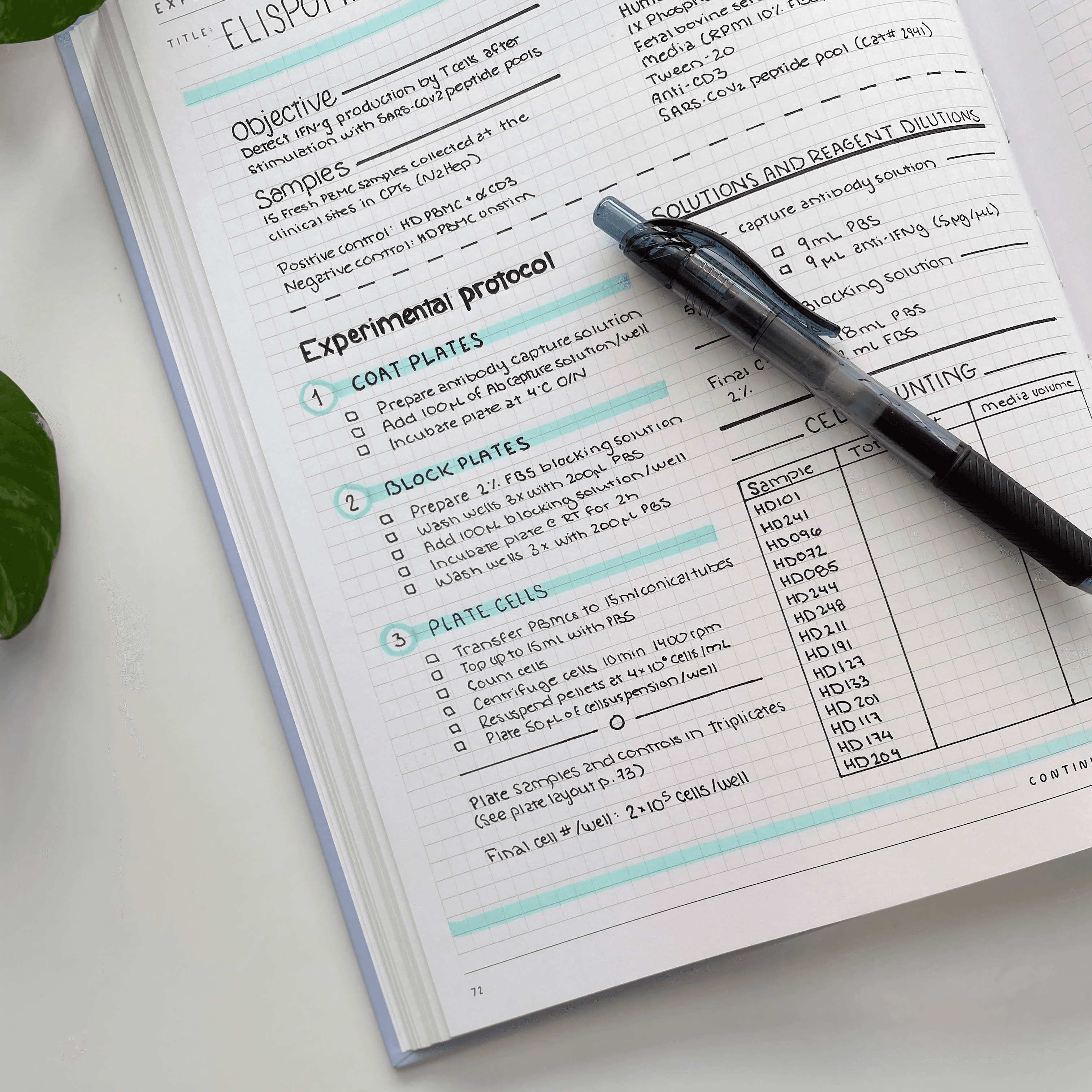
How to keep a lab notebook that reviewers trust
By
Princeton Journal of Pre-Collegiate Research
Read more

How to organize research files across a year-long project
By
Princeton Journal of Pre-Collegiate Research
Read more

How to document your data so you can defend it
By
Princeton Journal of Pre-Collegiate Research
Read more

How to write a grant proposal as a student
By
Princeton Journal of Pre-Collegiate Research
Read more

Free resources that replace research funding
By
Princeton Journal of Pre-Collegiate Research
Read more

Corporate and nonprofit programs that fund student research
By
Princeton Journal of Pre-Collegiate Research
Read more

Science fair grants and material stipends explained
By
Princeton Journal of Pre-Collegiate Research
Read more

Crowdfunding a student research project: does it work
By
Princeton Journal of Pre-Collegiate Research
Read more

How much does a research project actually cost
By
Princeton Journal of Pre-Collegiate Research
Read more

How to ask your school to fund your project
By
Princeton Journal of Pre-Collegiate Research
Read more

Grants for high school research projects: what exists
By
Princeton Journal of Pre-Collegiate Research
Read more

How to start a research club at your school
By
Princeton Journal of Pre-Collegiate Research
Read more