How teachers can help students publish research
Princeton Journal of Pre-Collegiate Research

Most high school students have no idea that publishing original research is within their reach. Teachers who know how to guide that process change everything. Understanding how teachers can help students publish research is not a niche concern reserved for elite prep schools. It is a practical skill set that any educator can develop, and the students who benefit are often the ones no one expected to produce scholarly work.
This guide is written for teachers, counselors, and faculty advisors who want to move their students from a half-formed idea to a published, peer-reviewed paper. Every step is actionable. Every recommendation is grounded in how real academic publishing works at the pre-collegiate level.
Why This Matters More Than You Think
Students who publish research before college arrive differently. They have experienced the full arc of intellectual work: forming a question, reviewing existing literature, collecting evidence, and defending conclusions under scrutiny. That experience is not replicable by coursework alone. It produces a different kind of thinker.
For teachers, guiding a student through publication is also professionally meaningful. You are not just preparing a student for a college application. You are introducing a young person to the standards and culture of academic scholarship. That is a significant act. Many students who publish at the high school level go on to pursue research careers, and the teacher who first believed in their work is rarely forgotten.
If you are wondering whether publishing research genuinely helps students in tangible ways, the answer is well-documented. You can read more about Does Publishing Research Help With College Admissions for a direct look at what admissions officers actually see when a student submits a published paper alongside their application.
Step One: Identify the Right Student and the Right Question
Not every student needs to be pushed toward publication. But more students are capable of it than teachers typically assume. The student who asks relentless follow-up questions in class, who wants to know why a finding is true rather than just what it says, is often a strong candidate. Curiosity is the raw material. Structure is what you provide.
The research question is the foundation. A weak question produces a weak paper, no matter how polished the writing. Help your student narrow their interest into something specific, testable, and original. Original does not mean unprecedented. It means the student is contributing their own analysis, data, or synthesis rather than summarizing what others have already said.
Encourage students to work within their genuine interests. A student passionate about language will produce stronger work on a linguistics question than on a chemistry topic they chose because it sounded impressive. For students looking for direction, resources like Linguistics Research Projects For High School Students and Sociology Research Ideas For High School Students offer concrete starting points organized by discipline.
Step Two: Teach the Literature Review Before Anything Else
Many students want to skip straight to their own findings. This is understandable, but it is also the fastest route to a rejected submission. Peer reviewers will not take a paper seriously if the author has not demonstrated awareness of existing scholarship. The literature review is not a formality. It is proof that the student knows the conversation they are entering.
Teach your student to search databases like Google Scholar, JSTOR, PubMed, or ERIC depending on their discipline. Show them how to identify peer-reviewed sources versus opinion pieces. Walk them through how to read an abstract efficiently and decide whether the full paper is worth their time. These are skills that will serve them for decades, and most high school curricula do not teach them explicitly.
A useful exercise: have the student write a one-paragraph summary of each source they read, followed by one sentence explaining how it connects to their own question. This prevents the literature review from becoming a list of summaries and forces genuine intellectual engagement with the material.
How Teachers Can Help Students Publish Research: The Writing Phase
Academic writing at the pre-collegiate level follows conventions that differ from the five-paragraph essay most students have been trained to produce. The structure of a research paper typically includes an abstract, introduction, methodology or approach, findings or analysis, discussion, and conclusion. Each section has a specific function. Teach that function explicitly before the student drafts each section.
The abstract is often the last thing written but the first thing read. It should summarize the question, method, key findings, and significance in roughly 150 to 250 words. Many student abstracts are too vague. Push for precision. If a reviewer cannot understand the paper's contribution from the abstract alone, the paper is unlikely to advance in the review process.
Encourage multiple drafts. The first draft is for getting ideas onto the page. The second draft is for structure and argument. The third draft is for clarity and precision at the sentence level. Teachers who treat the first draft as the final draft are not preparing students for the actual standards of academic publishing. Revision is not optional (it is the work).
Citation and Formatting Standards
Different journals require different citation formats. Some use APA, others use MLA, Chicago, or Vancouver depending on the discipline. Before your student submits anywhere, confirm the journal's author guidelines and format accordingly. A paper submitted in the wrong citation style signals carelessness to reviewers before they have read a single sentence of the actual argument.
Teach your student to use a citation manager early. Tools like Zotero or Mendeley are free, and they eliminate the mechanical errors that distract reviewers from the substance of a paper. Getting the formatting right is not glamorous work, but it is non-negotiable in academic publishing.
Choosing the Right Journal for Submission
This is one of the most consequential decisions in the publication process, and it is one where teacher guidance makes an enormous difference. Not all journals that accept high school research are equal. Some conduct genuine blind peer review. Others are predatory or vanity publications that accept virtually everything submitted (and charge fees for the privilege). Teach your students to tell the difference.
A credible pre-collegiate journal will have a transparent editorial board, a documented peer review process, clear submission guidelines, and ideally a DOI assignment for every published paper. A DOI (Digital Object Identifier) makes a paper permanently citable and findable in academic databases. Without it, a publication has limited value in the scholarly record.
The Princeton Journal of Pre-Collegiate Research publishes original work by high school students across all academic disciplines. Every published paper receives a DOI. Review is conducted by qualified graduate-level and faculty reviewers under a blind review model (no shortcuts, no rubber stamps). Submissions are evaluated on merit, not on the prestige of the student's school or the name recognition of their teacher.
For students from outside the United States, access to credible publication venues is a particular concern. Resources like High School Research Opportunities International Students address this directly and are worth sharing with students and families navigating the process from abroad.
How Teachers Can Help Students Publish Research: Navigating Peer Review
Peer review is where many students encounter their first experience of rigorous academic feedback. It can be deflating if they are not prepared for it. Your job as a teacher is to reframe reviewer feedback before the student ever receives it. Rejection or revision requests are not personal judgments. They are part of the process that makes published research credible.
When a student receives reviewer comments, work through them together. Identify which critiques address the argument, which address the methodology, and which address the writing. Prioritize substantive revisions over stylistic ones. Help the student draft a response letter that addresses each point directly and explains what changes were made (and why).
A student who successfully navigates one round of peer review has learned something that most adults never experience. They have submitted their thinking to external scrutiny, received criticism, revised their work, and defended their decisions. That is a significant intellectual achievement regardless of whether the paper is ultimately accepted.
What to Do If a Paper Is Rejected
Rejection is common in academic publishing. Even strong papers are sometimes rejected because they are not the right fit for a particular journal's scope or current editorial priorities. A rejection is not the end of the process. It is a redirection. Review the feedback, revise accordingly, and identify a different venue for submission.
Encourage your student to treat each submission cycle as a learning opportunity rather than a verdict on their worth as a researcher. The students who eventually publish are often the ones who submitted more than once.
Supporting Students Who Don't Have Obvious Research Advantages
One of the most important things a teacher can do is actively remove the assumption that research publication is only for students at well-resourced schools. Students at under-resourced schools, students without university connections, and students without laboratory access can all produce credible original research. The question is how.
Computational research, survey-based social science, historical analysis, literary criticism, and mathematical modeling all require minimal physical resources. A student with a laptop and a library card can conduct meaningful research in many disciplines. The barrier is usually knowledge of the process, not access to equipment. That is exactly the barrier a teacher can eliminate.
For students navigating this without institutional support, High School Research Students Who Dont Attend Top Schools offers direct guidance on how to pursue and publish research without elite school credentials. Share it. It matters.
Teachers can also point students toward discipline-specific guides that make the research process less abstract. The Physics Research Paper Guide High School Students and resources on Mathematics Research How High School Students Can Contribute are written specifically for pre-collegiate researchers and can function as supplemental curriculum in any classroom.
Building a Culture of Research in Your Classroom
Individual publication projects matter. But teachers who build a broader culture of inquiry produce more researchers over time. This means treating student questions as the starting point of investigation rather than interruptions to the lesson plan. It means assigning literature reviews alongside traditional essays. It means talking openly about how knowledge is produced and verified.
When one student in a class publishes, it changes what the other students believe is possible for them. That demonstration effect is powerful. Document it. Share it. Let it become part of the classroom's identity.
How Teachers Can Help Students Publish Research: A Summary
The path from student curiosity to published research is not mysterious. It is a sequence of learnable steps: identifying a strong question, conducting a literature review, writing to academic standards, choosing a credible journal, submitting, and revising. Every one of those steps is something a knowledgeable teacher can teach.
You do not need to be a research scientist to guide a student through this process. You need to understand the standards, know the resources, and believe that your students are capable of meeting a high bar. They are. The evidence is in every issue of every pre-collegiate journal that publishes original work by students who had a teacher willing to take them seriously.
If your student is ready to submit their work to a rigorous, internationally recognized publication, explore the submission process at the Princeton Journal of Pre-Collegiate Research. Every paper is reviewed on its merits. Every published paper receives a DOI. And every student who makes it through the process comes out a more capable scholar. That is the outcome worth working toward.
Read More

Can high school students be peer reviewers
By
Princeton Journal of Pre-Collegiate Research
Read more

What reviewing other papers teaches you about your own
By
Princeton Journal of Pre-Collegiate Research
Read more
How to give useful feedback on a classmate's paper
By
Princeton Journal of Pre-Collegiate Research
Read more

Student editorial boards: how they work
By
Princeton Journal of Pre-Collegiate Research
Read more
How to write a peer review as a student
By
Princeton Journal of Pre-Collegiate Research
Read more

Peer review etiquette: tone, structure, fairness
By
Princeton Journal of Pre-Collegiate Research
Read more

Version control for research documents
By
Princeton Journal of Pre-Collegiate Research
Read more

Digital vs paper lab notebooks for students
By
Princeton Journal of Pre-Collegiate Research
Read more

Data management basics for student researchers
By
Princeton Journal of Pre-Collegiate Research
Read more
How to keep a lab notebook that reviewers trust
By
Princeton Journal of Pre-Collegiate Research
Read more

How to organize research files across a year-long project
By
Princeton Journal of Pre-Collegiate Research
Read more

How to document your data so you can defend it
By
Princeton Journal of Pre-Collegiate Research
Read more

How to write a grant proposal as a student
By
Princeton Journal of Pre-Collegiate Research
Read more
Free resources that replace research funding
By
Princeton Journal of Pre-Collegiate Research
Read more
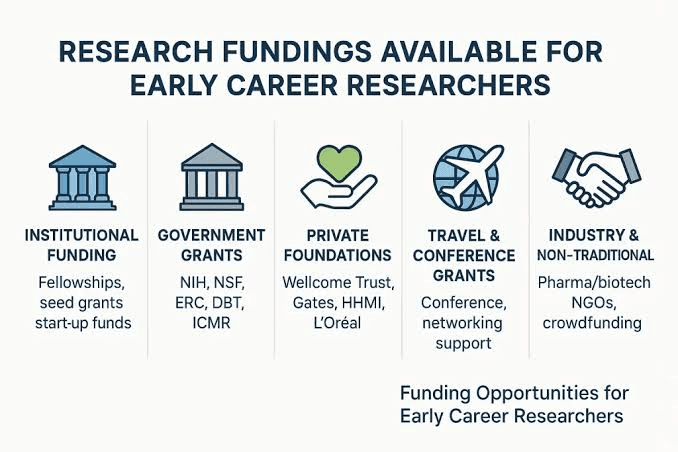
Corporate and nonprofit programs that fund student research
By
Princeton Journal of Pre-Collegiate Research
Read more

Science fair grants and material stipends explained
By
Princeton Journal of Pre-Collegiate Research
Read more

Crowdfunding a student research project: does it work
By
Princeton Journal of Pre-Collegiate Research
Read more

How much does a research project actually cost
By
Princeton Journal of Pre-Collegiate Research
Read more

How to ask your school to fund your project
By
Princeton Journal of Pre-Collegiate Research
Read more

Grants for high school research projects: what exists
By
Princeton Journal of Pre-Collegiate Research
Read more

How to start a research club at your school
By
Princeton Journal of Pre-Collegiate Research
Read more