What teachers should know before recommending a journal to students
Princeton Journal of Pre-Collegiate Research

Your recommendation carries weight. When a student asks which journal to submit their research to, they are not just asking for a name. They are asking you to vouch for a process, a standard, and an outcome that could shape their academic trajectory.
Knowing what teachers should know before recommending a journal to students is not a minor administrative detail. It is a professional responsibility. The landscape of academic publishing for pre-collegiate researchers has expanded rapidly, and not every journal that markets itself to high school students deserves your endorsement.
Why This Decision Matters More Than You Think
A published paper earns credibility only if the journal behind it earns credibility first. Students submitting to predatory or low-rigor outlets may gain a line on their resume, but admissions officers, scholarship committees, and future faculty advisors can tell the difference. A weak publication can actually signal poor judgment rather than academic achievement.
Conversely, a well-chosen journal validates the student's work in a way that a school award or teacher commendation simply cannot. It places their research in front of independent reviewers who have no prior relationship with the student and no incentive to be generous. That is exactly the kind of external validation that matters.
Before you recommend any outlet, take the time to compare journals before students submit research. The criteria you apply will protect your students and protect your own professional credibility.
The First Question: Is the Peer Review Process Real?
Peer review is the backbone of academic publishing. But the phrase "peer-reviewed" is used loosely, and not all peer review processes are created equal. Some journals claim peer review while running submissions through a cursory editorial scan with no independent expert evaluation. Others use reviewers who are unqualified or who share institutional affiliations with the authors.
A legitimate peer review process for high school research should involve graduate-level or faculty reviewers with relevant subject-matter expertise. Review should be blind (meaning reviewers do not know the author's identity) to eliminate bias. Feedback should be substantive enough to require revision, not just a rubber stamp of approval.
Ask the journal directly: How many reviewers evaluate each submission? Are reviews double-blind? What is the average revision cycle? A reputable journal will answer these questions without hesitation. Vague responses are a warning sign.
What Teachers Should Know Before Recommending a Journal: Evaluating Legitimacy
Legitimacy has several measurable indicators. Start with indexing. Does the journal assign a DOI (Digital Object Identifier) to each published paper? A DOI makes research permanently citable and searchable in academic databases. Without one, the paper essentially does not exist in the scholarly record.
Check the editorial board. Are the listed editors real, identifiable scholars with verifiable institutional affiliations? Search their names. If the board is anonymous, generic, or populated with unverifiable credentials, that is a significant red flag.
Look at the acceptance rate. Journals that accept nearly every submission are not selective; they are revenue-generating operations dressed as academic outlets. A meaningful acceptance rate signals that the journal actually enforces standards. For students exploring their options, resources like Best Journals For High School Students 2026 can help establish a baseline for comparison.
The Cost Question: Free to Publish vs. Pay-to-Publish
Many predatory journals charge article processing fees. They accept almost everything because their revenue model depends on volume, not quality. Students and their families may pay hundreds of dollars for a publication that carries no real academic weight.
Legitimate journals for pre-collegiate researchers should not require students to pay to publish. Open-access models can work ethically when funded through institutional support rather than author fees. If a journal's primary ask is financial, walk away.
For a deeper look at cost-free options, the guide on Open Access Journals High School Students Free To Publish outlines what ethical open-access publishing looks like at the pre-collegiate level. Cost should never be a barrier to credible publication.
Scope and Fit: Does the Journal Match the Student's Work?
Not every journal is right for every student. A journal that publishes exclusively STEM research is not the right home for a student who conducted original work in political theory or art history. Recommending a poor fit wastes the student's time and risks rejection on grounds unrelated to research quality.
Look for journals that publish across disciplines. Interdisciplinary work, in particular, needs a home that does not force it into a narrow category. If your student is working at the intersection of biology and ethics, or economics and urban planning, a multi-disciplinary journal will serve them better than a specialized one.
Teachers advising students in the social sciences should review outlets specifically suited to that work, such as those covered in Best Social Science Journals High School Students. Matching scope to subject is not optional; it is part of responsible guidance.
Feedback Quality: Does the Journal Teach?
One underappreciated criterion is whether the journal provides meaningful feedback regardless of the outcome. For a high school student, the review process is itself an educational experience. A rejection with substantive comments about methodology, argumentation, or literature gaps is more valuable than an acceptance with no feedback at all.
Ask: Does the journal share reviewer comments with authors? Are those comments actionable and specific? A journal that invests in feedback is a journal that cares about student development, not just publication volume. That distinction matters enormously for a student at the beginning of their research career.
This is especially important for first-generation students who may not have mentors or family members familiar with academic publishing norms. The resource on High School Research Journal Guide First Generation Students addresses this directly and is worth sharing with students who need additional context.
What Teachers Should Know Before Recommending a Journal: Timing and Process
Teachers often underestimate how long the submission-to-publication timeline actually takes. A student who plans to include a publication in a college application needs to submit months in advance, not weeks. Journals with thorough peer review cycles can take three to six months from submission to final decision.
Advise students to research timelines before committing to a journal. Some outlets offer expedited review, but expedited review that skips rigor is not a benefit. Understanding the timeline is part of making a strategic choice. The post on How Long Before Applications Submit To Journal breaks down realistic expectations for students working against application deadlines.
Also prepare students for the possibility of revision requests. Revision is not failure; it is the process working as intended. A student who understands this will approach reviewer feedback constructively rather than with discouragement.
International Students and Accessibility
If you teach or advise students from outside the United States, verify that the journal explicitly welcomes international submissions. Some journals have geographic restrictions embedded in their review processes or editorial priorities. A student in South Korea or Nigeria should have the same access to rigorous publication as a student in New York.
Journals that publish research from multiple continents demonstrate genuine commitment to meritocracy. The work should be evaluated on its quality, not the student's zip code. For guidance specific to this concern, High School Research Journals Accept International Students identifies outlets with verified international scope.
A Checklist for Teachers
Before recommending any journal to a student, run through these criteria systematically.
Peer review structure: Independent, qualified reviewers with blind or double-blind process.
DOI assignment: Every published paper receives a permanent digital identifier.
Editorial board transparency: Named, verifiable editors with real institutional affiliations.
No author fees: Publication should not require payment from students or families.
Substantive feedback: Reviewer comments shared with authors regardless of decision.
Disciplinary scope: Journal publishes in the relevant field or across multiple disciplines.
Realistic timeline: Review and publication timeline compatible with the student's goals.
International accessibility: Open to students regardless of country or institution.
Selective acceptance: Evidence that not all submissions are accepted.
No single criterion is sufficient on its own. A journal that assigns DOIs but charges fees is still problematic. A journal with a strong editorial board but no reviewer feedback shortchanges the student's development. Evaluate the full picture.
What to Do When a Student Asks About a Specific Journal
Students will sometimes arrive with a journal already in mind, often one they found through a quick search or peer recommendation. Your role is not to dismiss their initiative but to apply the criteria above before endorsing their choice.
If the journal meets the checklist, support the submission. If it raises flags, explain why clearly and offer a better alternative. Students respond to honest, evidence-based guidance. Telling a student that a journal is not credible without explaining why is not helpful; walking them through the evaluation process is.
Parents are often part of this conversation too. For families evaluating journals independently, the resource on What To Look For Before Child Submits Research Journal provides a parent-facing version of these same standards.
The Role of the Teacher in a Student's Research Journey
You are not just a subject-matter expert. When a student is navigating academic publishing for the first time, you are also their guide through an unfamiliar system. The choices you recommend will shape how they understand credibility, rigor, and professional standards in research.
That is not a small thing. A student who publishes in a rigorous, respected journal learns what real peer review feels like. They learn that their ideas can withstand independent scrutiny. They build confidence that is grounded in evidence, not just encouragement.
A student who publishes in a low-rigor journal learns the wrong lessons. They may believe the process is easier than it is, or that all peer review is essentially the same. Correcting those assumptions later is harder than setting the right standard from the beginning.
Conclusion: Your Recommendation Is a Standard
Knowing what teachers should know before recommending a journal to students is ultimately about holding a standard on behalf of the students who trust you. The journals worth recommending are the ones that take student research seriously, no shortcuts, no rubber stamps, no pay-to-play shortcuts dressed as opportunity.
Apply the checklist. Ask the hard questions. And when a journal earns your confidence, recommend it with conviction. The Princeton Journal of Pre-Collegiate Research publishes original work by high school students across all disciplines, with rigorous blind peer review, DOI indexing on every paper, and substantive reviewer feedback. It is built for exactly the students you are advising.
Explore more guidance for educators and students on the PJPCR Blogs, or visit Princeton JPCR to review submission standards and learn more about what makes a publication genuinely credible.
Read More

Can high school students be peer reviewers
By
Princeton Journal of Pre-Collegiate Research
Read more

What reviewing other papers teaches you about your own
By
Princeton Journal of Pre-Collegiate Research
Read more
How to give useful feedback on a classmate's paper
By
Princeton Journal of Pre-Collegiate Research
Read more

Student editorial boards: how they work
By
Princeton Journal of Pre-Collegiate Research
Read more
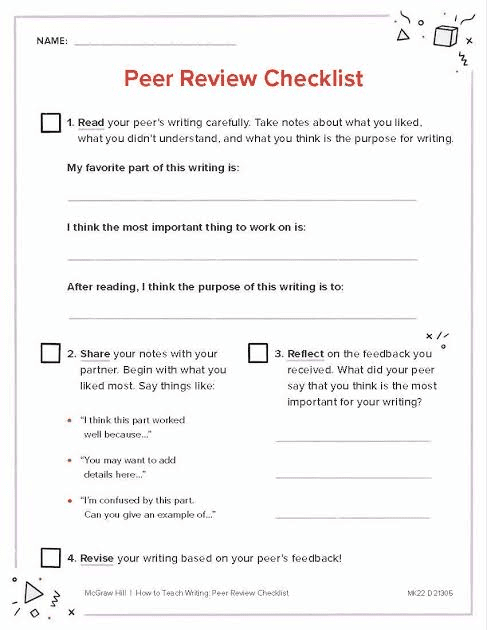
How to write a peer review as a student
By
Princeton Journal of Pre-Collegiate Research
Read more

Peer review etiquette: tone, structure, fairness
By
Princeton Journal of Pre-Collegiate Research
Read more

Version control for research documents
By
Princeton Journal of Pre-Collegiate Research
Read more

Digital vs paper lab notebooks for students
By
Princeton Journal of Pre-Collegiate Research
Read more

Data management basics for student researchers
By
Princeton Journal of Pre-Collegiate Research
Read more
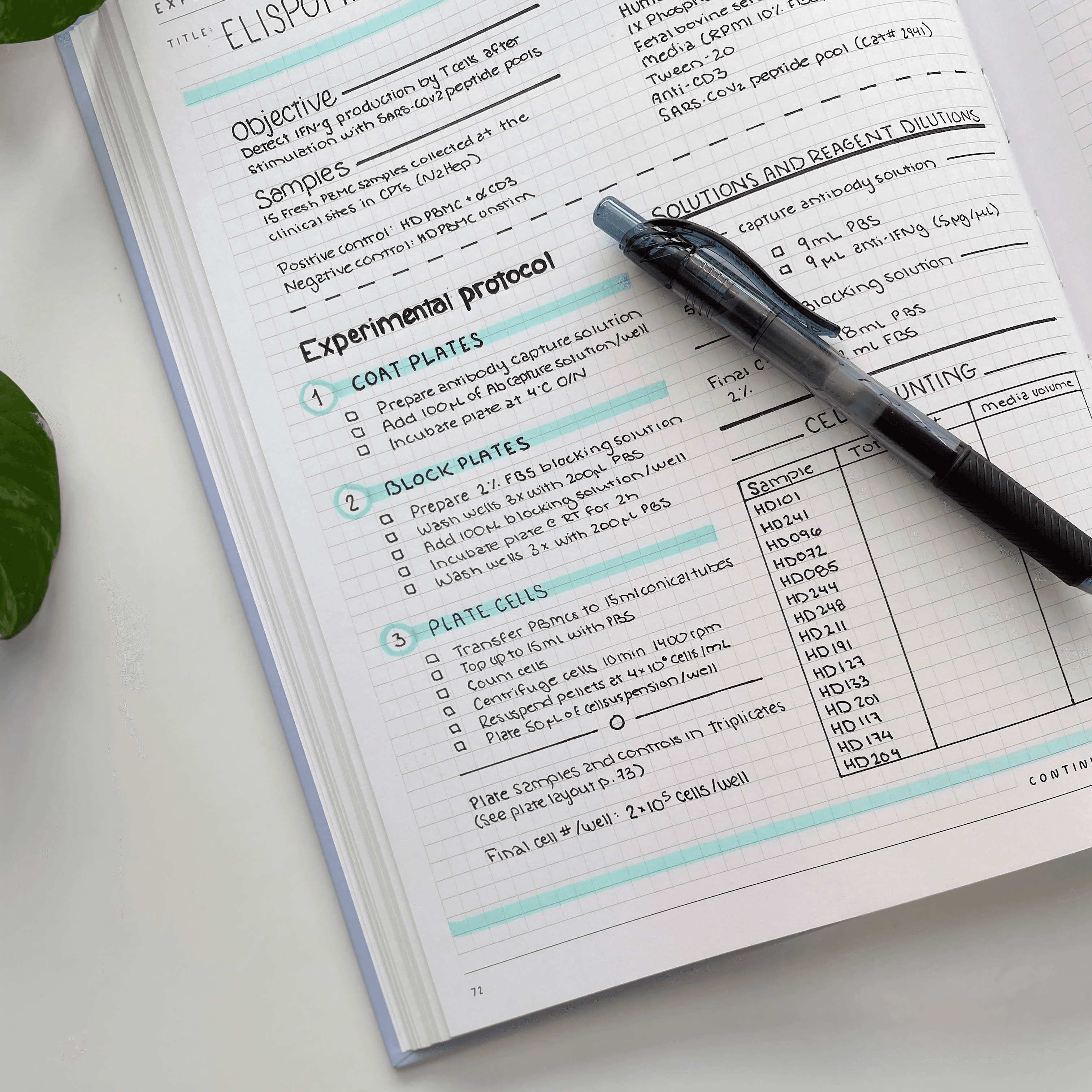
How to keep a lab notebook that reviewers trust
By
Princeton Journal of Pre-Collegiate Research
Read more

How to organize research files across a year-long project
By
Princeton Journal of Pre-Collegiate Research
Read more

How to document your data so you can defend it
By
Princeton Journal of Pre-Collegiate Research
Read more
How to write a grant proposal as a student
By
Princeton Journal of Pre-Collegiate Research
Read more
Free resources that replace research funding
By
Princeton Journal of Pre-Collegiate Research
Read more
Corporate and nonprofit programs that fund student research
By
Princeton Journal of Pre-Collegiate Research
Read more

Science fair grants and material stipends explained
By
Princeton Journal of Pre-Collegiate Research
Read more

Crowdfunding a student research project: does it work
By
Princeton Journal of Pre-Collegiate Research
Read more

How much does a research project actually cost
By
Princeton Journal of Pre-Collegiate Research
Read more

How to ask your school to fund your project
By
Princeton Journal of Pre-Collegiate Research
Read more

Grants for high school research projects: what exists
By
Princeton Journal of Pre-Collegiate Research
Read more

How to start a research club at your school
By
Princeton Journal of Pre-Collegiate Research
Read more