Do journals verify your age or grade level
Princeton Journal of Pre-Collegiate Research

You finished your research. You formatted the paper. Now you are staring at a submission portal and wondering: do journals actually verify your age or grade level? The answer matters more than you might expect, and it varies significantly across the publishing landscape.
This question comes up constantly among pre-collegiate researchers, and for good reason. Submitting to the wrong venue, or misrepresenting your status, carries real consequences. Understanding how verification works, where it is strict, and where it is essentially nonexistent will help you make smarter decisions before you hit submit.
Why Age and Grade Verification Exists in the First Place
High school research journals are a distinct category of academic publishing. They exist specifically to serve pre-collegiate students, typically defined as researchers who have not yet enrolled in an undergraduate degree program. That eligibility boundary is the entire point. Without it, these journals would simply be competing with undergraduate and graduate-level publications for the same pool of work.
When a journal publishes a paper under the banner of high school research, it is making an implicit claim to readers, institutions, and college admissions offices: this work was produced by a student at a specific stage of academic development. That claim has value. It contextualizes the achievement. A selective journal that publishes genuinely pre-collegiate work is signaling something meaningful about the next generation of scholars.
Verification, then, is not bureaucratic noise. It is the mechanism that protects the integrity of that claim. If anyone can submit regardless of age or enrollment status, the designation becomes meaningless.
Do Journals Verify Your Age or Grade Level? What the Process Actually Looks Like
The short answer is: some do, some do not, and the difference tells you a great deal about the journal's credibility. Here is how verification typically breaks down across the spectrum of pre-collegiate publishing.
Self-Reported Eligibility (Most Common)
The majority of high school research journals rely on self-reported eligibility. During submission, you check a box or fill in a field confirming that you are currently enrolled in high school or that you were at the time the research was conducted. No document is requested. No school official is contacted. The journal takes your word for it.
This approach is administratively simple, and most legitimate journals use it as a baseline. The implicit understanding is that misrepresentation constitutes academic dishonesty, with consequences ranging from retraction to permanent disqualification. That social contract functions reasonably well in a community of achievement-oriented students who have genuine stakes in their academic reputation.
Documentation-Based Verification
More rigorous journals require actual documentation. This might mean submitting a copy of your student ID, a letter from a school counselor or teacher confirming your enrollment, or an official transcript showing your current grade level. Some journals request this documentation at the point of submission. Others request it only after a paper clears initial review, reducing the administrative burden during the screening phase.
Documentation-based verification adds friction to the submission process, but that friction serves a purpose. It signals that the journal is serious about eligibility integrity. If a journal asks for nothing beyond a checkbox, ask yourself why. Selective journals with reputations worth protecting tend to verify more carefully.
Faculty or Mentor Confirmation
A third model involves confirming eligibility through a faculty mentor, research supervisor, or school official. The student submits contact information for an adult who can vouch for their enrollment status. The journal then contacts that person directly, either through an automated system or a manual email, to confirm the student is who they say they are.
This model is common in journals that also require faculty co-authors or advisors to be listed. It accomplishes two things at once: it verifies the student's eligibility and establishes that the research was conducted under appropriate adult oversight. Both of those factors matter for credibility.
What Happens If You Submit to a Journal That Does Not Verify?
This is where things get complicated. Journals that do not verify eligibility are not automatically predatory or low quality. Some reputable publications simply trust their applicant pool and have not had reason to implement formal verification systems. But the absence of verification does create an opening for misuse.
Graduate students and even faculty have been known to submit work to pre-collegiate journals under false pretenses, particularly when those journals carry name recognition. The work gets published, the credential gets listed on a CV, and readers assume the research was produced by a high school student. That is a form of academic fraud, and it devalues the publications of every legitimate student in the same journal.
If you are a genuine high school researcher, this dynamic hurts you directly. It dilutes the signal value of your publication. It is one reason why understanding high acceptance rate vs selective journals matters when you are evaluating where to submit your work.
How to Evaluate a Journal's Verification Standards Before You Submit
You do not have to guess. There are concrete steps you can take to assess how seriously a journal takes eligibility verification before you invest time in a submission.
Read the submission guidelines carefully. Look for explicit language about eligibility requirements. Does the journal define what it means by "high school student"? Does it specify whether the research must have been conducted during high school, or whether the student simply needs to be enrolled at the time of submission?
Look for documentation requirements. If the submission portal asks for nothing beyond a self-attestation, that is a data point. It does not disqualify the journal, but it should factor into your assessment.
Check whether a faculty advisor or mentor is required. Journals that require adult oversight tend to be more rigorous across the board, including on eligibility.
Look for published editorial policies. Credible journals publish their review and eligibility policies transparently. If you cannot find a clear statement of eligibility criteria, that is a red flag.
For a broader framework on evaluating journals before you commit, see our guide on how to compare journals before you submit research.
Do Journals Verify Your Age or Grade Level After Acceptance?
Some journals conduct verification post-acceptance rather than at the point of submission. This approach makes editorial sense: why invest verification resources in papers that will be rejected anyway? Once a paper clears peer review and is accepted for publication, the journal then requests documentation confirming the student's eligibility.
If you are submitting to a journal that uses this model, be prepared. Have your documentation ready before you receive an acceptance decision. A school enrollment letter, a signed statement from a counselor, or a transcript showing your grade level are all reasonable things to have on hand. Scrambling to produce documentation after an acceptance can delay publication and, in some cases, result in rescinded offers if the documentation cannot be produced promptly.
What If Your Research Was Conducted During High School but You Are Now in College?
This is a genuinely common situation, and different journals handle it differently. Some journals define eligibility based on the student's status at the time the research was conducted. Under that definition, a first-year college student submitting research completed during their senior year of high school is still eligible. Other journals require the student to be currently enrolled in high school at the time of submission, full stop.
Read the eligibility language carefully. If it is ambiguous, contact the editorial team directly before submitting. Do not assume. Misrepresenting your status, even inadvertently, can result in retraction after publication, which is a far worse outcome than a rejection would have been.
The Credibility Signal You Are Actually Looking For
When college admissions officers, scholarship committees, and academic mentors evaluate a pre-collegiate publication, they are not just looking at the paper. They are evaluating the journal. A publication in a journal with rigorous verification, blind peer review, and transparent editorial standards carries more weight than a publication in a journal that accepts everything and verifies nothing.
This is not a cynical observation. It is how credentialing works at every level of academia. The value of a publication is partially a function of the selectivity and integrity of the venue. If you are going to invest months of work into original research, you want that work evaluated and published by an institution that takes its own standards seriously.
That is also why understanding the difference between student-run vs faculty-reviewed journals matters. Faculty-reviewed journals with formal verification processes are generally held to a higher standard, and that standard protects the value of your publication.
You should also be aware of journals that exploit the ambiguity around verification to attract submissions without delivering meaningful review. Our resource on how to avoid predatory journals as a high school student covers the warning signs in detail.
International Students and Cross-Border Verification
Verification becomes more complex for international students. Grade level designations vary by country. What constitutes "high school" in the United States does not map perfectly onto secondary education systems in the United Kingdom, India, Germany, or South Korea. A student in their final year of secondary school in one country may be 17 or 18, while a student at the same stage in another country may be 16.
Reputable international journals account for this. They define eligibility in terms of educational stage rather than specific grade labels, and they accept documentation formats that reflect the student's home country's system. If you are an international student and the journal's eligibility language seems designed exclusively for the American K-12 system, that is worth flagging before you submit. For more on this, see our coverage of high school research journals that accept international students.
What PJPCR Does
The Princeton Journal of Pre-Collegiate Research takes eligibility verification seriously. Submitting authors confirm their pre-collegiate status as part of the submission process, and the journal's editorial team is structured to flag inconsistencies. Research submitted to PJPCR is held to the same standards of rigor regardless of the student's school, country, or background. Eligibility is not a formality here. It is a structural commitment to publishing work that genuinely represents the next generation of scholars.
PJPCR uses double-blind peer review (reviewers do not know the author's identity; authors do not know the reviewer's identity). That structure reinforces the meritocracy the journal is built on. Your paper is evaluated on its intellectual merit, not on where you go to school or who your mentor is. Verification of your pre-collegiate status is the baseline that makes that evaluation meaningful.
If you are still exploring your options, our roundup of the best journals for high school students in 2026 provides a comparative overview of the landscape. And if you are wondering whether you can submit the same paper to multiple venues simultaneously, our guide on how many journals you can submit the same paper to addresses that directly.
Final Thoughts: Do Journals Verify Your Age or Grade Level?
The answer is: it depends on the journal, and that variation is itself a quality signal. Journals that verify carefully are journals that care about the integrity of what they publish. Journals that verify nothing are journals that may not have much to protect.
As a pre-collegiate researcher, you have every reason to seek out the former. Your work deserves a venue that takes your eligibility, your research, and your future seriously. Do not settle for a publication that treats verification as an afterthought. The credential you earn is only as strong as the institution that grants it.
If you are ready to submit original research to a journal that holds itself and its authors to a rigorous standard, explore PJPCR's submission process and see whether your work is a fit. You can also browse the full PJPCR blog for more guidance on navigating academic publishing as a pre-collegiate researcher.
Read More

Can high school students be peer reviewers
By
Princeton Journal of Pre-Collegiate Research
Read more

What reviewing other papers teaches you about your own
By
Princeton Journal of Pre-Collegiate Research
Read more

How to give useful feedback on a classmate's paper
By
Princeton Journal of Pre-Collegiate Research
Read more

Student editorial boards: how they work
By
Princeton Journal of Pre-Collegiate Research
Read more
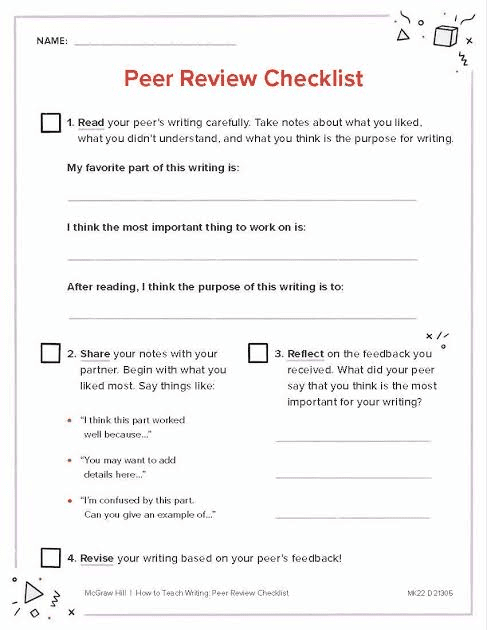
How to write a peer review as a student
By
Princeton Journal of Pre-Collegiate Research
Read more

Peer review etiquette: tone, structure, fairness
By
Princeton Journal of Pre-Collegiate Research
Read more

Version control for research documents
By
Princeton Journal of Pre-Collegiate Research
Read more

Digital vs paper lab notebooks for students
By
Princeton Journal of Pre-Collegiate Research
Read more

Data management basics for student researchers
By
Princeton Journal of Pre-Collegiate Research
Read more

How to keep a lab notebook that reviewers trust
By
Princeton Journal of Pre-Collegiate Research
Read more

How to organize research files across a year-long project
By
Princeton Journal of Pre-Collegiate Research
Read more

How to document your data so you can defend it
By
Princeton Journal of Pre-Collegiate Research
Read more
How to write a grant proposal as a student
By
Princeton Journal of Pre-Collegiate Research
Read more

Free resources that replace research funding
By
Princeton Journal of Pre-Collegiate Research
Read more
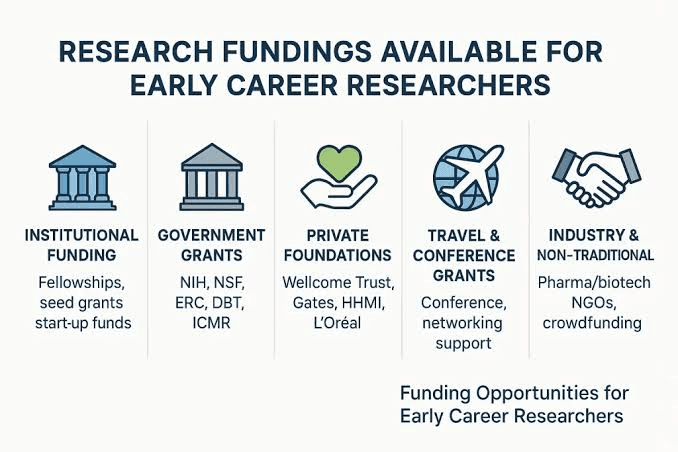
Corporate and nonprofit programs that fund student research
By
Princeton Journal of Pre-Collegiate Research
Read more

Science fair grants and material stipends explained
By
Princeton Journal of Pre-Collegiate Research
Read more

Crowdfunding a student research project: does it work
By
Princeton Journal of Pre-Collegiate Research
Read more

How much does a research project actually cost
By
Princeton Journal of Pre-Collegiate Research
Read more

How to ask your school to fund your project
By
Princeton Journal of Pre-Collegiate Research
Read more

Grants for high school research projects: what exists
By
Princeton Journal of Pre-Collegiate Research
Read more

How to start a research club at your school
By
Princeton Journal of Pre-Collegiate Research
Read more