Is there an age limit for academic journal submission
Princeton Journal of Pre-Collegiate Research

The short answer is no. There is no universal age limit for academic journal submission, and the question itself reveals a misconception worth dismantling. Academic journals evaluate work, not the age printed on a birth certificate.
Still, the longer answer matters. Many students, parents, and school counselors assume that peer-reviewed publication is reserved for university researchers, doctoral candidates, or credentialed professionals. That assumption has quietly discouraged a generation of high school students from submitting work that is genuinely publishable. This post clarifies the record, explains how journal eligibility actually works, and shows you what a serious submission pathway looks like for pre-collegiate researchers.
Is There an Age Limit for Academic Journal Submission? The Official Policy Landscape
Most academic journals do not publish an explicit age policy. Their submission guidelines focus on manuscript quality, methodological rigor, ethical compliance, and formatting standards. Age is simply not a listed criterion. What journals do require is that the work meets their scope and quality threshold. A 17-year-old who meets that threshold is as eligible as a 45-year-old professor (in theory).
In practice, however, general academic journals are built around the infrastructure of university research. They assume authors have institutional affiliations, faculty advisors, access to laboratory equipment, and familiarity with disciplinary conventions developed over years of coursework. High school students often lack those structural advantages, even when their intellectual contributions are genuine. This is a structural barrier, not a stated age restriction. The distinction matters.
Some journals do explicitly welcome student submissions. A growing number of peer-reviewed publications are designed specifically for pre-collegiate researchers, with review processes calibrated to evaluate original student work on its own terms. These are not lesser publications. They apply genuine peer review, assign DOIs, and maintain editorial standards comparable to early-career academic publishing.
What Journals Actually Look For (Regardless of Age)
Understanding what reviewers evaluate helps clarify why age is irrelevant to the core decision. Peer reviewers assess a manuscript on several dimensions. None of them involve checking the author's age.
Originality: Does the research contribute something new? A novel hypothesis, an underexplored dataset, a fresh synthesis of existing literature all qualify.
Methodological soundness: Is the research design appropriate for the question being asked? Are limitations acknowledged honestly?
Clarity of argument: Is the thesis stated clearly? Does the evidence support the conclusions? Learning how to write clearly and concisely in academic research is a skill that directly affects this criterion.
Citation integrity: Are sources properly attributed? Is the literature review current and relevant?
Ethical compliance: Does the research meet standards for academic honesty? Understanding what counts as academic dishonesty in student research is non-negotiable before any submission.
A high school student who addresses all five of these dimensions competently has a submittable paper. Full stop. The question is not whether you are old enough. The question is whether your work is ready.
Why the Age Misconception Persists
The belief that academic publishing has an age floor comes from several compounding sources. First, most published research is produced by people in graduate programs or professional positions, so the demographic association feels like a rule even when it is not one. Second, submission guidelines are written in language that assumes institutional affiliation, which creates a practical barrier that reads like a formal one. Third, high school curricula rarely include academic publishing as a goal, so students never learn that the pathway exists.
There is also a confidence gap. Many high school students who have completed rigorous independent research underestimate the quality of their own work. They assume that because they are not yet in college, their findings are not serious enough for peer review. That assumption is often wrong, and it costs them a credential that could meaningfully strengthen their academic profile.
If you have completed a summer research program, a science fair project, or an independent study, your work may already be closer to publishable than you think. Knowing how to adapt a summer program research project for journal submission is a concrete, learnable skill, not a gatekeeping mystery.
Is There an Age Limit for Academic Journal Submission at Specialized Pre-Collegiate Journals?
Specialized pre-collegiate journals invert the standard dynamic. Rather than having no stated age policy that implicitly favors older researchers, these journals explicitly welcome high school students. In some cases, high school enrollment is a submission requirement. The eligibility criterion is being a pre-collegiate researcher, which means age functions as a qualifier in your favor rather than a barrier.
The Princeton Journal of Pre-Collegiate Research operates exactly this way. We publish original research by high school students across STEM, humanities, social sciences, and interdisciplinary fields. We exist because rigorous student research deserves a credible publication venue (not a participation trophy, not a vanity press). Every submission goes through genuine blind peer review. Every accepted paper receives a DOI. The standard is real, and so is the recognition.
This model addresses the structural problem directly. You do not need a university affiliation. You do not need a faculty co-author. You need original work that meets the review criteria. If your paper does, it belongs in print.
Submitting Research You Already Have
One of the most common missed opportunities is the research students have already completed but never submitted. Class projects, competition entries, independent studies, and summer program outputs often contain the raw material for a publishable paper. The work exists. It just needs to be shaped for a journal audience.
Revising existing work for submission is a distinct skill from writing original research. If you have a paper that received strong feedback from a teacher, mentor, or competition judge, it is worth revisiting with publication in mind. Learning how to revise an old research paper for journal submission is a practical process with clear steps. It does not require starting over. It requires targeted refinement.
Similarly, if you have won or placed in an academic competition, that recognition can support your submission narrative. Understanding how a competition win can strengthen a journal submission helps you frame your work with the credibility it has already earned.
Practical Steps Before You Submit
Knowing that age is not a barrier is useful. Knowing what to do next is more useful. Here is a direct sequence for any high school student considering submission.
Assess your manuscript honestly. Does it present an original argument or finding? Does it cite sources correctly? Does it follow a clear structure? If the answer to any of these is uncertain, address it before submitting. Reviewing common grammar mistakes in academic research papers is a good starting point for surface-level review.
Edit your own work before anyone else sees it. Self-editing is not optional. Knowing how to edit your own research paper before submission reduces the chance of avoidable rejection and signals professionalism to reviewers.
Review the submission guidelines carefully. Every journal has specific formatting, citation, and scope requirements. Read the submission guidelines before you finalize your manuscript. Submitting a paper that ignores these requirements wastes your time and the reviewers'.
Understand the timeline. Many journals accept submissions on a rolling basis, which means you do not need to wait for a specific deadline. Understanding what rolling admission means for journal submissions helps you plan your timeline strategically.
Submit through the correct channel. When you are ready, use the official submission form and follow every instruction precisely.
A Note on Journal Credibility
Not all student journals are equal. This is a fair concern, and it deserves a direct answer. When evaluating any publication venue, look for genuine peer review (blind review by qualified reviewers, not editorial rubber-stamping), DOI assignment for every published paper, a transparent editorial board with verifiable credentials, and a clear scope that matches your research area.
Understanding what an academic advisory board signals about journal credibility is one way to distinguish serious publications from credential mills. The presence of an advisory board with real academic affiliations indicates that the journal is accountable to professional standards. The absence of one should prompt further scrutiny.
PJPCR meets these criteria. We apply blind peer review with no shortcuts and no rubber stamps. We assign DOIs. Our editorial board is composed of graduate-level reviewers and academic faculty. We publish across all disciplines because strong research does not confine itself to a single field.
Is There an Age Limit for Academic Journal Submission? The Final Answer
No. There is no age limit for academic journal submission as a universal policy. General journals evaluate manuscripts on merit, not on the author's age. Pre-collegiate journals go further by actively welcoming high school researchers and building review processes designed to assess student work rigorously and fairly.
The real barriers are structural, not chronological. Lack of institutional affiliation, unfamiliarity with submission conventions, and underestimating the quality of your own work are the obstacles that actually stop most high school students from submitting. All three are solvable. None of them are your age.
If you have completed original research, the next step is not waiting until college. The next step is preparing a manuscript and submitting it. You have already done the hardest part. Publishing it is the part that makes it permanent.
Review our submission guidelines and take the next step toward getting your research into print. Your work has earned it.
Read More

Can high school students be peer reviewers
By
Princeton Journal of Pre-Collegiate Research
Read more

What reviewing other papers teaches you about your own
By
Princeton Journal of Pre-Collegiate Research
Read more

How to give useful feedback on a classmate's paper
By
Princeton Journal of Pre-Collegiate Research
Read more

Student editorial boards: how they work
By
Princeton Journal of Pre-Collegiate Research
Read more
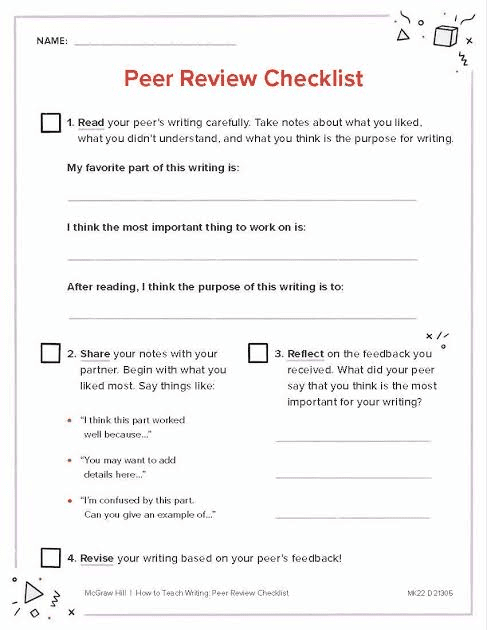
How to write a peer review as a student
By
Princeton Journal of Pre-Collegiate Research
Read more

Peer review etiquette: tone, structure, fairness
By
Princeton Journal of Pre-Collegiate Research
Read more

Version control for research documents
By
Princeton Journal of Pre-Collegiate Research
Read more

Digital vs paper lab notebooks for students
By
Princeton Journal of Pre-Collegiate Research
Read more

Data management basics for student researchers
By
Princeton Journal of Pre-Collegiate Research
Read more

How to keep a lab notebook that reviewers trust
By
Princeton Journal of Pre-Collegiate Research
Read more

How to organize research files across a year-long project
By
Princeton Journal of Pre-Collegiate Research
Read more

How to document your data so you can defend it
By
Princeton Journal of Pre-Collegiate Research
Read more

How to write a grant proposal as a student
By
Princeton Journal of Pre-Collegiate Research
Read more

Free resources that replace research funding
By
Princeton Journal of Pre-Collegiate Research
Read more
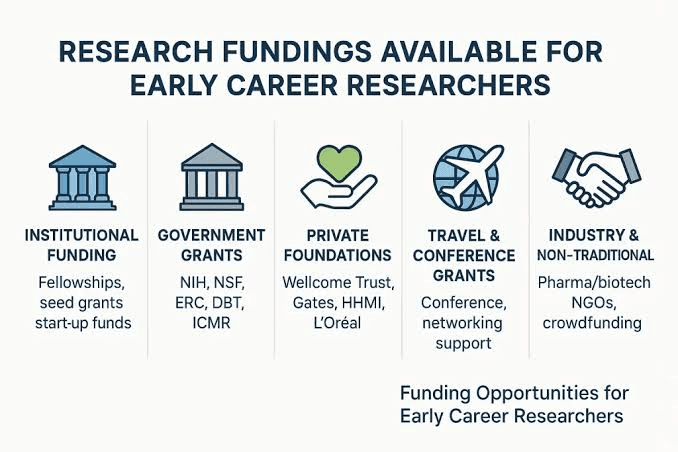
Corporate and nonprofit programs that fund student research
By
Princeton Journal of Pre-Collegiate Research
Read more

Science fair grants and material stipends explained
By
Princeton Journal of Pre-Collegiate Research
Read more

Crowdfunding a student research project: does it work
By
Princeton Journal of Pre-Collegiate Research
Read more

How much does a research project actually cost
By
Princeton Journal of Pre-Collegiate Research
Read more

How to ask your school to fund your project
By
Princeton Journal of Pre-Collegiate Research
Read more

Grants for high school research projects: what exists
By
Princeton Journal of Pre-Collegiate Research
Read more

How to start a research club at your school
By
Princeton Journal of Pre-Collegiate Research
Read more