Can teachers be listed as co-authors on student papers
Princeton Journal of Pre-Collegiate Research

The question of whether teachers can be listed as co-authors on student papers comes up constantly, and the answer matters more than most students realize. Get it wrong, and you risk misrepresenting your work to colleges, journals, and scholarship committees.
Authorship in academic publishing is not a courtesy. It is a formal claim of intellectual contribution. Every name on a paper signals to the reader: this person did substantive work to produce this research. That standard applies whether you are a tenured professor or a high school junior submitting to a peer-reviewed journal.
This post breaks down exactly when teacher co-authorship is appropriate, when it is not, and what the ethical and practical consequences are for student researchers navigating this question.
What Authorship Actually Means in Academic Publishing
Most serious academic journals follow the authorship criteria established by the International Committee of Medical Journal Editors (ICMJE) or similar frameworks. These frameworks require that a co-author must have made a substantial contribution to the conception or design of the work, or to the acquisition, analysis, or interpretation of data. They must also have participated in drafting or critically revising the intellectual content of the paper. And they must approve the final version submitted for publication.
All three conditions matter. Meeting only one or two does not qualify someone as an author. This is where the line between authorship and acknowledgment becomes critical.
If your teacher suggested a research topic, helped you format citations, reviewed your grammar, or encouraged you to submit, that is mentorship. It deserves acknowledgment in your paper. It does not automatically qualify them as a co-author.
When Can Teachers Be Listed as Co-Authors on Student Papers?
Teachers can legitimately appear as co-authors when they meet the same criteria any other author must meet. The role of the teacher in the research process determines everything.
The Teacher Contributed Original Intellectual Work
If a teacher helped design the research methodology, developed the hypothesis alongside the student, or contributed original analysis that shaped the paper's conclusions, that constitutes substantive intellectual contribution. In that case, co-authorship is not only appropriate but ethically required. Omitting a genuine contributor is itself a form of academic misconduct.
This scenario is more common in laboratory or field research settings, where a teacher or faculty mentor may co-design an experiment, contribute domain expertise that directly shapes the findings, or run portions of the data collection themselves. If the research would look fundamentally different without their involvement, co-authorship is warranted.
The Teacher Participated in Writing and Revision
Substantial authorship also requires contribution to the written work itself, not just the underlying research. A teacher who drafted entire sections, restructured arguments, or rewrote conclusions based on their own scholarly judgment has contributed to the manuscript in a way that may justify authorship credit. The key word is substantive. Line edits and grammar corrections do not meet that threshold.
The Teacher Approved the Final Submission
Co-authors are accountable for the work. If a teacher is listed as a co-author, they are implicitly accepting responsibility for the accuracy, integrity, and originality of the paper. That accountability is part of what authorship means. A teacher who is listed as a co-author but had no meaningful role in the research is not just receiving unearned credit. They are also accepting liability for work they cannot actually vouch for.
When Teacher Co-Authorship Is Inappropriate
This is where many students and teachers make well-intentioned but serious mistakes. There are several common scenarios where teacher co-authorship crosses an ethical line.
The Teacher Only Provided Guidance or Supervision
Mentorship is not authorship. A teacher who advised you on your topic, pointed you toward useful sources, reviewed your drafts for clarity, or helped you understand how to structure an argument has performed an invaluable service. That service belongs in your acknowledgments section. Adding their name to the author list misrepresents their role and inflates the perceived credibility of the paper in ways that mislead readers and reviewers.
Journals that publish student research, including those focused on pre-collegiate work, are increasingly alert to this pattern. Reviewers who see a teacher or professor listed as a co-author on a student paper will scrutinize the division of contributions carefully. Misrepresenting that division is a form of academic dishonesty. If you want to understand where those lines are drawn, the post on What Counts As Academic Dishonesty In Student Research provides a thorough breakdown of how journals and institutions define these violations.
The Teacher Is Listed to Add Credibility
Some students ask teachers to appear as co-authors specifically because they believe it will make the paper look more legitimate to reviewers or admissions committees. This is a misuse of the authorship system. Journals conduct blind review precisely to evaluate the quality of the work, not the prestige of the names attached to it. Adding a teacher's name to signal credibility is a form of misrepresentation, regardless of intent.
High-quality journals for student researchers, like those listed in the Best Journals For High School Students 2026 guide, evaluate submissions on the rigor of the research itself. A paper with genuine intellectual contribution does not need borrowed credibility.
The Teacher Wrote Significant Portions of the Paper
If a teacher wrote substantial portions of the paper, that is a different problem entirely. It raises questions not just about authorship but about the authenticity of the student's work. Research submitted under a student's name should reflect the student's intellectual labor. When it does not, both the student and the teacher are implicated in a misrepresentation that can have serious consequences, including retraction and reputational damage.
The Acknowledgments Section: Where Mentors Belong
Every well-formatted academic paper includes an acknowledgments section, and this is the correct place to recognize teachers, mentors, and advisors who contributed to the research without meeting the threshold for authorship. A clear, specific acknowledgment is not a lesser honor. It is an accurate one.
A strong acknowledgment identifies what the person actually contributed. Instead of writing a generic thank-you, specify that your teacher provided feedback on your methodology, connected you with relevant literature, or supervised your data collection process. Precision signals professionalism. It also protects everyone involved by accurately representing each person's role.
Faculty-Reviewed Journals and the Question of Reviewer Identity
Students sometimes confuse the role of a faculty reviewer with that of a co-author. These are entirely distinct roles. A faculty reviewer evaluates your submitted paper and provides feedback through the journal's editorial process. They do not become an author by virtue of reviewing your work. Understanding this distinction matters especially when choosing where to submit.
The difference between journals that use faculty reviewers versus those that rely on student reviewers has significant implications for the credibility of the review process. The post on Student Run Vs Faculty Reviewed Journals Difference explains how to evaluate those distinctions when selecting a publication venue. Knowing who is reviewing your work, and in what capacity, helps you make informed decisions about where your research belongs.
Practical Guidance for Students and Teachers
If you are a student working with a teacher on a research project, have an explicit conversation about authorship before you submit. Do not assume. Ask directly whether their contribution rises to the level of co-authorship under established criteria, or whether an acknowledgment is the appropriate recognition. Most teachers who understand academic publishing norms will appreciate the question and answer it honestly.
If you are a teacher mentoring a student researcher, resist the impulse to accept co-authorship as a gesture of encouragement or mutual recognition. Your role as mentor is already valuable. Accepting authorship credit you have not earned does not honor the student's work. It complicates it.
Students working on discipline-specific projects can find additional guidance in topic-focused resources. The post on How To Do Psychology Research As A High School Student addresses methodology and sourcing in ways that clarify what constitutes original student contribution. Similarly, Sociology Research Ideas For High School Students provides starting points for independent inquiry that students can genuinely own.
What Journals Expect When You Submit
Reputable journals that accept student research typically require authors to confirm that all listed contributors meet authorship criteria. Some ask for a contributor statement specifying each author's role. If you cannot clearly articulate what a listed co-author contributed, that is a signal the listing may not be appropriate.
Predatory journals, by contrast, may accept papers without scrutinizing authorship at all. This is one reason why avoiding predatory outlets matters so much. The guide on How To Avoid Predatory Journals High School Student walks through the red flags to watch for when evaluating potential publication venues. A journal that does not ask hard questions about authorship is unlikely to ask hard questions about anything else, including the integrity of your research.
The Bigger Picture: Integrity Is Your Credential
High school students who publish original research are building a record of intellectual achievement that will follow them through college applications, scholarship evaluations, and early academic careers. That record is only as strong as its integrity. A paper with inflated authorship, borrowed credibility, or misrepresented contributions is a liability, not an asset.
The students who benefit most from publishing research are those who can speak fluently and honestly about every aspect of their work: what they did, what their mentor contributed, and why the findings matter. Accurate authorship practices are part of that fluency.
Whether you are working on a STEM project, exploring education policy, or conducting fieldwork in your community, the standard is the same. Your name on a paper is a claim. Make sure it is a claim you can fully stand behind.
Can Teachers Be Listed as Co-Authors on Student Papers: The Bottom Line
Yes, teachers can be listed as co-authors on student papers, but only when they have made a genuine, substantive intellectual contribution to the research and the written work. Supervision, encouragement, editing, and mentorship belong in the acknowledgments. They do not belong in the author line.
This distinction protects everyone: the student's claim to original work, the teacher's professional integrity, and the credibility of the publication itself. Getting authorship right is not a technicality. It is a foundational practice of honest scholarship.
If you are ready to submit original research that reflects your own intellectual contribution, the Princeton Journal of Pre-Collegiate Research publishes rigorous, peer-reviewed work by high school students across all disciplines. Every submission is evaluated on its merits, with no shortcuts and no rubber stamps. Your work deserves that standard.
Read More

Can high school students be peer reviewers
By
Princeton Journal of Pre-Collegiate Research
Read more

What reviewing other papers teaches you about your own
By
Princeton Journal of Pre-Collegiate Research
Read more
How to give useful feedback on a classmate's paper
By
Princeton Journal of Pre-Collegiate Research
Read more

Student editorial boards: how they work
By
Princeton Journal of Pre-Collegiate Research
Read more
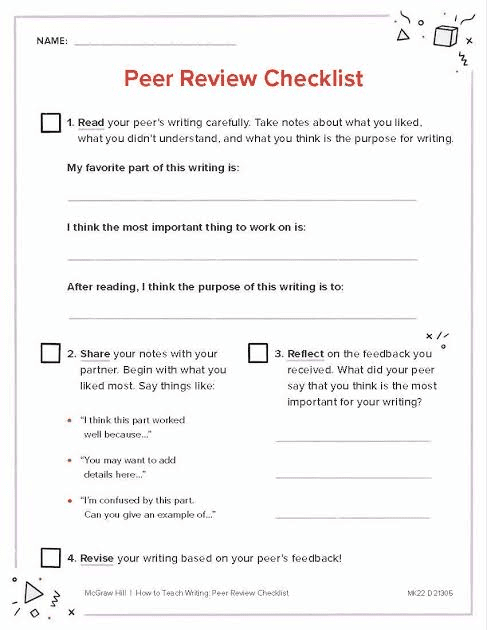
How to write a peer review as a student
By
Princeton Journal of Pre-Collegiate Research
Read more

Peer review etiquette: tone, structure, fairness
By
Princeton Journal of Pre-Collegiate Research
Read more

Version control for research documents
By
Princeton Journal of Pre-Collegiate Research
Read more

Digital vs paper lab notebooks for students
By
Princeton Journal of Pre-Collegiate Research
Read more

Data management basics for student researchers
By
Princeton Journal of Pre-Collegiate Research
Read more

How to keep a lab notebook that reviewers trust
By
Princeton Journal of Pre-Collegiate Research
Read more

How to organize research files across a year-long project
By
Princeton Journal of Pre-Collegiate Research
Read more

How to document your data so you can defend it
By
Princeton Journal of Pre-Collegiate Research
Read more

How to write a grant proposal as a student
By
Princeton Journal of Pre-Collegiate Research
Read more

Free resources that replace research funding
By
Princeton Journal of Pre-Collegiate Research
Read more

Corporate and nonprofit programs that fund student research
By
Princeton Journal of Pre-Collegiate Research
Read more

Science fair grants and material stipends explained
By
Princeton Journal of Pre-Collegiate Research
Read more

Crowdfunding a student research project: does it work
By
Princeton Journal of Pre-Collegiate Research
Read more

How much does a research project actually cost
By
Princeton Journal of Pre-Collegiate Research
Read more

How to ask your school to fund your project
By
Princeton Journal of Pre-Collegiate Research
Read more

Grants for high school research projects: what exists
By
Princeton Journal of Pre-Collegiate Research
Read more

How to start a research club at your school
By
Princeton Journal of Pre-Collegiate Research
Read more