How to publish your science fair project as a research paper
Princeton Journal of Pre-Collegiate Research

Your science fair project already contains the raw material of real research. Learning how to publish your science fair project as a research paper is the step that transforms a poster board into a permanent academic contribution.
Most students stop at the trophy or the ribbon. The ones who go further convert their experiments into peer-reviewed publications that follow them into college applications, scholarship interviews, and beyond. This guide shows you exactly how to make that transition, step by step.
Why the Leap from Fair to Publication Matters
A science fair project and a research paper share the same skeleton: a question, a method, data, and a conclusion. The difference is rigor, documentation, and permanence. A published paper earns a DOI (a digital object identifier), which means it exists forever, findable by anyone. A poster board gets recycled.
Publication also signals something that admissions officers and scholarship committees recognize immediately: this student did not stop when the fair ended. That distinction matters more than most students realize. For a deeper look at how this plays out in applications, read our breakdown of Is Published Research Paper Worth It College Admissions.
Step One: Audit What You Already Have
Before you write a single sentence of your paper, take stock of your existing materials. Pull out your hypothesis, your data tables, your methodology notes, and any observations you recorded during the experiment. If you competed at a regional or national fair, your abstract and judge feedback are also valuable starting points.
Ask yourself three questions. Is the question you investigated original, or did you replicate a known experiment? Is your data complete enough to support a conclusion? Did you follow a consistent, documented method? If you can answer yes to all three, you have a publishable project waiting to be written up.
What to Do If Your Data Has Gaps
Incomplete data is not a disqualifier. Many strong papers acknowledge limitations explicitly and call for further research. What you cannot do is fabricate or smooth over inconsistencies. If your sample size was small, say so. If a variable was difficult to control, document it. Reviewers respect honesty far more than they respect perfection (and they can tell the difference).
Step Two: Understand the Structure of a Research Paper
A research paper follows a specific format that differs from a science fair display. You need to understand that format before you start writing. Most papers in the sciences follow the IMRaD structure: Introduction, Methods, Results, and Discussion. Humanities and social science papers use variations of this, but the logic is the same.
Abstract: A concise summary of your entire paper, usually 150 to 250 words. Write this last.
Introduction: The context for your research, the gap your study addresses, and your specific research question or hypothesis.
Literature Review: A survey of existing research relevant to your topic. This is where you show you understand the field.
Methods: A detailed, reproducible account of how you conducted your study. Another researcher should be able to replicate your experiment from this section alone.
Results: Your data, presented clearly, with tables, graphs, or figures as appropriate. No interpretation here, just the findings.
Discussion: What your results mean, how they connect to existing research, and what limitations or future directions exist.
Conclusion: A tight summary of your contribution and its significance.
References: Every source cited, formatted consistently.
Your science fair materials already contain most of this content. The task now is to translate it into formal academic prose.
Step Three: Conduct a Focused Literature Review
This is the step most science fair students skip, and it is the one that separates a fair project from a genuine research paper. A literature review demonstrates that you understand where your work fits in the broader academic conversation. It is not a summary of everything ever written on your topic. It is a targeted survey of the most relevant prior studies.
Use Google Scholar, PubMed, JSTOR, or your school library database to find peer-reviewed sources. Aim for at least eight to twelve credible references. Read the abstracts first, then the full papers for the ones most relevant to your question. Take notes on what each study found, how it was conducted, and where it fell short (because that is often where your work steps in).
Step Four: Write the Paper
Start with the Methods section. It is the most concrete and the easiest to draft because you are simply describing what you did. Write it in past tense and third person (or first person plural if your journal permits). Include every detail: materials, quantities, equipment, procedures, and controls.
Move to Results next. Present your data without editorializing. Use clear, labeled figures and tables. Then write the Discussion, where you interpret your findings and connect them to the literature you reviewed. The Introduction comes after that, because you now know exactly what context to establish. The Abstract is always last.
Writing for Clarity, Not Complexity
Academic writing does not mean convoluted writing. Use precise language, not elaborate language. Every sentence should carry information. If a sentence does not add meaning, cut it. Your reviewers will thank you, and your paper will be stronger for it.
Before you submit, edit rigorously. Read the paper aloud. Check for logical gaps between sections. Verify that every claim in the Discussion is supported by data in the Results. Our guide on How To Edit Your Own Research Paper Before Submission walks through this process in detail.
Step Five: Choose the Right Journal
Not every journal publishes high school research. Most peer-reviewed journals are designed for credentialed researchers at universities and institutions. You need a journal that takes pre-collegiate work seriously, applies genuine peer review, and assigns a DOI to accepted papers.
The Princeton Journal of Pre-Collegiate Research (not affiliated with Princeton University) publishes original research by high school students across 50+ academic disciplines. Every submission goes through rigorous double-blind peer review, meaning reviewers do not know who you are and you do not know who they are (no shortcuts, no rubber stamps). Accepted papers receive a DOI and are accessible to a global readership spanning six continents.
When evaluating any journal, ask these questions. Does it use double-blind peer review? Does it assign DOIs? Is it indexed in recognized databases? Does it publish work across your discipline? If the answer to any of these is unclear or no, look elsewhere.
Step Six: Prepare Your Submission
Every journal publishes submission guidelines. Read them completely before you format a single page. Guidelines specify word counts, citation styles, figure requirements, file formats, and abstract length. Submitting without reading the guidelines is the fastest way to get a desk rejection (before a reviewer even sees your work).
Prepare the following before you submit. A clean, formatted manuscript that matches the journal's style guide. A cover letter that briefly introduces your paper and explains why it is a fit for the journal. All figures and tables in the required format. A complete reference list in the required citation style.
Handling the Peer Review Process
After submission, your paper enters peer review. At PJPCR, this means double-blind evaluation by qualified reviewers in your field. The process takes time (plan for several weeks). You may receive one of three outcomes: acceptance, revise and resubmit, or rejection.
Revise and resubmit is not a rejection. It is an invitation to strengthen your work based on expert feedback. Read every comment carefully. Respond to each one directly in a revision memo. Treat the process as a learning experience, because that is exactly what it is. If rejection does come, our resource on What To Do If Your Childs Research Paper Gets Rejected offers a clear path forward.
Common Mistakes to Avoid
Submitting without editing: A first draft is never a final draft. Edit for clarity, accuracy, and flow before submission.
Ignoring the literature review: Skipping this step signals to reviewers that you are not engaging with the field. Do the reading.
Overclaiming in the Discussion: Your results support specific conclusions. Do not stretch them further than the data allows.
Inconsistent citation formatting: Pick one citation style and apply it uniformly throughout the paper.
Submitting to the wrong journal: Match your topic and discipline to the journal's scope before you submit.
If Your Project Was in a Specific Field
The process described above applies across disciplines, but the specifics vary by field. Computer science papers often include code repositories and algorithm descriptions. Political science papers rely heavily on theoretical frameworks and secondary source analysis. Nutrition science papers require careful attention to ethical considerations and data sourcing.
If your project was in computer science, our guide on How To Write Computer Science Research Paper High School covers the field-specific requirements in depth. For projects in the social sciences, How To Write Political Science Research Paper High School is a useful companion resource.
Managing the Timeline
Converting a science fair project into a published paper takes longer than most students expect. A realistic timeline from start to submission is eight to twelve weeks, accounting for the literature review, drafting, editing, and formatting. Peer review adds additional weeks after that.
If you are managing this alongside a full course load, planning is essential. Break the process into weekly milestones. Dedicate specific hours each week to the paper and protect that time. Our guide on How To Plan A Research Project Around Your School Schedule provides a practical framework for doing exactly that.
How to Publish Your Science Fair Project as a Research Paper: The Summary
The path from science fair project to published research paper is direct, but it requires deliberate effort at every stage. Audit your existing materials. Understand the paper format. Conduct a genuine literature review. Write with clarity and precision. Choose a journal that applies real peer review and assigns DOIs. Submit carefully, respond to feedback, and revise thoroughly.
Knowing how to publish your science fair project as a research paper is a skill that compounds. The discipline you build, the feedback you process, and the credential you earn all carry forward. You leave the process a better researcher than you arrived.
If you are ready to take that step, Princeton JPCR accepts submissions from high school students across all disciplines. Double-blind peer review. A DOI on every accepted paper. Feedback that teaches. Submit your work and let it stand on its own.
Read More

Can high school students be peer reviewers
By
Princeton Journal of Pre-Collegiate Research
Read more

What reviewing other papers teaches you about your own
By
Princeton Journal of Pre-Collegiate Research
Read more
How to give useful feedback on a classmate's paper
By
Princeton Journal of Pre-Collegiate Research
Read more

Student editorial boards: how they work
By
Princeton Journal of Pre-Collegiate Research
Read more
How to write a peer review as a student
By
Princeton Journal of Pre-Collegiate Research
Read more

Peer review etiquette: tone, structure, fairness
By
Princeton Journal of Pre-Collegiate Research
Read more

Version control for research documents
By
Princeton Journal of Pre-Collegiate Research
Read more

Digital vs paper lab notebooks for students
By
Princeton Journal of Pre-Collegiate Research
Read more

Data management basics for student researchers
By
Princeton Journal of Pre-Collegiate Research
Read more
How to keep a lab notebook that reviewers trust
By
Princeton Journal of Pre-Collegiate Research
Read more

How to organize research files across a year-long project
By
Princeton Journal of Pre-Collegiate Research
Read more

How to document your data so you can defend it
By
Princeton Journal of Pre-Collegiate Research
Read more

How to write a grant proposal as a student
By
Princeton Journal of Pre-Collegiate Research
Read more
Free resources that replace research funding
By
Princeton Journal of Pre-Collegiate Research
Read more
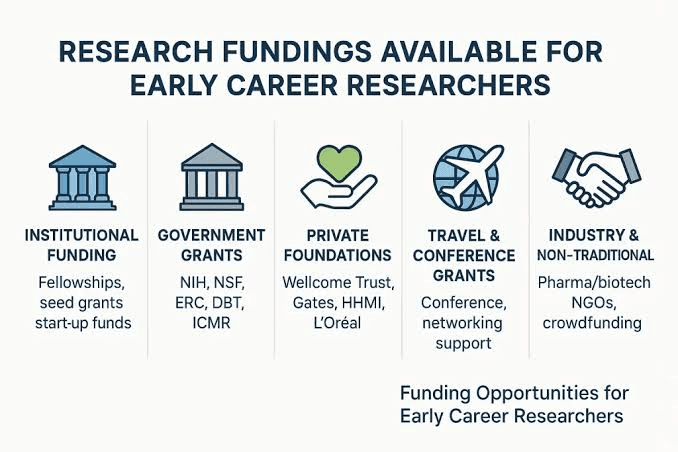
Corporate and nonprofit programs that fund student research
By
Princeton Journal of Pre-Collegiate Research
Read more

Science fair grants and material stipends explained
By
Princeton Journal of Pre-Collegiate Research
Read more

Crowdfunding a student research project: does it work
By
Princeton Journal of Pre-Collegiate Research
Read more

How much does a research project actually cost
By
Princeton Journal of Pre-Collegiate Research
Read more

How to ask your school to fund your project
By
Princeton Journal of Pre-Collegiate Research
Read more

Grants for high school research projects: what exists
By
Princeton Journal of Pre-Collegiate Research
Read more

How to start a research club at your school
By
Princeton Journal of Pre-Collegiate Research
Read more