How to write a grant proposal as a student
Princeton Journal of Pre-Collegiate Research
How to write a grant proposal as a student: a step-by-step guide
Writing a grant proposal as a student is a skill that most high school researchers need before they expect to. Many students complete a research project and only then discover that small grants exist to fund data collection, materials, or conference attendance. This post answers the specific question of how to write a grant proposal as a student, from identifying a fundable question to submitting a complete application. It is written for high school students in grades 9 through 12 who are at or near the stage of conducting original research. After reading, students will understand the required components of a student grant proposal, the most common reasons applications are rejected, and how to position completed research for publication at the Princeton Journal of Pre-Collegiate Research.
How do you write a grant proposal as a high school student?
A student grant proposal is a structured document, typically 500 to 1,500 words, that explains what you intend to research, why it matters, how you will conduct it, and what the funding will specifically cover. Most student-facing grant programs require six core sections: a project title, an abstract, a problem statement, a methodology, a budget justification, and a timeline. Knowing this structure before writing saves significant revision time.
Grant writing at the student level differs from academic grant writing in one important way: reviewers are not evaluating whether your hypothesis is correct. They are evaluating whether your plan is realistic, your question is specific, and your methods are appropriate for your resources. A student who proposes to survey 200 peers about social media use and analyze results using descriptive statistics is more fundable than one who proposes to sequence a novel genome without laboratory access.
The six required sections of a student grant proposal are as follows:
Project title. State the research question in one precise sentence. Avoid vague titles. "Investigating the Effect of Blue Light Exposure on Sleep Latency in Adolescents Aged 14-17" is fundable. "A Study of Sleep and Screens" is not.
Abstract. Summarize the entire proposal in 150 to 250 words. Write this last. It should state the problem, your method, your expected outcome, and the significance of the work. Reviewers often read only the abstract before deciding whether to continue.
Problem statement. Explain the gap in existing knowledge your project addresses. Cite at least two peer-reviewed sources. Use Google Scholar or PubMed to find them. A problem statement that opens with a specific statistic from a named study is stronger than one that opens with a general observation.
Methodology. Describe exactly what you will do, in what order, and with what instruments or tools. Include your sample size, your data collection method, and your analysis plan. If your school lacks laboratory equipment, name the alternative resource you have confirmed access to, such as a university partnership or an online dataset.
Budget justification. List every expense and explain why each one is necessary. Reviewers reject budgets that include items without justification. If you are requesting funds for survey software, state the platform, the cost per month, and the number of months required.
Timeline. Break the project into phases with specific dates. A six-month project should have at minimum four milestones: data collection complete, analysis complete, draft complete, and submission complete.
Students who are working with limited institutional resources will find practical strategies in the guide to research for students at schools with no science labs, which addresses how to design methodologically sound projects without specialized equipment.
What happens after you submit a student grant proposal?
Most student grant programs conduct a two-stage review. In the first stage, program staff screen applications for completeness and eligibility. Proposals that are missing a required section, exceed the word limit, or fall outside the program's stated focus areas are eliminated at this stage without substantive review. This is called administrative screening, and it accounts for a significant proportion of rejections that have nothing to do with research quality.
Applications that pass the first stage are forwarded to a review panel, which may include faculty members, researchers, or program officers. Reviewers score proposals against a rubric that typically weights significance, feasibility, and clarity of method most heavily. At many student grant programs, the review panel provides written feedback regardless of outcome. This feedback is worth requesting explicitly if it is not offered automatically, because it is directly applicable to improving both the grant proposal and the underlying research design.
Award decisions are typically communicated within six to twelve weeks of the submission deadline, though timelines vary by program. Students who receive partial funding should contact the program officer to clarify whether the award is contingent on a revised scope or budget. Students who are not funded should treat the reviewers' comments as a first round of peer critique and revise accordingly before applying to a second program.
Students who have already completed their research and are preparing to submit their findings for publication can review the research proposal example for high school students to understand how the framing of a proposal differs from the framing of a manuscript.
What are the most common mistakes students make when writing grant proposals?
The four errors below account for the majority of unsuccessful student grant applications. Each one is avoidable with targeted revision before submission.
The first mistake is proposing a question that is too broad to be completed within the stated timeline. A student who proposes to "examine the relationship between poverty and educational outcomes" without specifying a geographic scope, a grade level, a dataset, and an analysis method is proposing a doctoral dissertation, not a student project. Reviewers reject broad proposals because they cannot evaluate feasibility. The fix is to narrow the question until it is answerable with the resources and time the student actually has.
The second mistake is writing a budget that does not match the methodology. If the methodology describes conducting in-person interviews but the budget contains no line item for transportation or recording equipment, reviewers will flag the inconsistency as evidence that the student has not fully planned the project. Every item in the methodology should have a corresponding line in the budget, and every budget line should be traceable to a methodological step.
The third mistake is failing to cite existing literature in the problem statement. According to the National Institutes of Health's grant writing guidelines, which are publicly available and widely used as a model by student programs, a strong problem statement demonstrates that the applicant has reviewed the existing evidence and can identify a specific gap. Students who skip this step signal to reviewers that they have not engaged with the field. Two to four peer-reviewed citations are sufficient for a student proposal.
The fourth mistake is using vague language in the methodology section. Phrases such as "we will collect data from participants" or "analysis will be conducted" do not tell reviewers anything specific. The methodology must name the instrument (survey, spectrometer, interview protocol), the sample size, the recruitment method, and the statistical or analytical approach. Students who struggle with statistical methodology should review the guide to common statistical mistakes in student papers before finalizing their methods section.
How to write a grant proposal as a student, step by step
Identify your research question first. Do not begin writing a grant proposal until the question is specific enough to be answered with the resources you have. If the question is still broad, narrow it by fixing one variable: the population, the time period, or the setting.
Search for relevant literature. Use Google Scholar to find at least two peer-reviewed sources that address your topic. Note what those studies found and where they left gaps. This becomes the basis of your problem statement.
Confirm your resource access before writing your methodology. If your method requires laboratory equipment, confirm access in writing before including it in the proposal. Reviewers ask whether access has been secured.
Write the methodology before the abstract. The abstract summarizes the methodology, so the methodology must exist first. Write each section in this order: methodology, budget, timeline, problem statement, abstract, title.
Build the budget line by line from the methodology. Every methodological step that requires a resource should generate a budget line. Include unit cost, quantity, and total for each item.
Write the abstract last. Summarize the problem, method, expected outcome, and significance in 150 to 250 words. Read it aloud. If it makes sense without the rest of the proposal, it is ready.
Ask a teacher or mentor to read the proposal before submission. A mentor letter may be required by the grant program. The guide to how to write a mentor letter for a student journal submission explains what reviewers expect from supporting documentation.
When your research is complete, submit your findings for peer review. Completed student research across all disciplines can be submitted to PJPCR at princeton-jpcr.org/submit. Submission and peer review are free, and a publication fee applies for accepted papers.
If your research is complete and ready for peer review, review the submission guidelines at princeton-jpcr.org/submit. PJPCR publishes original research across all academic disciplines and accepts submissions on a rolling basis.
Frequently asked questions about how to write a grant proposal as a student
What is a grant proposal and how is it different from a research paper?
A grant proposal is a document submitted before research begins, requesting funds to conduct the work. A research paper reports findings after the work is complete. The proposal describes what you plan to do and why it is worth funding. The paper describes what you did and what you found. The two documents serve different audiences and follow different structures.
Grant proposals are evaluated on the strength of the plan, the clarity of the question, and the feasibility of the method. Research papers are evaluated on the quality of the data, the rigor of the analysis, and the validity of the conclusions. Students who understand this distinction write stronger proposals because they focus on justifying the design rather than anticipating results.
How long does it take to write a student grant proposal?
A well-prepared student grant proposal takes two to four weeks to write, assuming the research question is already defined. The problem statement requires the most time because it depends on a literature search. Students who attempt to write the entire proposal in one sitting consistently produce weaker applications than those who draft each section on separate days and revise between sessions.
Budget and timeline sections are often underestimated in the time they require. A realistic budget requires pricing out every item from an actual vendor or platform, which takes several hours. Build this time into the schedule before the submission deadline.
Do I need a faculty mentor to apply for a student research grant?
Most student grant programs do not require a faculty mentor, but many request a supporting letter from a teacher, school administrator, or subject-matter expert. This letter confirms that the student has institutional support and that the project is feasible within the student's setting. A mentor letter is not a guarantee of the student's success; it is evidence that a knowledgeable adult has reviewed the plan.
Students who do not have a formal mentor can often ask a science teacher, school librarian, or community professional in the relevant field to serve in this role. The letter should describe the student's preparation, the project's feasibility, and the mentor's qualifications to assess both.
What makes a student grant proposal strong enough to be funded?
Funded student proposals share four characteristics: a specific and answerable research question, a methodology that matches the student's actual resources, a budget that accounts for every methodological step, and a problem statement grounded in cited literature. Reviewers fund proposals they believe will be completed, not proposals that are merely interesting.
The single most common reason student proposals are not funded is a mismatch between the scope of the question and the resources available. A proposal that acknowledges its constraints and designs around them is more credible than one that ignores them. Students who are conducting research with limited access to institutional resources should consult the guide to research for students in rural areas without university access for strategies specific to their situation.
What kinds of student research does PJPCR publish, and is it peer reviewed?
PJPCR publishes original research by pre-collegiate students across all academic disciplines, including the natural sciences, social sciences, humanities, mathematics, and interdisciplinary fields. Every submission undergoes peer review conducted by qualified reviewers. Acceptance is selective; submission does not guarantee publication.
Students whose grant-funded research has produced original findings are encouraged to submit their completed manuscripts for consideration. The full peer review process is described at princeton-jpcr.org/peer-review, and the submission guidelines are available at princeton-jpcr.org/submit. The standard review and publication timeline is 2 to 3 months. A fast-track option is available for students who need a quicker turnaround.
What to do next
Writing a grant proposal as a student requires the same discipline as writing a research paper: a specific question, evidence from the literature, a realistic method, and honest accounting of what the work will require. The students who receive funding are not necessarily those with the most ambitious ideas. They are the ones whose proposals demonstrate that they have thought carefully about what they are going to do and why it is worth doing.
When the research is complete and the findings are ready for a wider audience, peer-reviewed publication is the appropriate next step. Explore the published issues at PJPCR to see the range of disciplines and methodologies that have been accepted. If your work is ready for peer review, submit it to PJPCR at princeton-jpcr.org/submit.
Read More
How to write a grant proposal as a student
By
Princeton Journal of Pre-Collegiate Research
Read more
Free resources that replace research funding
By
Princeton Journal of Pre-Collegiate Research
Read more
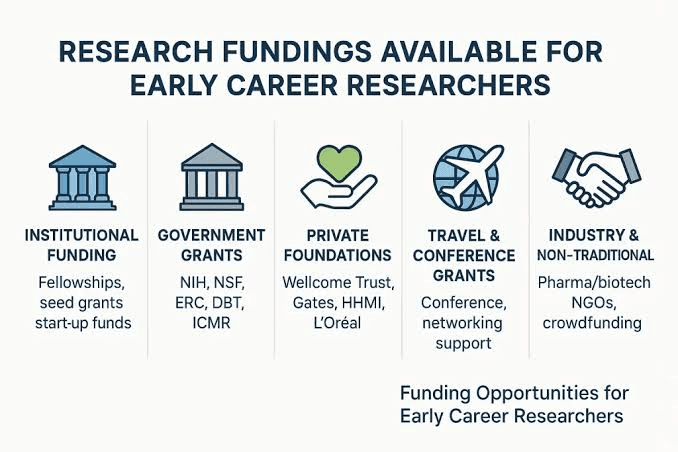
Corporate and nonprofit programs that fund student research
By
Princeton Journal of Pre-Collegiate Research
Read more

Science fair grants and material stipends explained
By
Princeton Journal of Pre-Collegiate Research
Read more

Crowdfunding a student research project: does it work
By
Princeton Journal of Pre-Collegiate Research
Read more

How much does a research project actually cost
By
Princeton Journal of Pre-Collegiate Research
Read more

How to ask your school to fund your project
By
Princeton Journal of Pre-Collegiate Research
Read more

Grants for high school research projects: what exists
By
Princeton Journal of Pre-Collegiate Research
Read more

How to start a research club at your school
By
Princeton Journal of Pre-Collegiate Research
Read more

How to organize a school research symposium
By
Princeton Journal of Pre-Collegiate Research
Read more

Turning a school club into a research pipeline
By
Princeton Journal of Pre-Collegiate Research
Read more

How to start a student research journal at your school
By
Princeton Journal of Pre-Collegiate Research
Read more

How to find a faculty sponsor for a research club
By
Princeton Journal of Pre-Collegiate Research
Read more

How to propose an independent study for research credit
By
Princeton Journal of Pre-Collegiate Research
Read more

Running a peer-review workshop at your school
By
Princeton Journal of Pre-Collegiate Research
Read more

How to get school funding for student research
By
Princeton Journal of Pre-Collegiate Research
Read more

How to do research as a team of students
By
Princeton Journal of Pre-Collegiate Research
Read more

Dividing work fairly in a group research project
By
Princeton Journal of Pre-Collegiate Research
Read more

Group research vs solo research: pros and cons
By
Princeton Journal of Pre-Collegiate Research
Read more

Resolving disagreements in group research
By
Princeton Journal of Pre-Collegiate Research
Read more
What to do when a co-author stops contributing
By
Princeton Journal of Pre-Collegiate Research
Read more