How to start a research club at your school
Princeton Journal of Pre-Collegiate Research

How to start a research club at your school
Starting a research club at your school is one of the most direct ways to build a structured environment for original inquiry, connect with peers who share your intellectual interests, and produce work that reaches beyond the classroom. This post is written for high school students in grades 9 through 12 who want to establish a functioning research club, whether or not their school has an existing science or academic programme to support it. By the end of this guide, you will know how to propose the club, recruit members, structure meetings, and move student projects toward peer-reviewed publication. Students whose work is ready for external review may consider submitting to the Princeton Journal of Pre-Collegiate Research, an open-access, peer-reviewed journal that publishes original research across all academic disciplines.
Why research clubs form and what makes them succeed
Most high school students who conduct original research do so in isolation. They identify a question, collect data, and write up findings without any peer feedback until the work is complete. Research clubs change that structure by creating a recurring forum for critique, collaboration, and accountability. Schools that have established student research programmes report higher rates of project completion and external submission than those that rely on individual student initiative alone, according to findings published by the National Science Teaching Association. The club model works because it distributes the motivational burden across a group rather than placing it entirely on one student.
Before proposing a research club, it is worth understanding what distinguishes a successful one from a club that meets twice and dissolves. The clubs that persist share three characteristics: a faculty advisor who attends regularly, a defined meeting structure that produces tangible outputs, and at least one member who has completed a project and can model what the process looks like from start to finish. If none of those conditions exist yet, this guide will show you how to build them.
How do you start a research club at your school?
To start a research club at your school, you need four things in place before the first meeting: administrative approval, a faculty advisor, a founding group of three to five members, and a written purpose statement. Most schools require a formal proposal submitted to the student activities office or principal. The proposal should take no more than one page and should specify the club's academic focus, meeting frequency, and intended outputs.
The steps below cover the full process from initial proposal to first research cycle.
Draft a one-page club proposal. The proposal should state what the club does, who it is for, how often it meets, and what it produces. Avoid vague language like "exploring science." Instead, write something specific: "Members will design and execute original research projects, present findings to peers for critique, and prepare manuscripts for external submission." Specificity signals seriousness to administrators and prospective advisors alike.
Identify and approach a faculty advisor. The advisor does not need to be a science teacher. A history teacher who has conducted archival research, an economics teacher familiar with quantitative methods, or a librarian with experience in academic databases can all serve effectively. What matters is that the advisor attends meetings consistently and is willing to give honest feedback on student work. Approach the advisor before submitting the proposal so their name can appear on it.
Recruit founding members across disciplines. A research club that draws only biology students will struggle when a member wants to study political science or linguistics. Recruit across departments from the start. Post in three places: the school announcements board, subject-specific classrooms, and any existing academic honour societies. Aim for five to eight founding members. Fewer than three makes the club fragile; more than ten in the first semester makes it difficult to give each project adequate attention.
Submit the proposal and obtain approval. Most schools require the proposal to be reviewed by the student activities coordinator and, in some cases, the principal or department head. Build in two to three weeks for this process. If your school has a formal club constitution template, use it. If not, your one-page proposal will typically suffice.
Hold a structured founding meeting. The first meeting sets the tone for everything that follows. Open with a 20-minute discussion of what research actually is at the high school level: the difference between a literature review and an original study, what a research question looks like, and what peer review means. Then ask each founding member to articulate one topic they are genuinely curious about. Do not assign projects at the first meeting. Let the curiosity inventory happen first.
Establish a repeating meeting structure. Clubs that meet without an agenda drift. A reliable structure for a biweekly 60-minute meeting is: 10 minutes of project status updates, 30 minutes of deep work on one member's project (methodology review, data discussion, or manuscript feedback), and 20 minutes of skill-building on a shared topic such as how to read a journal article, how to use Google Scholar effectively, or how to interpret a p-value. The explanation of p-values for high school researchers available on the PJPCR blog is a useful resource for that last component.
Plan around the academic calendar. Research projects compete with exams, college application season, and extracurricular commitments. Before the semester begins, map out which weeks are high-pressure and schedule lighter tasks for those periods. A detailed approach to this balance is covered in the guide on how to plan a research project around your school schedule.
What happens after the club is running?
Once a research club has established a regular meeting rhythm, the next challenge is moving members from the idea stage to a completed, submittable manuscript. This transition is where most student clubs stall. Members generate research questions enthusiastically but struggle to commit to a methodology, collect data systematically, and write up results in a form that could withstand external review.
The most effective intervention at this stage is to introduce the concept of a project milestone calendar at the start of each semester. Each member identifies their research question, their methodology, their data collection window, and their target submission date at the beginning of the term. The club then holds each member accountable to those milestones at each meeting. This is not bureaucratic overhead; it is the same structure that professional researchers use when managing grant-funded projects with fixed timelines.
It is also worth addressing the question of school involvement directly. Some students assume that original research requires institutional backing, laboratory access, or a teacher-assigned project. This is not accurate. A substantial portion of publishable high school research is conducted using publicly available datasets, survey instruments, systematic literature analysis, or observational methods that require no specialised equipment. The post on whether you can publish research without your school's involvement addresses this in detail and is worth sharing with club members who feel constrained by their school's resources. Similarly, students at schools without laboratory facilities should consult the guide on research for students at schools with no science labs, which outlines methodological alternatives that are rigorous and publishable.
What are the most common mistakes students make when starting a research club?
The most common mistake is launching a research club without a defined output goal. A club that exists to "do research" without specifying what that means in practice will default to reading articles and discussing ideas, which is valuable but insufficient. The fix is to state in the founding documents that the club's goal is to support members in producing at least one completed research project per academic year.
The second mistake is recruiting only students who are already high achievers in science. Research clubs that draw exclusively from AP Biology or AP Chemistry rosters tend to narrow their intellectual range and miss the interdisciplinary questions that are often most original. Psychology, economics, history, and linguistics all admit rigorous empirical research at the high school level. The guide on how aspiring psychologists start research in high school illustrates what that looks like in practice for one discipline.
The third mistake is treating the club as a resume item rather than a research environment. When membership is motivated primarily by college application strategy rather than intellectual curiosity, meeting quality declines and project completion rates drop. This does not mean that research has no relationship to college admissions; it does. But the students who benefit most from a research club are those who treat the work as the primary goal. The comparison between research and other extracurricular activities is examined in the post on research versus starting a club and how their impact compares.
The fourth mistake is waiting until a project is fully polished before seeking external feedback. Peer review is not a final validation step; it is a process that improves work at every stage. Clubs should build internal peer review into their meeting structure from the earliest draft stage, so that members are accustomed to giving and receiving critical feedback before they submit to any external venue.
How to start a research club at your school, step by step
Write a one-page proposal with a specific purpose statement, meeting schedule, and intended outputs.
Identify a faculty advisor before submitting the proposal.
Recruit five to eight founding members from at least three different subject areas.
Submit the proposal to your school's student activities office and obtain written approval.
Hold a founding meeting focused on defining what research means and inventorying member interests.
Establish a biweekly meeting structure with a fixed agenda: status updates, deep project work, and skill-building.
At the start of each semester, have each member complete a milestone calendar with a target submission date.
When a member's manuscript is complete and has been reviewed internally, support their submission to an appropriate peer-reviewed venue. For original research across all disciplines, the submission guidelines at PJPCR outline exactly what is required.
PJPCR publishes original research across all academic disciplines by pre-collegiate students. If a club member's work is ready for external peer review, they can review the submission guidelines at princeton-jpcr.org/submit.
Frequently asked questions about how to start a research club at your school
What is a research club and how is it different from a science club?
A research club is a student organisation focused on producing original, methodologically rigorous work across any academic discipline, not just science. Unlike a science club, which may centre on demonstrations, competitions, or science fair preparation, a research club is oriented toward the full research cycle: question formulation, methodology design, data collection, analysis, and manuscript preparation. Members work on independent projects and use club meetings for peer critique and skill development.
How long does it take to go from founding a research club to having a published paper?
Most student research projects take four to eight months from initial question to a submission-ready manuscript, depending on the methodology and the student's available time. After submission to a peer-reviewed journal, the review process typically takes additional time. At PJPCR, the standard review and publication timeline is 2 to 3 months. A fast-track option is available for students who need a quicker turnaround. Planning the full timeline at the start of the academic year helps clubs set realistic expectations.
Do you need a teacher or mentor to start a research club?
Most schools require a faculty advisor for any officially recognised student club, so a teacher's involvement is typically a procedural necessity. However, the advisor does not need to be a subject-matter expert in every member's research area. Their role is to provide logistical support, attend meetings, and offer feedback on process. Students can and do conduct original research independently; the advisor requirement is an institutional one, not an intellectual one.
What makes a research club produce work that is actually publishable?
Clubs that produce publishable work share three characteristics: they treat peer review as an ongoing process rather than a final step, they hold members to milestone calendars, and they recruit across disciplines so that members with different methodological backgrounds can critique each other's work. The quality threshold for publication is not perfection; it is originality, methodological transparency, and honest engagement with limitations. Clubs that build internal critique into every meeting produce stronger manuscripts than those that review work only at the end.
What kinds of research does PJPCR publish, and is it peer reviewed?
PJPCR publishes original research by pre-collegiate students across all academic disciplines, including biology, chemistry, physics, computer science, psychology, economics, history, and linguistics, among others. All submissions undergo external peer review conducted by qualified reviewers. Submission and peer review are free. A publication fee applies for accepted papers. To understand the full review process before submitting, students should consult the guide on how schools can support student research programmes and review the published issues to assess the scope and standard of work the journal accepts.
What to do next
Starting a research club at your school requires a clear proposal, a committed faculty advisor, and a meeting structure that produces tangible outputs rather than open-ended discussion. The clubs that sustain themselves are the ones that treat project completion as the measure of success, not attendance numbers or meeting frequency. If your club produces original research, the next step is external peer review. When a member's manuscript is ready, submit it to the Princeton Journal of Pre-Collegiate Research. Review the submission guidelines at princeton-jpcr.org/submit to confirm formatting requirements and begin the process.
Read More

How to write a grant proposal as a student
By
Princeton Journal of Pre-Collegiate Research
Read more
Free resources that replace research funding
By
Princeton Journal of Pre-Collegiate Research
Read more
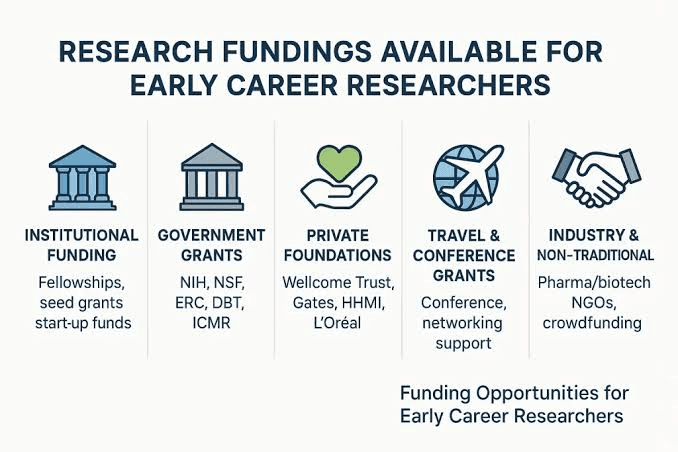
Corporate and nonprofit programs that fund student research
By
Princeton Journal of Pre-Collegiate Research
Read more

Science fair grants and material stipends explained
By
Princeton Journal of Pre-Collegiate Research
Read more

Crowdfunding a student research project: does it work
By
Princeton Journal of Pre-Collegiate Research
Read more

How much does a research project actually cost
By
Princeton Journal of Pre-Collegiate Research
Read more

How to ask your school to fund your project
By
Princeton Journal of Pre-Collegiate Research
Read more

Grants for high school research projects: what exists
By
Princeton Journal of Pre-Collegiate Research
Read more
How to start a research club at your school
By
Princeton Journal of Pre-Collegiate Research
Read more

How to organize a school research symposium
By
Princeton Journal of Pre-Collegiate Research
Read more

Turning a school club into a research pipeline
By
Princeton Journal of Pre-Collegiate Research
Read more

How to start a student research journal at your school
By
Princeton Journal of Pre-Collegiate Research
Read more

How to find a faculty sponsor for a research club
By
Princeton Journal of Pre-Collegiate Research
Read more

How to propose an independent study for research credit
By
Princeton Journal of Pre-Collegiate Research
Read more

Running a peer-review workshop at your school
By
Princeton Journal of Pre-Collegiate Research
Read more

How to get school funding for student research
By
Princeton Journal of Pre-Collegiate Research
Read more

How to do research as a team of students
By
Princeton Journal of Pre-Collegiate Research
Read more

Dividing work fairly in a group research project
By
Princeton Journal of Pre-Collegiate Research
Read more

Group research vs solo research: pros and cons
By
Princeton Journal of Pre-Collegiate Research
Read more

Resolving disagreements in group research
By
Princeton Journal of Pre-Collegiate Research
Read more

What to do when a co-author stops contributing
By
Princeton Journal of Pre-Collegiate Research
Read more