How much does a research project actually cost
Princeton Journal of Pre-Collegiate Research

How much does a research project actually cost?
Most guides about high school research focus on methodology, timelines, and publication. Very few address the practical question students and parents ask first: how much does a research project actually cost? The honest answer depends on the discipline, the methodology, and the choices a student makes along the way. This post breaks down the real cost categories across common research types, identifies where students spend money unnecessarily, and clarifies what is genuinely free. It is written for high school students in grades 9 through 12 and their parents. Students whose work is ready for peer-reviewed publication can submit it to the Princeton Journal of Pre-Collegiate Research, an open-access journal that publishes original pre-collegiate research across all academic disciplines.
How much does a research project actually cost for a high school student?
Most high school research projects cost between zero and several hundred dollars, depending entirely on the methodology. Survey-based, computational, and archival research can be completed at no cost. Laboratory or field research involving consumables, equipment, or specialized software may incur costs ranging from under fifty dollars to several hundred dollars. No category of student research inherently requires thousands of dollars.
The single most important cost variable is methodology. A student conducting a survey study using free tools such as Google Forms or one of the platforms listed in this guide on best survey tools for student research projects will spend nothing on data collection. A student culturing bacteria in a home or school laboratory will spend money on reagents, petri dishes, and growth media. A student building a machine learning classifier will spend nothing if they use freely available datasets and open-source libraries. Understanding which methodology a project requires is therefore the first step in estimating its cost.
The following breakdown covers the five most common cost categories in high school research:
Data collection tools. Survey platforms, interview recording software, and data storage are all available at no cost through Google Workspace, Qualtrics (free for students at many institutions), and university open-data repositories. Students who pay for premium survey tiers before exhausting free options are spending unnecessarily.
Laboratory consumables. Reagents, culture media, pipette tips, and protective equipment represent the most variable cost category. A basic microbiology project might require twenty to eighty dollars in consumables. More complex chemistry or biochemistry work can exceed two hundred dollars. Many school science departments will supply consumables for supervised projects at no cost to the student.
Software and statistical tools. R, Python, JASP, and jamovi are all free and sufficient for the statistical analyses required in most high school research. SPSS and MATLAB carry licensing costs but are unnecessary for the vast majority of student projects. Students should confirm that their school or local library provides software access before purchasing any license.
Access to academic literature. PubMed, Google Scholar, JSTOR's free-access tier, and institutional library portals provide access to the majority of papers a high school researcher will need. Interlibrary loan services, available through most public libraries, retrieve papers behind paywalls at no cost to the student.
Publication fees. Submission and peer review at PJPCR are free. A publication fee applies for accepted papers. Students should be aware that some journals charge fees at submission, before any review occurs. This is a meaningful distinction when budgeting.
What happens to research costs after the project is designed?
The design phase determines the majority of costs, but several additional expenses can arise during execution and after completion that students rarely anticipate.
During execution, the most common unexpected costs involve consumable overruns. A student who designs an experiment requiring three replicates but encounters contamination or equipment failure will need additional materials. Building a ten to twenty percent buffer into any consumables budget is standard practice in laboratory research. Students running survey studies occasionally encounter low response rates and attempt to boost participation through incentives such as gift cards. This is rarely necessary and almost never improves data quality in ways that justify the cost.
After the project is complete, some students invest in poster printing for science fairs or symposia. A standard research poster printed at a university print shop typically costs fifteen to forty dollars. This is optional and has no bearing on whether the underlying research is publishable.
The cost category that generates the most confusion among families is mentorship and research programme fees. Some private programmes charge thousands of dollars for supervised research experiences. These are not required for producing publishable research. Students who have conducted original work independently or under the supervision of a teacher, as described in this guide on how to ask a teacher to supervise your research project, are fully eligible to submit to peer-reviewed journals. The quality of the research determines publishability, not the institutional affiliation of the supervisor.
Students considering whether to pursue a structured research programme should also read this analysis of research versus passion projects to understand what distinguishes original research from other academic activities before committing to any programme or expenditure.
What are the most common mistakes students make when budgeting for research?
The most common budgeting mistakes in student research fall into three categories: overspending on tools before the methodology is finalised, underestimating consumable needs in laboratory work, and paying for services that are freely available through school or library systems.
The first mistake is purchasing software, equipment, or platform subscriptions before confirming that the chosen methodology actually requires them. A student who buys a statistical software license before realising that their analysis can be completed in R has spent money unnecessarily. The fix is straightforward: identify the specific analysis the project requires, then confirm whether a free tool can perform it before purchasing anything.
The second mistake is underbudgeting for laboratory consumables. Students frequently plan for one round of experiments without accounting for failed trials, contamination, or the need for additional replicates to achieve statistical power. According to standard experimental design principles taught in undergraduate research methods courses, a minimum of three independent replicates is required for most biological experiments. Students who budget for one round and encounter a failed trial must either abandon the experiment or find additional funds. The fix is to plan for at least two complete rounds of consumables from the outset.
The third mistake is paying for academic paper access. A 2023 analysis by the Scholarly Publishing and Academic Resources Coalition (SPARC) found that the majority of peer-reviewed literature is now available through open-access repositories, institutional portals, or interlibrary loan at no cost. Students who pay per-article fees through publisher websites are almost always paying for access that is available elsewhere for free. The fix is to search PubMed Central, Google Scholar, and the student's school or public library portal before paying for any article.
How to estimate the cost of your research project, step by step
The following process applies to any discipline and any methodology. Completing it before beginning data collection will prevent the majority of avoidable costs.
Write out your methodology in full. List every data collection step, every tool required, and every material needed. Do not estimate from memory. Write it out explicitly.
Categorise each item as free, school-supplied, or out-of-pocket. Contact your school science department or library before assuming any item is out-of-pocket. Many consumables, software licenses, and databases are already available to students at no cost.
Search for free alternatives to every paid item. For software, check whether R, Python, or JASP can perform the required analysis. For literature access, check PubMed Central, Google Scholar, and your public library's interlibrary loan service before paying for any article.
Add a fifteen percent buffer to any consumables estimate. This accounts for failed trials, contamination, and measurement error without requiring a return to the planning stage mid-project.
Confirm publication costs before selecting a journal. Submission and peer review at PJPCR are free. A publication fee applies for accepted papers. Some journals charge at submission regardless of outcome. Read the fee schedule of any journal before submitting.
Review your timeline against your budget. Projects completed over a single semester, as described in this guide on research projects you can finish in one semester, tend to have lower total costs than multi-year projects because consumable overruns accumulate over time.
Submit your completed research for peer review. Review the submission guidelines at princeton-jpcr.org/submit to confirm your manuscript meets the formatting and scope requirements before uploading.
PJPCR publishes original research across all academic disciplines. If your work is ready for peer review, review the submission guidelines at princeton-jpcr.org/submit. Submission is free. A fast-track option is available for students who need a quicker turnaround.
Frequently asked questions about how much a research project costs
What is the difference between a research project cost and a publication cost?
Research project costs cover materials, software, and data collection needed to conduct the study itself. Publication costs are separate fees charged by journals after the research is complete. These are two distinct expense categories. A student can complete a full research project at zero cost and still face a publication fee when submitting to certain journals.
Understanding this distinction matters because some students conflate the two and either avoid publication entirely or overestimate what research itself costs. The peer review process at most credible journals, including PJPCR, is editorially independent of any fee and does not guarantee acceptance.
How long does a typical high school research project take, and does a longer timeline mean higher costs?
Most high school research projects take three to nine months from initial question to submission-ready manuscript. A longer timeline does not necessarily mean higher costs, but it does increase the likelihood of consumable overruns in laboratory work. Survey and computational projects have essentially fixed costs regardless of duration.
Once a manuscript is submitted to PJPCR, the standard review and publication timeline is two to three months. A fast-track option is available for students who need a quicker turnaround. Neither timeline affects the research costs incurred before submission.
Do I need to pay for a mentor or research programme to produce publishable research?
No. Paying for a mentorship programme or supervised research experience is not a requirement for producing publishable research. Many published student papers are supervised by school teachers or conducted independently. What reviewers assess is the quality of the research design, the validity of the methodology, and the accuracy of the analysis, not the institutional affiliation of the supervisor.
Students who have conducted original work under teacher supervision should read this guide on how to supervise a student research project as a teacher to understand what constitutes adequate supervision for a publishable paper.
What makes a high school research paper cost-effective without compromising quality?
The most cost-effective student research projects are those where the methodology is matched precisely to the available resources before data collection begins. A well-designed survey study using free tools, analysed in R, and written up using a school library's database access costs nothing and can be fully publishable. Quality is determined by rigor, not expenditure.
Students considering what kind of project is feasible within their resource constraints should also review this guide on classroom research projects that can lead to publication for discipline-specific examples of low-cost, high-rigor student research.
What kinds of research does PJPCR publish, and what does it cost to submit?
PJPCR publishes original, peer-reviewed research by pre-collegiate students across all academic disciplines, including the natural sciences, social sciences, humanities, mathematics, and computer science. Submission and peer review are free. A publication fee applies for accepted papers. The journal does not guarantee acceptance; all submissions undergo genuine peer review.
Students can browse published issues to assess the scope and standard of work the journal has accepted. Full submission requirements are available at the submission guidelines page.
What to take away
The cost of a high school research project is determined almost entirely by methodology, not by ambition or discipline. Survey, computational, and archival research can be completed at no cost. Laboratory research requires a realistic consumables budget with a buffer for failed trials. No student needs to pay for a mentorship programme, premium software, or per-article journal access to produce publishable research. Submission and peer review at PJPCR are free, and a publication fee applies only for accepted papers.
Students who have completed original research and are ready for peer review should confirm their manuscript meets the formatting requirements and submit it to PJPCR at princeton-jpcr.org/submit.
Read More
How to write a grant proposal as a student
By
Princeton Journal of Pre-Collegiate Research
Read more
Free resources that replace research funding
By
Princeton Journal of Pre-Collegiate Research
Read more
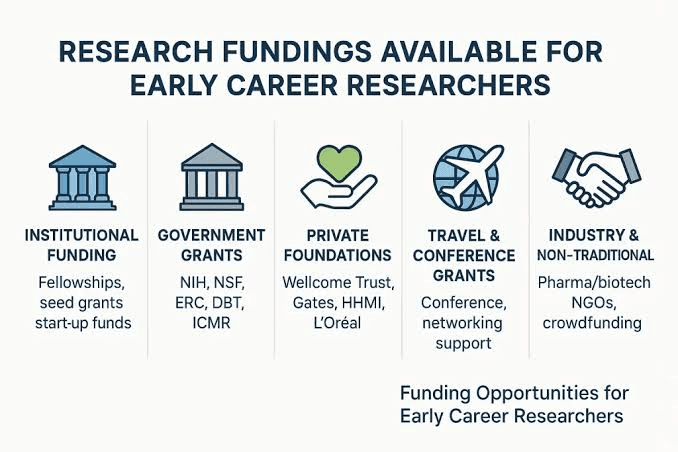
Corporate and nonprofit programs that fund student research
By
Princeton Journal of Pre-Collegiate Research
Read more

Science fair grants and material stipends explained
By
Princeton Journal of Pre-Collegiate Research
Read more

Crowdfunding a student research project: does it work
By
Princeton Journal of Pre-Collegiate Research
Read more
How much does a research project actually cost
By
Princeton Journal of Pre-Collegiate Research
Read more
How to ask your school to fund your project
By
Princeton Journal of Pre-Collegiate Research
Read more

Grants for high school research projects: what exists
By
Princeton Journal of Pre-Collegiate Research
Read more

How to start a research club at your school
By
Princeton Journal of Pre-Collegiate Research
Read more

How to organize a school research symposium
By
Princeton Journal of Pre-Collegiate Research
Read more

Turning a school club into a research pipeline
By
Princeton Journal of Pre-Collegiate Research
Read more

How to start a student research journal at your school
By
Princeton Journal of Pre-Collegiate Research
Read more

How to find a faculty sponsor for a research club
By
Princeton Journal of Pre-Collegiate Research
Read more

How to propose an independent study for research credit
By
Princeton Journal of Pre-Collegiate Research
Read more

Running a peer-review workshop at your school
By
Princeton Journal of Pre-Collegiate Research
Read more

How to get school funding for student research
By
Princeton Journal of Pre-Collegiate Research
Read more

How to do research as a team of students
By
Princeton Journal of Pre-Collegiate Research
Read more

Dividing work fairly in a group research project
By
Princeton Journal of Pre-Collegiate Research
Read more

Group research vs solo research: pros and cons
By
Princeton Journal of Pre-Collegiate Research
Read more

Resolving disagreements in group research
By
Princeton Journal of Pre-Collegiate Research
Read more
What to do when a co-author stops contributing
By
Princeton Journal of Pre-Collegiate Research
Read more