How to adapt a summer program research project for journal submission
Princeton Journal of Pre-Collegiate Research

You spent weeks on a summer research project. You have data, a mentor's signature, and a final report gathering dust in a folder. That work deserves more than a grade or a line on a resume. Learning how to adapt a summer program research project for journal submission is the step that transforms a completed assignment into a permanent, citable contribution to your field.
This guide walks you through exactly how to do it, from assessing what you already have to submitting a polished manuscript to a peer-reviewed journal. No shortcuts. No vague advice.
Why Summer Program Research Is Worth Adapting
Summer research programs produce real work. Whether you participated in a university lab, an independent research cohort, or a structured academic program, the output is often substantive enough to meet the baseline requirements for academic publication. The gap between a program report and a journal submission is smaller than most students assume.
The difference is format, rigor, and framing. A program report is written for a supervisor. A journal submission is written for a scholarly audience and evaluated by peer reviewers who have no stake in your success (which is exactly the point). Adapting your work means learning to speak to that second audience without losing the integrity of what you actually found.
If you are weighing whether a summer program produced research worth submitting, read our comparison of Research Summer Programs Vs Independent Research College to understand what kinds of outputs journals typically consider submission-ready.
Step One: Audit What You Already Have
Before you rewrite a single sentence, take stock of your existing materials. Pull together your final report, any data files, your literature review notes, your methodology documentation, and any feedback you received from program mentors. Lay it all out.
Ask yourself four questions. Does my project have a clear research question? Did I use a defined methodology to answer it? Do I have results that can be reported with specificity? Can I explain what those results mean in the context of existing scholarship? If the answer to all four is yes, you have the raw material for a submission.
If you answered no to one or two, that does not disqualify you. It tells you where the work is. A project with strong data but a vague research question can be sharpened. A project with a clear question but thin literature review can be expanded. Identify the gaps before you start writing.
Step Two: Understand the Journal Format
Academic journals have a standard structure that differs significantly from a program report. Most peer-reviewed journals expect submissions to follow an IMRaD format: Introduction, Methods, Results, and Discussion. Some humanities and social science journals use a modified structure, but the logic is the same. Your argument must be organized so a reader can follow your reasoning from question to conclusion.
Your program report likely has most of these components in some form. The introduction may be embedded in a background section. The methods may be described informally. The results may be mixed with interpretation. Adapting the work means separating these components, labeling them correctly, and ensuring each section does exactly what it is supposed to do (nothing more, nothing less).
Review the submission guidelines for any journal you are targeting before you restructure anything. Guidelines vary. Some journals have strict word limits per section. Others require specific citation formats. Knowing the target before you build the manuscript saves significant revision time later.
How to Adapt a Summer Program Research Project for Journal Submission: The Writing Phase
Reframe Your Introduction
A program report introduction typically explains what the program asked you to study. A journal introduction must establish why the question matters to the broader scholarly conversation. These are different tasks.
Start with the problem or gap in the literature your research addresses. Situate your work within existing scholarship by citing relevant sources. State your research question or hypothesis explicitly. End the introduction with a brief statement of what you found and why it matters. Reviewers should understand the contribution of your paper before they reach the methods section.
Tighten Your Methodology
The methods section must be precise enough that another researcher could replicate your study. Program reports often describe methods in narrative form, mixing procedure with rationale. In a journal submission, separate what you did from why you did it. Use past tense. Be specific about sample sizes, instruments, data sources, analytical approaches, and any limitations in your design.
If your summer project involved a mentor guiding your methodology, this is the section where you need to be especially careful. You must be able to describe and defend every methodological choice as your own understanding, not just as instructions you followed. Reviewers will probe this. Know your methods well enough to explain them without notes.
Report Results Without Interpretation
The results section presents findings. It does not explain them. This distinction trips up many first-time submitters, especially those whose program reports blended results and analysis into a single narrative section.
Present your findings clearly and in a logical sequence. Use tables, figures, or charts where appropriate, and make sure each visual element is labeled and referenced in the text. Quantitative research should report relevant statistics. Qualitative research should present themes or patterns with supporting evidence. Save your interpretation for the discussion section.
Build a Discussion That Earns Its Claims
The discussion section is where your research earns its place in the literature. Explain what your results mean. Connect them explicitly to the sources you cited in your introduction. Acknowledge the limitations of your study with honesty and specificity (vague disclaimers like "further research is needed" do not impress reviewers). Conclude with the implications of your findings for future work in the field.
This section is often underdeveloped in adapted program reports. Students state what they found and stop. Push further. What do your results confirm, complicate, or challenge in the existing literature? That is the scholarly contribution. That is what peer reviewers are looking for.
Step Three: Strengthen Your Literature Review
Most summer program reports include a background or literature review section, but it is rarely sufficient for journal submission. A strong literature review for a journal manuscript does three things: it demonstrates that you understand the current state of scholarship in your area, it identifies the specific gap your research addresses, and it establishes the theoretical or empirical framework that grounds your methodology.
Go back to the sources you cited in your program report and read them more carefully. Look at what they cite. Identify two to five additional sources that directly inform your research question. Integrate them into a revised literature review that builds an argument, not just a list of summaries.
Before you finalize your manuscript, use our guide on How To Edit Your Own Research Paper Before Submission to run a structured self-review. Catching structural and citation issues before submission increases your chances of clearing peer review.
Step Four: Revise for Academic Register
Program reports are often written in a semi-formal register. Journal submissions require consistent academic prose. This means eliminating first-person narrative where it is not appropriate to your discipline, removing colloquial phrasing, tightening passive constructions, and ensuring every claim is supported by evidence or citation.
Read your draft aloud. Sentences that feel awkward when spoken are usually structurally weak on the page. Cut sentences that restate what the previous sentence already said. Every sentence must add information or advance the argument. If it does neither, remove it.
Pay close attention to your abstract. Most journals require a structured abstract of 150 to 300 words that summarizes your research question, methodology, key findings, and conclusions. Write the abstract last, after the full manuscript is complete. It should be the clearest, most precise writing in the entire submission.
How to Adapt a Summer Program Research Project for Journal Submission: Choosing the Right Journal
Not every journal is the right home for every paper. Submitting to a journal whose scope does not match your topic wastes time and damages your credibility with editors. Research your options carefully.
For high school researchers, journals that specifically publish pre-collegiate work offer the most appropriate peer review process and the most relevant readership. The The Princeton Journal Of Pre Collegiate Research publishes original research across STEM, humanities, social sciences, and interdisciplinary fields. Every accepted paper receives a DOI, making your work permanently citable and globally discoverable.
If your research falls within the humanities, review our roundup of Best Humanities Journals High School Submissions to identify the most appropriate venues for your discipline. Matching your paper to the right journal is as important as the quality of the manuscript itself.
If you are based in the UK and need guidance on submission norms specific to your context, our High School Research Journal Submission Guide Uk covers the key differences in formatting expectations and submission etiquette.
Step Five: Prepare Your Submission Package
Most journals require more than a manuscript file. A typical submission package includes a cover letter, the manuscript itself (formatted to the journal's specifications), any figures or tables as separate files, a conflict of interest statement, and confirmation that the work has not been submitted elsewhere simultaneously.
The cover letter is brief but important. It should state your paper's title, confirm that it is original and not under review elsewhere, and explain in two to three sentences why the paper is a strong fit for that specific journal. Do not summarize the entire paper. Editors read hundreds of cover letters. Be direct and specific.
If your summer program mentor contributed substantively to the research design or analysis, discuss authorship with them before submitting. Authorship in academic publishing has specific conventions. A mentor who supervised your work is typically acknowledged, not listed as a co-author, unless they made direct intellectual contributions to the manuscript. Know the difference.
What Happens After You Submit
Understanding the post-submission process reduces anxiety and helps you respond professionally when feedback arrives. Most peer-reviewed journals use a double-blind review process, meaning reviewers do not know your identity and you do not know theirs (which keeps the evaluation honest). Review timelines vary, but expect a wait of several weeks to several months.
If you receive a revise-and-resubmit decision, treat it as an invitation, not a rejection. Respond to every reviewer comment systematically and specifically. If you disagree with a comment, explain why with evidence. If you agree, show exactly how you addressed it in the revised manuscript.
To understand how rolling submission windows work and how to time your submission strategically, read our explainer on What Does Rolling Admission Mean Journal Submissions.
How to Adapt a Summer Program Research Project for Journal Submission: Final Checklist
Research question is explicit and answerable
Literature review identifies a gap and grounds your methodology
Methods section is replicable and written in past tense
Results section presents findings without interpretation
Discussion section connects findings to existing scholarship and acknowledges limitations
Abstract is 150 to 300 words and covers all four components
Citations follow the target journal's required format
Cover letter is specific to the journal and confirms originality
Manuscript is formatted to the journal's submission guidelines
Your Research Belongs in the Scholarly Record
Learning how to adapt a summer program research project for journal submission is not a minor administrative task. It is the act of claiming your place in an academic conversation that extends far beyond any single program or semester. The work you did over those weeks has the potential to be read, cited, and built upon by researchers around the world (that is what a DOI and an indexed publication actually mean).
PJPCR is an international, peer-reviewed journal publishing original research by high school students across all academic disciplines. Not affiliated with Princeton University. Every submission receives rigorous double-blind peer review and substantive editorial feedback that makes you a stronger researcher regardless of outcome. Submit your adapted manuscript and let the work speak for itself.
Explore more resources on the Blogs page, or visit PJPCR to review submission guidelines and begin the process today.
Read More

Can high school students be peer reviewers
By
Princeton Journal of Pre-Collegiate Research
Read more

What reviewing other papers teaches you about your own
By
Princeton Journal of Pre-Collegiate Research
Read more

How to give useful feedback on a classmate's paper
By
Princeton Journal of Pre-Collegiate Research
Read more

Student editorial boards: how they work
By
Princeton Journal of Pre-Collegiate Research
Read more
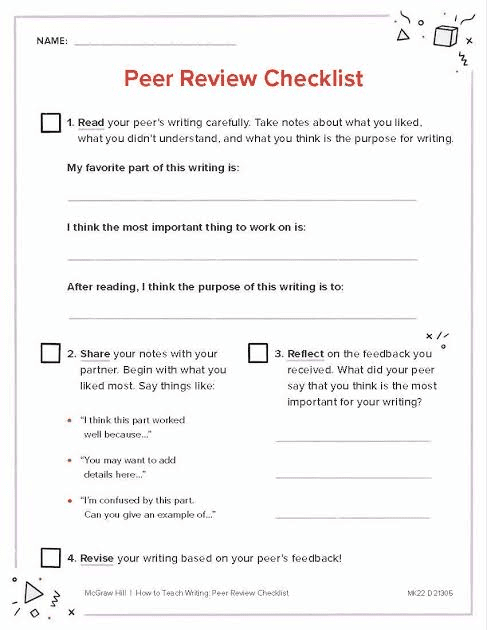
How to write a peer review as a student
By
Princeton Journal of Pre-Collegiate Research
Read more

Peer review etiquette: tone, structure, fairness
By
Princeton Journal of Pre-Collegiate Research
Read more

Version control for research documents
By
Princeton Journal of Pre-Collegiate Research
Read more

Digital vs paper lab notebooks for students
By
Princeton Journal of Pre-Collegiate Research
Read more

Data management basics for student researchers
By
Princeton Journal of Pre-Collegiate Research
Read more
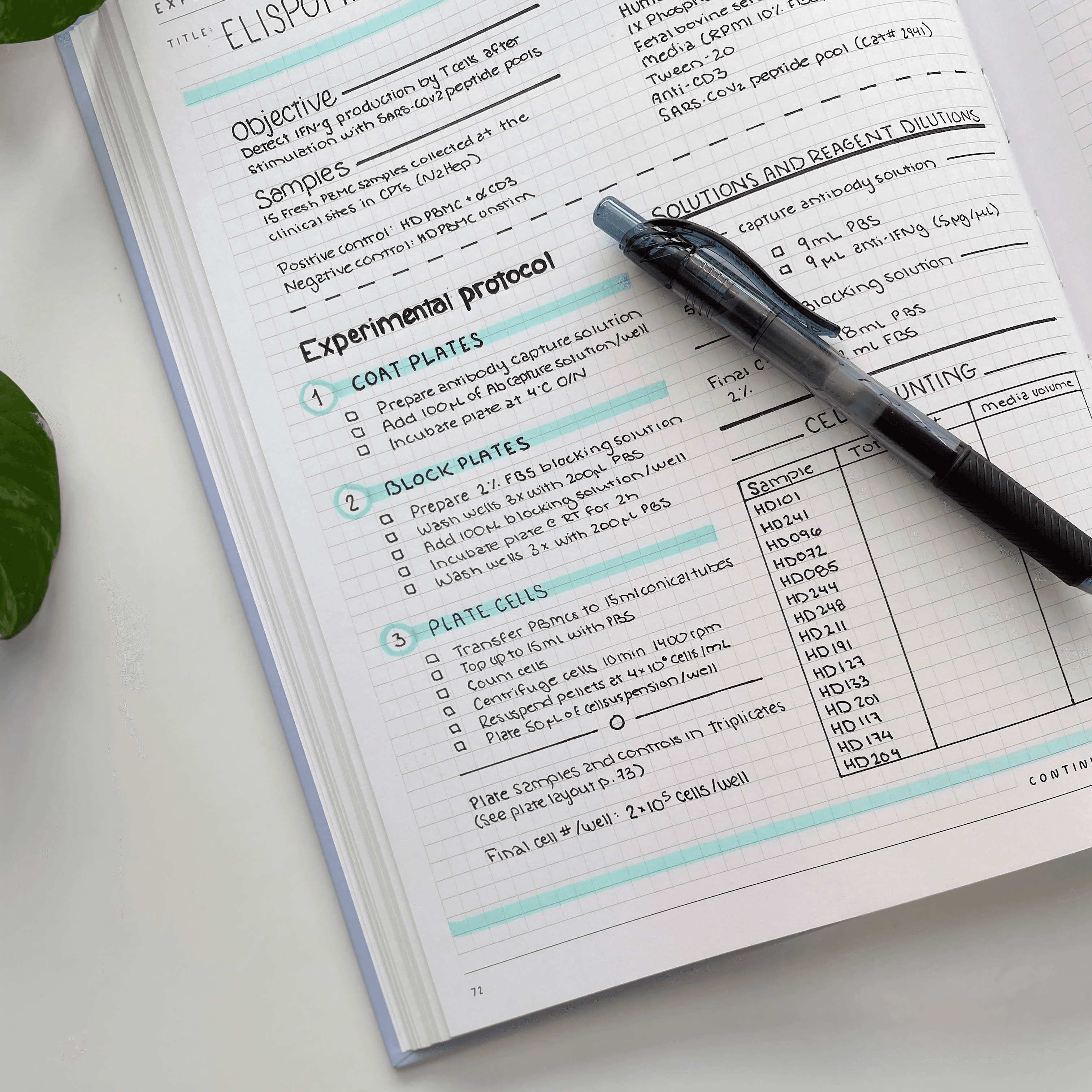
How to keep a lab notebook that reviewers trust
By
Princeton Journal of Pre-Collegiate Research
Read more

How to organize research files across a year-long project
By
Princeton Journal of Pre-Collegiate Research
Read more

How to document your data so you can defend it
By
Princeton Journal of Pre-Collegiate Research
Read more

How to write a grant proposal as a student
By
Princeton Journal of Pre-Collegiate Research
Read more
Free resources that replace research funding
By
Princeton Journal of Pre-Collegiate Research
Read more
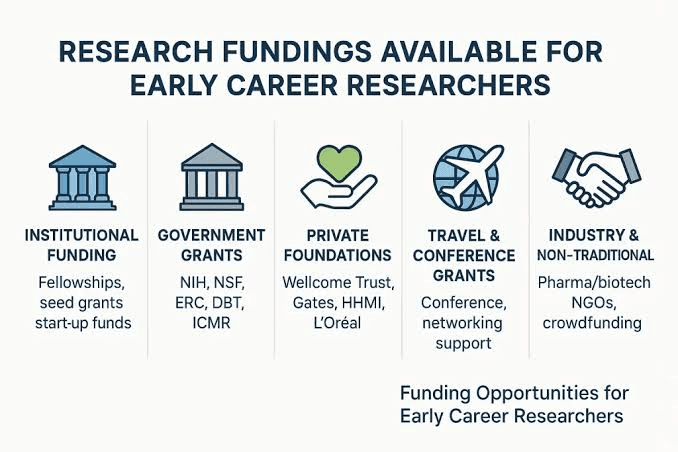
Corporate and nonprofit programs that fund student research
By
Princeton Journal of Pre-Collegiate Research
Read more

Science fair grants and material stipends explained
By
Princeton Journal of Pre-Collegiate Research
Read more

Crowdfunding a student research project: does it work
By
Princeton Journal of Pre-Collegiate Research
Read more

How much does a research project actually cost
By
Princeton Journal of Pre-Collegiate Research
Read more

How to ask your school to fund your project
By
Princeton Journal of Pre-Collegiate Research
Read more

Grants for high school research projects: what exists
By
Princeton Journal of Pre-Collegiate Research
Read more

How to start a research club at your school
By
Princeton Journal of Pre-Collegiate Research
Read more