Crowdfunding a student research project: does it work
Princeton Journal of Pre-Collegiate Research

Crowdfunding a student research project: does it work?
Crowdfunding a student research project is a legitimate funding strategy, but success rates vary significantly depending on project type, platform choice, and how the campaign is framed. This post is written for high school students and their parents who are weighing crowdfunding against other funding options. After reading, you will understand when crowdfunding is realistic, what the evidence shows about campaign outcomes, and what to do with completed research once funding is secured. Students whose work is ready for peer review may submit it to the Princeton Journal of Pre-Collegiate Research, an open-access journal publishing original research by pre-collegiate students across all academic disciplines.
Why student researchers consider crowdfunding in the first place
Crowdfunding a student research project has become a more visible option since platforms such as Experiment.com launched specifically for scientific research campaigns. The core appeal is straightforward: institutional funding for pre-collegiate research is scarce, and most grant programmes target university-affiliated researchers. A student working independently, or at a school without a dedicated research budget, often has no obvious funding pathway. Crowdfunding appears to solve this by connecting researchers directly with the public.
The reality is more complicated. Experiment.com, which is the most relevant platform for scientific student research, reported in its published data that the average successful campaign raises approximately $4,000 to $6,000, and that campaigns with a strong existing network of supporters are significantly more likely to reach their funding goals than those relying on organic platform discovery. This matters for students, whose networks are typically smaller than those of professional researchers.
That said, crowdfunding has worked for pre-collegiate and early-career researchers, particularly in fields where the research costs are modest, the question is publicly legible, and the student can communicate the work clearly to a non-specialist audience. Citizen science projects, environmental monitoring studies, and social science surveys have all been successfully funded through public campaigns by young researchers.
Students at schools without laboratory access face a particularly acute version of this problem. A companion guide on research for students at schools with no science labs addresses how to design studies that do not depend on institutional equipment, which is directly relevant to keeping crowdfunding targets realistic.
Does crowdfunding a student research project actually work? What the evidence shows
Crowdfunding works for student research projects when three conditions are met: the funding target is under $5,000, the researcher has an existing audience of at least 50 to 100 engaged supporters, and the research question can be explained in plain language to a general audience. Campaigns that meet all three conditions have a meaningfully higher completion rate than those that do not. Campaigns that rely entirely on strangers discovering the project organically rarely succeed.
Experiment.com, the primary platform for scientific crowdfunding, publishes aggregate data on its campaign outcomes. As of its most recent publicly available figures, approximately 40 percent of campaigns on the platform reach their funding goal. That figure is higher than on general-purpose platforms such as GoFundMe for research-specific campaigns, because the Experiment.com audience is self-selected toward science supporters. However, a 40 percent success rate also means that the majority of campaigns do not fund fully.
The campaigns that succeed share identifiable characteristics. They are specific rather than broad: a campaign to measure microplastic concentrations in a local river performs better than a campaign described as "environmental research." They include a clear budget breakdown, so donors understand exactly what their contribution funds. They update backers regularly, which builds trust and encourages sharing. And they are launched with a pre-committed group of supporters who pledge in the first 48 hours, which triggers platform algorithms to surface the campaign more widely.
Students in rural areas or those without university access face an additional structural challenge. The guide on research for students in rural areas without university access outlines alternative resource strategies that can reduce the funding requirement of a project, which in turn makes a crowdfunding target more achievable.
What happens after you raise the money?
Securing crowdfunding is the beginning of the research process, not the end. Once funding is in place, the student must execute the study, analyse the data, and produce a written output that justifies the investment. Backers who contributed to a campaign expect to see results, and the most credible form of results is a written research report or published paper.
This is where the connection between crowdfunding and academic publishing becomes important. A student who raises $3,000 to conduct an independent study on water quality, completes the data collection, and then submits a rigorous paper to a peer-reviewed journal has produced something substantially more credible than a student who simply posted results on a campaign update page. Peer review adds an independent layer of validation that crowdfunding backers and college admissions readers both recognise.
The gap between completing a study and producing a publishable paper is where many student researchers stall. The research may be sound, but the write-up may not meet the methodological transparency standards that reviewers expect. Understanding what reviewers assess, and drafting accordingly, is the most important skill a student can develop after data collection is complete.
What are the most common mistakes students make when crowdfunding research?
The single most common mistake is setting a funding target that is too high relative to the student's existing network. A student with 80 followers across their personal social media accounts who sets a $15,000 funding goal is unlikely to succeed, regardless of how compelling the research question is. Crowdfunding scales with audience size. A realistic target for a first-time student campaigner is between $500 and $3,000, with a budget that reflects actual material costs rather than aspirational scope.
The second common mistake is describing the research in academic language that non-specialist donors cannot parse. A campaign abstract that reads like a journal submission will not convert general visitors into backers. The research question must be translated into a sentence that a curious adult with no scientific background can understand and care about. This is a distinct communication skill from academic writing, and students often underestimate how different it is.
The third mistake is launching a campaign without pre-committed supporters. According to Experiment.com's published guidance for researchers, campaigns that raise 30 percent of their goal in the first week are significantly more likely to complete successfully. Launching without a group of people ready to pledge on day one is the structural equivalent of opening a restaurant without any reservations.
A fourth mistake is treating the campaign as the final output. Crowdfunding funds research; it does not validate it. Students who complete their funded project and then do nothing with the findings have missed the most important step. Writing up results and submitting them for peer review is what transforms a funded project into a genuine contribution to knowledge.
How to crowdfund a student research project, step by step
Define the research question precisely. The question must be specific, answerable within your timeline, and explainable in one sentence to a non-specialist. Vague questions produce vague campaigns that do not fund.
Calculate the actual budget. List every material cost: equipment, reagents, survey software, data storage, travel if required. The total becomes your funding target. Do not inflate it. Donors respond better to modest, specific budgets than to large round numbers.
Choose the right platform. Experiment.com is the strongest option for scientific research because its audience is already oriented toward supporting student and independent researchers. General-purpose platforms attract a broader but less targeted audience.
Write the campaign in plain language. The title should state what you are studying and why it matters. The description should explain the method, the expected output, and how the money will be spent. Avoid jargon. Every sentence should be readable by someone with no background in your field.
Build your pre-launch supporter list. Before the campaign goes live, identify at least 30 to 50 people who have agreed to contribute in the first week. This group is the engine of early momentum. Without it, the campaign is unlikely to gain algorithmic traction on the platform.
Launch and update regularly. Post updates at least once per week during the campaign. Share progress on data collection, unexpected findings, and methodology decisions. Backers who feel informed are more likely to share the campaign with their own networks.
Complete the research and write it up. Once funding closes and data collection is complete, produce a full written report. If the methodology is rigorous and the findings are original, consider submitting the paper for peer review through the submission guidelines at princeton-jpcr.org/submit.
PJPCR publishes original research across all academic disciplines, including independent studies funded outside of institutional settings. If your crowdfunded research has produced a complete, original paper, review the submission guidelines to determine whether your work is ready for peer review.
Frequently asked questions about crowdfunding a student research project
What is crowdfunding for research and how is it different from a grant?
Research crowdfunding is a public fundraising model in which individuals contribute small amounts to fund a specific study, typically through a platform such as Experiment.com. Unlike a grant, which is awarded by an institution after a formal review process, crowdfunding is funded directly by the public and does not require institutional affiliation. The tradeoff is that success depends heavily on the researcher's ability to communicate the work to a general audience and to mobilise a network of early supporters.
How long does a student research crowdfunding campaign typically run?
Most research crowdfunding campaigns on Experiment.com run for 30 days. Some platforms allow campaigns of up to 60 days, but longer campaigns do not consistently outperform shorter ones. The critical period is the first seven days: campaigns that reach 30 percent of their goal in the first week are significantly more likely to fund fully. Planning the launch carefully, with pre-committed supporters ready to pledge immediately, is more important than the total campaign duration.
Do I need a faculty mentor or institutional affiliation to crowdfund research?
No institutional affiliation is required to launch a crowdfunding campaign for research. Experiment.com accepts campaigns from independent researchers, including pre-collegiate students. Having a mentor or advisor is not a platform requirement, though it strengthens the credibility of the campaign and the quality of the resulting research. Students without institutional access have successfully funded and completed independent studies through crowdfunding, particularly in fields where data collection does not require specialised laboratory equipment.
What makes a student research project publishable after it has been crowdfunded?
Publishability depends on the quality of the methodology and the rigour of the write-up, not on the funding source. A crowdfunded study that uses a clearly defined method, collects data systematically, analyses results with appropriate statistical tools, and situates findings within existing literature meets the same standard as institutionally funded research. Reviewers assess whether the conclusions are supported by the data and whether the method is transparent enough to be replicated. Funding origin is not a criterion. Browse published issues to understand the scope and standard of research that has been accepted for publication.
Does PJPCR accept research that was independently funded through crowdfunding?
Yes. The Princeton Journal of Pre-Collegiate Research evaluates submissions based on the quality and originality of the research, not on whether the work was conducted within an institutional setting or funded through a traditional grant. Independent research, including studies funded through crowdfunding platforms, is eligible for submission provided it meets the methodological and formatting standards described in the peer review process guidelines. Submission and peer review are free. A publication fee applies for accepted papers. A fast-track option is available for students who need a quicker turnaround, with a standard review timeline of 2 to 3 months.
Conclusion
Crowdfunding a student research project can work, but it works best when the funding target is modest, the research question is publicly legible, and the campaign launches with a committed group of early supporters. The evidence from platforms such as Experiment.com suggests that roughly 40 percent of campaigns reach their goal, and that early momentum is the single strongest predictor of success. Setting a realistic budget, writing for a non-specialist audience, and building a pre-launch supporter list are the three actions most likely to determine whether a campaign funds.
Completing the research and writing it up rigorously is what transforms a funded project into a genuine contribution to knowledge. Students who conduct original, methodologically sound research, whether funded through crowdfunding, school resources, or independent means, have produced work that belongs in a peer-reviewed venue. If your research is complete and ready for evaluation, submit it to PJPCR at princeton-jpcr.org/submit.
Read More
How to write a grant proposal as a student
By
Princeton Journal of Pre-Collegiate Research
Read more
Free resources that replace research funding
By
Princeton Journal of Pre-Collegiate Research
Read more
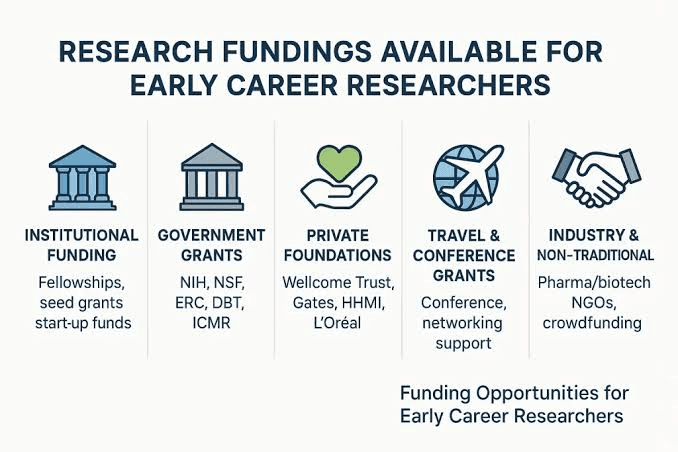
Corporate and nonprofit programs that fund student research
By
Princeton Journal of Pre-Collegiate Research
Read more

Science fair grants and material stipends explained
By
Princeton Journal of Pre-Collegiate Research
Read more
Crowdfunding a student research project: does it work
By
Princeton Journal of Pre-Collegiate Research
Read more

How much does a research project actually cost
By
Princeton Journal of Pre-Collegiate Research
Read more
How to ask your school to fund your project
By
Princeton Journal of Pre-Collegiate Research
Read more

Grants for high school research projects: what exists
By
Princeton Journal of Pre-Collegiate Research
Read more

How to start a research club at your school
By
Princeton Journal of Pre-Collegiate Research
Read more

How to organize a school research symposium
By
Princeton Journal of Pre-Collegiate Research
Read more

Turning a school club into a research pipeline
By
Princeton Journal of Pre-Collegiate Research
Read more

How to start a student research journal at your school
By
Princeton Journal of Pre-Collegiate Research
Read more

How to find a faculty sponsor for a research club
By
Princeton Journal of Pre-Collegiate Research
Read more

How to propose an independent study for research credit
By
Princeton Journal of Pre-Collegiate Research
Read more

Running a peer-review workshop at your school
By
Princeton Journal of Pre-Collegiate Research
Read more

How to get school funding for student research
By
Princeton Journal of Pre-Collegiate Research
Read more

How to do research as a team of students
By
Princeton Journal of Pre-Collegiate Research
Read more

Dividing work fairly in a group research project
By
Princeton Journal of Pre-Collegiate Research
Read more

Group research vs solo research: pros and cons
By
Princeton Journal of Pre-Collegiate Research
Read more

Resolving disagreements in group research
By
Princeton Journal of Pre-Collegiate Research
Read more

What to do when a co-author stops contributing
By
Princeton Journal of Pre-Collegiate Research
Read more