How to Read a Scientific Paper (Without Getting Lost)
Princeton Journal of Pre-Collegiate Research
TL;DR: This post answers a specific question that trips up most high school researchers: how do you actually read a scientific paper without losing the thread? It is written for students in grades 9 through 12 who are beginning to engage with primary literature, whether for a research project, a literature review, or their first submission to a journal. By the end, you will know the correct reading order, what each section is actually doing, and how to extract the claims that matter. If your own research is ready for peer review, the Princeton Journal of Pre-Collegiate Research publishes original work across all academic disciplines.
Why reading scientific papers is harder than it looks
Most students read a scientific paper the same way they read a textbook: front to back, word by word, stopping when something is confusing. That approach fails almost immediately. The introduction of a typical research article in a field like molecular biology or economics can reference dozens of prior studies, assume familiarity with specialised methods, and bury its actual argument in the final paragraph. A 2019 study published in eLife found that even trained scientists report difficulty reading papers outside their immediate subfield. For high school students encountering primary literature for the first time, the challenge is structural, not intellectual. The paper was not written for you. That does not mean you cannot read it effectively. It means you need a different entry point.
Learning how to read a scientific paper is a foundational skill for any student conducting original research. It shapes how you build a literature review, how you identify a research gap, and how you frame your own findings when you eventually write them up. This guide gives you that entry point.
How do you read a scientific paper as a high school student?
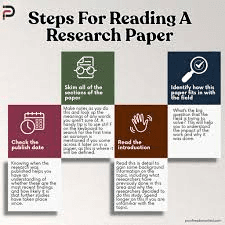
Read a scientific paper in this order: abstract, conclusion, figures and tables, introduction, methods, results, discussion. Do not read front to back on a first pass. Start with the abstract to get the central claim, jump to the conclusion to see what the authors say their findings mean, then examine the figures before reading a single paragraph of the body. This non-linear approach lets you build a map of the paper before you navigate it.
Here is what each section is actually doing, and what you should extract from it.
Abstract (read first). The abstract is a compressed version of the entire paper: the question, the method, the key result, and the conclusion. Read it to orient yourself. Do not try to understand every term. Identify the one central claim the authors are making.
Conclusion (read second). The conclusion tells you what the authors believe their results mean in context. It often names the limitations of the study and suggests directions for future research. Reading it early tells you whether this paper is relevant to your question before you invest time in the methods section.
Figures and tables (read third). Most of the actual data in a scientific paper lives in the figures. Read the caption of each figure before the figure itself. The caption explains what is being shown. The figure shows whether the data supports the claim. If you cannot understand what a figure is measuring, note it and return after reading the results section.
Introduction (read fourth). The introduction contextualises the research question. It reviews prior work and explains why the gap this paper addresses matters. For your own literature review, the introduction is a map of relevant prior studies. Follow the citations.
Methods (read fifth). The methods section explains how the study was conducted. For a first read, you do not need to understand every protocol. Focus on the study design: what was measured, what was controlled, how large the sample was, and what statistical tests were used. These details determine how much weight you can give the results.
Results (read sixth). The results section presents findings without interpretation. Read it alongside the figures. Check whether the results described in the text match what the figures show.
Discussion (read last). The discussion is where authors interpret their results, acknowledge limitations, and position their findings relative to prior work. This is often the most useful section for a student researcher because it explicitly names what remains unknown.
For guidance on how to use what you find in these papers, the post on how to write a literature review for a research paper walks through the next step in detail.
What should you actually do while reading a scientific paper?
Reading a scientific paper is not a passive activity. The goal is not to finish it. The goal is to extract specific, usable information: the central claim, the methodology, the key result, and the limitations. Students who read passively often finish a paper and cannot summarise what it found. Students who annotate actively finish with a set of notes they can use.
Annotating means doing four things as you read. First, underline or highlight the central claim wherever it appears most clearly stated (usually the final sentence of the abstract and the opening sentence of the conclusion). Second, write the study design in your own words in the margin next to the methods section: one sentence, no jargon. Third, note any limitation the authors name explicitly. Limitations are research gaps. A limitation named in a 2021 paper is a potential research question for your own study in 2025. Fourth, flag every term you do not understand and look it up before your second read. Trying to push through unfamiliar terminology on a first pass is the single most common reason students give up on a paper halfway through.
One practical tool: after your first pass, write a three-sentence summary without looking at the paper. Sentence one: what question the paper asked. Sentence two: how it tried to answer that question. Sentence three: what it found and what it could not conclude. If you cannot write those three sentences, you need a second pass. If you can, you have genuinely read the paper.
When you are building a literature review for your own research, this summary becomes one entry in a reading log. A reading log with 10 to 15 entries gives you the raw material for a coherent literature review section. For more on structuring that section, see the guide on how to write an introduction for a research paper, which covers how prior literature shapes your framing.
What are the most common mistakes students make when reading scientific papers?
Most errors in reading scientific papers fall into four categories. Each one has a direct consequence for the quality of the research that follows.
Treating the abstract as the full paper. The abstract is a summary, not a substitute. It omits methodological detail, sample size, effect size, and limitation statements. Students who cite a paper based only on its abstract frequently misrepresent what the study actually found. The fix: always read the conclusion and at least one figure before citing a paper in your own work.
Ignoring the limitations section. The limitations section is where the authors tell you exactly what their study cannot prove. Students building a literature review who skip this section often overstate the strength of prior evidence. According to the American Psychological Association's Publication Manual (7th edition), a credible discussion of prior work must acknowledge the boundaries of that work. The fix: read the limitations section on every paper you plan to cite.
Confusing correlation with causation in the results. Many studies in social science, psychology, and public health report correlational findings. A result showing that two variables are associated does not mean one caused the other. Students who miss this distinction misframe their own research questions. The fix: check the methods section for the study design. Randomised controlled trials can support causal claims. Observational studies generally cannot.
Reading too many papers too quickly. A student who reads 20 abstracts has not read 20 papers. Depth beats breadth in a literature review. Five papers read carefully, with annotations and summaries, produce better research framing than 20 papers skimmed. The fix: set a reading limit per session and complete the three-sentence summary before moving to the next paper.
How to read a scientific paper effectively, step by step
Find the paper through Google Scholar, PubMed, or your school library database. Confirm it is a peer-reviewed primary research article, not a review article or opinion piece.
Read the abstract in full. Write down the central claim in one sentence before moving on.
Read the conclusion. Check whether it matches the claim in the abstract. Note any limitations the authors name.
Examine every figure and table. Read the caption first. Write one sentence per figure describing what it shows.
Read the introduction. List the three most relevant prior studies cited. These are your next papers to find.
Read the methods section. Write the study design in your own words: what was measured, how, and in what sample.
Read the results and discussion. Note any finding the authors describe as unexpected or inconsistent with prior work. These are research gaps.
Write your three-sentence summary from memory. If you cannot, do a second pass on the sections where your summary breaks down.
Add the paper to your reading log with the citation, your three-sentence summary, and the key limitation.
When your own research is ready for submission, understanding how papers are structured will directly improve the quality of your manuscript. You can review how to format a research paper for publication to see what journals expect structurally before you submit.
PJPCR publishes original research across all academic disciplines. If your work is ready for peer review, review the submission guidelines at how to submit a research paper as a high school student.
Frequently asked questions about how to read a scientific paper
What is a peer-reviewed scientific paper?
A peer-reviewed scientific paper is a research article that has been evaluated by independent experts in the same field before publication. Reviewers assess the methodology, the validity of the findings, and the accuracy of the conclusions. Peer review is the standard by which academic claims are verified. It does not guarantee a paper is correct, but it does mean the work has been scrutinised by qualified readers before it reached you.
How long does it take to read a scientific paper properly?
A careful first read of a 6,000 to 8,000 word research article takes between 60 and 90 minutes for a student new to primary literature. A second annotated read takes an additional 30 to 45 minutes. Speed increases significantly with practice and with familiarity in the discipline. Do not benchmark your reading speed against what you can do with a textbook chapter. Primary literature is denser and requires active processing, not passive reading.
Do I need a university library to access scientific papers?
No. A large volume of peer-reviewed research is freely available without institutional access. PubMed Central hosts millions of open-access biomedical papers. Google Scholar indexes papers across all disciplines and often links to free full-text versions. Many authors also post preprints or accepted manuscripts on ResearchGate or their institutional pages. If a paper is behind a paywall, email the corresponding author directly. Most researchers will send a PDF by return.
What makes a scientific paper credible enough to cite in my own research?
A credible paper to cite is one published in a peer-reviewed journal, with a clearly stated methodology, a defined sample, and an explicit limitations section. Check the journal's indexing status: papers indexed in databases like PubMed, Scopus, or Web of Science have passed baseline editorial standards. Also check the date. In fast-moving fields like immunology or machine learning, a paper from 2015 may have been superseded. Prioritise recent primary research over older review articles where possible.
What kinds of research does PJPCR publish, and is it peer reviewed?
The Princeton Journal of Pre-Collegiate Research publishes original research by high school students across STEM, humanities, social sciences, and interdisciplinary fields. Submissions undergo genuine peer review by qualified reviewers. Acceptance is selective; PJPCR does not guarantee publication. Submission and peer review are free. A publication fee applies for accepted papers. A fast-track option is available for students who need a quicker turnaround, bringing the timeline to 2 to 4 weeks versus the standard 2 to 3 months. You can review what makes a research paper get rejected to strengthen your manuscript before submitting.
What to do now
Reading scientific papers is a skill that compounds. The first paper in an unfamiliar field takes 90 minutes and leaves you with more questions than answers. The tenth paper in the same field takes 40 minutes and slots directly into a framework you have already built. The process described here, reading non-linearly, annotating actively, writing three-sentence summaries, and building a reading log, is not a shortcut. It is the method that produces genuine comprehension rather than the illusion of it.
The same rigour that makes you a careful reader of other people's research is what makes your own research credible. When you understand how evidence is constructed and where it can fail, you write differently. You frame your questions more precisely, you acknowledge your limitations honestly, and you position your findings relative to prior work rather than in isolation.
If your research is ready for peer review, submit it to PJPCR at the submission guidelines page.
Read More

APA format for high school research papers: complete guide
By
RISE Research
Read more

MLA format for research papers: when and how
By
RISE Research
Read more

APA vs MLA vs Chicago: which to use for your paper
By
RISE Research
Read more

How to cite a dataset
By
RISE Research
Read more

In-text citations vs footnotes: how each works
By
RISE Research
Read more

What is a p-value, explained for high school researchers
By
RISE Research
Read more

What is regression analysis and when do you use it
By
RISE Research
Read more

What is standard deviation and why it matters
By
RISE Research
Read more

What is a t-test and when do you need one
By
RISE Research
Read more

What is effect size and why reviewers care
By
RISE Research
Read more

Common statistical mistakes in student papers
By
RISE Research
Read more

Research for biology majors: what to publish before applying
By
https://princeton-jpcr.org/
Read more

Research for economics majors
By
https://princeton-jpcr.org/
Read more

Research for political science majors
By
https://princeton-jpcr.org/
Read more

Research for English and humanities majors
By
https://princeton-jpcr.org/
Read more

Research for neuroscience majors
By
https://princeton-jpcr.org/
Read more

Undecided major: what research keeps your options open
By
https://princeton-jpcr.org/
Read more

Summer research timeline: June to August week by week
By
Princeton Journal of Pre-Collegiate Research
Read more
Research goals to set at the start of the school year
By
Princeton Journal of Pre-Collegiate Research
Read more

How to finish your research paper before finals season
By
Princeton Journal of Pre-Collegiate Research
Read more

New year research resolutions that actually stick
By
Princeton Journal of Pre-Collegiate Research
Read more