Methods section example: how published student papers describe methodology
Princeton Journal of Pre-Collegiate Research

The methods section is where your research either earns credibility or loses it. Every published student paper that survives rigorous peer review does so in part because its methodology is described with precision, transparency, and enough detail that another researcher could replicate the work.
This post breaks down exactly how strong student papers write their methods sections. You will see real structural patterns, discipline-specific approaches, and the specific language choices that distinguish publishable work from a class assignment. If you are preparing to submit original research, this guide is essential reading.
Why the Methods Section Matters More Than You Think
Peer reviewers read your methods section with one question in mind: can I trust this? If the answer is uncertain, your paper is rejected. The methods section is not a formality. It is the backbone of your scientific or scholarly argument.
For high school researchers in particular, a well-written methods section signals maturity and rigor. It tells reviewers that you understand the difference between doing research and documenting research. Those are not the same thing. The documentation is what gets published.
If you want to understand how to write a research methods section from the ground up, that resource covers the foundational principles. This post goes further by showing you how published student papers actually execute those principles across different disciplines.
The Core Structure of a Publishable Methods Section
Regardless of discipline, every strong methods section answers four questions in sequence. What was the study design? Who or what was studied? What tools or instruments were used? How was data collected and analyzed? The order matters. Reviewers expect this logical progression.
Here is the standard structural skeleton used in published student papers across STEM and social science fields:
Study Design or Research Approach - Identify the type of study (experimental, observational, survey-based, qualitative, comparative, archival, etc.)
Participants or Materials - Describe the sample, specimen, dataset, or source material with specificity
Instruments and Procedures - List every tool, protocol, or method used, with enough detail to replicate
Data Analysis - Explain exactly how raw data was processed, coded, or interpreted
Ethical Considerations - Note IRB approval, consent procedures, or data privacy measures where applicable
Published student papers do not skip any of these components. Weak submissions often omit the analysis subsection entirely, treating it as implied. It is never implied. State it explicitly.
Methods Section Example: STEM Research Papers
In biology, chemistry, and environmental science, the methods section follows a protocol-style format. Precision is non-negotiable. Published student papers in these fields typically open with a one-sentence statement of the experimental design, followed immediately by materials.
A representative passage from a published student biology paper might read as follows: "A controlled laboratory experiment was conducted to assess the effect of microplastic concentration on the germination rate of Raphanus sativus (radish). Seeds (n=150) were divided into five treatment groups of 30, each exposed to polystyrene microplastic concentrations of 0, 50, 100, 200, and 400 mg/L in distilled water for 72 hours at 22 degrees Celsius. Germination was recorded every 12 hours using a binary classification (germinated/not germinated) and confirmed by radicle emergence exceeding 2 mm."
Notice what that passage does. It names the species with binomial nomenclature. It specifies sample size. It defines the treatment conditions numerically. It operationalizes the dependent variable. Every element is measurable and replicable. That is the standard.
For computational or data science papers, the methods section shifts toward describing datasets, preprocessing steps, and algorithmic choices. Published student papers in this space often include a data provenance statement: where the dataset came from, how large it was, and what cleaning procedures were applied before analysis. Omitting this is a common reason reviewers flag submissions for revision.
Methods Section Example: Social Science and Humanities Research
Social science methods sections follow the same logical structure but use different vocabulary. The word "participants" replaces "specimens." "Coding scheme" replaces "measurement protocol." The underlying discipline of transparency, however, is identical.
A published student paper in psychology or sociology might open its methods section this way: "This study employed a cross-sectional survey design to examine the relationship between social media usage frequency and self-reported academic motivation among high school students (N=214, ages 14-18). Participants were recruited through convenience sampling at three secondary schools in the same metropolitan area. The survey instrument consisted of 28 Likert-scale items adapted from the Academic Motivation Scale (Vallerand et al., 1992) and a custom-designed Social Media Usage Inventory. All participants provided informed assent, and parental consent was obtained for participants under 16."
This passage does several things correctly. It names the design type. It quantifies the sample. It acknowledges sampling limitations (convenience sampling). It cites the validated instrument it adapted rather than claiming original tool development without evidence. And it addresses consent explicitly.
Humanities papers present a different challenge. If your paper involves textual analysis, historical archival research, or philosophical argumentation, your methods section describes your analytical framework, your source selection criteria, and your interpretive approach. Published student papers in history, for example, often include a brief source criticism statement explaining why certain primary sources were prioritized and how potential bias in those sources was accounted for.
Language Patterns That Signal Publishable Quality
The language of a methods section is deliberately passive and precise. This is one of the few places in academic writing where passive voice is not a weakness. "Samples were collected" is preferred over "I collected samples" because the focus is on the procedure, not the researcher. Published student papers consistently use this convention.
Here are specific language patterns found in published student papers that reviewers respond to positively:
Operational definitions: Define every key variable as it was measured, not as it is conceptually understood. "Stress" is not a definition. "Stress, operationalized as a score above 20 on the Perceived Stress Scale (Cohen et al., 1983)" is a definition.
Numeric specificity: Replace vague quantifiers with exact figures. "Several trials" becomes "three independent trials." "A large sample" becomes "n=312."
Temporal precision: State durations, intervals, and sequences explicitly. "Incubated for 48 hours at 37 degrees Celsius" leaves no ambiguity.
Justification statements: Briefly explain why a particular method was chosen when the choice is not self-evident. "A thematic analysis approach was selected to preserve the complexity of participant responses rather than reduce them to numerical scores."
Limitation acknowledgment: Published student papers often include one or two sentences noting methodological constraints. This does not weaken the paper. It demonstrates intellectual honesty.
Common Mistakes That Block Publication
Peer reviewers at journals like Princeton JPCR read hundreds of methods sections. Certain errors appear repeatedly in rejected submissions. Knowing them in advance gives you a significant advantage.
Vagueness about sample selection. Stating that you "surveyed students at your school" is insufficient. How were they selected? Was participation voluntary? What were the inclusion and exclusion criteria? These details are not optional.
Undescribed instruments. If you used a questionnaire, describe it or cite the validated version you adapted. If you built a device or wrote code, describe its specifications. Reviewers cannot evaluate what they cannot see.
Missing analysis procedures. Many student submissions describe data collection in detail but then jump directly to results without explaining how raw data became findings. Statistical tests must be named. Qualitative coding procedures must be described. Software used for analysis (SPSS, R, NVivo, Python) should be identified.
Conflating methods with results. The methods section describes what you did, not what you found. Any sentence that begins with "We discovered" or "The results showed" belongs in the results section, not here.
If you are considering turning an existing school project into a submission, understanding these distinctions is critical. The guide on how to turn a school capstone project into a published paper addresses exactly how to bridge that gap.
Adapting Your Methods Section for Different Submission Contexts
If you are submitting to a pre-collegiate journal, your methods section should be written for a reviewer who is a graduate student or faculty member in your field. Do not over-explain basic concepts, but do not assume familiarity with your specific local context. A reviewer in another country does not know what your school's lab equipment looks like.
Students who have conducted science fair projects often have strong raw data but underdeveloped methods documentation. The transition from a display board to a publishable paper requires expanding the methods section significantly. The resource on how to turn a science fair project into published research walks through that specific process.
If your research involved a mentor, teacher, or faculty collaborator, their role in the methodology may need to be disclosed. The question of whether teachers can be listed as co-authors on student papers is directly relevant here, particularly if the mentor contributed to study design or data analysis.
Timing and Submission Strategy
A methods section cannot be written retroactively without risk. Students who document their procedures as they conduct research produce stronger methods sections than those who reconstruct the process from memory after the fact. Build the habit of keeping a research log from day one.
If you are working against a deadline, prioritize the methods section before the discussion. Reviewers can accept a discussion that needs development. They cannot accept a methods section that is vague or incomplete. The paper lives or dies on the reproducibility of your work.
For students navigating timing around college application cycles, the guide on how to get research published before college deadlines offers practical timelines that account for peer review turnaround.
Methods Section Example: Putting It All Together
To consolidate everything above, here is a condensed but complete methods section written in the style of a published student paper in environmental science:
"This study used a field-based observational design to quantify the relationship between urban tree canopy coverage and ambient temperature variation across twelve city blocks in a mid-sized northeastern U.S. city. Canopy coverage was estimated using publicly available satellite imagery from the USDA Forest Service Urban Tree Canopy dataset (2022 release). Temperature readings were collected at street level using a calibrated digital thermometer (Fluke 62 MAX, accuracy plus or minus 1.0 degree Celsius) at three fixed points per block between 1:00 PM and 3:00 PM on five consecutive clear-sky days in July 2023. Data were recorded in a standardized field log and entered into a spreadsheet for analysis. Pearson correlation coefficients were calculated using R (version 4.3.1) to assess the linear relationship between canopy percentage and mean afternoon temperature. Blocks with active construction or unusual heat sources were excluded from analysis."
That passage is under 150 words. It covers design, materials, instruments, procedures, analysis, and exclusion criteria. It is specific, replicable, and written in the register of published academic work. That is the target.
Conclusion: Methods Section Examples and the Standard They Set
Understanding how published student papers describe methodology is not an abstract exercise. It is the practical skill that separates submissions that advance through peer review from those that do not. The methods section example patterns shown here apply across disciplines: name your design, quantify your sample, specify your instruments, describe your analysis, and acknowledge your constraints.
Princeton JPCR holds student research to the same methodological standards as graduate-level academic publishing (no shortcuts, no rubber stamps). Every paper that earns a DOI through our blind review process reflects exactly the kind of rigorous documentation described in this guide.
If you are ready to submit original research, explore our research and publishing resources or visit Princeton JPCR to review submission guidelines. Your methods section is ready to write. Start now.
Read More

Can high school students be peer reviewers
By
Princeton Journal of Pre-Collegiate Research
Read more

What reviewing other papers teaches you about your own
By
Princeton Journal of Pre-Collegiate Research
Read more

How to give useful feedback on a classmate's paper
By
Princeton Journal of Pre-Collegiate Research
Read more

Student editorial boards: how they work
By
Princeton Journal of Pre-Collegiate Research
Read more
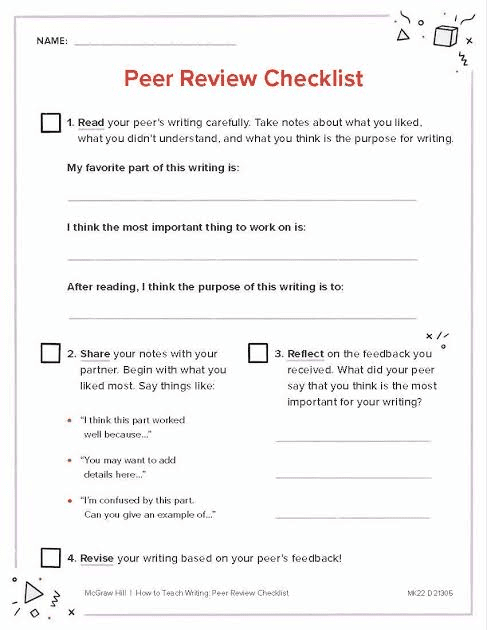
How to write a peer review as a student
By
Princeton Journal of Pre-Collegiate Research
Read more

Peer review etiquette: tone, structure, fairness
By
Princeton Journal of Pre-Collegiate Research
Read more

Version control for research documents
By
Princeton Journal of Pre-Collegiate Research
Read more

Digital vs paper lab notebooks for students
By
Princeton Journal of Pre-Collegiate Research
Read more

Data management basics for student researchers
By
Princeton Journal of Pre-Collegiate Research
Read more
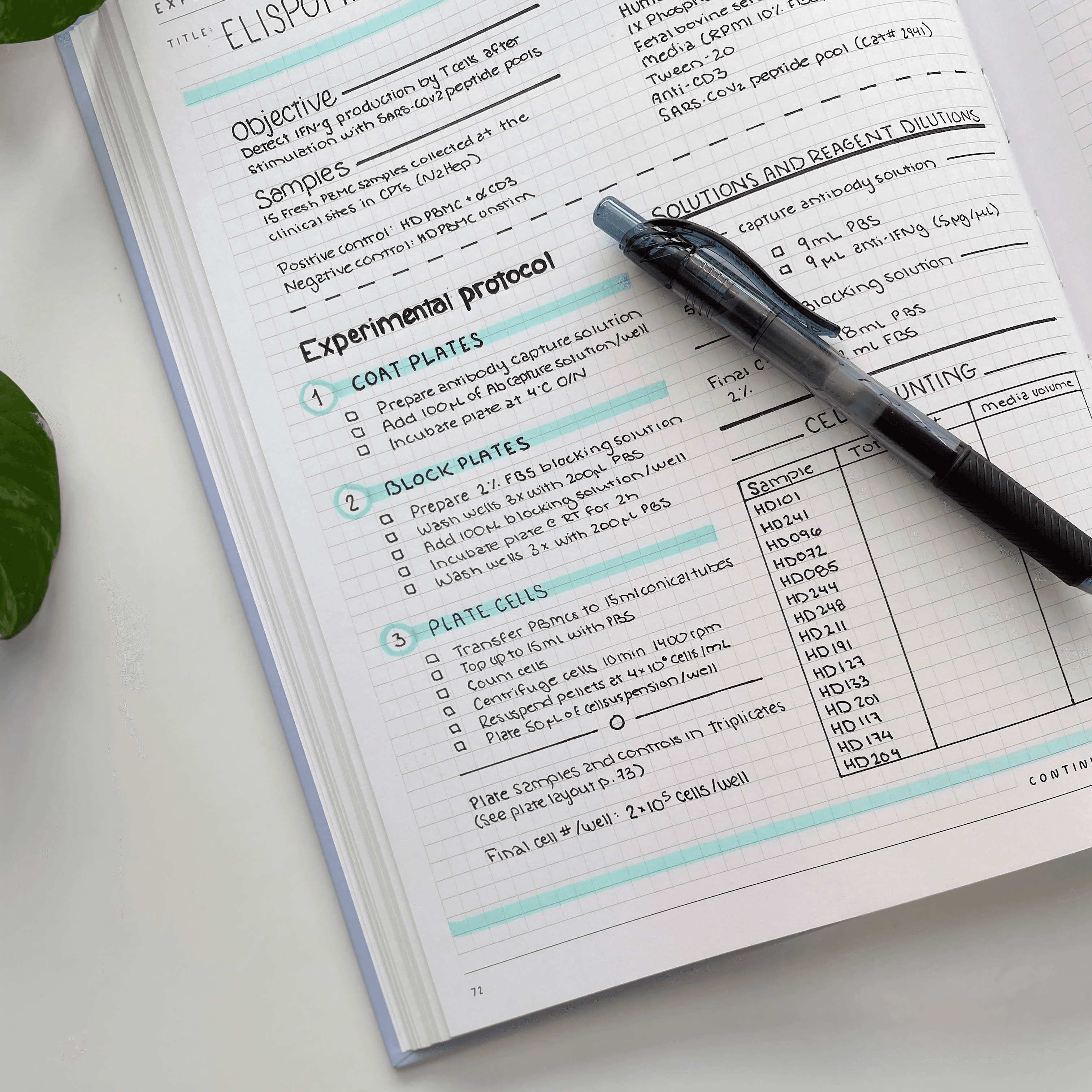
How to keep a lab notebook that reviewers trust
By
Princeton Journal of Pre-Collegiate Research
Read more

How to organize research files across a year-long project
By
Princeton Journal of Pre-Collegiate Research
Read more

How to document your data so you can defend it
By
Princeton Journal of Pre-Collegiate Research
Read more

How to write a grant proposal as a student
By
Princeton Journal of Pre-Collegiate Research
Read more

Free resources that replace research funding
By
Princeton Journal of Pre-Collegiate Research
Read more

Corporate and nonprofit programs that fund student research
By
Princeton Journal of Pre-Collegiate Research
Read more

Science fair grants and material stipends explained
By
Princeton Journal of Pre-Collegiate Research
Read more

Crowdfunding a student research project: does it work
By
Princeton Journal of Pre-Collegiate Research
Read more

How much does a research project actually cost
By
Princeton Journal of Pre-Collegiate Research
Read more

How to ask your school to fund your project
By
Princeton Journal of Pre-Collegiate Research
Read more

Grants for high school research projects: what exists
By
Princeton Journal of Pre-Collegiate Research
Read more

How to start a research club at your school
By
Princeton Journal of Pre-Collegiate Research
Read more