High school research paper example: what a publishable paper looks like
Princeton Journal of Pre-Collegiate Research

Most high school students have written research papers. Far fewer have written publishable research papers. Understanding what a high school research paper example that meets publication standards actually looks like is the difference between an assignment and a contribution to academic knowledge.
This guide breaks down the anatomy of a publishable paper, section by section. You will see what reviewers look for, what separates acceptable from exceptional, and how to build a paper that stands up to genuine peer scrutiny.
Why Publication Standards Matter at the High School Level
Publication is not just a credential. It is a signal that your work can withstand independent evaluation by experts who do not know your name, your school, or your GPA. That is the core of blind peer review, and it is the standard that serious academic journals apply to every submission, regardless of the author's age.
At the Princeton Journal of Pre-Collegiate Research, we hold student research to the same standards of rigor applied in graduate-level publishing. No grade inflation. No participation trophies. A paper either meets the bar or it does not, and our reviewers tell you exactly why.
Understanding what a publishable paper looks like gives you a concrete target. Vague advice like "be more analytical" is not useful. A detailed high school research paper example, walked through component by component, is.
The Core Structure of a Publishable Research Paper
Publishable papers follow a recognizable structure. Deviating from it without strong justification signals inexperience to reviewers. The sections below represent the standard architecture across STEM, humanities, and social science disciplines (with minor variations depending on the field).
Title and Abstract
Your title must be precise and descriptive. Vague titles like "A Study on Climate" fail immediately. A strong title identifies the subject, the method or angle, and the scope. For example: "Microplastic Concentration in Urban Stormwater Runoff: A Comparative Analysis of Three Watershed Zones."
The abstract is 150 to 250 words. It states the research question, the methodology, the key findings, and the significance. It does not tease or withhold. Reviewers read abstracts to decide whether the paper deserves full attention, so every sentence must carry weight.
A common mistake is writing the abstract as an introduction. It is not. It is a compressed version of the entire paper, including results. Write it last.
Introduction and Research Question
The introduction establishes context, identifies a gap in existing knowledge, and states the research question clearly. This is where many student papers fall short. They describe a topic instead of identifying a problem worth investigating.
A publishable introduction answers three questions in sequence: What is already known? What remains unknown or contested? What does this paper do about it? The research question or thesis statement should appear by the end of the introduction, not buried in the middle.
Strong introductions cite recent, credible sources (peer-reviewed journals, not encyclopedias or general-interest websites). They demonstrate that the student has engaged with the existing literature, not just summarized it.
Literature Review
The literature review is not a summary of everything you read. It is a critical synthesis of what scholars have established, where they disagree, and where your research fits. This section demonstrates intellectual positioning, not just reading comprehension.
Organize the literature review thematically, not chronologically. Group sources by argument or finding, then explain how your work builds on, challenges, or fills a gap in that conversation. A paper without a substantive literature review signals to reviewers that the student did not engage seriously with the field.
If you are working on a social science paper, our guide on How To Write A Gender Studies Research Paper High School offers a detailed walkthrough of how to frame literature reviews in argument-driven disciplines.
Methodology
The methodology section is where publishable papers separate from school assignments. It must be detailed enough that another researcher could replicate your study. Vague descriptions like "I surveyed students" do not meet this standard.
Specify your sample size, selection criteria, instruments, data collection procedures, and analytical methods. Acknowledge limitations honestly. Reviewers are not looking for perfection; they are looking for intellectual honesty and methodological awareness.
For quantitative papers, explain your statistical methods. For qualitative papers, explain your coding or interpretive framework. For historical or humanities papers, explain your archival sources and how you evaluated their credibility. Our Writing A History Research Paper High School Guide covers source evaluation in depth for students working in that tradition.
Results and Analysis
Results present what you found. Analysis explains what it means. These are distinct intellectual tasks, and conflating them is one of the most common errors in student research papers.
In the results section, present your data clearly. Use tables, figures, or charts where appropriate, and label everything. Do not interpret yet. In the analysis section (sometimes called Discussion), explain what the results indicate, how they relate to your research question, and how they compare to existing findings in the literature.
Strong analysis does not just confirm what you expected. It grapples with unexpected results, alternative explanations, and the limits of what your data can support. That intellectual honesty is what distinguishes a publishable paper from a polished school project.
Conclusion
The conclusion does not introduce new information. It synthesizes the argument, restates the significance of the findings, and identifies directions for future research. It should leave the reader with a clear sense of what your paper contributed and why it matters.
Avoid the temptation to overclaim. A well-scoped conclusion that accurately represents what your study showed is far stronger than sweeping generalizations your data cannot support.
What Reviewers Actually Look For
Peer reviewers at journals like PJPCR evaluate papers on specific criteria. Knowing these criteria in advance is not gaming the system. It is understanding the standards of the field you are entering.
Originality: Does the paper ask a question that has not been answered in exactly this way before? Even a replication study must justify its contribution.
Methodological rigor: Are the methods appropriate for the research question? Are they executed and described with sufficient precision?
Engagement with existing literature: Does the student demonstrate knowledge of what scholars have already established?
Clarity of argument: Is the research question clear? Does the paper answer it directly and consistently?
Academic writing quality: Is the prose precise, formal, and free of ambiguity? Are citations formatted correctly?
Ethical considerations: For research involving human subjects or sensitive data, are ethical protocols addressed?
Reviewers are not looking for perfect papers. They are looking for papers that demonstrate genuine scholarly effort and intellectual seriousness. A paper with a modest scope, executed rigorously, will outperform an ambitious paper executed carelessly every time.
A Concrete High School Research Paper Example: Annotated Breakdown
Consider a paper submitted to a pre-collegiate journal on the topic of urban food deserts and adolescent nutrition. Here is how a publishable version of that paper differs from a typical school assignment at each stage.
School assignment version: "Food deserts are areas where people cannot access healthy food. This is a big problem in cities. I surveyed 20 students at my school about what they eat."
Publishable version: "This study examines the relationship between food retail density and self-reported dietary quality among adolescents in three low-income urban ZIP codes. Using USDA food access data combined with a validated 24-hour dietary recall instrument administered to 87 participants (ages 14-18), the study finds a statistically significant correlation between proximity to full-service grocery stores and reported fruit and vegetable consumption (r = 0.43, p < 0.01). These findings extend prior work by Chen et al. (2021) by isolating adolescent-specific consumption patterns distinct from household-level data."
The difference is not just length. It is specificity, methodological grounding, engagement with prior literature, and a clearly scoped contribution. That is what a high school research paper example that meets publication standards actually looks like in practice.
Common Mistakes That Prevent Publication
Even strong students make predictable errors that prevent their papers from clearing peer review. Recognizing these in advance will save you significant revision time.
Overly broad research questions: "How does social media affect teenagers?" cannot be answered in a single paper. Narrow the scope until the question is answerable with the resources you have.
Insufficient citation of primary sources: Secondary sources summarize. Primary sources (original studies, data sets, archival documents) are what reviewers want to see you engage with directly.
Plagiarism, including unintentional paraphrasing: Academic integrity is non-negotiable. Our guide on How To Avoid Plagiarism In A High School Research Paper covers both intentional and unintentional forms in detail.
Missing or thin methodology: If a reviewer cannot understand how you collected and analyzed your data, the paper cannot be accepted.
Conclusions that exceed the data: Your findings support conclusions proportional to your sample size, method, and scope. Stay within those boundaries.
Discipline-Specific Considerations
The general structure above applies across fields, but each discipline has conventions that reviewers expect you to follow. A biology paper that omits a materials and methods section will be rejected regardless of the quality of its findings. A political science paper that does not engage with theoretical frameworks will be seen as analytically shallow.
If you are writing in the sciences, our How To Write A Biology Research Paper For High School guide and the Physics Research Paper Guide High School Students both walk through field-specific formatting and structural expectations.
For social science and policy work, the How To Write Public Health Research Paper High School guide and the How To Write Political Science Research Paper High School resource address the specific conventions those disciplines demand.
Match your paper's format to your field. Reviewers notice immediately when a student has not done this, and it signals a lack of familiarity with the scholarly community they are trying to join.
How Long Does It Take to Produce a Publishable Paper?
Students often underestimate the time required. A publishable paper is not a weekend project. From initial question formulation through final revision, most successful submissions represent months of sustained work. Our resource on How Long Does It Take To Write A High School Research Paper provides realistic timelines by paper type and discipline.
Plan for multiple full drafts. Plan for feedback that requires substantive revision, not just editing. The students whose papers get published are not necessarily the most naturally talented writers. They are the ones who treated the revision process as part of the intellectual work, not an afterthought.
What a Publishable Paper Looks Like: The Standard You Are Aiming For
A publishable high school research paper example demonstrates a clear, original research question. It situates that question within existing scholarship. It uses a methodology appropriate to the question and describes it with enough precision for replication. It presents results honestly and analyzes them with intellectual rigor. It draws conclusions proportional to the evidence. And it does all of this in clear, precise academic prose, properly cited, properly formatted, and free of the vagueness that characterizes most school-level writing.
That is a high standard. It is also an achievable one. Students from over six continents have met it and published original research through PJPCR. They did not do it because it was easy. They did it because they took the standard seriously and worked toward it deliberately.
Ready to Submit Your Research?
Understanding what a high school research paper example that meets publication standards looks like is the first step. The second step is building one. If you are working toward submission, our guide on How To Submit Research Paper High School Student walks through the submission process at PJPCR from manuscript preparation through final formatting requirements.
Publication is within reach for any student willing to do the work at the level the work demands. Start with a question worth asking. Build your paper to the standard described here. Submit it to a journal that will evaluate it honestly. That is the path, and it is open to you.
Explore more guides and resources across every discipline in our Blogs section, and when you are ready, bring your research to a journal that takes pre-collegiate scholarship seriously.
Read More

Can high school students be peer reviewers
By
Princeton Journal of Pre-Collegiate Research
Read more

What reviewing other papers teaches you about your own
By
Princeton Journal of Pre-Collegiate Research
Read more
How to give useful feedback on a classmate's paper
By
Princeton Journal of Pre-Collegiate Research
Read more

Student editorial boards: how they work
By
Princeton Journal of Pre-Collegiate Research
Read more
How to write a peer review as a student
By
Princeton Journal of Pre-Collegiate Research
Read more

Peer review etiquette: tone, structure, fairness
By
Princeton Journal of Pre-Collegiate Research
Read more

Version control for research documents
By
Princeton Journal of Pre-Collegiate Research
Read more

Digital vs paper lab notebooks for students
By
Princeton Journal of Pre-Collegiate Research
Read more

Data management basics for student researchers
By
Princeton Journal of Pre-Collegiate Research
Read more
How to keep a lab notebook that reviewers trust
By
Princeton Journal of Pre-Collegiate Research
Read more

How to organize research files across a year-long project
By
Princeton Journal of Pre-Collegiate Research
Read more

How to document your data so you can defend it
By
Princeton Journal of Pre-Collegiate Research
Read more

How to write a grant proposal as a student
By
Princeton Journal of Pre-Collegiate Research
Read more
Free resources that replace research funding
By
Princeton Journal of Pre-Collegiate Research
Read more
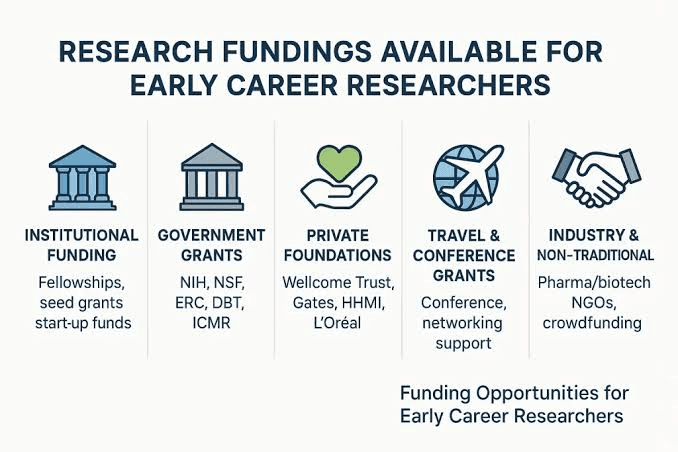
Corporate and nonprofit programs that fund student research
By
Princeton Journal of Pre-Collegiate Research
Read more

Science fair grants and material stipends explained
By
Princeton Journal of Pre-Collegiate Research
Read more

Crowdfunding a student research project: does it work
By
Princeton Journal of Pre-Collegiate Research
Read more

How much does a research project actually cost
By
Princeton Journal of Pre-Collegiate Research
Read more

How to ask your school to fund your project
By
Princeton Journal of Pre-Collegiate Research
Read more

Grants for high school research projects: what exists
By
Princeton Journal of Pre-Collegiate Research
Read more

How to start a research club at your school
By
Princeton Journal of Pre-Collegiate Research
Read more