Research proposal example for high school students
Princeton Journal of Pre-Collegiate Research

Most high school students have a research idea worth pursuing. What stops them is not ability but structure. A well-built research proposal turns a vague question into a credible, executable plan, and it is the first document that tells reviewers, mentors, and journals whether your work deserves serious attention.
This guide walks you through every component of a strong research proposal example for high school students. You will see what each section must accomplish, what language to use, and what common mistakes to avoid. By the end, you will have a clear template you can adapt to any discipline, from biology to economics to literary analysis.
What Is a Research Proposal and Why Does It Matter?
A research proposal is a formal document that outlines what you intend to study, why it matters, how you will conduct the research, and what you expect to find. It is not a finished paper. It is a blueprint. Reviewers use it to evaluate the feasibility, originality, and rigor of your plan before you invest weeks or months in execution.
For high school researchers, a strong proposal does something additional: it signals that you understand academic conventions. That signal matters when you are submitting to peer-reviewed journals, applying to summer research programs, or seeking faculty mentorship. A poorly structured proposal, regardless of how brilliant the underlying idea is, will not move forward. A well-structured one opens doors.
The Core Components of a Research Proposal
Every strong research proposal, across all disciplines, contains the same foundational elements. The order and emphasis may shift slightly depending on whether your work is empirical, theoretical, or humanities-based. The elements themselves do not change.
1. Title
Your title should be specific, descriptive, and concise. Avoid vague titles like "A Study on Climate Change." Prefer something like "The Effect of Urban Heat Islands on Asthma Hospitalization Rates in Low-Income Neighborhoods, 2015-2023." A precise title tells the reader exactly what you are studying, in what context, and with what scope. Keep it under 20 words.
2. Abstract
The abstract is a 150-250 word summary of your entire proposal. Write it last, even though it appears first. It should cover your research question, your methodology, your expected contribution, and your significance statement. Many reviewers read only the abstract before deciding whether to engage further. Make every sentence count.
3. Introduction and Background
This section establishes the context for your research. You are answering one question: why does this problem exist and why has it not been fully solved? Start with the broader field, narrow to the specific gap your research addresses, and end with a clear statement of your research question or hypothesis. Cite existing literature. Show that you have read the field, not just Googled it.
A strong introduction for a high school proposal might look like this: "Microplastic contamination in freshwater systems has been documented extensively in rivers across Europe and North America (Smith et al., 2019; Liu & Chen, 2021). However, limited research exists on microplastic accumulation in suburban storm drain systems in the northeastern United States. This study investigates whether storm drain proximity to commercial zones correlates with elevated microplastic concentrations in downstream water samples."
Notice what that paragraph does. It acknowledges existing work, identifies a specific gap, and states a testable question. That is the formula.
4. Literature Review
The literature review is not a summary of everything ever written on your topic. It is a curated argument. You are showing that you understand the current state of knowledge and that your proposed research adds something new. Organize it thematically, not chronologically. Group sources by the claims they support, not by when they were published.
For high school researchers exploring interdisciplinary topics, this section can feel daunting. It should not. You are not expected to have read every paper in the field. You are expected to have read the most relevant ones carefully and to demonstrate that your question emerges from genuine engagement with the existing scholarship. If you are working in the social sciences, resources like Sociology Research Ideas For High School Students can help you identify credible starting points for your literature search.
5. Research Question or Hypothesis
State your research question or hypothesis clearly and in its own section. Do not bury it inside a paragraph. If your research is empirical, frame a testable hypothesis: "Students in schools with longer lunch periods will report higher levels of academic focus in afternoon classes." If your research is exploratory or qualitative, frame an open-ended research question: "How do first-generation college students at urban public high schools navigate institutional barriers to advanced coursework?"
One question or one hypothesis per proposal. Scope is your friend at this stage.
6. Methodology
This is the section most high school researchers underestimate. Methodology is where you explain exactly how you will collect data, analyze it, and draw conclusions. Reviewers are looking for replicability. Could someone else follow your method and get comparable results? If yes, your methodology is strong. If no, revise it.
Include the following elements in your methodology section:
Research design: Is this a survey study, a controlled experiment, a textual analysis, a comparative case study, or something else?
Data sources: Where is your data coming from? Primary sources, existing datasets, interviews, laboratory experiments?
Sample or corpus: What is the scope of your data? How many participants, texts, or observations?
Analysis method: How will you interpret the data? Statistical analysis, thematic coding, close reading, computational modeling?
Limitations: What are the known constraints of your approach? Acknowledging limitations is a sign of intellectual honesty, not weakness.
If your research does not require a laboratory, that is not a disadvantage. Many rigorous studies are conducted entirely through publicly available data, archival sources, or structured surveys. Online Research Programs For High School Students No Lab Req demonstrates the range of credible approaches available to students without institutional lab access.
7. Expected Results and Significance
You do not know your results yet. That is the point of research. But you should be able to articulate what you expect to find and why it would matter if you found it. This section answers the "so what" question. Connect your anticipated findings to the broader field. Explain who benefits from this knowledge and how.
Avoid overclaiming. You are not going to solve climate change with a single high school study. You are contributing a specific, bounded piece of evidence to an ongoing conversation. Frame it that way. Precision is more credible than ambition.
8. Timeline
Provide a realistic timeline broken into phases. A sample structure for a six-month research project might include: literature review and proposal refinement in month one, data collection in months two and three, analysis in month four, writing and revision in month five, and final submission in month six. Reviewers want to see that you have thought through the logistics, not just the ideas.
9. References
Use a consistent citation format throughout. APA is standard in social sciences and STEM. MLA is common in humanities. Chicago is used in history and some interdisciplinary fields. Whatever format you choose, apply it consistently and completely. A reference list with missing volume numbers, incomplete author names, or inconsistent formatting signals carelessness. Carelessness undermines credibility.
A Complete Research Proposal Example for High School Students
Below is a condensed but complete example of what a research proposal looks like when all components are assembled correctly. This example is in the social sciences, but the structure applies across disciplines.
Title: Social Media Use and Academic Self-Efficacy Among High School Students: A Survey-Based Study
Abstract: This study examines the relationship between daily social media use and academic self-efficacy among high school students aged 14-18. Using a validated survey instrument administered to 120 students across three public high schools, this research tests the hypothesis that higher daily social media use correlates with lower academic self-efficacy scores. Findings will contribute to the growing body of literature on digital media and adolescent academic outcomes and may inform school-based digital wellness interventions.
Introduction: Academic self-efficacy, defined as a student's belief in their capacity to complete academic tasks successfully, is a significant predictor of academic achievement (Bandura, 1997). Recent research has examined how digital media environments affect adolescent self-perception, but findings on social media's specific impact on academic self-efficacy remain inconsistent (Valkenburg et al., 2021; Twenge & Campbell, 2019). This study addresses that gap by testing the relationship in a structured, survey-based design within a defined demographic.
Hypothesis: Students who report more than four hours of daily social media use will score significantly lower on the Academic Self-Efficacy Scale (ASES) than students who report fewer than two hours of daily use.
Methodology: Participants will be recruited through school counselors at three public high schools in the same metropolitan district. The survey will include the validated 10-item Academic Self-Efficacy Scale and a self-reported social media use questionnaire. Data will be analyzed using Pearson correlation and independent samples t-tests. Limitations include reliance on self-reported data and a geographically restricted sample.
Significance: If the hypothesis is supported, findings will provide school counselors with evidence to justify structured digital wellness programming. If not supported, findings will challenge prevailing assumptions and prompt more nuanced research designs.
Discipline-Specific Considerations
The structure above applies broadly, but each discipline has conventions worth understanding before you write. STEM proposals emphasize experimental controls, measurement precision, and reproducibility. Humanities proposals emphasize theoretical frameworks, primary source selection, and interpretive methodology. Social science proposals balance quantitative rigor with attention to context and positionality.
If you are working in the physical sciences, the Physics Research Paper Guide High School Students provides field-specific guidance on structuring empirical claims. For those working in mathematics, Mathematics Research How High School Students Can Contribute addresses how to frame original contributions within a formal proof or computational context. Students pursuing cultural or linguistic research will find Linguistics Research Projects For High School Students a useful companion for scoping a manageable and original question.
Common Mistakes to Avoid
Even strong researchers make predictable errors in their first proposals. Knowing what to avoid saves revision time.
Overly broad research questions: "How does poverty affect education?" is not a research question. It is a dissertation topic. Narrow your scope to something you can actually investigate.
Missing the gap: If you cannot explain what your research adds to existing knowledge, you do not yet have a proposal. You have a summary of other people's work.
Vague methodology: "I will collect data and analyze it" is not a methodology. Specify your instruments, your sample, and your analytical approach.
Inconsistent citations: Pick a format and apply it precisely throughout.
Overclaiming significance: Modesty about scope is a strength. Reviewers respect researchers who understand the limits of a single study.
What Comes After the Proposal
A strong proposal is the beginning, not the end. Once your proposal is approved or refined, the actual research begins. And once the research is complete, the next step is dissemination: sharing your findings with a broader academic audience through peer-reviewed publication.
International students navigating this process will find High School Research Opportunities International Students a useful resource for understanding pathways available outside the United States. Students from underrepresented backgrounds, including first-generation researchers, should also explore High School Research Journal Guide First Generation Students, which addresses the specific challenges and opportunities facing researchers without institutional mentorship networks.
Conclusion: Build the Proposal, Then Build the Research
A research proposal example for high school students is not just a document. It is a discipline. It teaches you to think before you act, to read before you claim, and to plan before you collect. Every component of a strong proposal, from the title to the references, reflects a decision about what matters and why. That kind of structured thinking is what separates credible academic research from a well-intentioned school project.
The Princeton Journal of Pre-Collegiate Research exists because high school researchers deserve a rigorous, merit-based venue for their best work. We hold student submissions to the same standards as graduate-level peer review (no shortcuts, no rubber stamps). If your proposal leads to a completed study worth sharing, we want to see it. Explore our Blogs for additional research guides across disciplines, and visit Princeton JPCR to learn more about submitting your work to an international peer-reviewed audience.
Start with the proposal. The rest follows.
Read More

Can high school students be peer reviewers
By
Princeton Journal of Pre-Collegiate Research
Read more

What reviewing other papers teaches you about your own
By
Princeton Journal of Pre-Collegiate Research
Read more
How to give useful feedback on a classmate's paper
By
Princeton Journal of Pre-Collegiate Research
Read more

Student editorial boards: how they work
By
Princeton Journal of Pre-Collegiate Research
Read more
How to write a peer review as a student
By
Princeton Journal of Pre-Collegiate Research
Read more

Peer review etiquette: tone, structure, fairness
By
Princeton Journal of Pre-Collegiate Research
Read more

Version control for research documents
By
Princeton Journal of Pre-Collegiate Research
Read more

Digital vs paper lab notebooks for students
By
Princeton Journal of Pre-Collegiate Research
Read more

Data management basics for student researchers
By
Princeton Journal of Pre-Collegiate Research
Read more
How to keep a lab notebook that reviewers trust
By
Princeton Journal of Pre-Collegiate Research
Read more

How to organize research files across a year-long project
By
Princeton Journal of Pre-Collegiate Research
Read more

How to document your data so you can defend it
By
Princeton Journal of Pre-Collegiate Research
Read more

How to write a grant proposal as a student
By
Princeton Journal of Pre-Collegiate Research
Read more
Free resources that replace research funding
By
Princeton Journal of Pre-Collegiate Research
Read more
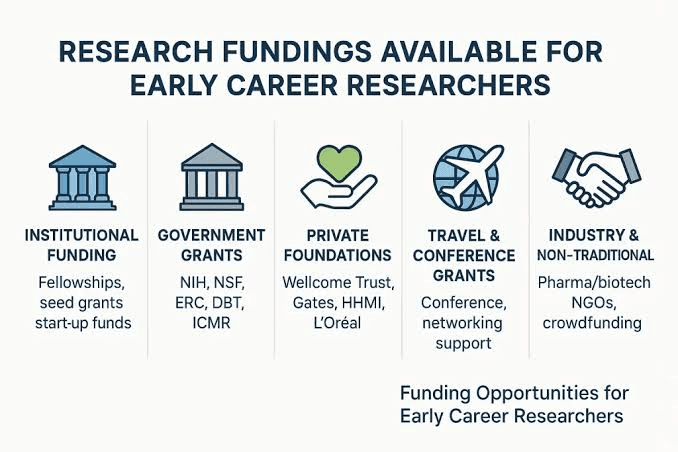
Corporate and nonprofit programs that fund student research
By
Princeton Journal of Pre-Collegiate Research
Read more

Science fair grants and material stipends explained
By
Princeton Journal of Pre-Collegiate Research
Read more

Crowdfunding a student research project: does it work
By
Princeton Journal of Pre-Collegiate Research
Read more

How much does a research project actually cost
By
Princeton Journal of Pre-Collegiate Research
Read more
How to ask your school to fund your project
By
Princeton Journal of Pre-Collegiate Research
Read more

Grants for high school research projects: what exists
By
Princeton Journal of Pre-Collegiate Research
Read more

How to start a research club at your school
By
Princeton Journal of Pre-Collegiate Research
Read more