How to do marine biology research without lab access
Princeton Journal of Pre-Collegiate Research

Most students assume marine biology research requires a university lab, expensive equipment, and a faculty mentor standing beside them. That assumption is wrong, and it is holding talented researchers back. Learning how to do marine biology research without lab access is entirely possible, and the resulting work can be rigorous, original, and publishable.
The ocean produces more publicly available data than almost any other scientific domain. Satellite imagery, long-term monitoring programs, open-access specimen databases, and decades of published field studies sit waiting for a researcher willing to ask a precise question. You do not need a centrifuge to contribute something meaningful to marine science.
Why Marine Biology Is More Accessible Than You Think
Marine biology carries a reputation for requiring fieldwork on research vessels or access to aquaria with specialized filtration systems. That reputation reflects one narrow slice of the discipline. A large portion of active marine research today is computational, comparative, or literature-based. Ecologists model population dynamics using existing survey data. Conservation scientists analyze satellite-tagged migration routes. Taxonomists revise species classifications using museum specimen records. None of those researchers needed a wet lab for their most recent paper.
High school students can operate in exactly the same space. The constraint is not equipment. The constraint is research design. A well-formed question, applied to credible existing data, produces credible science. That is the foundation of secondary research, and it is a legitimate and respected methodology across every tier of academic publishing.
If you want to understand how secondary research works as a formal methodology, the guide on How To Do Secondary Research Without Original Experiments explains the framework clearly. Marine biology is one of the strongest disciplines for applying it.
Step One: Choose a Research Question That Fits Your Resources
The most common mistake student researchers make is choosing a question before auditing their available resources. In marine biology without lab access, your resources are data repositories, published literature, and observational tools you can deploy yourself. Your question must fit those resources precisely.
Strong research questions for resource-constrained marine biology tend to fall into a few categories. Comparative analyses ask whether outcomes differ across geography, time period, or species group. Trend analyses ask whether a measurable variable has changed over a defined period. Synthesis questions ask what the existing literature collectively reveals about a mechanism or pattern that has not yet been explicitly summarized.
Weak research questions in this context are those that require wet lab confirmation to answer. If your question cannot be addressed without culturing organisms, running chemical assays, or conducting dissections, redesign it. The goal is not to simulate lab work. The goal is to identify a question that data and literature can genuinely answer.
Key Data Sources for Marine Biology Research Without Lab Access
Access to quality data is not a barrier when you know where to look. Several major repositories publish marine science data openly and freely.
Ocean Biodiversity Information System (OBIS)
OBIS aggregates occurrence records for marine species from institutions worldwide. It currently holds hundreds of millions of records spanning centuries of collection. You can query by species, location, depth, or time period. A student asking how the documented range of a specific fish species has shifted over the last forty years has everything they need in OBIS alone.
NOAA National Centers for Environmental Information
NOAA publishes sea surface temperature records, ocean chemistry data, coral reef monitoring results, and fisheries stock assessments going back decades. These datasets are structured, documented, and designed for public use. Trend analyses, anomaly detection, and comparative studies across ocean regions are all viable research directions using NOAA data.
Global Fishing Watch
Global Fishing Watch uses satellite data to track fishing vessel activity across the world's oceans. For students interested in fisheries management, marine protected area effectiveness, or illegal fishing patterns, this is a powerful and underused resource at the high school research level.
NASA Earthdata
NASA's ocean color data, chlorophyll concentration maps, and sea level altimetry products allow students to study phytoplankton dynamics, harmful algal bloom patterns, and coastal ecosystem change using satellite remote sensing. No boat required.
Published Literature via Google Scholar and PubMed
Systematic literature reviews and meta-analyses are rigorous research outputs in their own right. Identifying a gap in the existing literature, synthesizing findings across multiple studies, or evaluating conflicting conclusions across a body of work is genuine scholarly contribution. These approaches require careful methodology, clear inclusion criteria, and transparent analysis, but they require no physical equipment whatsoever.
How to Do Marine Biology Research Without Lab Access: Fieldwork You Can Do Yourself
Not all non-lab research is desk-based. If you live near a coast, estuary, tidal flat, or even a freshwater system with marine-connected species, you have access to a field site. Citizen science programs formalize this kind of data collection and connect your observations to broader research networks.
iNaturalist allows you to document species occurrences with photographs and GPS coordinates. Your observations, once verified by the platform's identification community, become part of a global biodiversity database that researchers actively use. Reef Life Survey trains volunteer divers to conduct standardized fish and invertebrate counts on coral reefs. CoastSnap uses fixed camera mounts at beaches worldwide to track coastal morphology changes, and students can both contribute data and analyze the existing photographic archive.
Fieldwork without lab access does not mean unstructured observation. Design your field component with the same rigor you would bring to a controlled experiment. Define your sampling protocol before you begin. Record environmental variables consistently. Document your methods in enough detail that another researcher could replicate them. That discipline is what separates publishable field observation from a nature journal.
Structuring Your Research Paper
Once you have a question, a dataset or literature corpus, and a methodology, the work of writing begins. Marine biology papers follow standard scientific structure: introduction, methods, results, discussion, and conclusion. Each section has a specific job, and none of them should carry weight that belongs in another section.
The introduction establishes what is known, what is unknown, and why your specific question matters. The methods section describes exactly what you did with your data or literature, in enough detail to be reproducible. The results section presents findings without interpretation. The discussion interprets findings, acknowledges limitations, and situates your work in the broader literature. The conclusion answers your original research question directly.
For students writing their first scientific paper, the guide on How To Write A Biology Research Paper For High School covers this structure in detail. Marine biology papers follow the same conventions.
Titles deserve particular attention. A strong title communicates your question, your approach, and your scope in under fifteen words. Vague titles like "A Study of Ocean Temperature" signal weak research design before a reviewer reads a single sentence. The resource on How To Write A Strong Title For A Research Paper walks through exactly how to construct one that works.
Common Methodological Pitfalls to Avoid
Data-driven marine biology research without lab access introduces specific methodological risks. The most common is treating correlation as causation. If your analysis shows that sea surface temperature and coral bleaching events co-occur in a dataset, you have identified a correlation. You have not demonstrated a mechanism. Your discussion must reflect that distinction clearly.
A second pitfall is ignoring data provenance. Not all records in open-access databases are equally reliable. OBIS records, for example, vary in taxonomic precision, collection methodology, and temporal resolution. Your methods section must address how you evaluated and filtered your data sources. Reviewers will ask, and the answer matters.
A third pitfall is scope creep. Students who ask narrow, precise questions produce stronger papers than students who attempt to explain everything about a species or ecosystem. Constrain your question deliberately. A focused analysis of one variable across one region over one defined time period is more publishable than a broad survey of everything known about coral reefs.
Proofreading and grammar are not afterthoughts. Reviewers form impressions quickly, and mechanical errors undermine the credibility of otherwise strong science. The resource on Common Grammar Mistakes In Academic Research Papers covers the errors that appear most frequently in student submissions.
Managing Your Time and Staying on Track
Marine biology research projects without lab access can be completed on a student schedule, but they require planning. A literature review that draws on fifty papers takes longer than most students anticipate. Data cleaning and analysis take longer still. Building a realistic timeline before you begin prevents the panic that collapses otherwise promising projects.
Setting defined milestones, such as completing your literature review by a specific date, finishing data collection by another, and submitting a full draft by a third, keeps the project moving. The guide on How To Set Milestones For A Long Term Research Project provides a practical framework for doing this effectively.
Summer is a particularly productive window for this kind of work. Uninterrupted weeks allow for the deep reading and sustained analysis that marine biology research demands. If you are considering using a summer break to complete a paper, the post on Can You Do A Research Paper Over The Summer addresses both the feasibility and the strategy.
Where to Publish Your Marine Biology Research
Completing a rigorous paper is only half the work. Publication transforms private effort into public scholarship. For high school students, finding the right journal matters. Not every publication venue applies genuine peer review, and a credential from a journal that rubber-stamps submissions carries no real weight.
Princeton JPCR (not affiliated with Princeton University) publishes original research by high school students across 50+ academic disciplines, including marine biology and environmental science. Every submission goes through double-blind peer review. Accepted papers receive a DOI, making them permanently citable and globally discoverable. Reviewers provide substantive feedback whether a paper is accepted or not, because the goal is researcher development, not just publication throughput.
If you want to understand which journals apply genuine standards to student submissions, the comparison at Journals That Accept High School Research In Biology is a useful starting point. Some journals accept student work without a faculty mentor, which matters for independent researchers. That landscape is covered in the post on Journals That Accept High School Research Without Mentor.
How to Do Marine Biology Research Without Lab Access: The Core Takeaway
The absence of a lab is not the absence of an opportunity. Marine biology is a data-rich, literature-rich discipline with open-access resources, active citizen science programs, and legitimate methodological pathways that require no specialized equipment. The students who succeed in this space are not the ones with the best institutional connections. They are the ones who ask precise questions, apply rigorous methods, and write with clarity and discipline.
If you are ready to begin, start with a question you genuinely want to answer. Audit the data available to you. Design a methodology that fits those resources. Write every section with the expectation that a serious reviewer will read it. Then submit to a journal that will hold your work to the same standard it would hold any researcher's work.
That is how original research gets done. Lab access is optional. Rigor is not. Explore the Blogs at Princeton JPCR for more guides on research methodology, academic writing, and the publication process for high school scholars.
Read More

Can high school students be peer reviewers
By
Princeton Journal of Pre-Collegiate Research
Read more

What reviewing other papers teaches you about your own
By
Princeton Journal of Pre-Collegiate Research
Read more

How to give useful feedback on a classmate's paper
By
Princeton Journal of Pre-Collegiate Research
Read more

Student editorial boards: how they work
By
Princeton Journal of Pre-Collegiate Research
Read more
How to write a peer review as a student
By
Princeton Journal of Pre-Collegiate Research
Read more

Peer review etiquette: tone, structure, fairness
By
Princeton Journal of Pre-Collegiate Research
Read more

Version control for research documents
By
Princeton Journal of Pre-Collegiate Research
Read more

Digital vs paper lab notebooks for students
By
Princeton Journal of Pre-Collegiate Research
Read more

Data management basics for student researchers
By
Princeton Journal of Pre-Collegiate Research
Read more

How to keep a lab notebook that reviewers trust
By
Princeton Journal of Pre-Collegiate Research
Read more

How to organize research files across a year-long project
By
Princeton Journal of Pre-Collegiate Research
Read more

How to document your data so you can defend it
By
Princeton Journal of Pre-Collegiate Research
Read more

How to write a grant proposal as a student
By
Princeton Journal of Pre-Collegiate Research
Read more
Free resources that replace research funding
By
Princeton Journal of Pre-Collegiate Research
Read more
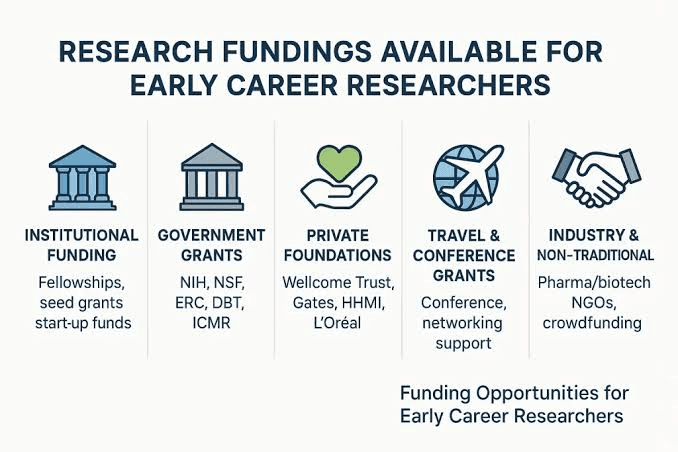
Corporate and nonprofit programs that fund student research
By
Princeton Journal of Pre-Collegiate Research
Read more

Science fair grants and material stipends explained
By
Princeton Journal of Pre-Collegiate Research
Read more

Crowdfunding a student research project: does it work
By
Princeton Journal of Pre-Collegiate Research
Read more

How much does a research project actually cost
By
Princeton Journal of Pre-Collegiate Research
Read more

How to ask your school to fund your project
By
Princeton Journal of Pre-Collegiate Research
Read more

Grants for high school research projects: what exists
By
Princeton Journal of Pre-Collegiate Research
Read more

How to start a research club at your school
By
Princeton Journal of Pre-Collegiate Research
Read more