How to Do Secondary Research Without Doing Original Experiments
Princeton Journal of Pre-Collegiate Research
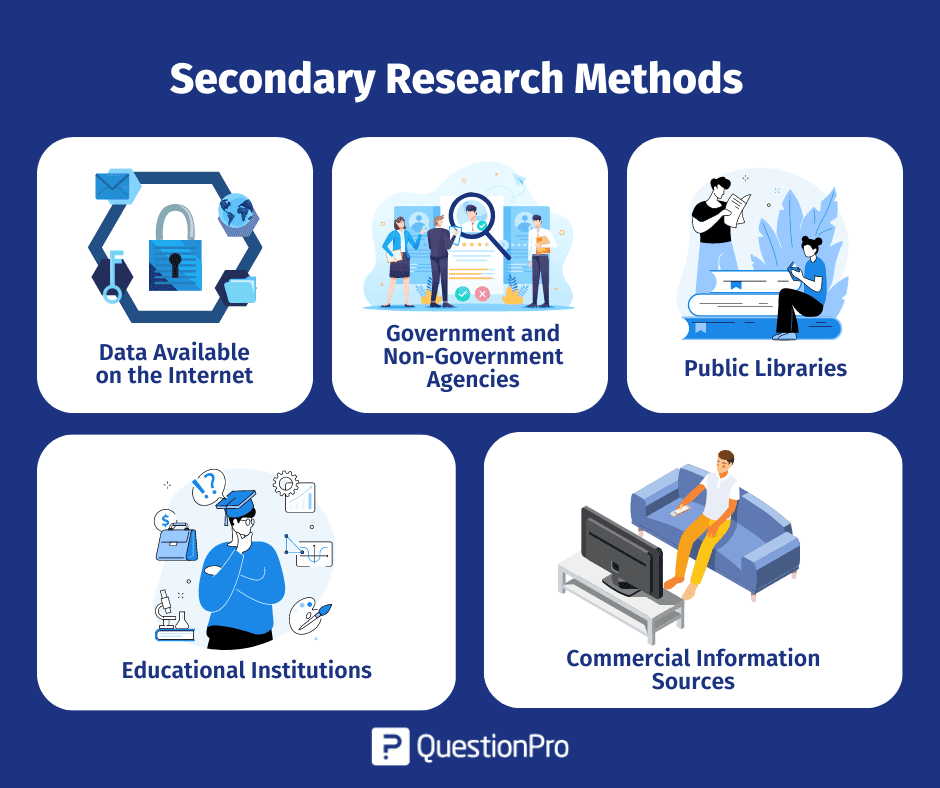
TL;DR: This post answers a specific question: can you produce credible, publishable academic research without running your own experiments? The answer is yes, and this guide explains exactly how. It is written for high school students in grades 9 through 12 who want to conduct rigorous secondary research, including literature reviews, systematic reviews, and evidence syntheses. After reading, you will know how to structure a secondary research project, avoid the mistakes that get these papers rejected, and submit finished work to the Princeton Journal of Pre-Collegiate Research.
Why secondary research is a legitimate and rigorous academic method
Secondary research is not a shortcut. The Cochrane Collaboration, one of the most cited sources in global health policy, produces no original experiments. Its entire output is systematic reviews of existing studies. When a government agency updates clinical guidelines or education policy, it does so based on synthesised evidence, not new data collection. The method is not inferior to primary research. It is different, and it demands a different set of skills.
High school students who want to know how to do secondary research without doing original experiments often assume they are choosing the easier path. They are not. A well-executed literature review requires you to evaluate the quality of dozens of sources, identify where those sources agree and conflict, and construct an original argument from that evidence. That is analytical work, and it is exactly what academic reviewers assess.
How do you do secondary research without doing original experiments?
Secondary research without original experiments means systematically locating, evaluating, and synthesising existing published studies to answer a specific research question. The core steps are: define a focused question, search academic databases using structured search terms, screen sources against clear inclusion criteria, extract and compare findings, and write an evidence-based argument. Done rigorously, this produces a publishable academic paper.
The process has a defined structure. Follow it in sequence.
Define a narrow, answerable research question. Broad questions produce unfocused reviews. A question like "What is the effect of sleep deprivation on adolescent academic performance?" is answerable. "How does sleep affect teenagers?" is not. If you need help building a focused question, read this guide on how to come up with a research question in high school before proceeding.
Search academic databases, not general websites. Use Google Scholar, PubMed, JSTOR, ERIC, or PsycINFO depending on your discipline. Search using Boolean operators: combine terms with AND, OR, and NOT to control your results. Record every search string you use. Reviewers will ask how you found your sources.
Set inclusion and exclusion criteria before you read. Decide in advance which sources qualify: publication date range, study type, population studied, language. Apply these criteria consistently. This is what separates a systematic review from a reading list.
Extract findings in a structured way. Create a table. For each source, record the author, year, methodology, sample size, key finding, and any limitations the authors themselves acknowledged. This table becomes the backbone of your analysis section.
Identify patterns, conflicts, and gaps across sources. Where do studies agree? Where do they contradict each other, and why? What question does the existing literature leave unanswered? That gap is your original contribution. For more on this, see what is a research gap and how do you find one.
Write your paper in standard academic structure. Introduction, literature review or background, methodology (your search and selection process), findings, discussion, and conclusion. The methodology section is not optional in secondary research. It is what makes your process reproducible and your conclusions credible.
The final step, once your paper is complete and revised, is to submit it for peer review. PJPCR publishes secondary research across all disciplines, including literature reviews, systematic reviews, and evidence syntheses, provided the methodology is clearly documented and the argument is original.
What happens after you submit a secondary research paper for review?
Peer reviewers assessing secondary research look at three things before anything else: whether your research question is clearly defined, whether your source selection process is documented and defensible, and whether your conclusions follow directly from the evidence you present. These are different criteria from what reviewers apply to experimental papers, but they are no less demanding.
The first stage is a desk review. An editor checks whether your submission meets basic formatting requirements and whether the paper falls within the journal's scope. Desk rejection at this stage is common and does not reflect on the quality of your underlying research. It usually means the paper was submitted in the wrong format, lacked a methodology section, or addressed a question outside the journal's published scope.
If your paper passes the desk review, it moves to peer review. For secondary research, reviewers will specifically examine whether your inclusion criteria were applied consistently, whether you engaged with conflicting evidence rather than ignoring it, and whether your discussion section distinguishes between what the evidence shows and what you are inferring from it. This last point is where many student submissions fall short. A strong discussion section in a secondary research paper names the limitations of the studies you reviewed, not just the limitations of your own process.
Revision requests are normal. A request to revise and resubmit is not a rejection. It means reviewers found the core work credible and want you to strengthen specific sections. Treat it as a specific, expert critique of your argument. Address every point the reviewer raises, and document how you addressed it in your revision letter.
The standard review and publication timeline at PJPCR is 2 to 3 months. A fast-track option is available for students who need a quicker turnaround.
What are the most common mistakes students make in secondary research?
The most common failure in student secondary research is treating a literature review as a summary rather than an argument. A summary lists what studies found. An argument uses those findings to answer a question, resolve a conflict in the literature, or identify what remains unknown. Reviewers reject summaries. They publish arguments.
The second mistake is failing to document the search process. Students often read widely, select sources they find useful, and never record how they found them. This makes the paper unreplicable. A reviewer cannot assess whether your conclusions are based on a representative sample of the literature if they cannot see how you searched for it. Document every database, every search string, and every filter you applied. This belongs in your methodology section.
The third mistake is ignoring conflicting evidence. If three studies support your argument and two contradict it, you cannot cite only the three. Academic reviewers will identify the omissions. Engage with the contradictory evidence directly. Explain why it differs, whether due to different populations, methodologies, or time periods, and state what that means for your conclusions. This is not a weakness in your paper. It is evidence that you understand the literature.
The fourth mistake is writing a discussion section that simply restates the findings. The discussion is where you interpret. What do the patterns mean? What do the conflicts suggest about the state of knowledge in this field? What should future researchers investigate? If your discussion section could have been written before you read a single source, it is not doing its job. For guidance on writing this section well, see how to write a discussion section in a research paper.
How to structure and submit a secondary research paper, step by step
Write your research question in one sentence. It must be specific enough to answer with existing published evidence.
Choose your methodology type. A narrative literature review synthesises sources thematically. A systematic review follows a pre-defined protocol and is fully reproducible. Choose based on your question and the volume of available literature.
Run your database searches and record every step. Save your search strings, the databases you used, and the number of results each search returned.
Screen sources using your pre-set inclusion criteria. Record how many sources you screened and how many you excluded at each stage.
Build your extraction table. One row per source. Columns for methodology, sample, key finding, and limitations.
Draft your paper in full academic structure. Do not skip the methodology section. Write your introduction using the guidance at how to write an introduction for a research paper.
Revise your discussion section. Check that every claim in the discussion is supported by a specific source in your review. Remove any inference that goes beyond the evidence.
Check your paper against the submission guidelines and submit your finished work for peer review.
PJPCR publishes original secondary research, including literature reviews and systematic reviews, across all academic disciplines. If your paper is complete and your methodology is documented, review the common reasons research papers get rejected before you submit, then visit the submission guidelines at princeton-jpcr.org.
Frequently asked questions about secondary research without original experiments
What is secondary research and how is it different from a school essay?
Secondary research is the systematic collection, evaluation, and synthesis of existing published studies to answer a defined research question. It differs from a school essay in three specific ways: it requires a documented search methodology, it engages with conflicting evidence rather than selecting only supporting sources, and it produces a conclusion that adds something to the existing literature rather than summarising it. A school essay argues a position. A secondary research paper maps and analyses an evidence base.
How long does it take to complete a secondary research paper?
A rigorous secondary research paper typically takes two to four months to complete, depending on the breadth of the literature and the complexity of the question. This includes the search phase, the screening and extraction phase, drafting, and revision. After submission to a peer-reviewed journal, the review process adds additional time. PJPCR's standard review and publication timeline is 2 to 3 months. A fast-track option is available for students who need a quicker turnaround. A publication fee applies for accepted papers.
Do I need access to a university library to do secondary research?
No. Google Scholar is freely accessible and indexes millions of peer-reviewed papers. PubMed is free and covers biomedical and life sciences literature. Many journals publish open-access articles that require no institutional login. Where a paper is behind a paywall, you can email the corresponding author directly to request a copy. Most researchers respond. The assumption that secondary research requires university access is one of the most common barriers students cite, and it is not accurate.
What makes a secondary research paper publishable rather than just well-written?
A publishable secondary research paper has three qualities a well-written paper may lack: a documented and reproducible search methodology, genuine engagement with conflicting evidence, and a conclusion that identifies something the existing literature has not resolved. Strong writing is necessary but not sufficient. Reviewers assess whether the process is credible and whether the argument is original. If your paper could have been written without reading the primary literature carefully, it will not pass peer review. For more on what reviewers assess, see what reviewers look for in student research.
What kinds of secondary research does PJPCR publish?
The Princeton Journal of Pre-Collegiate Research publishes literature reviews, systematic reviews, and evidence syntheses across all academic disciplines, including STEM, social sciences, humanities, and interdisciplinary fields. The key requirement is that the methodology is clearly documented and the argument is original. Secondary research is not a lower-tier submission category. It is assessed by the same peer review standards as primary research. Review the submission guidelines at princeton-jpcr.org for formatting and scope requirements.
What to take away from this guide
Secondary research without original experiments is a rigorous academic method used at the highest levels of scholarship. For high school students, it is a realistic and credible path to published research. The skills it demands, defining a narrow question, searching systematically, evaluating sources critically, and constructing an original argument from conflicting evidence, are exactly the skills that make a researcher useful.
The two things that determine whether a secondary research paper gets published are the methodology and the argument. Document every step of your search process. Engage with evidence that complicates your conclusions. Write a discussion section that interprets, not just restates. If you apply those three principles, your paper will be in a stronger position than most submissions reviewers see.
If your research is ready for peer review, submit it to PJPCR at princeton-jpcr.org.
Read More

APA format for high school research papers: complete guide
By
RISE Research
Read more

MLA format for research papers: when and how
By
RISE Research
Read more

APA vs MLA vs Chicago: which to use for your paper
By
RISE Research
Read more

How to cite a dataset
By
RISE Research
Read more

In-text citations vs footnotes: how each works
By
RISE Research
Read more

What is a p-value, explained for high school researchers
By
RISE Research
Read more

What is regression analysis and when do you use it
By
RISE Research
Read more

What is standard deviation and why it matters
By
RISE Research
Read more

What is a t-test and when do you need one
By
RISE Research
Read more

What is effect size and why reviewers care
By
RISE Research
Read more

Common statistical mistakes in student papers
By
RISE Research
Read more

Research for biology majors: what to publish before applying
By
https://princeton-jpcr.org/
Read more

Research for economics majors
By
https://princeton-jpcr.org/
Read more

Research for political science majors
By
https://princeton-jpcr.org/
Read more

Research for English and humanities majors
By
https://princeton-jpcr.org/
Read more

Research for neuroscience majors
By
https://princeton-jpcr.org/
Read more

Undecided major: what research keeps your options open
By
https://princeton-jpcr.org/
Read more

Summer research timeline: June to August week by week
By
Princeton Journal of Pre-Collegiate Research
Read more

Research goals to set at the start of the school year
By
Princeton Journal of Pre-Collegiate Research
Read more

How to finish your research paper before finals season
By
Princeton Journal of Pre-Collegiate Research
Read more

New year research resolutions that actually stick
By
Princeton Journal of Pre-Collegiate Research
Read more