Can you publish research from a school science competition
Princeton Journal of Pre-Collegiate Research

You spent months on that project. You built the experiment, ran the trials, analyzed the data, and stood at a poster board answering judges' questions. Now the competition is over. The question is: can you publish research from a school science competition, and should you?
The answer is yes. Competition research can become published research. But the path from a science fair table to a peer-reviewed journal is not automatic. It requires deliberate work, honest self-assessment, and a clear understanding of what academic publication actually demands.
What Makes Competition Research Publication-Ready?
Not every science fair project qualifies for academic publication. That is not a criticism of the work. It is a recognition that competitions and journals serve different purposes. Competitions reward innovation, presentation, and potential. Journals reward rigor, reproducibility, and contribution to existing knowledge.
Publication-ready competition research typically shares several characteristics. The study has a clearly defined research question with a testable hypothesis. The methodology is documented in enough detail that another researcher could replicate it. The data collection was systematic, not anecdotal. And the conclusions are proportional to the evidence, not inflated by enthusiasm.
If your project meets those criteria, you already have the foundation. What remains is the work of translating competition materials into a formal research paper.
Can You Publish Research From a School Science Competition: The Honest Assessment
Before you begin drafting a manuscript, evaluate your project against four questions. First: was your sample size sufficient to support your conclusions? Small samples are common in student research, and reviewers will flag them. Second: did you control for confounding variables? Competitions sometimes reward clever ideas even when experimental controls are incomplete. Journals do not extend the same courtesy.
Third: have you reviewed the existing literature? A published paper must situate itself within prior research. If you conducted your experiment without reading what scientists already know about the topic, that gap will show. Fourth: is your data original? Publication requires that the work has not been published elsewhere. Competition submission does not disqualify you, but prior publication in another journal does.
Answer those four questions honestly. If your project holds up, move forward. If it reveals weaknesses, address them before you submit anywhere.
From Poster Board to Manuscript: The Conversion Process
A science fair display board and a research paper are structurally different documents. The display board communicates visually and quickly. The manuscript communicates precisely and completely. Converting one into the other takes more effort than most students expect (and that effort is exactly what makes the credential meaningful).
Structure Your Paper Correctly
Academic research papers follow a standard structure: Abstract, Introduction, Literature Review, Methodology, Results, Discussion, and Conclusion. Each section has a specific function. The Introduction establishes why the question matters. The Literature Review demonstrates awareness of prior work. The Methodology section documents exactly what you did. The Results section reports findings without interpretation. The Discussion section interprets those findings and acknowledges limitations.
Many students collapse these sections together or skip the Literature Review entirely. That approach will not survive peer review. Build each section deliberately.
Write a Literature Review From Scratch
If your competition project did not include a formal literature review, write one now. Use Google Scholar, PubMed, JSTOR, or your school library's database access. Search for peer-reviewed articles related to your topic. Read at least ten to fifteen sources. Identify the consensus view, the open questions, and where your research fits within that landscape.
A strong literature review does not just list what others found. It builds the logical case for why your specific study was necessary. That argument is the spine of your Introduction section.
Document Your Methodology in Full
Competition judges often accept a summarized methodology. Peer reviewers do not. Write your Methods section so that a competent researcher in your field could replicate your study exactly. Specify sample sizes, instruments, materials, procedures, statistical tests, and any deviations from your original protocol. If you used a survey, include the full instrument in an appendix. If you conducted lab work, specify concentrations, temperatures, and durations.
Precision here is not pedantry. It is the standard that separates publishable work from a school project (and that distinction is the entire point).
Which Journals Accept High School Research?
This is where many students stall. Traditional academic journals are designed for credentialed researchers. Submitting to a journal that does not publish student work wastes your time and produces unnecessary rejection. The better approach is to identify journals that explicitly welcome pre-collegiate research.
Princeton JPCR is an international, peer-reviewed journal publishing original research by high school students across STEM, humanities, social sciences, and interdisciplinary fields. Every submission undergoes rigorous double-blind peer review. Every accepted paper receives a DOI, making it permanently findable and citable. The journal publishes across 50+ disciplines and has reached readers on six continents (your science fair project has an audience it has never had before).
For students who have already competed at the regional or national level, publication at Princeton JPCR represents the logical next step. The competition proved your idea had merit. Publication proves your research has scholarly value.
If you are curious about how other competitions translate into research opportunities, the guide on Siemens Competition Alternatives High School Researchers covers the broader landscape of pre-collegiate research recognition.
Can You Publish Research From a School Science Competition in Multiple Disciplines?
Yes. Science fairs span biology, chemistry, physics, environmental science, computer science, behavioral science, and more. Each discipline has its own conventions for research papers, and those conventions matter when you write your manuscript.
Computer science projects, for example, require detailed documentation of algorithms, datasets, and computational methods. Environmental science projects require site descriptions, sampling protocols, and often a discussion of ecological context. Behavioral science projects require attention to IRB-equivalent ethical considerations and validated measurement instruments.
Princeton JPCR accepts all of these. If you need discipline-specific guidance on converting your project into a paper, these resources address the process directly:
If your competition project falls into one of these categories, start with the relevant guide before you draft your manuscript. Discipline-specific conventions are not optional details. They are what reviewers use to evaluate whether you understand your field.
What Peer Review Looks Like for Former Competition Research
Princeton JPCR uses double-blind peer review. Reviewers do not know your name, your school, or your competition record. Your paper is evaluated entirely on its scholarly merit. That is the standard (no shortcuts, no rubber stamps).
Reviewers assess the clarity of the research question, the soundness of the methodology, the accuracy of the data analysis, and the validity of the conclusions. They also evaluate the literature review for completeness and the writing for precision. Feedback is substantive and instructive. Even papers that require revision receive comments that make the research stronger.
This process is different from competition judging in one important way. Competition judges reward potential. Peer reviewers evaluate execution. If your project was strong in concept but needed methodological refinement, the peer review process will identify exactly where that refinement is needed. Students who engage seriously with reviewer feedback leave the process as stronger researchers (you leave a better researcher than you arrived).
Practical Steps to Submit Your Competition Research
Here is the sequence that works. Follow it in order.
Audit your competition project against the four questions listed earlier. Identify gaps before reviewers do.
Conduct or expand your literature review. Read primary sources in your field. Cite them properly using a consistent citation format (APA, MLA, or Chicago depending on your discipline).
Write the full manuscript using the standard academic structure. Do not repurpose your display board text directly. Write fresh, precise prose.
Revise for precision. Every claim needs evidence. Every conclusion needs proportional support. Remove any language that overstates what your data shows.
Review the submission guidelines for your target journal. Princeton JPCR publishes its submission requirements clearly. Follow them exactly.
Submit and engage with reviewer feedback. Treat revision requests as part of the research process, not as rejection.
Students who follow this sequence consistently produce publishable manuscripts from competition projects. The work is real. The credential that results is real.
Why This Matters Beyond the College Application
Publication from a competition project does more than strengthen a college application (though it does that, credibly and verifiably). It contributes to the actual body of knowledge in your field. A DOI-assigned paper is indexed, searchable, and citable. Other researchers can find it. Future students can build on it. Your work enters the permanent scientific record.
That is a different kind of achievement than a trophy or a ribbon. Trophies sit on shelves. Published research exists forever, findable by anyone.
For students in specific regions navigating publication for the first time, these guides address the process in context:
Wherever you are, the path to publication runs through the same process: rigorous research, honest self-assessment, and a journal that takes student scholarship seriously.
Can You Publish Research From a School Science Competition: The Final Answer
Yes. You can publish research from a school science competition. The competition gave you the question, the data, and the preliminary findings. Publication demands that you take those materials and meet the standards of peer-reviewed scholarship. That gap is closeable. Thousands of high school students have closed it.
The work you did at that science fair was not the end of the project. It was the beginning of the research. Now finish it properly.
Princeton JPCR is not affiliated with Princeton University. It is an independent journal built specifically to give high school researchers a credible, rigorous venue for their work. If your competition project is ready, submit your research to Princeton JPCR and let the peer review process determine its place in the scholarly record. If you want to explore more about the research and publication process first, the Blogs section covers every stage of the journey from first draft to final publication.
Read More

Can high school students be peer reviewers
By
Princeton Journal of Pre-Collegiate Research
Read more

What reviewing other papers teaches you about your own
By
Princeton Journal of Pre-Collegiate Research
Read more
How to give useful feedback on a classmate's paper
By
Princeton Journal of Pre-Collegiate Research
Read more

Student editorial boards: how they work
By
Princeton Journal of Pre-Collegiate Research
Read more
How to write a peer review as a student
By
Princeton Journal of Pre-Collegiate Research
Read more

Peer review etiquette: tone, structure, fairness
By
Princeton Journal of Pre-Collegiate Research
Read more

Version control for research documents
By
Princeton Journal of Pre-Collegiate Research
Read more

Digital vs paper lab notebooks for students
By
Princeton Journal of Pre-Collegiate Research
Read more

Data management basics for student researchers
By
Princeton Journal of Pre-Collegiate Research
Read more
How to keep a lab notebook that reviewers trust
By
Princeton Journal of Pre-Collegiate Research
Read more

How to organize research files across a year-long project
By
Princeton Journal of Pre-Collegiate Research
Read more

How to document your data so you can defend it
By
Princeton Journal of Pre-Collegiate Research
Read more

How to write a grant proposal as a student
By
Princeton Journal of Pre-Collegiate Research
Read more
Free resources that replace research funding
By
Princeton Journal of Pre-Collegiate Research
Read more
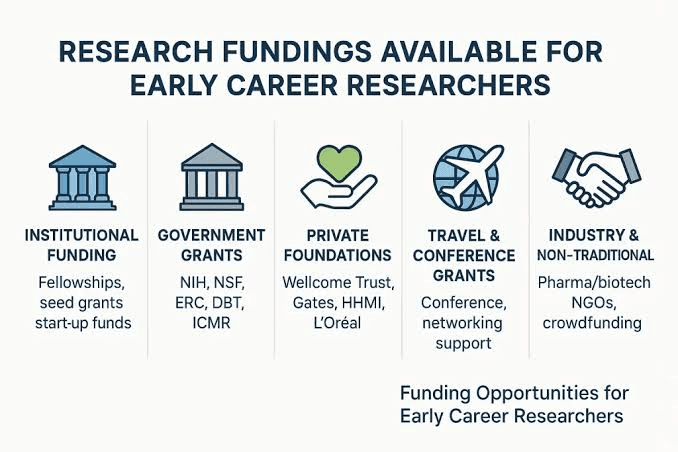
Corporate and nonprofit programs that fund student research
By
Princeton Journal of Pre-Collegiate Research
Read more

Science fair grants and material stipends explained
By
Princeton Journal of Pre-Collegiate Research
Read more

Crowdfunding a student research project: does it work
By
Princeton Journal of Pre-Collegiate Research
Read more

How much does a research project actually cost
By
Princeton Journal of Pre-Collegiate Research
Read more

How to ask your school to fund your project
By
Princeton Journal of Pre-Collegiate Research
Read more

Grants for high school research projects: what exists
By
Princeton Journal of Pre-Collegiate Research
Read more

How to start a research club at your school
By
Princeton Journal of Pre-Collegiate Research
Read more