Siemens Competition Alternatives for High School Researchers
Princeton Journal of Pre-Collegiate Research
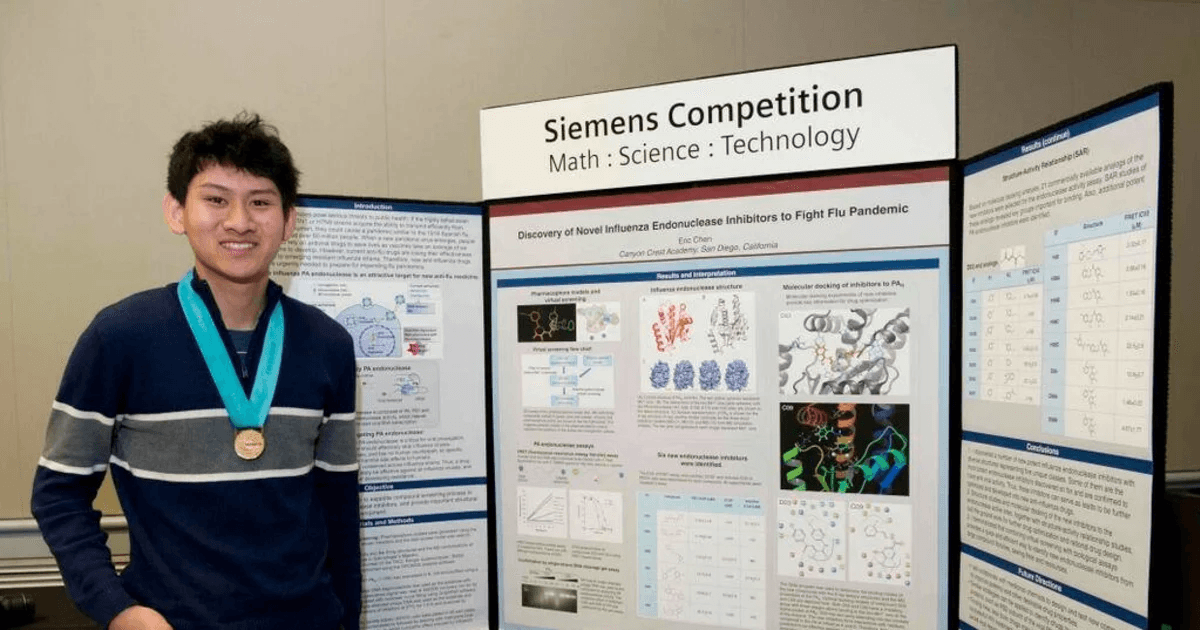
The Siemens Competition closed permanently in 2017. Many students searching for it today are looking for the same thing it once offered: a credible, high-stakes venue to validate original research. This post identifies the strongest Siemens Competition alternatives for high school researchers, explains what each option actually evaluates, and helps you decide which path fits your work. If your research is already complete, one of these options may be the right next step this week.
What were students actually looking for in the Siemens Competition?
The Siemens Competition was a national STEM research competition that evaluated original, independent research by high school students. It offered recognition, scholarship money, and, critically, external validation of scientific work. When students search for alternatives today, they are usually looking for one or more of three things: scholarship funding, competitive recognition, or a credible record of published and evaluated research. Those are three different goals, and the best alternative depends on which one matters most to you.
What are the best Siemens Competition alternatives for high school researchers?
The strongest alternatives fall into two categories: research competitions and peer-reviewed journals. Competitions offer prizes and rankings. Journals offer permanent, citable publication. The right choice depends on whether you want to win something or publish something. Many serious researchers pursue both. The options below cover both paths.
Research competitions that replaced the Siemens Competition
Several national competitions now occupy the space the Siemens Competition once held. Each has distinct eligibility rules, evaluation criteria, and reward structures.
Regeneron Science Talent Search is the most prestigious STEM research competition currently open to high school seniors in the United States. It is administered by Society for Science and has been running since 1942. The competition evaluates original research projects. Finalists present their work to a panel of scientists in Washington, D.C. Approximately 1,800 students enter annually, and 40 finalists are selected. The top prize is $250,000. Eligibility is limited to U.S. high school seniors, and the application requires a full research report, not just an abstract.
Regeneron International Science and Engineering Fair (ISEF) is the largest international pre-college science competition, also administered by Society for Science. Unlike the Science Talent Search, ISEF is open to students in grades 9 through 12 and to international participants. Students qualify through affiliated regional and state fairs. ISEF evaluates projects across 22 categories including behavioral science, environmental engineering, and computational biology. Winning a regional fair is the standard pathway to ISEF participation.
Junior Science and Humanities Symposia (JSHS) is a U.S. Department of Defense-sponsored program that recognises original research in STEM fields. It operates through regional symposia held at universities across the country, with national finalists presenting at an annual symposium. JSHS accepts research papers and evaluates both the written work and the oral presentation. It is open to students in grades 9 through 12 and does not require prior competition experience.
Davidson Fellows Scholarship accepts applications from students under 18 who have completed a significant piece of original work in science, technology, mathematics, literature, music, or philosophy. It is not a competition in the traditional sense: applicants submit a project and are evaluated independently rather than ranked against each other in real time. Scholarships range from $10,000 to $50,000. The Davidson Fellows programme explicitly values depth of contribution over grade level or institutional affiliation.
Peer-reviewed publication as a Siemens Competition alternative
For many students, the more durable alternative to a competition is publication in a peer-reviewed journal. A competition result is a moment. A published paper is a permanent record. It carries a DOI (Digital Object Identifier), which means it exists in the academic record indefinitely, findable by anyone. Colleges, scholarship committees, and future research supervisors can read the actual work, not just a competition placement.
The Princeton Journal of Pre-Collegiate Research publishes original research by high school students across all academic disciplines, including STEM, humanities, and social sciences. Every submission goes through double-blind peer review. Accepted papers receive a DOI and are freely accessible to the public. Submission and peer review are free. A publication fee applies for accepted papers. The standard review timeline is 2 to 3 months. A fast-track option is available for students who need a quicker turnaround.
Publication and competition are not mutually exclusive. Students who publish their research before or after entering a competition have a citable record of their work regardless of the competition outcome. If you are exploring options beyond competitions, see the guide to free-to-submit high school research journals for a broader overview of the publication landscape.
What happens after you submit to a competition or journal?
Understanding the process prevents the most common source of frustration: mismatched expectations about timelines and outcomes.
For competitions, the process typically involves an initial eligibility screen, a judging round based on written materials, and then an invitation to present for finalists. Most competitions notify applicants of their status within 6 to 12 weeks of the application deadline. Rejection at the written stage does not mean the research is weak. Competition judges evaluate fit, presentation, and completeness as much as scientific merit. A strong project can be eliminated because the abstract was unclear or the methodology section was incomplete.
For journals, the process is different. After submission, an editor conducts an initial desk review to check whether the paper meets basic formatting and scope requirements. Papers that pass desk review are assigned to peer reviewers, typically two or three experts in the relevant field. Reviewers evaluate the research question, methodology, analysis, and conclusions. They may accept the paper, request revisions, or recommend rejection. Revision requests are not rejection. They are an invitation to strengthen the work. The full process at most peer-reviewed student journals takes 2 to 3 months from submission to a final decision.
One important distinction: competitions are zero-sum. A limited number of students win. Journals are not zero-sum. Every paper that meets the standard for publication gets published, regardless of how many other strong papers are submitted that month. This makes publication a more accessible credential for students whose research is rigorous but not in a field that competitions heavily favour.
What mistakes do students make when choosing a Siemens Competition alternative?
Most students make one of four errors when evaluating their options. Each one is avoidable.
The first mistake is entering a competition before the research is complete. Competitions evaluate finished work. Submitting a project that is still in progress, or that has not been written up as a formal research paper, almost always results in elimination at the desk review stage. The fix: treat your competition application the same way you would treat a journal submission. The research must be complete, the methodology must be documented, and the conclusions must be supported by your data.
The second mistake is treating competition placement as the only form of validation. The Siemens Competition produced thousands of applicants who did not win but who conducted genuinely strong research. Many of those students had no record of their work beyond the application itself. A peer-reviewed publication creates a record that exists independently of any competition outcome.
The third mistake is assuming that STEM research is the only kind that qualifies for serious recognition. Both JSHS and the Davidson Fellows programme accept humanities and social science work. Peer-reviewed journals, including those that publish high school research, cover every academic discipline. Students working in psychology, economics, history, or environmental studies have the same publication pathways as students working in biology or computer science. For students in specific fields, the guides to journals that accept high school psychology research and journals that accept high school biology research offer field-specific guidance.
The fourth mistake is not understanding what admissions readers actually assess. A competition placement or a published paper is not a credential that works on its own. What matters is whether you can discuss the work fluently, explain the methodology clearly, and articulate what you learned. The credential opens a conversation. Your ability to have that conversation is what closes it. For more on how research intersects with college admissions, the post on whether Stanford cares if you published research in high school addresses this directly.
How to choose the right Siemens Competition alternative, step by step
Identify your primary goal. Scholarship funding, competitive recognition, and a published research record are three different goals. Rank them before evaluating any option.
Assess your research stage. Is your project complete, written up, and supported by data? If not, no competition or journal will accept it. Complete the research first.
Check eligibility requirements. Regeneron Science Talent Search is U.S. seniors only. ISEF requires regional qualification. JSHS is open to grades 9 through 12. Davidson Fellows requires applicants under 18. Publication at a peer-reviewed journal has no geographic or grade-level restriction.
Evaluate your timeline. Most major competitions have annual deadlines in the autumn or early winter. Peer-reviewed journals accept submissions year-round. If you are not ready for a competition cycle this year, publication is not a fallback: it is a parallel and permanent option.
Prepare your materials to the same standard regardless of destination. A strong abstract, a clearly documented methodology, and a well-structured results section are required for both competitions and journals. Write the paper first. Then decide where to submit it.
If your goal includes a citable, permanent record of your research, review the open-access journals available to high school students and consider submitting to a peer-reviewed journal alongside or instead of a competition.
PJPCR publishes original research by high school students across all academic disciplines. If your research is complete and ready for peer review, review the submission guidelines at princeton-jpcr.org.
Frequently asked questions about Siemens Competition alternatives for high school researchers
What replaced the Siemens Competition for high school students?
The Regeneron Science Talent Search and Regeneron ISEF are the most direct replacements for the Siemens Competition in terms of prestige and scope. Both are administered by Society for Science and evaluate original STEM research by high school students. JSHS and the Davidson Fellows Scholarship cover similar ground with different eligibility structures. For students seeking a permanent published record rather than a competition placement, peer-reviewed journals for high school researchers are the primary alternative.
How long does it take to hear back from a high school research journal?
Most peer-reviewed journals that publish high school research take 2 to 3 months from submission to a final decision. This includes initial desk review, peer review, and any revision rounds. At PJPCR, the standard timeline is 2 to 3 months. A fast-track option is available for students who need a quicker turnaround. Neither timeline is guaranteed acceptance: both are timelines for the review process.
Do I need a mentor or university affiliation to enter a research competition?
Most major competitions do not require a university mentor, though many applicants have one. Regeneron ISEF and JSHS evaluate the research itself, not the institutional support behind it. Peer-reviewed journals similarly evaluate the work on its merits. If you conducted independent research without a faculty mentor, that does not disqualify you. For guidance on independent research pathways, see the post on journals that accept high school research without a mentor.
What makes a high school research project strong enough to compete or publish?
A strong project asks a specific, answerable question; uses a documented, replicable methodology; and draws conclusions that are supported by the data collected. Scope matters less than rigour. A narrow, well-executed study on a local environmental question is stronger than a broad, unsupported claim about a global phenomenon. Reviewers and competition judges both evaluate whether the conclusions follow from the evidence, not whether the topic is impressive.
What kinds of research does PJPCR publish?
The Princeton Journal of Pre-Collegiate Research publishes original research by high school students across all academic disciplines, including STEM, humanities, social sciences, and interdisciplinary fields. There is no restriction on topic, methodology, or geographic location of the researcher. Every submission is evaluated through double-blind peer review. Accepted papers are published open-access with a DOI. Review the full scope and submission requirements at princeton-jpcr.org.
What to do next
The Siemens Competition is gone, but the goal it served is not. High school researchers have more options today than at any previous point: national competitions with substantial prizes, international fairs with broad eligibility, and peer-reviewed journals that publish original student work across every discipline. The right choice depends on your goal, your timeline, and the current state of your research.
If you want competitive recognition and scholarship funding, Regeneron Science Talent Search, Regeneron ISEF, JSHS, and the Davidson Fellows Scholarship are the strongest current options. If you want a permanent, citable record of your research that exists independently of any competition cycle, peer-reviewed publication is the path. Both are worth pursuing if your work is ready.
If your research is complete and you are ready for peer review, submit it to PJPCR at princeton-jpcr.org.
Read More

APA format for high school research papers: complete guide
By
RISE Research
Read more

MLA format for research papers: when and how
By
RISE Research
Read more

APA vs MLA vs Chicago: which to use for your paper
By
RISE Research
Read more

How to cite a dataset
By
RISE Research
Read more

In-text citations vs footnotes: how each works
By
RISE Research
Read more

What is a p-value, explained for high school researchers
By
RISE Research
Read more

What is regression analysis and when do you use it
By
RISE Research
Read more

What is standard deviation and why it matters
By
RISE Research
Read more

What is a t-test and when do you need one
By
RISE Research
Read more

What is effect size and why reviewers care
By
RISE Research
Read more

Common statistical mistakes in student papers
By
RISE Research
Read more

Research for biology majors: what to publish before applying
By
https://princeton-jpcr.org/
Read more

Research for economics majors
By
https://princeton-jpcr.org/
Read more

Research for political science majors
By
https://princeton-jpcr.org/
Read more

Research for English and humanities majors
By
https://princeton-jpcr.org/
Read more

Research for neuroscience majors
By
https://princeton-jpcr.org/
Read more
Undecided major: what research keeps your options open
By
https://princeton-jpcr.org/
Read more

Summer research timeline: June to August week by week
By
Princeton Journal of Pre-Collegiate Research
Read more

Research goals to set at the start of the school year
By
Princeton Journal of Pre-Collegiate Research
Read more

How to finish your research paper before finals season
By
Princeton Journal of Pre-Collegiate Research
Read more

New year research resolutions that actually stick
By
Princeton Journal of Pre-Collegiate Research
Read more