How to do nutrition science research in high school
Princeton Journal of Pre-Collegiate Research

Nutrition science is one of the most accessible and impactful fields a high school student can enter. You do not need a university lab or a faculty mentor to produce original, meaningful research in this discipline. What you need is a clear question, a sound methodology, and the discipline to see it through.
This guide walks you through how to do nutrition science research in high school, from selecting a research question to preparing your findings for peer-reviewed publication. Every step is actionable. No filler, no vague advice.
Why Nutrition Science Is an Ideal Starting Point
Nutrition science sits at the intersection of biology, chemistry, public health, and behavioral science. That breadth is an advantage for high school researchers. You can pursue a question rooted in biochemistry, or you can investigate dietary patterns across a community. Both are legitimate research directions.
The field also has urgent relevance. Chronic disease, food insecurity, metabolic health, and dietary misinformation are live issues that affect real populations. Research in this space does not feel academic in the abstract sense (it connects directly to how people live and die). That stakes-level relevance makes your work matter from day one.
Additionally, nutrition science research is feasible without expensive equipment. Survey-based studies, dietary analysis using publicly available datasets, and literature-driven systematic reviews are all within reach of a motivated high school student.
Step 1: Choose a Research Question That Is Specific and Answerable
The most common mistake early researchers make is choosing a question that is too broad. "How does diet affect health?" is not a research question. "Is there a correlation between added sugar consumption and self-reported sleep quality among adolescents aged 14 to 17?" is a research question.
A strong research question in nutrition science has four qualities. It is specific enough to be investigated with limited resources. It is original, meaning it adds something to the existing literature rather than simply repeating it. It is feasible within your time and access constraints. And it is significant, meaning the answer matters to someone beyond you.
To find your question, start by reading recent literature in areas that interest you. PubMed, Google Scholar, and JSTOR are free to search. Look for gaps, contradictions, or underexplored populations in the studies you read. A gap in the literature is your entry point.
Sample Research Questions for High School Nutrition Researchers
Does breakfast consumption frequency correlate with academic performance in high school students?
How do dietary patterns differ between food-secure and food-insecure households in urban versus rural settings, based on publicly available NHANES data?
What is the relationship between ultra-processed food consumption and reported energy levels in adolescents?
How accurately do high school students estimate caloric content of common school lunch items?
Does plant-based diet adoption correlate with measurable changes in reported inflammation markers in peer-reviewed longitudinal studies?
Each of these is narrow enough to investigate seriously. Each also connects to broader public health questions, which strengthens the significance of your work.
Step 2: Understand Your Methodology Options
Nutrition science research at the high school level typically falls into one of three methodological categories: primary data collection, secondary data analysis, or systematic literature review. Understanding which approach fits your question is critical before you begin.
Primary Data Collection
This involves gathering original data directly from participants. Surveys, dietary recall interviews, food frequency questionnaires, and observational food audits are common tools. If your school has a science teacher or counselor willing to assist with IRB-equivalent ethical oversight, you can survey your own school population.
Primary data collection requires careful attention to ethics. You must protect participant privacy, obtain informed consent (or parental consent for minors), and handle data responsibly. This is not optional (it is a foundational requirement of any legitimate research involving human subjects).
Secondary Data Analysis
The National Health and Nutrition Examination Survey (NHANES), the Behavioral Risk Factor Surveillance System (BRFSS), and the USDA's Food and Nutrient Database are publicly available datasets you can analyze without collecting any new data. This approach is powerful because the datasets are large, nationally representative, and rigorously collected.
Secondary data analysis requires statistical competence. Familiarity with tools like Excel, R, or Python will serve you well. If you have not yet learned basic descriptive statistics, this is the moment to do so. Free resources through Khan Academy and Coursera cover everything you need.
Systematic Literature Review
A systematic review synthesizes existing research on a defined question using a transparent, reproducible methodology. You define inclusion and exclusion criteria, search multiple databases, screen results, and summarize findings. This is rigorous, publishable work that does not require lab access or participant recruitment.
If you are new to research, a systematic review is often the best starting point. It builds your literature comprehension skills, teaches you how to evaluate study quality, and produces a document that can stand on its own as a scholarly contribution.
Step 3: Conduct a Thorough Literature Review
Before you collect a single data point or write a single conclusion, you must know what has already been established in your area. A literature review is not a summary of everything ever written on a topic. It is a targeted synthesis of the most relevant, recent, and credible research that frames your own question.
Use PubMed for biomedical and nutritional studies. Use Google Scholar for broader interdisciplinary coverage. Prioritize peer-reviewed journal articles published within the last ten years, unless older foundational studies are directly relevant to your question.
As you read, take structured notes. Record the study design, sample size, key findings, and limitations of each paper. These notes become the backbone of your literature review section. They also help you identify exactly where your research fits into the larger conversation.
Avoiding plagiarism at this stage is non-negotiable. Every idea, statistic, or claim drawn from another source must be properly cited. If you need guidance on citation ethics, our resource on how to avoid plagiarism in a high school research paper covers the standards you need to meet.
Step 4: Design and Execute Your Study
With your question defined and your literature reviewed, you are ready to design your study. Write out your methodology in full before you begin data collection. This forces you to think through every procedural decision in advance and reduces the risk of methodological errors that compromise your results.
Your methodology section should specify your research design, your data sources or participant recruitment strategy, your data collection instruments (surveys, questionnaires, databases), your analysis plan, and your approach to controlling for confounding variables.
Confounding variables are a particular challenge in nutrition science. Diet is influenced by income, culture, geography, age, and dozens of other factors. A study that finds a correlation between fruit consumption and academic performance, for example, must account for the fact that fruit consumption also correlates with household income. Acknowledging and addressing confounders is what separates credible research from superficial observation.
Step 5: Analyze Your Data and Interpret Results Honestly
Data analysis in nutrition science research typically involves descriptive statistics (means, medians, frequency distributions), inferential statistics (correlation coefficients, chi-square tests, regression analysis), and sometimes qualitative coding if you used open-ended survey responses.
Interpret your results honestly. If your data does not support your hypothesis, that is a finding, not a failure. Null results are publishable and valuable. Resist the temptation to overstate your conclusions or selectively report findings that support a preferred narrative. That is not science (that is advocacy dressed as research).
Be explicit about your study's limitations. Small sample sizes, self-reported dietary data, and cross-sectional designs all introduce uncertainty. Naming these limitations does not weaken your paper. It demonstrates scientific maturity and intellectual honesty.
How to Do Nutrition Science Research in High School: Writing the Paper
A standard research paper in nutrition science follows the IMRAD structure: Introduction, Methods, Results, and Discussion. Each section has a specific function, and understanding those functions will make your writing cleaner and more credible.
The introduction establishes the background, identifies the gap in the literature, and states your research question or hypothesis. The methods section describes exactly what you did in enough detail that another researcher could replicate your study. The results section reports your findings without interpretation. The discussion interprets those findings, connects them to the existing literature, acknowledges limitations, and suggests directions for future research.
Your abstract should be written last. It is a 150 to 250 word summary of the entire paper, and it cannot be written accurately until the paper itself is complete.
If you want detailed guidance on structuring a research paper in a related scientific discipline, our post on how to do biomedical research in high school covers structural and methodological principles that transfer directly to nutrition science work.
Connecting Nutrition Research to Broader Disciplines
Nutrition science does not exist in isolation. Many of the strongest high school research projects in this field draw on adjacent disciplines to deepen their analysis. Understanding those connections will make your work more sophisticated.
Behavioral science is directly relevant when you study dietary decision-making, food choice psychology, or eating patterns in response to stress. Our guide on how to do behavioral science research in high school provides a complementary framework for research at this intersection.
Environmental science intersects with nutrition when your research addresses food systems, agricultural practices, or the environmental determinants of dietary access. If your question touches on food environments or sustainability, the methods outlined in our post on how to conduct environmental science research in high school will strengthen your approach.
Social science methods, including survey design and community-level analysis, are also core competencies for nutrition researchers studying population-level dietary behavior. Cross-disciplinary thinking is not a detour (it is how the best research gets done).
Publishing Your Nutrition Science Research
Completing your research is one milestone. Publishing it is another. Peer-reviewed publication transforms your work from a school project into a permanent scholarly contribution. It gives your findings a DOI, makes them discoverable by researchers worldwide, and demonstrates to university admissions committees that your intellectual engagement is real and rigorous.
Not all publication venues for high school students are equal. Before you submit anywhere, understand what you are looking for in a credible journal. Our guide on what to look for in a high school research journal covers the criteria that distinguish legitimate peer review from rubber-stamp publication.
The Princeton Journal of Pre-Collegiate Research (not affiliated with Princeton University) publishes original research by high school students across all academic disciplines, including nutrition science. Every submission undergoes rigorous double-blind peer review. Accepted papers receive a DOI and are indexed for global discoverability. Reviewers provide substantive feedback whether your paper is accepted or not (you leave the process a better researcher than you arrived).
If you are comparing options before you submit, our analysis of high school research journals ranked by selectivity provides a useful reference point for understanding where different venues sit on the rigor spectrum.
How to Do Nutrition Science Research in High School: The Bottom Line
Nutrition science research in high school is not a simulation of real research. It is real research. The questions are live, the methods are established, and the findings can contribute to a body of knowledge that affects public health policy, clinical practice, and individual behavior.
Start with a specific, answerable question. Choose a methodology that fits your resources. Review the literature thoroughly. Execute your study with integrity. Write it up in standard scientific format. Then submit it somewhere that will hold it to the same standards applied to any serious scholarly work.
That process, followed honestly, produces something that lasts. A published paper with a DOI exists permanently in the scholarly record (findable by anyone, cited by future researchers, part of the conversation that shapes what we know about food and health).
If you are ready to take the next step, explore the PJPCR blog for additional research guides across disciplines, or visit Princeton JPCR to learn about submission requirements and review timelines. Your research belongs in the record. Start building it.
Read More

Can high school students be peer reviewers
By
Princeton Journal of Pre-Collegiate Research
Read more

What reviewing other papers teaches you about your own
By
Princeton Journal of Pre-Collegiate Research
Read more

How to give useful feedback on a classmate's paper
By
Princeton Journal of Pre-Collegiate Research
Read more

Student editorial boards: how they work
By
Princeton Journal of Pre-Collegiate Research
Read more
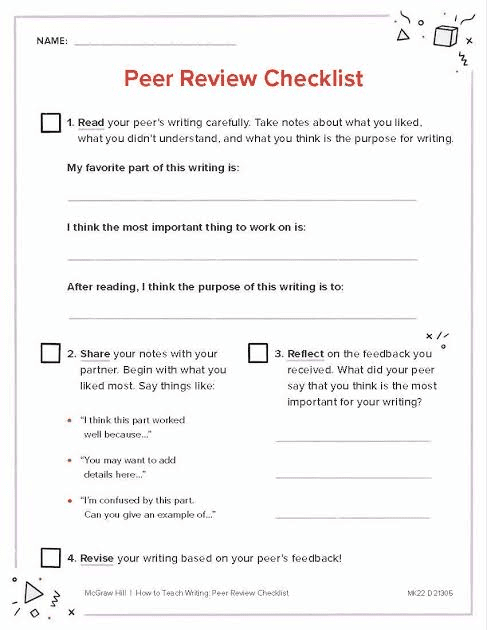
How to write a peer review as a student
By
Princeton Journal of Pre-Collegiate Research
Read more

Peer review etiquette: tone, structure, fairness
By
Princeton Journal of Pre-Collegiate Research
Read more

Version control for research documents
By
Princeton Journal of Pre-Collegiate Research
Read more

Digital vs paper lab notebooks for students
By
Princeton Journal of Pre-Collegiate Research
Read more

Data management basics for student researchers
By
Princeton Journal of Pre-Collegiate Research
Read more

How to keep a lab notebook that reviewers trust
By
Princeton Journal of Pre-Collegiate Research
Read more

How to organize research files across a year-long project
By
Princeton Journal of Pre-Collegiate Research
Read more

How to document your data so you can defend it
By
Princeton Journal of Pre-Collegiate Research
Read more

How to write a grant proposal as a student
By
Princeton Journal of Pre-Collegiate Research
Read more
Free resources that replace research funding
By
Princeton Journal of Pre-Collegiate Research
Read more
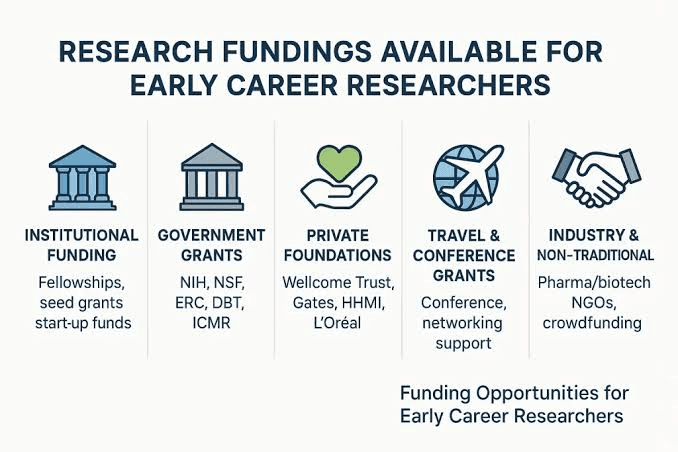
Corporate and nonprofit programs that fund student research
By
Princeton Journal of Pre-Collegiate Research
Read more

Science fair grants and material stipends explained
By
Princeton Journal of Pre-Collegiate Research
Read more

Crowdfunding a student research project: does it work
By
Princeton Journal of Pre-Collegiate Research
Read more

How much does a research project actually cost
By
Princeton Journal of Pre-Collegiate Research
Read more

How to ask your school to fund your project
By
Princeton Journal of Pre-Collegiate Research
Read more

Grants for high school research projects: what exists
By
Princeton Journal of Pre-Collegiate Research
Read more

How to start a research club at your school
By
Princeton Journal of Pre-Collegiate Research
Read more