What Is Open Access Publishing and Why It Matters for Students
Princeton Journal of Pre-Collegiate Research
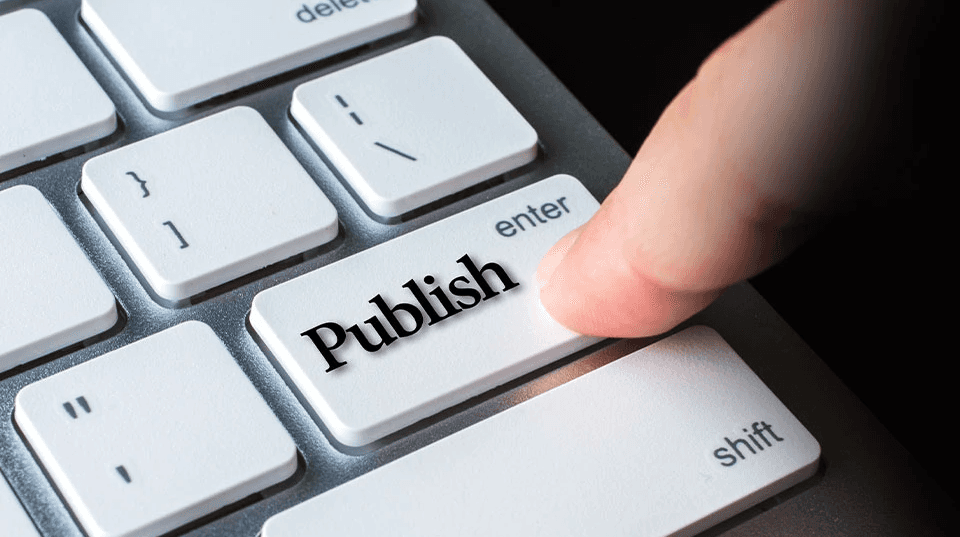
If you have ever tried to read a research article online only to hit a paywall demanding $30 or more for a single paper, you already understand one of the biggest frustrations in academic life. What is open access publishing and why it matters for students is a question that deserves a thorough answer, because the movement behind it is reshaping how knowledge is shared across the globe. Open access publishing refers to the practice of making scholarly research freely available online, without subscription fees, paywalls, or licensing restrictions. For students at every level, this shift has profound implications for how they learn, research, and participate in academic communities.
Understanding the Basics of Open Access Publishing
Open access (OA) publishing is a model of academic publishing in which research outputs — journal articles, conference papers, theses, datasets, and more — are made freely available to anyone with an internet connection. Unlike traditional subscription-based journals, which require institutions or individuals to pay for access, open access content can be read, downloaded, and often reused without cost.
The open access movement gained significant momentum in the early 2000s, with landmark declarations such as the Budapest Open Access Initiative (2002), the Bethesda Statement on Open Access Publishing (2003), and the Berlin Declaration on Open Access to Knowledge in the Sciences and Humanities (2003). These documents collectively established the philosophical and practical framework for what open access should look like.
There are several distinct types of open access publishing:
Gold Open Access: Articles are published directly in open access journals and are immediately freely available. Authors or their institutions often pay an Article Processing Charge (APC) to cover publishing costs.
Green Open Access: Authors self-archive their work in institutional or subject repositories, making it freely available even if the journal itself is behind a paywall.
Diamond Open Access: Journals publish articles freely without charging authors or readers, typically funded by institutions, grants, or academic societies.
Hybrid Open Access: Traditional subscription journals offer an open access option for individual articles, usually for a fee paid by the author.
Bronze Open Access: Articles are made free to read on publisher websites but without a clear open license, meaning reuse rights may be limited.
Understanding these distinctions helps students identify which resources they can access freely and how they can legally use and share those materials in their own academic work.
What Is Open Access Publishing and Why It Matters for Students in Practical Terms
The question of what is open access publishing and why it matters for students becomes especially clear when you consider the economics of traditional academic publishing. University libraries in the United States spend hundreds of millions of dollars each year on journal subscriptions. Even with these enormous budgets, most institutions cannot afford access to every journal their students and faculty need. Students at smaller colleges, community colleges, or universities in lower-income countries face even steeper barriers.
Open access directly addresses this inequality. When research is freely available, a student at a rural community college has the same access to cutting-edge scholarship as a student at an Ivy League university. This democratization of knowledge is one of the most compelling arguments for the open access movement.
Here are some concrete ways open access publishing benefits students:
Free access to research: Students can read the latest studies, meta-analyses, and systematic reviews without needing institutional subscriptions or paying out of pocket.
Better research papers: Access to a wider range of sources means students can write more comprehensive, well-supported academic papers.
Support for independent learners: Students who are self-studying, taking online courses, or pursuing continuing education outside traditional institutions benefit enormously from freely available research.
Reduced financial burden: Graduate students, in particular, often conduct research without full institutional support. Open access reduces the cost of accessing literature for their theses and dissertations.
Global equity: Students in developing countries gain access to the same knowledge base as their peers in wealthier nations, helping to close global educational gaps.
The History and Growth of the Open Access Movement
To fully appreciate why open access matters, it helps to understand how academic publishing evolved into its current form. For centuries, scholarly communication happened through letters, books, and eventually journals. As universities and research institutions proliferated in the 20th century, academic journals became the primary vehicle for sharing research findings.
Publishers recognized the value of this content and began charging increasingly high subscription fees. By the 1990s, what librarians called the "serials crisis" had emerged: journal prices were rising far faster than library budgets, forcing institutions to cancel subscriptions and limit access. The internet, which seemed to promise universal access to information, paradoxically became a tool for reinforcing these paywalls.
The open access movement arose as a direct response. Researchers, librarians, and advocates argued that publicly funded research — paid for by taxpayers through government grants — should be freely available to the public. This argument gained traction with funding agencies. In the United States, the National Institutes of Health (NIH) began requiring grantees to deposit their research in PubMed Central, a free digital archive. Similar mandates followed from the Wellcome Trust, the European Research Council, and many national funding agencies around the world.
Today, thousands of open access journals exist across every discipline. Platforms like JSTOR Open, PubMed Central, DOAJ (Directory of Open Access Journals), and institutional repositories at universities worldwide provide free access to millions of articles. The movement continues to grow, with increasing numbers of funders, institutions, and governments mandating open access for publicly funded research.
Challenges and Criticisms of Open Access Publishing
While the benefits of open access are substantial, the model is not without its challenges and criticisms. Students and researchers should be aware of these issues to navigate the open access landscape thoughtfully.
Article Processing Charges (APCs): In the gold open access model, the cost of publishing is often shifted from readers to authors. APCs can range from a few hundred to several thousand dollars per article. For researchers without grant funding or institutional support, these fees can be prohibitive. Critics argue that this model simply moves the financial barrier rather than eliminating it.
Predatory publishing: The growth of open access has unfortunately also given rise to predatory journals — publications that charge APCs but provide little or no peer review, editorial oversight, or quality control. These journals exploit the open access model to profit from researchers desperate to publish. Students need to learn how to identify legitimate open access journals using tools like the DOAJ or Beall's List.
Quality perceptions: Some academics still associate open access with lower quality, though this perception is increasingly outdated. Many of the world's most prestigious and rigorous journals now publish under open access models, including journals from Nature, PLOS, and the BMJ group.
Sustainability: Diamond open access models, which charge neither authors nor readers, must find alternative funding sources. The long-term sustainability of these models depends on continued support from institutions, governments, and academic societies.
Despite these challenges, the trajectory of academic publishing is clearly moving toward greater openness. Students who understand both the benefits and the limitations of open access are better equipped to use these resources effectively and critically.
How Students Can Find and Use Open Access Resources
Knowing that open access resources exist is one thing; knowing how to find them is another. Fortunately, a growing ecosystem of tools and platforms makes it easier than ever to locate freely available research.
Google Scholar: This free search engine indexes scholarly literature across disciplines. Many results include links to freely available versions of articles, including author manuscripts deposited in repositories.
Unpaywall: This browser extension automatically finds legal, free versions of research articles as you browse the web. When you land on a paywalled article, Unpaywall checks repositories and open access journals for a free version.
PubMed Central: A free digital archive of biomedical and life sciences literature maintained by the National Library of Medicine. Essential for students in health, medicine, and biology.
DOAJ (Directory of Open Access Journals): A curated index of high-quality, peer-reviewed open access journals. Useful for finding legitimate journals in your field.
CORE: An aggregator of open access research outputs from repositories and journals worldwide, providing access to millions of full-text articles.
OpenDOAR: A directory of open access repositories, helping students find institutional and subject-specific archives where researchers deposit their work.
Institutional repositories: Most universities maintain their own repositories where faculty and student research is archived and made freely available. Check your institution's library website for access.
When using open access resources, students should always check the license under which content is published. Creative Commons licenses, for example, specify how content can be reused, shared, and adapted. Understanding these licenses ensures that students use open access materials legally and ethically in their own work.
The Future of Open Access and What It Means for Education
The open access movement is not slowing down. Governments, funding agencies, and institutions around the world are increasingly mandating open access for publicly funded research. The Plan S initiative, launched in 2018 by a coalition of European research funders, requires that all research funded by its members be published in open access journals or platforms from 2021 onward. Similar policies are emerging in the United States, with the White House Office of Science and Technology Policy directing federal agencies to require immediate open access to federally funded research by 2025.
For students, these developments mean that the volume of freely available, high-quality research will continue to grow. The barriers that once separated well-funded institutions from under-resourced ones will continue to erode. Students who learn to navigate open access resources now will be well-positioned to thrive in an academic and professional environment where open knowledge sharing is the norm.
Beyond access, open access publishing also encourages a culture of transparency and reproducibility in research. When data, methods, and findings are openly available, other researchers — including students — can scrutinize, replicate, and build upon them. This openness strengthens the integrity of science and scholarship as a whole.
Why Every Student Should Care About Open Access Publishing
Open access publishing is not just a technical matter for librarians and journal editors. It is a question of educational equity, scientific integrity, and the future of knowledge itself. When research is locked behind paywalls, only those with institutional privilege or financial resources can participate fully in academic discourse. Open access breaks down those barriers, making it possible for anyone with curiosity and an internet connection to engage with the frontiers of human knowledge.
For students, the practical benefits are immediate and tangible: better access to sources, stronger research papers, reduced costs, and a more level playing field regardless of where you study or how much money your institution has. But the broader significance goes further. By supporting, using, and advocating for open access, students become participants in a global movement to make knowledge a public good rather than a private commodity.
Understanding what is open access publishing and why it matters for students is the first step. The next step is to use these resources, share them with peers, and advocate for policies that expand open access in your own institution and beyond. The future of academic publishing is open — and students have both the most to gain and an important role to play in shaping it.
Read More

APA format for high school research papers: complete guide
By
RISE Research
Read more

MLA format for research papers: when and how
By
RISE Research
Read more

APA vs MLA vs Chicago: which to use for your paper
By
RISE Research
Read more

How to cite a dataset
By
RISE Research
Read more
In-text citations vs footnotes: how each works
By
RISE Research
Read more

What is a p-value, explained for high school researchers
By
RISE Research
Read more

What is regression analysis and when do you use it
By
RISE Research
Read more

What is standard deviation and why it matters
By
RISE Research
Read more

What is a t-test and when do you need one
By
RISE Research
Read more

What is effect size and why reviewers care
By
RISE Research
Read more

Common statistical mistakes in student papers
By
RISE Research
Read more

Research for biology majors: what to publish before applying
By
https://princeton-jpcr.org/
Read more

Research for economics majors
By
https://princeton-jpcr.org/
Read more

Research for political science majors
By
https://princeton-jpcr.org/
Read more

Research for English and humanities majors
By
https://princeton-jpcr.org/
Read more

Research for neuroscience majors
By
https://princeton-jpcr.org/
Read more
Undecided major: what research keeps your options open
By
https://princeton-jpcr.org/
Read more

Summer research timeline: June to August week by week
By
Princeton Journal of Pre-Collegiate Research
Read more
Research goals to set at the start of the school year
By
Princeton Journal of Pre-Collegiate Research
Read more

How to finish your research paper before finals season
By
Princeton Journal of Pre-Collegiate Research
Read more

New year research resolutions that actually stick
By
Princeton Journal of Pre-Collegiate Research
Read more