How to support a child doing research in a subject you don't understand
Princeton Journal of Pre-Collegiate Research

Your child is deep into a research project on quantum error correction, behavioral economics, or the migration patterns of migratory birds, and you have no idea what any of it means. That is not a problem. Knowing how to support a child doing research in a subject you don't understand is less about subject expertise and more about the kind of presence, structure, and encouragement that makes serious academic work possible.
This guide is for parents who want to show up meaningfully, even when the content is over their heads. (and that is most parents, most of the time.)
Why Your Expertise in the Subject Does Not Matter
The instinct to feel disqualified is understandable. If your child is writing about CRISPR gene editing and your background is in marketing, it is easy to assume you have nothing useful to offer. That assumption is wrong. Research is not just about content knowledge. It is about process, discipline, time management, and resilience, and those are areas where a parent's support is irreplaceable.
Researchers at every level, including doctoral students, rely on advisors who push back on their thinking without always being domain experts. Your role is not to teach the subject. Your role is to hold the space for the work to happen.
The students who complete strong research projects almost always have one thing in common: someone at home who took the work seriously, even without understanding it fully.
How to Support a Child Doing Research in a Subject You Don't Understand: Start With the Right Questions
Asking good questions is a skill that requires no prior knowledge. You do not need to understand the methodology to ask, What are you trying to prove? You do not need a background in statistics to ask, How do you know that result is significant? These prompts do not require you to evaluate the answers. They require your child to articulate their thinking out loud, which is one of the most valuable practices in academic research.
Make it a habit to ask one or two genuine questions each week. Not quizzing, not correcting. Just curious engagement. (your child will notice the difference between performance and real interest.)
Some questions that work across every discipline:
What is the central question your research is trying to answer?
What have other researchers found on this topic?
What would it mean if your hypothesis turns out to be wrong?
What is the hardest part of this project right now?
Who else is reviewing your work?
That last question matters. Strong student research does not happen in isolation. If your child does not yet have a mentor or advisor, that is worth addressing. Understanding questions to ask before your child joins a research program can help you evaluate whether the support structures around the project are adequate.
Build the Infrastructure Around the Work
This is where parents become genuinely indispensable, regardless of subject knowledge. Research projects fail not because students lack intelligence, but because the surrounding conditions do not support sustained intellectual effort.
Time and Space
Research requires uninterrupted blocks of time. A student who is constantly pulled into household obligations, social commitments, or screen time will struggle to produce coherent academic work. Protecting your child's research time is a concrete act of support. It signals that you take the project seriously, and that signal matters to a teenager navigating competing priorities.
A dedicated workspace, even a corner of a room with a cleared desk, communicates that this work has a home in your household.
Timeline Accountability
Most research projects have multiple stages: topic selection, literature review, methodology design, data collection, analysis, writing, and revision. Each stage has its own demands. Students who do not map these stages against a calendar almost always fall behind, and the compounding pressure of a missed deadline can derail an otherwise strong project.
You do not need to understand the content to ask, Where are you in the timeline? If the answer is vague, that is useful information. If your child is already behind, the guidance on what to do if you fall behind on a research timeline offers a practical framework for recovery without panic.
Emotional Steadiness
Research is difficult. There will be moments when the data does not cooperate, the argument falls apart, or a reviewer's feedback is harder to absorb than expected. Your job in those moments is not to fix the problem. Your job is to stay calm and help your child stay in the work rather than retreating from it.
Understanding how involved parents should be in their child's research can help you calibrate your engagement so that your presence supports rather than undermines your child's developing independence as a researcher.
Know the Limits of Your Role
There is a meaningful difference between supporting research and doing it. Parents who write sections, reframe arguments, or heavily edit their child's prose are not helping. They are substituting. The research must belong to the student, in terms of both intellectual ownership and academic integrity.
This is not just an ethical principle. It is a practical one. A student who publishes work they did not produce cannot defend it in an interview, build on it in future projects, or derive genuine confidence from the credential. The value of student research comes from the student having done it.
Understanding what counts as academic dishonesty in student research is essential reading for any parent who wants to support without inadvertently crossing a line that could compromise their child's work.
Similarly, if your child is using AI tools during the research process, that is a conversation worth having. The standards around AI assistance are evolving, and transparency matters. Reviewing how to disclose AI assistance in a research paper gives both of you a clear picture of what responsible use looks like.
When the Results Are Not What Anyone Expected
One of the most valuable lessons research teaches is that null results and unexpected findings are not failures. They are data. But for a student who has invested months in a project, a result that does not support the original hypothesis can feel like the entire effort was wasted.
It was not. Knowing what to do if research results do not support the hypothesis reframes this moment as an opportunity rather than a dead end. Your role as a parent is to reinforce that framing, even if you cannot evaluate the results yourself.
The same applies to rejection. If your child submits their work for publication and receives a rejection or a request for major revisions, that is a normal part of the academic process. Every researcher encounters it. Knowing how to support your child through research paper rejection prepares you to respond in a way that keeps them moving forward rather than shutting down.
How to Support a Child Doing Research in a Subject You Don't Understand: The Mentor Question
Every serious student research project benefits from subject-matter mentorship. This is the person who can evaluate the methodology, push back on the analysis, and help your child situate their work within the existing literature. That is not your job as a parent. Finding that person, however, might be.
Teachers, university professors, researchers at local institutions, and professionals in relevant fields are all potential mentors. Many are willing to engage with motivated high school students. The challenge is initiating the conversation and establishing the relationship.
Once a mentor is involved, the question of how to credit that person properly becomes relevant. Knowing how to credit a research mentor or advisor properly ensures that your child's paper reflects both integrity and professionalism in how it acknowledges the people who contributed to the work.
The Publication Question
Many students doing serious research will eventually consider submitting their work for publication. This is a significant step, and it raises legitimate questions for parents who are evaluating journals and programs without a background in academic publishing.
Before your child submits anywhere, understanding what to look for before your child submits to a research journal gives you a framework for distinguishing rigorous, credible venues from those that simply collect fees and offer nothing of academic value. The difference matters enormously for how the credential is perceived by universities and scholarship committees.
If publication fees are part of the conversation, that question deserves a direct answer. The post on whether it is worth paying for your child's research to be published addresses this honestly, including when a publication fee reflects legitimate infrastructure and when it is a red flag.
How to Support a Child Doing Research in a Subject You Don't Understand: What Actually Moves the Needle
After everything else, the actions that most consistently produce strong outcomes are simple. Show up consistently. Ask questions without demanding answers you can evaluate. Protect time and space for the work. Stay steady when the work gets hard. Trust your child to own the intellectual content while you own the conditions that make the work possible.
Research is a long game. The student who finishes a rigorous project, submits it for peer review, and receives substantive feedback, whether or not it results in publication, has developed something that does not show up on a transcript but shapes how they approach every hard problem afterward. (that is the point of all of this.)
Your subject ignorance is not a barrier to that outcome. Your presence and engagement are what make it more likely.
Final Thought
Knowing how to support a child doing research in a subject you don't understand comes down to one core insight: your child does not need you to be a co-researcher. They need you to be a reliable, engaged, and structurally supportive presence while they do the work themselves. That is a role any parent can fill, regardless of background.
If your child is ready to take their research to the next level, Princeton JPCR publishes original work by high school students across 50+ academic disciplines, with rigorous double-blind peer review and a DOI assigned to every accepted paper. Explore the PJPCR blog for more guidance on every stage of the student research journey, or visit the Princeton Journal of Pre-Collegiate Research to learn about submission standards and what a credible publication looks like for pre-collegiate researchers.
Princeton JPCR is not affiliated with Princeton University.
Read More

Can high school students be peer reviewers
By
Princeton Journal of Pre-Collegiate Research
Read more

What reviewing other papers teaches you about your own
By
Princeton Journal of Pre-Collegiate Research
Read more
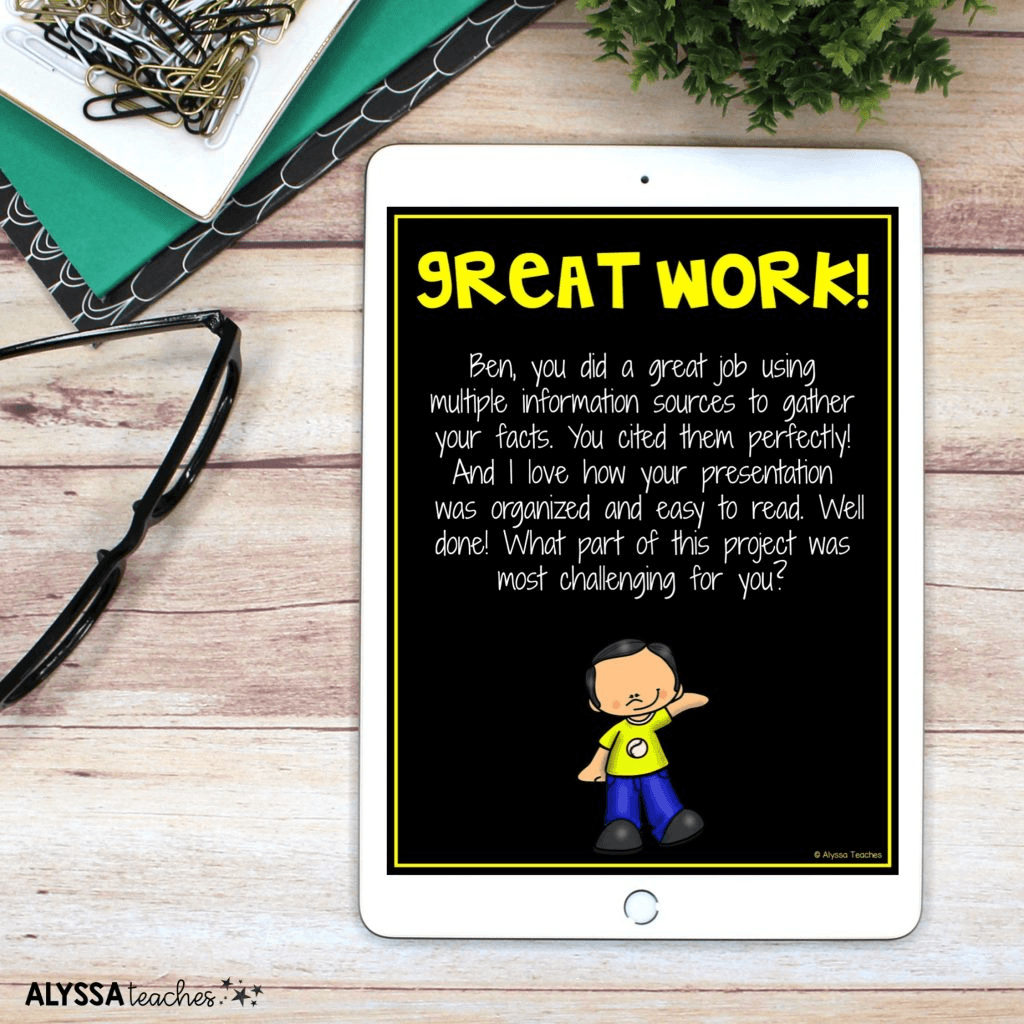
How to give useful feedback on a classmate's paper
By
Princeton Journal of Pre-Collegiate Research
Read more

Student editorial boards: how they work
By
Princeton Journal of Pre-Collegiate Research
Read more
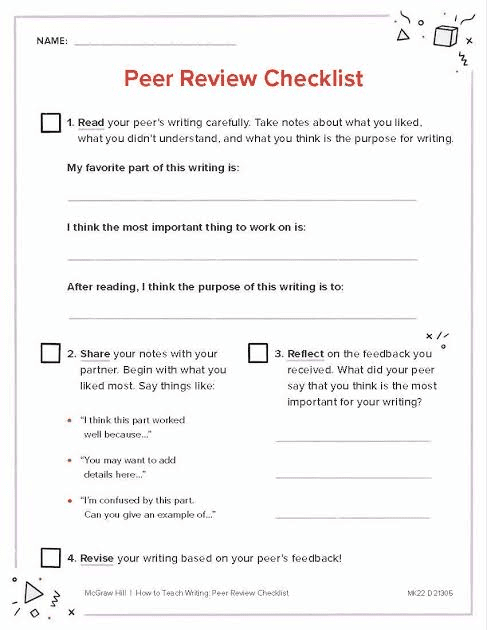
How to write a peer review as a student
By
Princeton Journal of Pre-Collegiate Research
Read more

Peer review etiquette: tone, structure, fairness
By
Princeton Journal of Pre-Collegiate Research
Read more

Version control for research documents
By
Princeton Journal of Pre-Collegiate Research
Read more

Digital vs paper lab notebooks for students
By
Princeton Journal of Pre-Collegiate Research
Read more

Data management basics for student researchers
By
Princeton Journal of Pre-Collegiate Research
Read more

How to keep a lab notebook that reviewers trust
By
Princeton Journal of Pre-Collegiate Research
Read more

How to organize research files across a year-long project
By
Princeton Journal of Pre-Collegiate Research
Read more

How to document your data so you can defend it
By
Princeton Journal of Pre-Collegiate Research
Read more

How to write a grant proposal as a student
By
Princeton Journal of Pre-Collegiate Research
Read more
Free resources that replace research funding
By
Princeton Journal of Pre-Collegiate Research
Read more
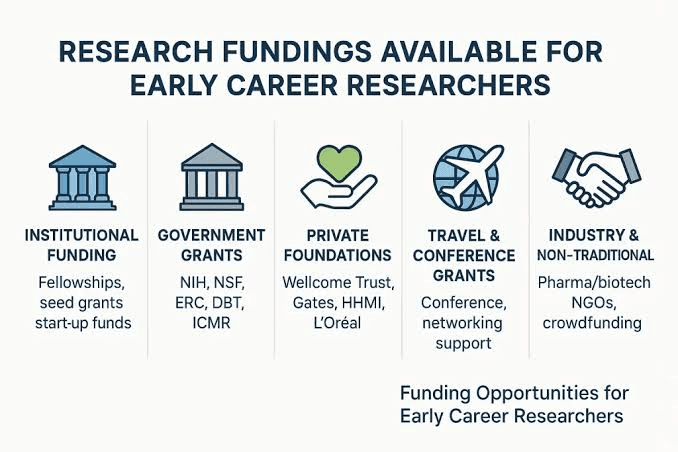
Corporate and nonprofit programs that fund student research
By
Princeton Journal of Pre-Collegiate Research
Read more

Science fair grants and material stipends explained
By
Princeton Journal of Pre-Collegiate Research
Read more

Crowdfunding a student research project: does it work
By
Princeton Journal of Pre-Collegiate Research
Read more

How much does a research project actually cost
By
Princeton Journal of Pre-Collegiate Research
Read more

How to ask your school to fund your project
By
Princeton Journal of Pre-Collegiate Research
Read more

Grants for high school research projects: what exists
By
Princeton Journal of Pre-Collegiate Research
Read more

How to start a research club at your school
By
Princeton Journal of Pre-Collegiate Research
Read more