How to Cite Sources Correctly in a Research Paper
Princeton Journal of Pre-Collegiate Research
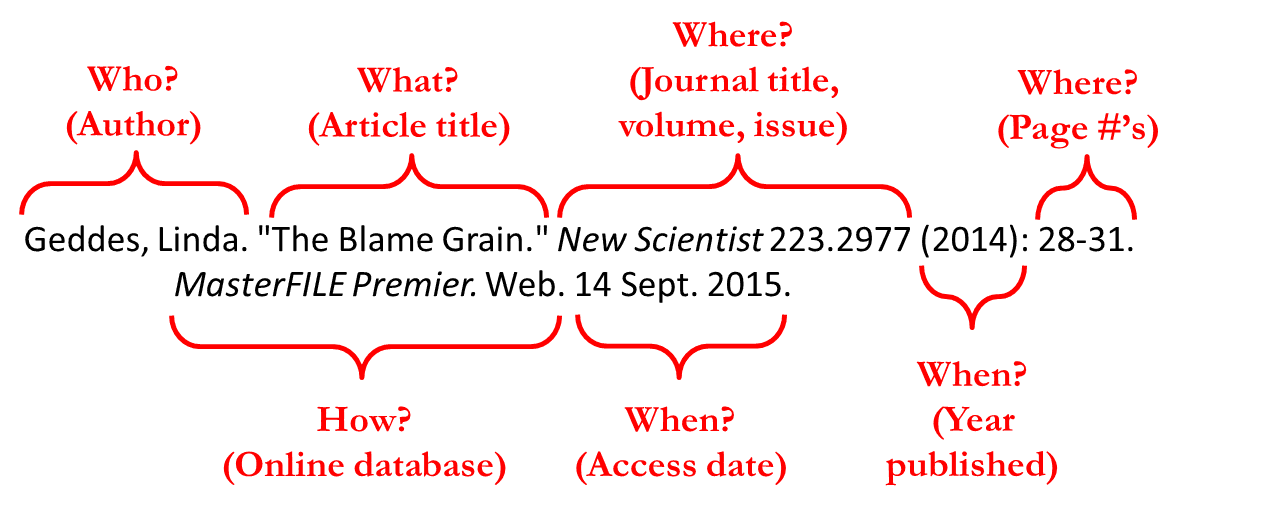
TL;DR: Citing sources correctly in a research paper means following a specific citation style (APA, MLA, or Chicago), applying it consistently to every source you use, and formatting both your in-text citations and your reference list according to that style's rules. This guide explains exactly how to do that, why citation errors get papers rejected, and what a correctly cited paper looks like in practice. If your research is complete and properly documented, the Princeton Journal of Pre-Collegiate Research accepts original work across all academic disciplines.
Why citation errors are one of the most common reasons student papers get rejected
Peer reviewers notice citation problems immediately. A missing page number in an APA in-text citation, a reference list entry with an incorrect author format, or an inconsistent style across a single paper signals to reviewers that the author has not yet learned to treat sources with the precision that academic publishing requires. This is not a minor formatting issue. Citation accuracy is a proxy for research integrity. If you cannot document where your evidence comes from, reviewers cannot verify your claims.
Learning how to cite sources correctly in a research paper is not about memorising rules. It is about understanding why those rules exist: to give credit to original authors, to allow readers to locate every source you used, and to demonstrate that your argument is built on verifiable evidence. Every citation you write is a promise to the reader that the source exists and says what you claim it says.
How do you cite sources correctly in a research paper?
Citing sources correctly requires three things: choosing the right citation style for your discipline, applying that style consistently to every in-text citation, and formatting your reference list or bibliography according to the same style's exact specifications. Most journals specify which style they require. If they do not, APA is standard in the sciences and social sciences; MLA is standard in the humanities; Chicago is common in history and some interdisciplinary fields.
Step 1: Confirm which citation style your target journal requires
Before you write a single citation, check the submission guidelines of the journal you are targeting. The style requirement is usually listed under formatting instructions. Using the wrong style is a correctable error, but submitting a paper in MLA format to a journal that requires APA tells reviewers you did not read the guidelines. Read the guidelines first.
Step 2: Record full source information at the point of research, not at the point of writing
The most common citation mistake happens before the paper is written. Students gather information from sources, take notes, and then cannot reconstruct the full bibliographic details when it is time to cite. For every source you use, record the author's full name, publication year, full title, journal or book title, volume and issue number (for journal articles), page numbers, DOI or URL, and the date you accessed it (for online sources). Do this the moment you encounter the source. Reconstructing this information later costs hours and often results in incomplete citations.
Step 3: Format in-text citations as you write, not after
Insert citations at the point of use, not as a cleanup task after drafting. In APA style, an in-text citation includes the author's last name, the publication year, and a page number for direct quotes: (Smith, 2021, p. 44). In MLA style, it includes the author's last name and the page number: (Smith 44). In Chicago author-date style, it includes the author's last name, year, and page: (Smith 2021, 44). If you are paraphrasing rather than quoting directly, the page number is still recommended in APA and Chicago, though not strictly required in MLA for paraphrases.
Step 4: Build your reference list using the correct entry format for each source type
A journal article, a book, a book chapter, a website, and a dataset each have a different citation format. Using the journal article format for a book chapter is a common error that peer reviewers catch. In APA 7th edition, a journal article citation follows this structure: Author, A. A., & Author, B. B. (Year). Title of article. Title of Journal, volume(issue), page range. https://doi.org/xxxxx. Every element matters. The italics, the capitalisation rules, the placement of the DOI: all of these are specified and all of them are checked.
Step 5: Cross-check every in-text citation against your reference list
Every source cited in the body of your paper must appear in your reference list. Every entry in your reference list must correspond to at least one in-text citation. Orphaned references (sources listed but never cited) and missing references (sources cited but not listed) are both errors. Do this check systematically before submission, not by memory.
Step 6: Use a citation manager to reduce errors, but verify its output
Tools like Zotero, Mendeley, and the citation export functions in Google Scholar can generate formatted citations automatically. These tools are useful, but they make errors. DOIs are sometimes missing. Author names are sometimes inverted incorrectly. Journal titles are sometimes abbreviated when they should not be. Use citation managers to draft your references, then verify each entry against the official style guide or a trusted style manual before submission.
What separates a correctly cited paper from one that just looks cited?
There is a difference between a paper that has citations and a paper that cites correctly. The surface difference is formatting. The deeper difference is source selection and integration.
Peer-reviewed journal articles and published books are the primary sources of evidence in academic research. Citing a Wikipedia article, a news summary, or an uncredited website in place of a primary source tells reviewers that you have not engaged with the actual literature in your field. Wikipedia itself states in its own editorial guidelines that it is not a citable source for academic work. Use it to find leads, not as evidence.
Strong citation practice also means citing the original source, not a secondary summary of it. If you read about a study in a review article, locate the original study and cite that. If you cannot access the original, you may cite the secondary source but must indicate this clearly using the appropriate format (in APA: Smith, as cited in Jones, 2020). Citing a secondary source as if it were primary is a form of misrepresentation, even when unintentional.
Finally, the number of citations in a paper is not a measure of quality. A paper with 40 citations that are all tangential to the argument is weaker than a paper with 15 citations that are precisely relevant and correctly integrated. Cite what you actually used. Cite it where you used it. Cite it accurately.
What are the most common citation mistakes high school researchers make?
The four errors below account for the majority of citation problems in student papers submitted for peer review. Each one is fixable with a specific correction.
The first is mixing citation styles within a single paper. A student formats some references in APA and others in MLA because they copied citations from different sources without standardising them. The consequence is immediate rejection or a mandatory revision request. The fix: choose one style before you begin and apply it to every single citation, regardless of where you found the source information.
The second is failing to cite paraphrased content. Many students believe that citations are only required for direct quotations. This is incorrect. Any idea, finding, argument, or data point that originated with another author requires a citation, whether you quote it verbatim or restate it in your own words. The American Psychological Association's Publication Manual (7th edition) is explicit on this point. Uncited paraphrases constitute plagiarism under most academic integrity policies.
The third is using DOIs inconsistently. A DOI (Digital Object Identifier) is a permanent link to a published source. APA 7th edition requires a DOI for any journal article that has one, formatted as a hyperlink: https://doi.org/xxxxx. Students frequently omit DOIs or include them in an incorrect format. Every DOI should be verified by pasting it into doi.org before submission.
The fourth is treating the reference list as an afterthought. Students who write their reference list in the final hour of a submission deadline produce the most errors. The reference list should be built incrementally throughout the research and writing process, not assembled from memory at the end.
How to cite sources correctly in a research paper: a submission-ready checklist
Confirm the citation style required by your target journal before writing.
Record full bibliographic details for every source at the point of research.
Insert in-text citations as you write each paragraph, not after drafting.
Use the correct citation format for each source type: journal article, book, book chapter, website, dataset.
Cross-check every in-text citation against your reference list for completeness.
Verify every DOI using doi.org and format it as a full hyperlink.
Run your reference list through a citation checker or compare it line by line against the official style manual.
Confirm that no source in your reference list is uncited in the body, and no in-text citation is missing from the reference list.
If your paper passes all eight checks, your citations are ready for peer review. When your research is complete and your paper is properly formatted, review the submission guidelines at princeton-jpcr.org to submit your work to the Princeton Journal of Pre-Collegiate Research.
PJPCR accepts original research across all academic disciplines. If your paper is complete and your citations are in order, review the submission guidelines at princeton-jpcr.org.
Frequently asked questions about how to cite sources correctly in a research paper
What is a citation in a research paper?
A citation is a formatted reference that identifies the source of a specific piece of information, quotation, or idea used in your paper. It appears in two places: as a brief in-text marker at the point of use, and as a full bibliographic entry in the reference list at the end of the paper. Together, these two elements allow any reader to locate the original source.
How many sources should a high school research paper have?
There is no fixed number, but most peer-reviewed student papers in the sciences and social sciences cite between 10 and 30 sources. The right number depends on your discipline, your research question, and the scope of your paper. A focused 3,000-word paper with 15 precisely relevant, peer-reviewed sources is stronger than a longer paper padded with tangential references. Quality and relevance matter more than volume.
Do I need to cite sources I paraphrase, or only ones I quote directly?
You must cite every source you use, whether you quote it directly or paraphrase it. Paraphrasing means restating someone else's idea in your own words. The idea still originated with another author, and that author must be credited. Failing to cite paraphrased content is plagiarism under standard academic integrity definitions, regardless of intent.
What makes a citation credible in an academic research paper?
A credible citation points to a peer-reviewed source: a journal article published in a refereed journal, a book from an academic press, or an official institutional report. Sources that have not been peer-reviewed, including most websites, news articles, and encyclopaedias, are generally not appropriate as primary evidence in academic research. When in doubt, check whether the source has a DOI, which indicates it has been formally published and indexed.
What kinds of research does PJPCR publish, and is it peer reviewed?
The Princeton Journal of Pre-Collegiate Research publishes original research by high school students across STEM, the humanities, social sciences, and interdisciplinary fields. All submissions undergo genuine peer review by qualified reviewers. PJPCR does not guarantee acceptance; papers are evaluated on the quality of the research and the rigour of the manuscript. Published work is open-access and freely available. You can explore published issues at princeton-jpcr.org.
What to do next
Correct citation is not optional in academic publishing. It is a baseline requirement. The practical steps are clear: choose your citation style before you begin, record source details at the point of research, insert citations as you write, and verify every entry before submission. These habits take discipline to build, but they become automatic with practice.
A paper with accurate, consistent citations tells a reviewer that the author takes the work seriously. That impression matters before a single line of your argument is evaluated. Get the citations right, and your research can be judged on its merits.
If your research is complete and your paper is ready for peer review, submit it to the Princeton Journal of Pre-Collegiate Research at princeton-jpcr.org.
Read More

APA format for high school research papers: complete guide
By
RISE Research
Read more

MLA format for research papers: when and how
By
RISE Research
Read more

APA vs MLA vs Chicago: which to use for your paper
By
RISE Research
Read more

How to cite a dataset
By
RISE Research
Read more

In-text citations vs footnotes: how each works
By
RISE Research
Read more

What is a p-value, explained for high school researchers
By
RISE Research
Read more

What is regression analysis and when do you use it
By
RISE Research
Read more

What is standard deviation and why it matters
By
RISE Research
Read more

What is a t-test and when do you need one
By
RISE Research
Read more

What is effect size and why reviewers care
By
RISE Research
Read more

Common statistical mistakes in student papers
By
RISE Research
Read more

Research for biology majors: what to publish before applying
By
https://princeton-jpcr.org/
Read more

Research for economics majors
By
https://princeton-jpcr.org/
Read more

Research for political science majors
By
https://princeton-jpcr.org/
Read more

Research for English and humanities majors
By
https://princeton-jpcr.org/
Read more

Research for neuroscience majors
By
https://princeton-jpcr.org/
Read more

Undecided major: what research keeps your options open
By
https://princeton-jpcr.org/
Read more

Summer research timeline: June to August week by week
By
Princeton Journal of Pre-Collegiate Research
Read more

Research goals to set at the start of the school year
By
Princeton Journal of Pre-Collegiate Research
Read more

How to finish your research paper before finals season
By
Princeton Journal of Pre-Collegiate Research
Read more

New year research resolutions that actually stick
By
Princeton Journal of Pre-Collegiate Research
Read more