How to compare journals before you submit your research
Princeton Journal of Pre-Collegiate Research

Choosing the wrong journal wastes months of your time and can quietly damage your credibility. Knowing how to compare journals before you submit your research is one of the most important skills a pre-collegiate researcher can develop.
Most students finish their paper and then rush to find somewhere to send it. That sequence is backwards. The journal you choose shapes how your work is reviewed, how it is indexed, and how seriously it is taken by admissions officers, mentors, and future collaborators. This guide walks you through every factor that matters, in the order you should evaluate them.
Start With Legitimacy, Not Prestige
The first question is not "Is this journal well-known?" The first question is "Is this journal real?" Predatory journals exist across every discipline. They charge fees, skip peer review, and publish almost anything. A publication in one of them is worse than no publication at all because it signals that you did not do your homework.
A legitimate journal will have a clearly named editorial board with verifiable affiliations. It will have a documented peer review process, an ISSN (International Standard Serial Number), and a history of published issues you can actually read. If a journal's website is vague about who reviews submissions or how decisions are made, walk away.
For high school students specifically, the landscape is more complicated. Many journals claim to be peer-reviewed but use superficial review processes (a quick read by a graduate student, no structured feedback, no revision cycle). That is not peer review in any meaningful sense. Before you submit anywhere, read the Best High School Research Journals To Submit To to understand what genuine rigor looks like at the pre-collegiate level.
Understand the Peer Review Process in Detail
Not all peer review is equal. Single-blind review means the reviewers know who you are. Double-blind review means neither you nor the reviewers know each other's identities. Double-blind is the gold standard because it removes bias from the equation entirely. Your paper is evaluated on its merits, not your school, your name, or your mentor's reputation.
Ask directly: how many reviewers evaluate each submission? What are their qualifications? Are they domain experts or generalists? What does the revision process look like? A journal that cannot answer these questions clearly has something to hide.
Rigor in peer review also means the journal rejects papers. A journal with a 90% acceptance rate is not selective (it is a vanity press with a website). Acceptance rates matter. Selectivity signals that the editorial board is actually making judgments, not just collecting fees. You can learn more about how selectivity varies across pre-collegiate publications in this breakdown of High School Research Journals Ranked By Selectivity.
Evaluate Scope and Fit Before You Submit
A journal's scope tells you which papers belong there. Submitting outside a journal's scope is one of the most common reasons papers are desk-rejected without review. Read the aims and scope statement carefully. Then read several published papers. If your work does not fit the intellectual neighborhood of what is already published, move on.
Fit is not just about discipline. It is about methodology, depth, and framing. A journal that publishes quantitative social science research is not the right home for a qualitative case study, even if the topic overlaps. Match the type of work, not just the subject area.
If you are working in biology, psychology, or medicine, discipline-specific publications exist that are built for pre-collegiate researchers in those fields. Explore resources like Journals That Accept High School Research In Biology and Journals That Accept High School Research Psychology to identify journals where your specific work will land with the right audience.
How to Compare Journals Before You Submit: The Key Criteria Side by Side
Once you have a shortlist of legitimate, appropriately scoped journals, compare them systematically. Do not rely on gut feeling or name recognition alone. Use a consistent framework.
Indexing and Discoverability
A published paper that no one can find is not much of a publication. Ask whether the journal assigns DOIs (Digital Object Identifiers) to published papers. A DOI is a permanent, citable link. It means your paper exists in a searchable, persistent location (it exists forever, findable by anyone with an internet connection). Journals indexed in major academic databases like Google Scholar, ERIC, or discipline-specific repositories give your work far greater reach than journals that exist only on their own website.
Timeline and Turnaround
Timeline matters enormously for high school students. If you are applying to college in the fall, a journal with a six-month review cycle does you no good. Find out the average time from submission to decision, and from acceptance to publication. Some journals publish accepted papers online ahead of print, which gives you a citable record faster. If speed is a priority, review the Fastest High School Research Journals For Publication before committing to a submission.
Fees and Cost Structure
Many legitimate journals charge publication fees after acceptance. That is normal and does not disqualify a journal. What matters is transparency: the fee should be clearly stated before you submit, not revealed only after you have invested weeks in revision. Be skeptical of journals that charge submission fees regardless of outcome. Also be skeptical of journals that charge nothing and require nothing (that is a different kind of red flag).
If cost is a barrier, there are options. A full comparison of Free To Submit High School Research Journals can help you identify where you can submit without upfront financial commitment.
Mentor Requirements
Some journals require a faculty mentor or adult sponsor to co-sign your submission. Others accept independent student work. Neither model is inherently better, but you need to know which applies before you invest time in formatting and submission. If you are working independently, check whether the journals on your list require mentorship. A useful resource here is the guide on Journals That Accept High School Research Without Mentor.
International Accessibility
If you are based outside the United States, confirm that the journal explicitly accepts international submissions. Some publications are US-centric in their scope, their editorial board, and their reviewer pool. A genuinely international journal publishes work from students on multiple continents and does not require institutional affiliations that only domestic students can provide. Review what is available to you in High School Research Journals Accept International Students.
Read Published Papers Before You Decide
This step is non-negotiable. Before you submit to any journal, read at least three to five papers it has published. This tells you more than any "about" page ever will. You will see the actual quality threshold the editorial board enforces. You will see how papers are structured, what methodologies are accepted, and what level of depth is expected.
If the published papers are shallow, poorly argued, or methodologically thin, that tells you exactly what the journal's standards are. If the published papers are rigorous, well-cited, and clearly structured, that tells you something different. Match your expectations to the evidence, not to the journal's self-description.
How to Compare Journals Before You Submit: A Practical Checklist
Use this checklist to evaluate every journal on your shortlist before making a final decision.
Legitimacy: Named editorial board with verifiable credentials. Published ISSN. History of real issues.
Peer review: Double-blind process with documented reviewer qualifications. Evidence of rejection and revision cycles.
Scope fit: Your discipline, methodology, and framing align with what the journal has published before.
Indexing: DOI assignment. Presence in Google Scholar or other academic databases.
Timeline: Average review and publication timelines match your deadlines.
Fees: Clearly disclosed before submission. No hidden costs revealed post-acceptance.
Mentor requirements: You know whether a faculty sponsor is required and whether you have one.
International access: Confirmed that your location and institutional status do not disqualify you.
Published work quality: You have read recent papers and confirmed the standard is one you can meet and respect.
What Happens After You Choose
Selecting the right journal is only the beginning. Once you submit, the process has its own arc: acknowledgment, peer review, editorial decision, revision (often), and final acceptance. Understanding that arc in advance reduces anxiety and helps you respond professionally at each stage. A full walkthrough of the submission experience is available in What Happens After You Submit Your Research Paper.
One more consideration: whether you are submitting original research or a literature review affects which journals will consider your work. These are meaningfully different paper types, and not every journal accepts both. If you are unsure which category your paper falls into, the comparison in Literature Review Vs Original Research Which To Submit will clarify your options.
Why Journal Selection Is a Research Skill
Graduate students spend years learning how to navigate the publication landscape. As a high school researcher, you are learning this earlier than almost anyone. That is an advantage, not a burden. The ability to evaluate a journal's credibility, assess fit, and make a strategic submission decision is exactly the kind of independent scholarly judgment that distinguishes serious researchers from students who simply completed a project.
Admissions officers and academic mentors recognize this. A publication in a rigorous, selective, well-indexed journal demonstrates more than subject knowledge. It demonstrates that you understand how academic knowledge is produced, validated, and shared. That is a different and more powerful signal than a trophy or a test score.
How to Compare Journals Before You Submit Your Research: Final Thoughts
Knowing how to compare journals before you submit your research is not a minor logistical detail. It is a foundational research competency. The journal you choose determines whether your work reaches the right audience, carries lasting credibility, and contributes to your academic record in a meaningful way.
Do the work upfront. Evaluate legitimacy, peer review rigor, scope fit, indexing, timeline, fees, and published quality. Read real papers. Ask hard questions. The right journal for your research exists. Finding it is part of the research process itself.
At PJPCR, we publish original research by high school students across more than 50 academic disciplines. Every submission undergoes rigorous double-blind peer review. Accepted papers receive DOIs and are indexed for permanent discoverability. If your work is ready, explore PJPCR and see whether it is the right home for what you have built.
Read More

Can high school students be peer reviewers
By
Princeton Journal of Pre-Collegiate Research
Read more

What reviewing other papers teaches you about your own
By
Princeton Journal of Pre-Collegiate Research
Read more
How to give useful feedback on a classmate's paper
By
Princeton Journal of Pre-Collegiate Research
Read more

Student editorial boards: how they work
By
Princeton Journal of Pre-Collegiate Research
Read more
How to write a peer review as a student
By
Princeton Journal of Pre-Collegiate Research
Read more

Peer review etiquette: tone, structure, fairness
By
Princeton Journal of Pre-Collegiate Research
Read more

Version control for research documents
By
Princeton Journal of Pre-Collegiate Research
Read more

Digital vs paper lab notebooks for students
By
Princeton Journal of Pre-Collegiate Research
Read more

Data management basics for student researchers
By
Princeton Journal of Pre-Collegiate Research
Read more

How to keep a lab notebook that reviewers trust
By
Princeton Journal of Pre-Collegiate Research
Read more

How to organize research files across a year-long project
By
Princeton Journal of Pre-Collegiate Research
Read more

How to document your data so you can defend it
By
Princeton Journal of Pre-Collegiate Research
Read more
How to write a grant proposal as a student
By
Princeton Journal of Pre-Collegiate Research
Read more
Free resources that replace research funding
By
Princeton Journal of Pre-Collegiate Research
Read more
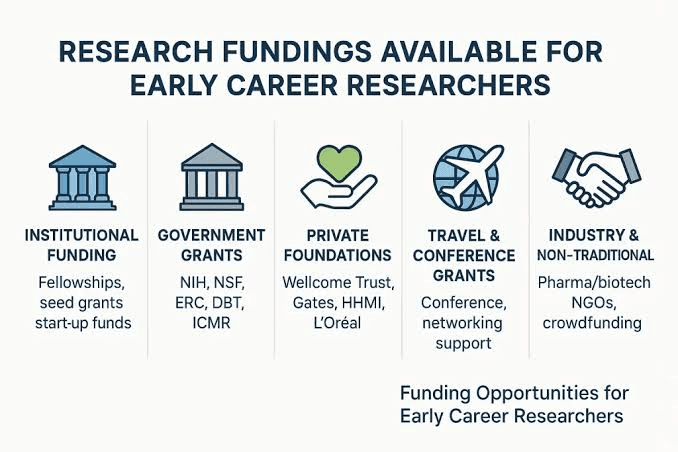
Corporate and nonprofit programs that fund student research
By
Princeton Journal of Pre-Collegiate Research
Read more

Science fair grants and material stipends explained
By
Princeton Journal of Pre-Collegiate Research
Read more

Crowdfunding a student research project: does it work
By
Princeton Journal of Pre-Collegiate Research
Read more

How much does a research project actually cost
By
Princeton Journal of Pre-Collegiate Research
Read more

How to ask your school to fund your project
By
Princeton Journal of Pre-Collegiate Research
Read more

Grants for high school research projects: what exists
By
Princeton Journal of Pre-Collegiate Research
Read more

How to start a research club at your school
By
Princeton Journal of Pre-Collegiate Research
Read more