Best journals for high school students in 2026
Princeton Journal of Pre-Collegiate Research

Your research deserves more than a grade. The best journals for high school students in 2026 give your work a permanent, citable home in the academic record. This guide covers the most credible options available right now, what separates rigorous journals from superficial ones, and how to choose the right venue for your specific research.
Why Publication Matters Before College
Publishing original research as a high school student signals something that grades alone cannot: you can generate knowledge, not just absorb it. Admissions committees at selective universities notice this distinction. More importantly, the process of submitting to a peer-reviewed journal, receiving expert feedback, and revising your work transforms how you think about evidence and argumentation. You leave a better researcher than you arrived.
A legitimate publication also carries a DOI (Digital Object Identifier). That DOI means your paper exists permanently in the scholarly record, findable by anyone, indexed by databases, and citable by future researchers. That is a meaningful credential, not a participation trophy.
What Separates Legitimate Journals from Predatory Ones
Not every journal that accepts high school submissions is worth your time. The pre-collegiate publishing space has grown rapidly, and quality varies enormously. Before submitting anywhere, evaluate these four criteria.
Double-blind peer review: Reviewers should not know your name or school, and you should not know theirs. This structure removes bias and ensures your work is evaluated on its merits alone (no shortcuts, no rubber stamps).
Editorial transparency: A credible journal publishes its editorial board, review criteria, and acceptance standards openly. If you cannot find this information, treat that as a warning sign.
Indexed archiving: Published papers should receive a DOI and appear in searchable academic databases. A publication that disappears when the website goes offline is not a real publication.
Selective acceptance: Journals that accept every submission provide no meaningful credential. Selectivity is evidence of rigor. Check how high school research journals rank by selectivity before you commit to a venue.
Best Journals for High School Students in 2026: The Top Options
The following journals represent the most credible and established venues for pre-collegiate research in 2026. Each has a distinct disciplinary focus or structural approach. Match your research to the right venue rather than submitting indiscriminately.
Princeton Journal of Pre-Collegiate Research (PJPCR)
PJPCR is an international, peer-reviewed journal publishing original research by high school students across STEM, humanities, social sciences, and interdisciplinary fields. Every submission undergoes rigorous double-blind peer review. Accepted papers receive a DOI and permanent archiving, making them citable in future academic work. PJPCR publishes across 50+ academic disciplines and has reached students on six continents. If your research does not fit neatly into one disciplinary box, PJPCR's breadth makes it a strong first consideration. (It is not affiliated with Princeton University.)
PJPCR holds student research to the same standards of evidence, citation, and argumentation applied in professional academic publishing. That rigor is the point. A publication here means something precisely because it is not easy to earn. Learn more about submitting your work at the PJPCR homepage.
Journal of Emerging Investigators (JEI)
JEI focuses exclusively on life sciences and publishes research conducted by middle and high school students. The journal is mentored, meaning faculty scientists guide the review process. It is a strong option for students with biology, chemistry, or health science projects. Review timelines can be longer than some alternatives, so plan your submission schedule accordingly. For context on how timelines differ across journals, see this breakdown of how review timelines vary across high school journals.
Concord Review
The Concord Review is the oldest and most selective journal for high school history and humanities essays. It publishes long-form analytical writing, typically 8,000 to 12,000 words, and its acceptance rate is extremely low. If you have produced a substantial, archivally grounded history or humanities paper, this is the most prestigious venue in the pre-collegiate space. Students interested in humanities publication more broadly should also review the landscape of best humanities journals for high school submissions.
American Mathematics Competition Publications and Math Journals
For students with strong mathematics research, several specialized venues publish pre-collegiate work. The Rose-Hulman Undergraduate Mathematics Journal occasionally accepts exceptional high school submissions. PRIMES at MIT also produces a conference proceedings that functions similarly to a journal for accepted participants. Mathematics research requires proof-level rigor, and these venues enforce it without exception.
Specialized Science Journals for High School Students
Several science-focused journals serve specific disciplinary communities. Students in physics, chemistry, environmental science, and biology have dedicated options beyond the broad multi-disciplinary journals. The best science journals for high school students include venues like the Journal of Student Research (JSR) and the Young Scientists Journal (YSJ), both of which maintain peer review processes and indexed archiving.
Computer Science and Technology Journals
Computer science research by high school students has grown dramatically. Journals now exist specifically for this field, covering topics from machine learning to cybersecurity to software engineering. If your project involves original code, algorithm design, or computational analysis, discipline-specific venues will connect you with reviewers who understand the technical standards involved. A curated list of the best computer science journals for high school students can help you identify the right fit.
Social Science Journals
Economics, psychology, political science, and sociology research by high school students has a growing set of dedicated publication venues. Social science work requires careful attention to methodology, data collection ethics, and statistical interpretation. Journals in this space evaluate those elements specifically. Students pursuing this path should explore the best social science journals for high school students to understand which venues align with their methodology and disciplinary focus.
Medical and Health Sciences Journals
High school students conducting research in medicine, public health, neuroscience, or clinical topics have specialized options. These journals apply particularly strict standards around research ethics, data sourcing, and clinical claims. Students should not attempt to publish medical research in a general journal if a dedicated venue exists. The best high school medical research journals provide a focused starting point for students in this area.
International Students: Your Options Are Broad
Pre-collegiate publishing is genuinely global. Most of the journals listed above accept submissions from students outside the United States. PJPCR, for example, publishes students from six continents. If you are an international student wondering whether these opportunities are available to you, the answer is yes. A dedicated resource on high school research journals that accept international students can help you navigate submission requirements specific to your region.
A Note on Fees and Open Access
Some journals charge publication fees for accepted papers. Others operate on open access models with no cost to authors. Both structures exist legitimately in academic publishing. The key question is not whether a fee exists but whether the journal delivers genuine peer review, indexed archiving, and a DOI in return. A fee for a rigorous, indexed publication is a different proposition than a fee for a vanity credential. Students researching no-cost options should review open access journals for high school students that are free to publish in for a current list of fee-free venues with legitimate review processes.
How to Choose the Right Journal for Your Research
The best journals for high school students in 2026 are not interchangeable. Choosing the right venue requires honest assessment of your research's disciplinary home, methodological strength, and scope. Follow this decision framework before submitting anywhere.
Identify your discipline first. A paper on environmental perception belongs in a different journal than a paper on algorithm design. Disciplinary fit affects how reviewers evaluate your methodology and contribution.
Read published papers in your target journal. Compare your work honestly to what the journal has already published. If the gap is significant, revise before submitting rather than after rejection.
Check the review process explicitly. Confirm double-blind review, confirm a DOI is issued upon acceptance, and confirm the journal is indexed. These three elements are non-negotiable for a credential that will hold up to scrutiny.
Understand the timeline. Some journals take three to six months to return a decision. If you are submitting with a college application deadline in mind, start early. Review the full landscape of the best high school research journals to submit to with timelines and acceptance context included.
Prepare your manuscript to the journal's specifications. Citation format, word count, abstract requirements, and figure formatting vary by journal. Submissions that ignore these requirements signal carelessness before a reviewer reads a single sentence.
Building Research Skills Before You Submit
Publication is the end of a research process, not the beginning. Students who produce publishable work typically have prior experience with structured research environments. Summer research programs give high school students access to university labs, faculty mentors, and research methodologies that are difficult to replicate independently. If you are early in your research journey, explore the best summer research programs for high school students in 2025 as a foundation before targeting publication.
Strong research also requires disciplinary grounding. A student writing on anthropological topics, for example, benefits from understanding the field's core methodological debates before designing a study. Resources on anthropology research topics for high school students can help students identify tractable, original questions within established disciplinary frameworks.
Best Journals for High School Students in 2026: Final Guidance
The best journals for high school students in 2026 share three qualities: genuine peer review, permanent indexed archiving, and selective acceptance standards. Every journal on this list meets those criteria. The right choice for your work depends on your discipline, your research's scope, and your timeline.
Do not submit to every journal simultaneously. Identify your top two or three options, prepare a manuscript that meets their specific standards, and submit with the seriousness the process deserves. Peer review is not a formality. It is the mechanism by which scholarship improves, and engaging with it honestly, even when the feedback is hard, makes you a stronger thinker.
PJPCR accepts original research across all academic disciplines from high school students worldwide. Every submission receives rigorous double-blind peer review. Accepted papers are published with a DOI and permanent archiving. If your research is ready, submit your work to PJPCR and put it into the permanent scholarly record where it belongs.
Read More

Can high school students be peer reviewers
By
Princeton Journal of Pre-Collegiate Research
Read more

What reviewing other papers teaches you about your own
By
Princeton Journal of Pre-Collegiate Research
Read more
How to give useful feedback on a classmate's paper
By
Princeton Journal of Pre-Collegiate Research
Read more

Student editorial boards: how they work
By
Princeton Journal of Pre-Collegiate Research
Read more
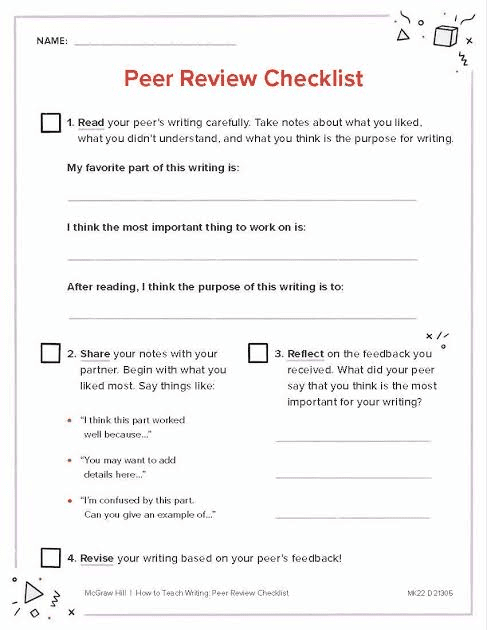
How to write a peer review as a student
By
Princeton Journal of Pre-Collegiate Research
Read more

Peer review etiquette: tone, structure, fairness
By
Princeton Journal of Pre-Collegiate Research
Read more

Version control for research documents
By
Princeton Journal of Pre-Collegiate Research
Read more

Digital vs paper lab notebooks for students
By
Princeton Journal of Pre-Collegiate Research
Read more

Data management basics for student researchers
By
Princeton Journal of Pre-Collegiate Research
Read more
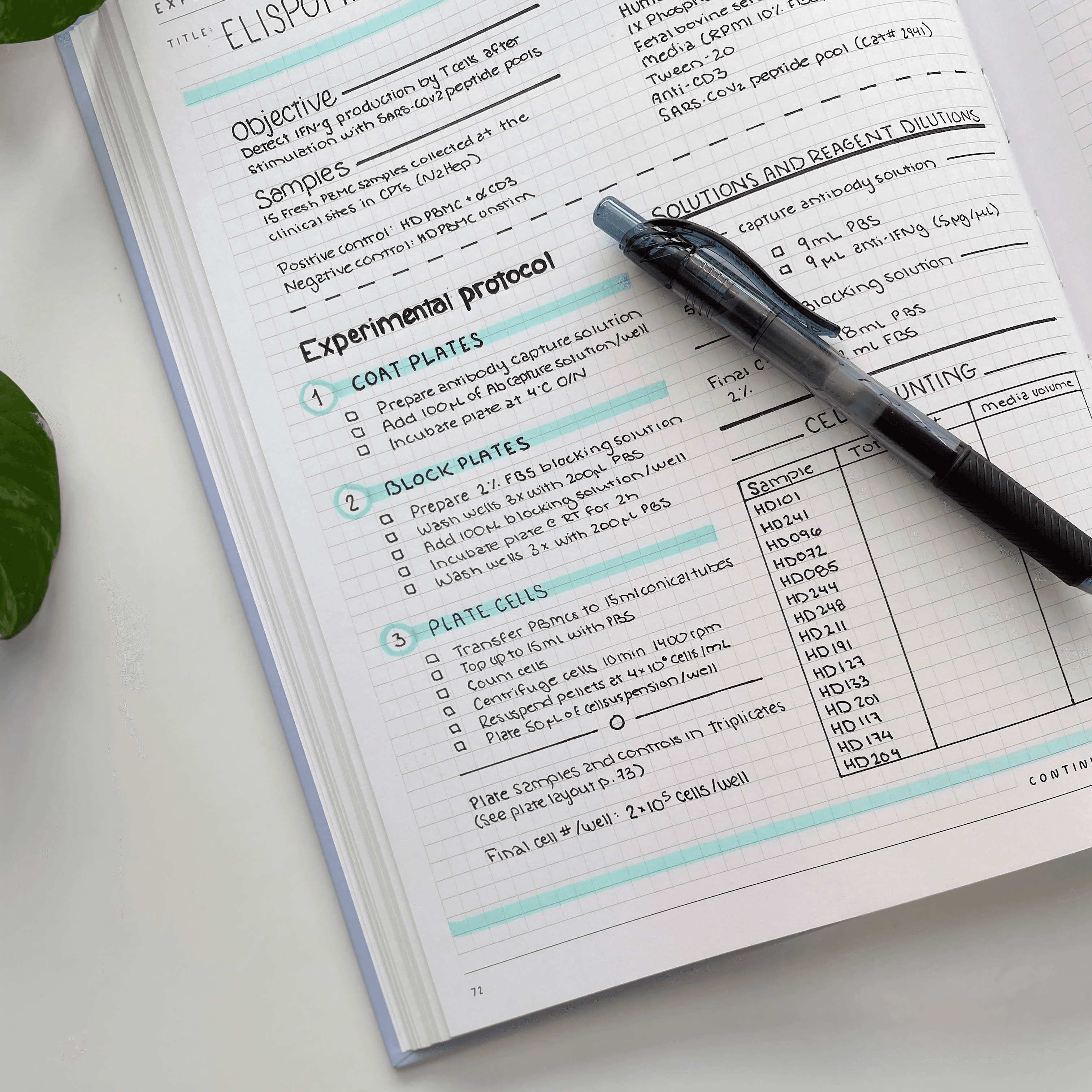
How to keep a lab notebook that reviewers trust
By
Princeton Journal of Pre-Collegiate Research
Read more

How to organize research files across a year-long project
By
Princeton Journal of Pre-Collegiate Research
Read more

How to document your data so you can defend it
By
Princeton Journal of Pre-Collegiate Research
Read more

How to write a grant proposal as a student
By
Princeton Journal of Pre-Collegiate Research
Read more
Free resources that replace research funding
By
Princeton Journal of Pre-Collegiate Research
Read more
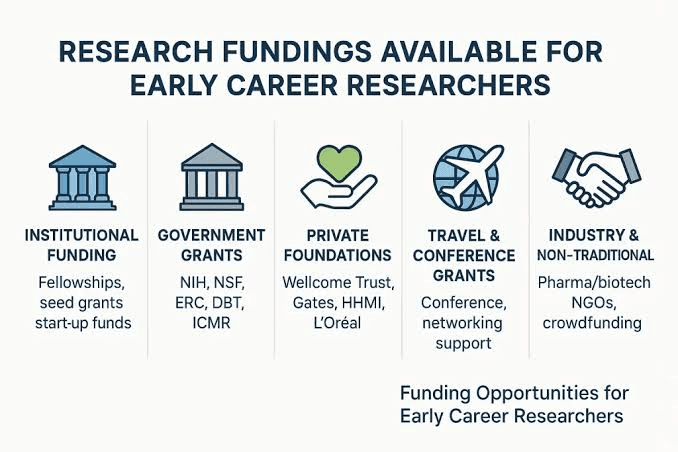
Corporate and nonprofit programs that fund student research
By
Princeton Journal of Pre-Collegiate Research
Read more

Science fair grants and material stipends explained
By
Princeton Journal of Pre-Collegiate Research
Read more

Crowdfunding a student research project: does it work
By
Princeton Journal of Pre-Collegiate Research
Read more

How much does a research project actually cost
By
Princeton Journal of Pre-Collegiate Research
Read more

How to ask your school to fund your project
By
Princeton Journal of Pre-Collegiate Research
Read more

Grants for high school research projects: what exists
By
Princeton Journal of Pre-Collegiate Research
Read more

How to start a research club at your school
By
Princeton Journal of Pre-Collegiate Research
Read more