How to talk to your child's school counselor about research opportunities
Princeton Journal of Pre-Collegiate Research
Most school counselors want to help. The problem is that most parents do not know how to ask. If you want to open a real conversation about how to talk to your child's school counselor about research opportunities, this guide gives you the exact framework to do it well.
Research experience is no longer a bonus on a college application. It is becoming a differentiator, particularly at selective institutions. Counselors know this, but they are managing hundreds of students. Your job is to make the conversation easy, specific, and productive.
Why This Conversation Matters More Than You Think
School counselors sit at the intersection of academic programming, college advising, and student development. They often know about opportunities that never appear on the school website, including local university partnerships, summer research programs, and faculty mentors willing to work with high school students. Many of these opportunities go unfilled simply because no one asks.
Parents who approach counselors with vague requests get vague responses. Parents who arrive prepared, with a clear understanding of what research experience looks like and why it matters, get real recommendations. The difference is preparation.
Understanding what colleges actually think about high school research before you walk into that meeting will sharpen your questions considerably. Admissions offices are not impressed by research participation trophies. They are looking for students who engaged seriously with a question, produced something original, and can speak to the process. That framing should guide every part of your counselor conversation.
Before the Meeting: Do Your Homework
Walking into a counselor's office without preparation wastes everyone's time. Spend thirty minutes before the meeting getting clear on three things: your child's academic interests, their current workload, and what kind of research engagement is realistic for them right now.
Know Your Child's Interests with Precision
Saying your child is interested in science is not useful. Saying your child is interested in the social determinants of health outcomes in low-income urban communities is useful. Counselors can connect specific interests to specific opportunities. Vague interests produce vague suggestions.
Sit down with your child before the meeting and ask them what questions genuinely interest them. Not what subjects they are good at. What questions keep them up at night. That distinction matters.
Understand What Research Actually Looks Like in High School
Research at the high school level takes many forms. It can mean working in a university lab over the summer. It can mean conducting an independent study under a faculty mentor. It can mean designing and executing an original research project, writing it up as a formal paper, and submitting it to a peer-reviewed journal for publication.
That last path is increasingly accessible. Journals like the Princeton Journal of Pre-Collegiate Research publish original work by high school students across more than 50 academic disciplines, following rigorous double-blind peer review. Knowing that this option exists gives you something concrete to bring to the counselor conversation (most counselors are unaware that credible publication venues for high school students exist).
Review the School's Existing Resources
Check the school's course catalog for independent study options, research electives, or senior thesis programs. Look at whether the school has a science fair or academic competition infrastructure. Review any existing partnerships with local colleges or universities. This background knowledge signals to the counselor that you are a serious, engaged parent, not someone looking for a shortcut.
How to Structure the Conversation
Learning how to talk to your child's school counselor about research opportunities is largely about structure. A well-structured conversation covers four areas: context, goals, constraints, and next steps.
Open with Context, Not a Request
Start by giving the counselor a brief picture of where your child is academically and what they are working toward. Something like: your child is a sophomore with strong grades in biology and chemistry, they are considering pre-med programs in college, and they want to begin building a research record now rather than waiting until junior year. That context tells the counselor everything they need to make a relevant recommendation.
Do not open with a demand or a vague ask. Do not say you want them to find your child a research opportunity. Say you want to explore what options exist and figure out which ones are the best fit.
Ask Specific, Answerable Questions
Counselors respond well to specific questions. Here are questions that tend to generate useful answers.
Does the school have any existing relationships with university research programs or faculty mentors?
Are there independent study credits available for students pursuing original research projects?
Has the school supported students in submitting work to academic journals or competitions before?
Are there summer programs the school has recommended for students interested in research?
What would it take to formalize a research project as part of the student's academic record?
These questions are specific enough to be answerable and open enough to invite the counselor's expertise. They also signal that you understand the landscape.
Address Constraints Honestly
Research takes time. If your child is already carrying a heavy course load, a demanding extracurricular schedule, or other significant commitments, say so. A good counselor will help you find opportunities that are realistic, not just impressive on paper. Knowing how to plan a research project around your school schedule is a real skill, and the counselor's input on pacing and timing is valuable.
Be honest about your child's readiness as well. Not every student is ready to conduct independent research as a freshman. Some students need a year of building foundational skills first. A counselor who knows your child well can give you an honest read on that.
Leave with Concrete Next Steps
Do not let the meeting end with a vague agreement to follow up. Before you leave, confirm at least one specific action item. That might be the name of a teacher who runs an independent study program, the deadline for a summer research application, or a list of journals and competitions the school has worked with before. Write it down in front of the counselor. It signals that you are serious and that you will follow through.
What to Do If the Counselor Has Limited Knowledge
Many school counselors are generalists. They are excellent at college advising and student support, but they may not have deep knowledge of the research publication landscape for high school students. If that is the case, do not be frustrated. Come prepared to share information, not just request it.
You can mention that peer-reviewed journals for high school students exist and that publication is achievable with the right support. You can reference the growing body of evidence that research experience carries weight in college admissions, particularly at research-oriented universities. If the counselor is unfamiliar with how high school research journals are evaluated for selectivity, you can share that context as well.
Position yourself as a resource, not a critic. Counselors who feel supported are more likely to go the extra mile for your child.
Expanding the Conversation Beyond the Counselor
The school counselor is one node in a larger network. A productive conversation with them often opens doors to other conversations: with subject-area teachers who could serve as research advisors, with department heads who control independent study credits, or with local university faculty who have worked with high school students before.
If your child is an international student or attending school outside the United States, the counselor conversation still applies, but the landscape of opportunities looks different. Understanding the range of high school research opportunities for international students gives you a broader map to work from.
For students in specific regions, even more targeted resources exist. Students based in Southeast Asia, for example, will find that research opportunities for high school students in Singapore include a robust ecosystem of university programs and competitions that counselors in the region may be able to connect them with directly.
After the Meeting: Keep the Momentum
One conversation is not enough. Research opportunities take time to develop, and the counselor relationship benefits from ongoing communication. Send a brief follow-up email within 48 hours thanking the counselor and restating the next steps you agreed on. Check in again when your child begins a project, and again when they complete it.
Counselors remember families who follow through. When the next opportunity comes across their desk, they think of the students whose parents were engaged, organized, and appreciative, not the ones who asked once and disappeared.
If your child begins working on an independent research paper, make sure they understand what the process involves. Resources on how long it takes to write a high school research paper and how to avoid plagiarism in a high school research paper are practical starting points that set realistic expectations and build good habits from the beginning.
The Bigger Picture
Knowing how to talk to your child's school counselor about research opportunities is a skill that compounds. The first conversation opens a door. Subsequent conversations widen it. Students who begin building research experience in their sophomore or junior year arrive at the college application process with something most of their peers do not have: documented evidence that they can ask a serious question, pursue it rigorously, and produce original work.
That is not a minor credential. At universities that take research seriously, it is a signal that cannot be faked or manufactured at the last minute. The counselor conversation is where it starts.
Start the Conversation Today
Schedule the meeting. Prepare your questions. Know what research opportunities exist, including peer-reviewed publication venues designed specifically for high school students. Arrive as a partner, not a petitioner.
If your child is ready to take their research seriously, the Princeton Journal of Pre-Collegiate Research is ready to receive it. Every paper goes through rigorous double-blind peer review. Every accepted paper receives a DOI, making it permanently citable and globally discoverable. Students leave the process as stronger researchers and stronger writers (which is the point).
The counselor conversation is the first step. The research is the work. The publication is the proof. Start with the conversation.
Read More

Can high school students be peer reviewers
By
Princeton Journal of Pre-Collegiate Research
Read more

What reviewing other papers teaches you about your own
By
Princeton Journal of Pre-Collegiate Research
Read more
How to give useful feedback on a classmate's paper
By
Princeton Journal of Pre-Collegiate Research
Read more

Student editorial boards: how they work
By
Princeton Journal of Pre-Collegiate Research
Read more
How to write a peer review as a student
By
Princeton Journal of Pre-Collegiate Research
Read more

Peer review etiquette: tone, structure, fairness
By
Princeton Journal of Pre-Collegiate Research
Read more

Version control for research documents
By
Princeton Journal of Pre-Collegiate Research
Read more

Digital vs paper lab notebooks for students
By
Princeton Journal of Pre-Collegiate Research
Read more

Data management basics for student researchers
By
Princeton Journal of Pre-Collegiate Research
Read more

How to keep a lab notebook that reviewers trust
By
Princeton Journal of Pre-Collegiate Research
Read more

How to organize research files across a year-long project
By
Princeton Journal of Pre-Collegiate Research
Read more

How to document your data so you can defend it
By
Princeton Journal of Pre-Collegiate Research
Read more

How to write a grant proposal as a student
By
Princeton Journal of Pre-Collegiate Research
Read more
Free resources that replace research funding
By
Princeton Journal of Pre-Collegiate Research
Read more
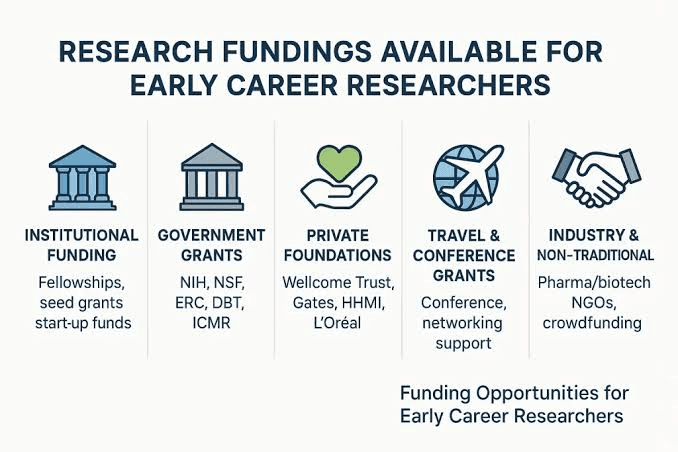
Corporate and nonprofit programs that fund student research
By
Princeton Journal of Pre-Collegiate Research
Read more

Science fair grants and material stipends explained
By
Princeton Journal of Pre-Collegiate Research
Read more

Crowdfunding a student research project: does it work
By
Princeton Journal of Pre-Collegiate Research
Read more

How much does a research project actually cost
By
Princeton Journal of Pre-Collegiate Research
Read more

How to ask your school to fund your project
By
Princeton Journal of Pre-Collegiate Research
Read more

Grants for high school research projects: what exists
By
Princeton Journal of Pre-Collegiate Research
Read more

How to start a research club at your school
By
Princeton Journal of Pre-Collegiate Research
Read more