How to Turn a Science Fair Project Into a Published Research Paper
Princeton Journal of Pre-Collegiate Research
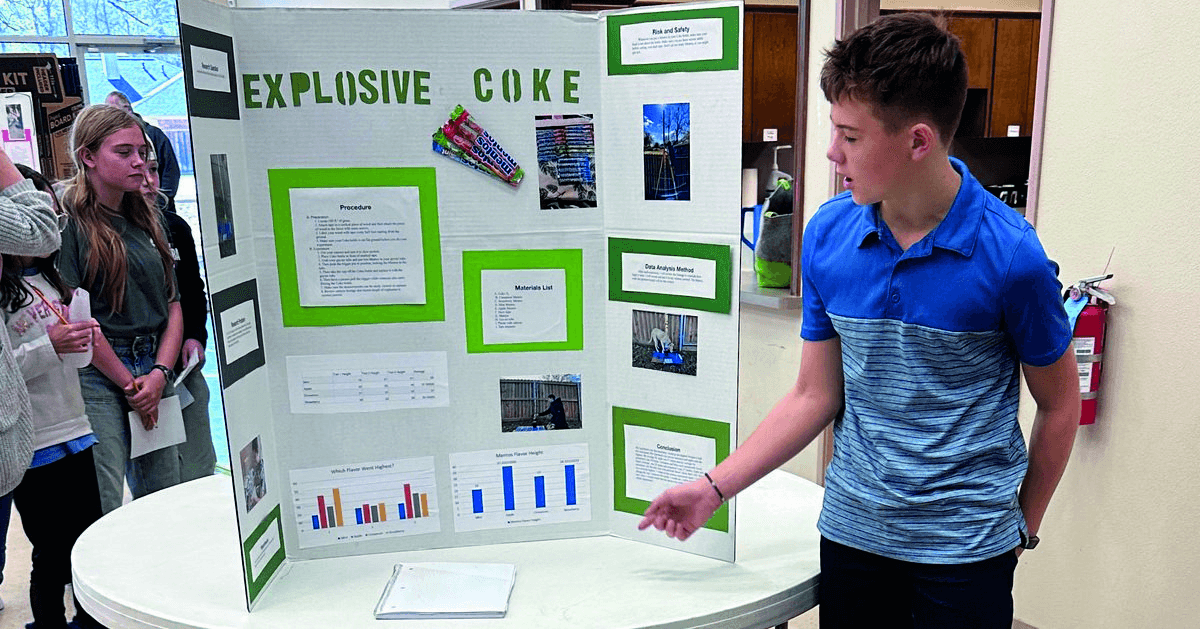
If you've ever wondered how to turn a science fair project into a published research paper, you're not alone. Thousands of students complete impressive experiments every year, only to let their hard work collect dust after the fair is over. The truth is, many science fair projects contain genuinely valuable data and insights that deserve a wider audience. With the right guidance, your project could become a peer-reviewed publication that advances scientific knowledge and looks incredible on college applications. This guide walks you through every step of the process, from evaluating your project's potential to submitting your manuscript to a journal.
Is Your Science Fair Project Ready for Publication?
Before diving into the writing process, you need to honestly assess whether your project meets the basic standards for academic publication. Not every science fair project will qualify, but many are closer than you think.
Ask yourself these key questions:
Did you follow the scientific method rigorously? You need a clear hypothesis, controlled variables, and repeatable procedures.
Do you have sufficient data? A single trial rarely satisfies peer reviewers. Multiple trials and statistical analysis strengthen your case significantly.
Is your topic original? Your research should add something new to existing knowledge, even if it's a small contribution.
Can you explain your methodology clearly? Other researchers should be able to replicate your experiment based on your description.
If you answered yes to most of these questions, you have a solid foundation. If your data is thin or your methodology has gaps, consider whether you can conduct additional trials before moving forward.
Understanding the Structure of a Research Paper
Academic research papers follow a specific format known as IMRaD: Introduction, Methods, Results, and Discussion. Understanding this structure is essential when learning how to turn a science fair project into a published research paper, because your science fair report and a formal manuscript are quite different documents.
Here's what each section requires:
Abstract
The abstract is a concise summary of your entire paper, typically 150–250 words. It should briefly describe your research question, methodology, key findings, and conclusions. Write this section last, even though it appears first in the paper.
Introduction
The introduction establishes the context for your research. It should review existing literature on your topic, identify the gap your research addresses, and clearly state your hypothesis or research question. This section requires you to cite published studies, so you'll need to conduct a thorough literature review.
Methods
The methods section describes exactly how you conducted your experiment. Include materials, equipment, procedures, and any statistical methods you used to analyze your data. Be specific enough that another researcher could replicate your work.
Results
Present your data clearly and objectively in the results section. Use tables, graphs, and figures to illustrate your findings. Avoid interpreting your results here — simply report what you observed.
Discussion
The discussion is where you interpret your results, explain what they mean, connect them to existing research, acknowledge limitations, and suggest directions for future study. This is often the most challenging section for student researchers.
References
Every claim you make that isn't your own original finding must be cited. Use a consistent citation format such as APA, MLA, or the style required by your target journal.
Conducting Your Literature Review
One of the biggest differences between a science fair report and a publishable paper is the literature review. You need to demonstrate that you understand the existing research in your field and that your work contributes something meaningful to it.
Start your literature search using these free resources:
Google Scholar — Excellent starting point for finding peer-reviewed articles
PubMed — Essential for biology, chemistry, and health-related research
ERIC — Useful for education-related projects
arXiv — Great for physics, mathematics, and computer science
Read at least 10–15 relevant papers before writing your introduction. Take notes on key findings, methodologies, and any contradictions between studies. This background knowledge will strengthen every section of your paper.
Elevating Your Data and Analysis
Science fair judges appreciate creative thinking and effort, but peer reviewers demand statistical rigor. Before writing your paper, revisit your data analysis with fresh eyes.
Consider these improvements:
Calculate statistical significance using t-tests, ANOVA, or chi-square tests depending on your data type
Report error bars and standard deviations in all graphs and tables
Increase your sample size if possible by conducting additional trials
Use appropriate software like Excel, R, or Python for data visualization
If you're unsure which statistical tests to use, ask a math teacher, science mentor, or university professor for guidance. Many researchers are happy to help motivated students.
Finding a Mentor
Having an experienced researcher review your work before submission dramatically increases your chances of acceptance. A mentor can help you identify weaknesses in your methodology, improve your writing, and navigate the submission process.
Where to find a mentor:
Contact professors at local universities whose research aligns with your topic
Reach out to science fair judges who expressed interest in your project
Connect with researchers through programs like Intel ISEF or Regeneron STS
Ask your school's science department for recommendations
When reaching out to potential mentors, be professional, concise, and specific about what kind of help you're seeking. Attach a brief summary of your project and explain your publication goals.
How to Turn a Science Fair Project Into a Published Research Paper: Choosing the Right Journal
Selecting the right journal is one of the most important decisions in the publication process. Submitting to the wrong journal wastes time and can be discouraging. Fortunately, several journals specifically welcome student research.
Journals that publish student research include:
Journal of Emerging Investigators (JEI) — Specifically designed for middle and high school researchers
American Journal of Undergraduate Research (AJUR) — For undergraduate-level work
Young Scientists Journal — Peer-reviewed journal run by and for young scientists
Cureus — Open-access medical journal that accepts student submissions
PLOS ONE — Broad-scope open-access journal that values methodological soundness
Read the author guidelines for each journal carefully before submitting. Pay attention to formatting requirements, word count limits, citation styles, and figure specifications. Submitting a paper that doesn't follow these guidelines is an immediate red flag for editors.
Writing and Revising Your Manuscript
With your structure planned, literature reviewed, and data analyzed, it's time to write. Many student researchers make the mistake of trying to write a perfect first draft. Instead, focus on getting your ideas down first and refining them later.
Follow this writing process:
Start with methods and results — These sections are most straightforward and build your confidence
Write the introduction and discussion — These require more synthesis and critical thinking
Draft the abstract last — Once the full paper is complete, summarizing it becomes much easier
Revise multiple times — Each pass should focus on a different aspect: clarity, logic, grammar, and formatting
Get feedback from others — Ask your mentor, a teacher, and ideally a peer to review your draft
Pay special attention to your academic voice. Research papers use formal, objective language. Avoid first-person pronouns where possible, eliminate casual expressions, and ensure every claim is supported by evidence or citations.
Navigating Peer Review
After submission, your paper will undergo peer review, where experts in your field evaluate your work. This process can take anywhere from a few weeks to several months. Most papers receive one of four responses: accept, minor revisions, major revisions, or reject.
Don't be discouraged by revision requests — they're extremely common even for experienced researchers. Treat reviewer comments as valuable feedback rather than personal criticism. Respond to each comment systematically and explain how you've addressed each concern in a cover letter accompanying your revised submission.
If your paper is rejected, read the reviewer comments carefully, improve your manuscript, and submit to another appropriate journal. Persistence is essential in academic publishing.
Ethical Considerations for Student Researchers
Academic integrity is non-negotiable in research publishing. Before submitting your paper, ensure you've addressed these ethical requirements:
Proper attribution — Cite all sources accurately and completely
Data integrity — Never fabricate, falsify, or selectively omit data
Human subjects approval — If your research involved human participants, you may need IRB approval
Animal welfare — Research involving animals must follow established ethical guidelines
Conflict of interest disclosure — Be transparent about any potential conflicts
Most journals require authors to sign an ethics statement confirming compliance with these standards. Take this seriously — violations can have lasting consequences for your academic reputation.
Celebrating and Sharing Your Published Work
When your paper is accepted and published, take a moment to celebrate this remarkable achievement. Very few students reach this milestone, and it represents genuine scientific contribution.
Once published, share your work strategically:
Add it to your college application and resume
Share it on academic networking platforms like ResearchGate
Present your findings at local science fairs or academic conferences
Notify your school and local media — published student research is newsworthy
More importantly, use this experience as a springboard. The skills you've developed — critical thinking, scientific writing, data analysis, and perseverance — are invaluable regardless of your future career path.
Final Thoughts on How to Turn a Science Fair Project Into a Published Research Paper
The journey of learning how to turn a science fair project into a published research paper is challenging, but entirely achievable for dedicated students. By strengthening your methodology, conducting a thorough literature review, finding a mentor, choosing the right journal, and persisting through the peer review process, you can transform your science fair work into a genuine contribution to human knowledge. Start today — your research deserves to be heard.
Read More

APA format for high school research papers: complete guide
By
RISE Research
Read more

MLA format for research papers: when and how
By
RISE Research
Read more

APA vs MLA vs Chicago: which to use for your paper
By
RISE Research
Read more

How to cite a dataset
By
RISE Research
Read more

In-text citations vs footnotes: how each works
By
RISE Research
Read more

What is a p-value, explained for high school researchers
By
RISE Research
Read more

What is regression analysis and when do you use it
By
RISE Research
Read more

What is standard deviation and why it matters
By
RISE Research
Read more

What is a t-test and when do you need one
By
RISE Research
Read more

What is effect size and why reviewers care
By
RISE Research
Read more

Common statistical mistakes in student papers
By
RISE Research
Read more

Research for biology majors: what to publish before applying
By
https://princeton-jpcr.org/
Read more

Research for economics majors
By
https://princeton-jpcr.org/
Read more

Research for political science majors
By
https://princeton-jpcr.org/
Read more

Research for English and humanities majors
By
https://princeton-jpcr.org/
Read more

Research for neuroscience majors
By
https://princeton-jpcr.org/
Read more
Undecided major: what research keeps your options open
By
https://princeton-jpcr.org/
Read more

Summer research timeline: June to August week by week
By
Princeton Journal of Pre-Collegiate Research
Read more

Research goals to set at the start of the school year
By
Princeton Journal of Pre-Collegiate Research
Read more

How to finish your research paper before finals season
By
Princeton Journal of Pre-Collegiate Research
Read more

New year research resolutions that actually stick
By
Princeton Journal of Pre-Collegiate Research
Read more