How to do business and entrepreneurship research in high school
Princeton Journal of Pre-Collegiate Research

Most high school students assume serious business research is reserved for MBA programs and corporate think tanks. That assumption is wrong, and it is costing students one of the most compelling academic credentials they can build before college applications. Learning how to do business and entrepreneurship research in high school is not only possible, it is increasingly expected by selective universities that want to see original thinking, not just extracurricular participation.
This guide walks you through every stage of the process, from identifying a viable research question to publishing your findings in a peer-reviewed journal. (no shortcuts, no rubber stamps)
Why Business and Entrepreneurship Research Belongs in High School
Business and entrepreneurship sit at the intersection of economics, psychology, sociology, and data analysis. That breadth is an asset, not a complication. It means you can approach a research question from multiple disciplinary angles, which produces richer, more defensible work.
Admissions officers at competitive universities are not impressed by generic business club memberships. They are impressed by students who identified a real market problem, gathered original data, applied a theoretical framework, and produced a written analysis that holds up to scrutiny. Research does that. Participation does not.
Beyond admissions, the skills are transferable. A student who completes a rigorous research project before college arrives at their first economics or management course with a structural advantage over peers who have never written a literature review or interpreted regression output.
Choosing a Research Question That Is Actually Researchable
The most common failure point in high school business research is selecting a question that is too broad, too normative, or impossible to investigate with available resources. A question like "Is entrepreneurship good for the economy?" is an opinion prompt, not a research question. A question like "Do minority-owned small businesses in urban zip codes access SBA loans at lower rates than non-minority-owned businesses, controlling for firm age and revenue?" is a research question.
Good business and entrepreneurship research questions share three traits. They are specific enough to answer within a defined scope. They are empirically testable using data you can realistically obtain. And they connect to existing academic literature, meaning someone has studied adjacent questions before and you can position your work relative to theirs.
Productive Research Areas for High School Students
You do not need access to proprietary corporate data to do meaningful work. The following areas are well-suited to high school researchers because they offer accessible data sources and rich existing literature.
Consumer behavior and decision-making: Survey-based studies examining how price anchoring, social proof, or scarcity framing affects purchasing intent among specific demographic groups.
Entrepreneurial intention: What factors predict whether a high school or college student intends to start a business? Self-efficacy, family background, and access to mentorship are all measurable variables.
Small business survival: Using publicly available datasets from the U.S. Census Bureau or the Bureau of Labor Statistics, students can analyze survival rates across industries, regions, or firm sizes.
Social entrepreneurship: How do mission-driven businesses balance financial sustainability with social impact? Case study and interview-based methodologies work well here.
Gig economy and labor: Platform-based work raises testable questions about income volatility, worker autonomy, and skill development.
Local market analysis: A competitive analysis of a specific local industry, grounded in primary data collection, can produce genuinely original findings.
If you are exploring how economics intersects with entrepreneurship, reviewing High School Economics Research Paper Ideas Examples can help you identify adjacent questions worth investigating.
Building Your Literature Review
A literature review is not a summary of articles you found on Google. It is a structured argument that maps the existing state of knowledge on your topic, identifies gaps or contradictions in that knowledge, and positions your research as a response to one of those gaps. (this is the part most students skip, and it shows)
Start with Google Scholar, JSTOR, and SSRN, which hosts a large volume of economics and management working papers. Search for your core concepts using academic terminology. If you are studying entrepreneurial self-efficacy, search that exact phrase, not "confidence in starting a business." Read abstracts first to assess relevance, then read methodology sections carefully to understand how other researchers operationalized similar variables.
Aim for a minimum of ten to fifteen peer-reviewed sources. Organize them thematically, not chronologically. Your literature review should tell a coherent story about what researchers have established, where they disagree, and what remains unanswered. Your research question should emerge logically from that story.
Methodology: Choosing the Right Approach
Business and entrepreneurship research supports a wide range of methodologies. Your choice should be driven by your research question, not by what feels most familiar.
Quantitative Methods
Surveys, experiments, and secondary data analysis all fall under quantitative methodology. If your question involves measuring relationships between variables, quantitative methods are appropriate. A survey measuring the relationship between risk tolerance and entrepreneurial intention, administered to a sample of high school students, is a legitimate quantitative study. Tools like Google Forms for data collection and JASP or Excel for basic statistical analysis are accessible to high school researchers.
Be honest about your sample size and its limitations. A sample of 80 students from one school is not representative of all high school students globally. Acknowledge that in your limitations section. Reviewers will respect intellectual honesty far more than overclaiming.
Qualitative Methods
Interviews, case studies, and content analysis are qualitative approaches well-suited to entrepreneurship research. If you want to understand the lived experience of a first-generation entrepreneur navigating access to capital, a structured interview protocol will yield richer data than a survey. Qualitative work requires rigorous coding and thematic analysis, which takes time but produces nuanced findings that quantitative work often cannot capture.
Mixed Methods
Some of the strongest undergraduate and graduate research in business combines both approaches. A survey establishes statistical patterns, and follow-up interviews explain the mechanisms behind those patterns. Mixed methods studies are ambitious for a high school researcher, but they are achievable if your timeline allows. For guidance on how long the full writing process realistically takes, see How Long Does It Take To Write A High School Research Paper.
Data Collection and Ethical Considerations
If your research involves human participants, whether through surveys or interviews, you must address ethical protocols before collecting a single data point. Most high school researchers do not have access to a formal Institutional Review Board, but that does not eliminate ethical obligations. Participants must provide informed consent. Anonymity must be protected where promised. Data must be stored securely.
Some high schools have faculty advisors who can serve as informal IRB equivalents. If yours does not, document your ethical safeguards in your methodology section and describe how you protected participant data. Journals that publish high school research will look for this.
Secondary data sources, meaning datasets that already exist and are publicly available, sidestep many of these concerns. The U.S. Small Business Administration, the World Bank's Enterprise Surveys, and the Kauffman Foundation all publish datasets that support serious entrepreneurship research without requiring primary data collection.
Writing the Paper
Business and entrepreneurship research papers follow standard academic structure: abstract, introduction, literature review, methodology, results, discussion, and conclusion. Each section has a specific job. The introduction establishes the research problem and states your thesis. The methodology section is written so that another researcher could replicate your study. The discussion section interprets your results in the context of the existing literature, not just in isolation.
Write in precise, formal academic prose. Avoid hedging language that weakens your claims, but also avoid overstating what your data supports. The goal is accuracy, not persuasion. (you are not writing a pitch deck)
Citations matter. Use a consistent citation format, APA is standard in social sciences and business research, and cite every claim that is not original to your study. Proper citation practice is also your primary defense against plagiarism. For a thorough treatment of this, read How To Avoid Plagiarism In A High School Research Paper before you begin drafting.
Finding a Mentor
Independent research is possible, but mentorship accelerates the process and improves the quality of the output. Look first within your school: economics teachers, business teachers, and social science faculty are often willing to advise motivated students. Look next at local universities. Many professors are open to advising high school researchers, particularly if your topic aligns with their own work.
A mentor does not write your paper. A mentor helps you sharpen your research question, catches methodological errors before they become structural problems, and provides feedback on drafts. (you leave a better researcher than you arrived) Cold emails to professors work more often than students expect, provided they are specific, professional, and demonstrate that you have already done preliminary reading in the field.
Publishing Your Research
Completing the research is the first milestone. Publishing it is the credential. A peer-reviewed publication with a DOI is permanently indexed and findable by anyone, including admissions officers, future employers, and graduate school committees. (it exists forever, findable by anyone)
Not all journals that accept high school research are equal. Before submitting, evaluate the journal's peer review process, its indexing status, and whether it assigns DOIs to published papers. For a framework to make that evaluation, read What To Look For In A High School Research Journal. If you want to compare options across the landscape of available publications, High School Research Journals Ranked By Selectivity provides a structured comparison.
The Princeton Journal of Pre-Collegiate Research publishes original research by high school students across all academic disciplines, including business and entrepreneurship. Every submission undergoes rigorous double-blind peer review. Accepted papers receive a DOI and are accessible to a global readership. (not affiliated with Princeton University) The review process is selective because that is what makes the credential meaningful.
Understanding the difference between free and paid publication options is also worth your time before you submit anywhere. Free Vs Paid High School Research Journals breaks down what those distinctions actually mean for the credibility of your publication.
How to Do Business and Entrepreneurship Research in High School: A Summary
Learning how to do business and entrepreneurship research in high school requires choosing a specific, testable question, building a rigorous literature review, selecting an appropriate methodology, collecting and analyzing data responsibly, and writing a paper that meets academic standards. None of those steps are beyond a motivated high school student with the right guidance and the willingness to do the work seriously.
The students who complete this process do not just have a line on a resume. They have demonstrated the capacity to identify a problem, design a method for investigating it, and communicate findings to an academic audience. That is a rare credential at any age.
If you are ready to move from idea to published research, start with your question. Everything else follows from that. And when your paper is ready, submit it to a journal that takes high school research as seriously as you do.
Read More

Can high school students be peer reviewers
By
Princeton Journal of Pre-Collegiate Research
Read more

What reviewing other papers teaches you about your own
By
Princeton Journal of Pre-Collegiate Research
Read more

How to give useful feedback on a classmate's paper
By
Princeton Journal of Pre-Collegiate Research
Read more

Student editorial boards: how they work
By
Princeton Journal of Pre-Collegiate Research
Read more
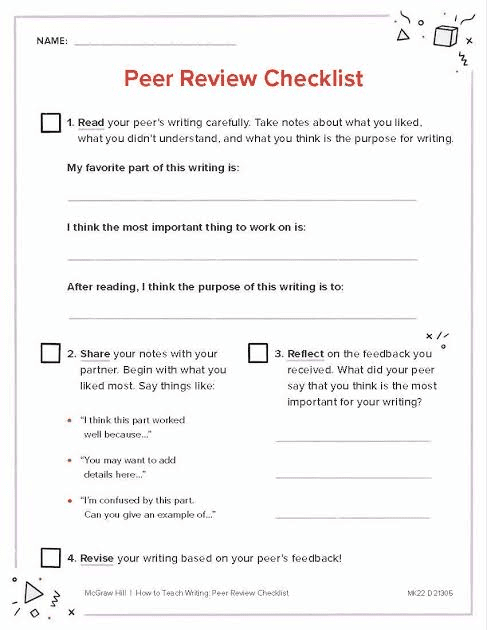
How to write a peer review as a student
By
Princeton Journal of Pre-Collegiate Research
Read more

Peer review etiquette: tone, structure, fairness
By
Princeton Journal of Pre-Collegiate Research
Read more

Version control for research documents
By
Princeton Journal of Pre-Collegiate Research
Read more

Digital vs paper lab notebooks for students
By
Princeton Journal of Pre-Collegiate Research
Read more

Data management basics for student researchers
By
Princeton Journal of Pre-Collegiate Research
Read more

How to keep a lab notebook that reviewers trust
By
Princeton Journal of Pre-Collegiate Research
Read more

How to organize research files across a year-long project
By
Princeton Journal of Pre-Collegiate Research
Read more

How to document your data so you can defend it
By
Princeton Journal of Pre-Collegiate Research
Read more

How to write a grant proposal as a student
By
Princeton Journal of Pre-Collegiate Research
Read more
Free resources that replace research funding
By
Princeton Journal of Pre-Collegiate Research
Read more
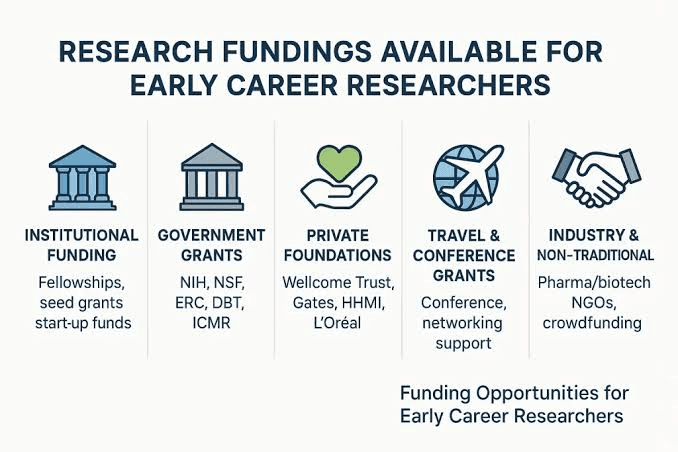
Corporate and nonprofit programs that fund student research
By
Princeton Journal of Pre-Collegiate Research
Read more

Science fair grants and material stipends explained
By
Princeton Journal of Pre-Collegiate Research
Read more

Crowdfunding a student research project: does it work
By
Princeton Journal of Pre-Collegiate Research
Read more

How much does a research project actually cost
By
Princeton Journal of Pre-Collegiate Research
Read more

How to ask your school to fund your project
By
Princeton Journal of Pre-Collegiate Research
Read more

Grants for high school research projects: what exists
By
Princeton Journal of Pre-Collegiate Research
Read more

How to start a research club at your school
By
Princeton Journal of Pre-Collegiate Research
Read more