How to help your child choose a research topic without doing it for them
Princeton Journal of Pre-Collegiate Research

Your child wants to publish research. You want to help. The problem is that the line between guiding and taking over is thinner than most parents expect. Knowing how to help your child choose a research topic without doing it for them is one of the most valuable skills you can develop as a parent of an aspiring young scholar.
This is not about stepping back entirely. It is about stepping in strategically. The research topic your child chooses will shape every hour they spend on this project. It will determine whether they stay motivated through revision cycles, whether reviewers find the work credible, and whether the experience builds genuine intellectual confidence. Get this stage right, and everything downstream becomes more manageable.
Why the Topic Has to Come from Them
A parent-chosen topic produces parent-driven research. That pattern shows up in the writing, in the argument structure, and in the way a student answers questions about their own work. Peer reviewers notice. Admissions officers notice. More importantly, your child will notice halfway through the project when motivation collapses and they have no personal stake in the outcome.
Original research demands sustained curiosity. A student who chose their own topic will push through a frustrating literature review because they genuinely want to know the answer. A student who inherited a topic from a well-meaning parent will not have that internal engine. The credential matters, but the intellectual growth behind it matters more (and the two are not mutually exclusive).
There is also a practical dimension. Journals that publish high school research, including Princeton JPCR, run rigorous double-blind peer review. Reviewers assess whether the student demonstrates genuine engagement with the subject. That engagement is visible in the writing. It cannot be faked, and it cannot be borrowed from a parent who did the thinking for them.
Start With What They Already Know They Love
The first conversation is not about research. It is about interest. Ask your child what they read about when nobody is assigning it. Ask what they argued about with friends last week. Ask which class made them lose track of time this semester. These questions surface authentic intellectual territory without triggering the pressure of a formal research decision.
Many students discount their own interests because they assume research has to look a certain way. A student obsessed with sports statistics may not realize that is a legitimate entry point into data science or sports psychology research. A student who writes fiction may not see the connection to narrative theory, linguistics, or media studies. Your job at this stage is to validate the breadth of what counts as a researchable interest.
If your child is uncertain where to start, subject-specific resources can help them see what research in a given field actually looks like. Reading examples of published student work in areas they find interesting often unlocks ideas faster than any brainstorming exercise. Our Anthropology Research Topics For High School Students and Chemistry Research Paper Topics For High School Students guides are designed exactly for this moment.
How to Help Your Child Choose a Research Topic: The Narrowing Process
A broad interest is a starting point, not a topic. The narrowing process is where most students need the most structured support, and it is also where parents most often overstep. The goal is to ask questions that force your child to do the thinking, not to suggest answers that do the thinking for them.
Ask Questions, Not Suggestions
There is a meaningful difference between saying "you should study the effect of social media on teenage anxiety" and asking "what specifically about social media do you find most interesting, and is there something about it you genuinely do not understand yet?" The first closes the decision. The second opens it. Train yourself to ask rather than suggest, especially in early conversations.
Useful narrowing questions include: What aspect of this subject do you find most confusing? What would you want to know that you cannot find in a textbook? Is there a debate in this area where you have a strong instinct about who is right? What would change if someone could prove this? These questions push toward a researchable problem rather than a general subject area.
Introduce the Concept of a Research Gap
Students often assume good research means finding a topic that has never been discussed. That is not how research works. Good research identifies something that has been discussed but not fully resolved, or applies an existing framework to a new context. Explaining this concept early removes a major source of paralysis.
A student interested in environmental policy does not need to discover a new pollutant. They might examine how a specific local regulation has performed against its stated goals, or compare two cities' approaches to the same environmental challenge. The gap is in the specific comparison, not in the broad subject. Help your child see that specificity is the product of curiosity, not the absence of it.
Let Them Discard Ideas Without Judgment
The narrowing process produces dead ends. A student might spend two weeks reading about a topic and conclude it does not hold their interest at the depth required for a full research paper. That is not failure. That is how intellectual discernment develops. Resist the urge to rescue a discarded idea because you thought it was promising. Your child is learning to evaluate their own engagement, which is a skill that will serve them for decades.
Practical Structures That Support Without Controlling
Support does not have to be passive. There are concrete things parents can do that genuinely help without crossing into doing the work for the student.
Create protected time. Research thinking requires uninterrupted space. Protecting two or three hours per week where your child can read, draft, and think without competing demands is a structural form of support that does not interfere with their intellectual ownership.
Ask for updates, not reports. There is a difference between asking "what did you decide?" and asking "what are you thinking about this week?" The first creates pressure to have finished something. The second invites ongoing reflection and keeps communication open.
Provide access, not direction. If your child is exploring a topic in neuroscience, pointing them toward a guide on Neuroscience Research Without A Lab gives them a resource without prescribing a conclusion. If they are considering data science, sharing information on How To Do Data Science Research Without A PhD opens a door they can choose to walk through or not.
Normalize the difficulty. Topic selection is genuinely hard. Telling your child that confusion at this stage is normal and expected reduces the anxiety that often causes students to grab the first idea that sounds acceptable rather than the one that genuinely excites them.
When Your Child Wants You to Just Tell Them
At some point, many students will ask a parent to simply choose a topic for them. This is usually a signal of overwhelm, not laziness. The appropriate response is to acknowledge the difficulty and redirect rather than comply or refuse. Something like: "I understand this feels overwhelming. Let us go back to what you told me last month about your interest in urban planning. What specifically about that conversation stuck with you?"
This approach validates the frustration without solving the problem for them. It also models the kind of reflective questioning that good researchers use when they are stuck. You are teaching a process, not just supporting a project.
If your child is stuck because they genuinely do not know what kind of research is possible without a lab or a mentor, that is a solvable information problem. Resources like How To Do Secondary Research Without Original Experiments and Journals That Accept High School Research Without Mentor address exactly those constraints and often open up possibilities students did not know existed.
How to Help Your Child Choose a Research Topic When They Have Too Many Ideas
Some students do not struggle with finding ideas. They struggle with committing to one. This is a different problem, and it requires a different kind of support. The risk here is not paralysis but perpetual pivoting, which produces a student who has read broadly and written nothing.
A useful exercise is to ask your child to write three sentences about each of their top two or three ideas: what the question is, why it matters, and how they would begin to answer it. The idea that produces the clearest three sentences is usually the right one. Not because clarity means the topic is easy, but because clarity at this stage indicates genuine intellectual traction.
You can also encourage your child to think about feasibility alongside interest. A topic that requires primary data from a laboratory they cannot access is a harder starting point than a topic that can be explored through existing literature, public datasets, or surveys. Helping your child match their idea to the resources they actually have is practical guidance, not interference.
What Parents Should Avoid
Even well-intentioned parents can undermine the process. A few specific patterns are worth naming directly.
Prestige-chasing on the child's behalf. Choosing a topic because it sounds impressive to admissions committees, rather than because it genuinely interests your child, is one of the most common mistakes. Reviewers can identify hollow enthusiasm. The research will suffer for it.
Editing the topic into a different topic. Feedback on scope and feasibility is appropriate. Rewriting the research question to reflect your own intellectual preferences is not. There is a clear line between the two.
Comparing to other students. Telling your child that another student chose a topic in machine learning or genomics introduces competitive pressure that distorts the decision. Your child's research should reflect their curiosity, not a benchmark.
If you are uncertain about how involved you should be at various stages of the process, the guide on How Involved Should Parents Be In Childs Research provides a clear framework for navigating that boundary throughout the project.
The Outcome You Are Working Toward
When the topic selection process works, your child arrives at a research question they can articulate clearly, defend enthusiastically, and pursue independently. They feel ownership over the project because they made the central intellectual decision. That ownership is what sustains them through the difficult middle stages of research, and it is what produces work that is genuinely worth publishing.
The goal of knowing how to help your child choose a research topic without doing it for them is not to produce a paper. It is to produce a researcher. The paper is the artifact. The researcher is the person who will carry that capacity forward into university, into a career, and into every complex problem they encounter for the rest of their life.
Ready to Take the Next Step?
Once your child has a topic they believe in, the next decisions involve finding the right venue for their work. Understanding what makes a journal credible, what peer review actually involves, and what to look for before submitting are all part of preparing a student for a successful publication experience. The guide on What To Look For Before Child Submits Research Journal is a strong next read for parents navigating that stage.
Princeton JPCR publishes original research by high school students across 50+ academic disciplines. Every submission undergoes rigorous double-blind peer review. The journal exists because student research deserves to be taken seriously (and because the students who produce it deserve a credential that reflects real intellectual work). Explore our Blogs for more guides supporting every stage of the research journey.
Read More

Can high school students be peer reviewers
By
Princeton Journal of Pre-Collegiate Research
Read more

What reviewing other papers teaches you about your own
By
Princeton Journal of Pre-Collegiate Research
Read more
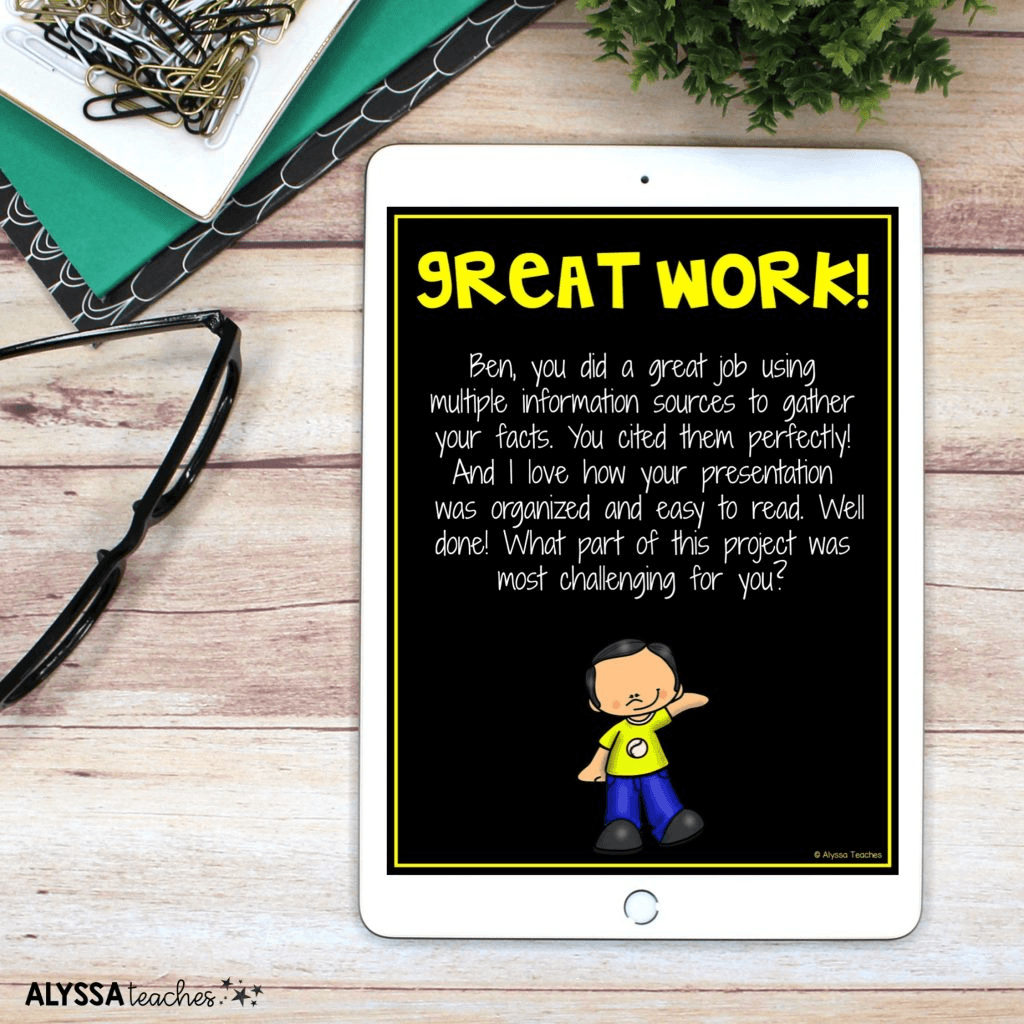
How to give useful feedback on a classmate's paper
By
Princeton Journal of Pre-Collegiate Research
Read more

Student editorial boards: how they work
By
Princeton Journal of Pre-Collegiate Research
Read more
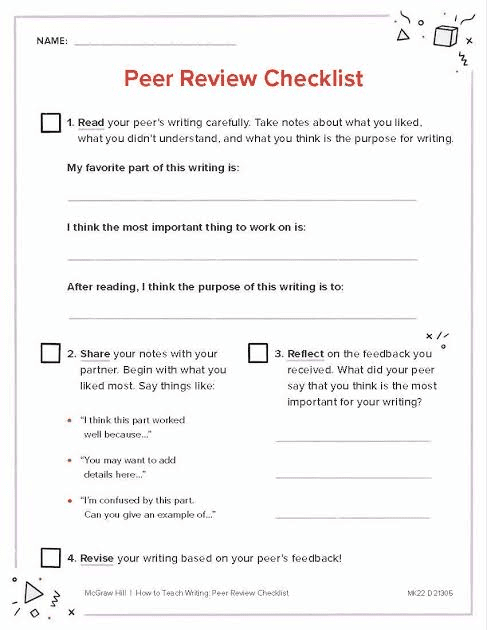
How to write a peer review as a student
By
Princeton Journal of Pre-Collegiate Research
Read more

Peer review etiquette: tone, structure, fairness
By
Princeton Journal of Pre-Collegiate Research
Read more

Version control for research documents
By
Princeton Journal of Pre-Collegiate Research
Read more

Digital vs paper lab notebooks for students
By
Princeton Journal of Pre-Collegiate Research
Read more

Data management basics for student researchers
By
Princeton Journal of Pre-Collegiate Research
Read more

How to keep a lab notebook that reviewers trust
By
Princeton Journal of Pre-Collegiate Research
Read more

How to organize research files across a year-long project
By
Princeton Journal of Pre-Collegiate Research
Read more

How to document your data so you can defend it
By
Princeton Journal of Pre-Collegiate Research
Read more

How to write a grant proposal as a student
By
Princeton Journal of Pre-Collegiate Research
Read more
Free resources that replace research funding
By
Princeton Journal of Pre-Collegiate Research
Read more
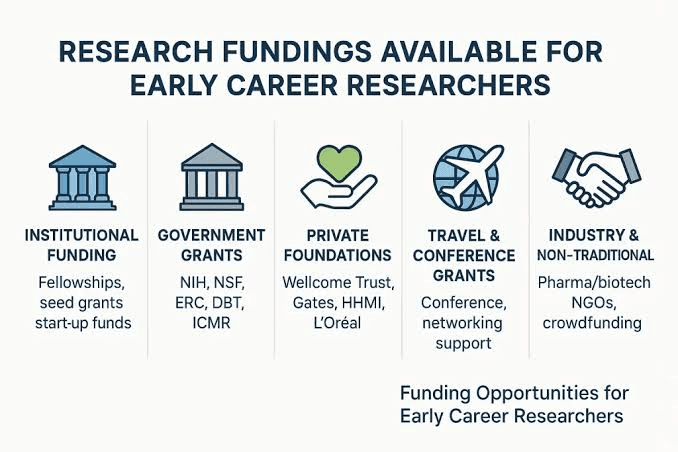
Corporate and nonprofit programs that fund student research
By
Princeton Journal of Pre-Collegiate Research
Read more

Science fair grants and material stipends explained
By
Princeton Journal of Pre-Collegiate Research
Read more

Crowdfunding a student research project: does it work
By
Princeton Journal of Pre-Collegiate Research
Read more

How much does a research project actually cost
By
Princeton Journal of Pre-Collegiate Research
Read more

How to ask your school to fund your project
By
Princeton Journal of Pre-Collegiate Research
Read more

Grants for high school research projects: what exists
By
Princeton Journal of Pre-Collegiate Research
Read more

How to start a research club at your school
By
Princeton Journal of Pre-Collegiate Research
Read more