High school research publication guide for Sri Lanka
Princeton Journal of Pre-Collegiate Research
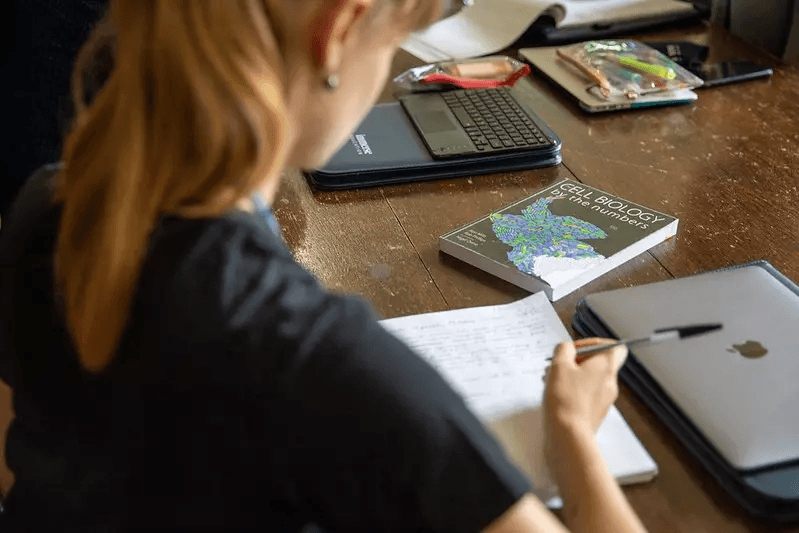
Sri Lankan students pursuing original research at the pre-collegiate level now have access to international publication opportunities that were once reserved for university scholars. This high school research publication guide for Sri Lanka addresses the full process, from selecting a research topic to submitting a manuscript to a peer-reviewed journal.
Why Research Publication Matters for Sri Lankan Students
Academic research publication signals intellectual maturity and scholarly commitment. For Sri Lankan students applying to universities abroad, a published paper demonstrates capabilities that transcend standardized test scores and grade point averages. University admissions committees in the United Kingdom, the United States, Australia, and Canada increasingly recognize student publications as evidence of independent inquiry and sustained academic effort.
Beyond admissions, publication contributes to a student's long-term scholarly identity. It establishes early familiarity with peer review, citation standards, and academic discourse. Students who publish before university enrollment enter their undergraduate programs with a distinct methodological advantage.
Understanding the Sri Lankan Academic Context
Sri Lanka's national curriculum, administered through the Department of Examinations, includes the Ordinary Level and Advanced Level examinations. Students in the Advanced Level stream, particularly those pursuing science, mathematics, commerce, or arts subjects, are well-positioned to conduct discipline-specific original research. The A/L syllabus in subjects such as Combined Mathematics, Physics, Chemistry, Biology, and Economics provides a rigorous theoretical foundation that supports independent scholarly inquiry.
International school students in Sri Lanka following the Cambridge IGCSE or A Level curriculum have additional pathways. The Cambridge framework explicitly encourages extended research projects, and the Independent Research Report component of certain Cambridge programs provides a structured entry point into academic writing. Students in this category may find the Research Publication Guide For Igcse Students particularly relevant to their circumstances.
Selecting a Research Topic
A viable research topic must be both original and manageable within the constraints of pre-collegiate resources. Sri Lankan students have access to rich local contexts for research across multiple disciplines. Topics may draw on the country's biodiversity, historical records, demographic patterns, economic structures, or social institutions.
Strong research topics are specific, arguable, and connected to existing scholarly literature. A student interested in environmental science might examine water quality variation in a particular river basin. A student in the humanities might analyze the representation of colonial history in Sri Lankan secondary school textbooks. The key criterion is that the research must contribute a new finding, analysis, or argument rather than summarize existing knowledge.
Students pursuing history-related inquiries may benefit from reviewing the 50 History Research Topics For High School Papers resource, which offers structured guidance on framing historical arguments at the pre-collegiate level.
Structuring the Research Paper
Academic journals expect manuscripts to follow a standardized structure. While formatting requirements vary by journal, most peer-reviewed publications require the following core components.
Abstract: A concise summary of the research question, methodology, findings, and conclusions, typically between 150 and 250 words.
Introduction: A presentation of the research problem, a review of relevant literature, and a clear statement of the study's objectives or thesis.
Methodology: A detailed account of how the research was conducted, including data collection methods, analytical frameworks, and any limitations.
Results or Findings: A factual presentation of what the research produced, without interpretive commentary.
Discussion: An interpretation of the findings in relation to the research question and existing scholarship.
Conclusion: A synthesis of the study's contributions and suggestions for future research.
References: A complete bibliography formatted according to the journal's citation style, most commonly APA, MLA, or Chicago.
Students seeking detailed guidance on manuscript preparation should consult the resource on How To Format A Research Paper For Publication, which outlines technical formatting requirements across major citation systems.
Identifying Appropriate Journals for Submission
Not all academic journals accept submissions from pre-collegiate authors. Students must identify journals that explicitly welcome high school research. Several peer-reviewed journals operating internationally maintain submission categories for secondary school students, provided the work meets their scholarly standards.
The Princeton Journal of Pre-Collegiate Research (PJPCR) publishes original research across disciplines, maintaining rigorous peer review and high editorial standards. The journal does not restrict submissions by geography, meaning Sri Lankan students may submit manuscripts on any qualifying topic. The editorial process evaluates research on the basis of methodological soundness, originality, and contribution to the relevant field.
Students who have completed Advanced Placement research coursework may find the guidance on how to Turn Ap Research Paper Into Journal Publication useful for adapting existing academic work into a submission-ready manuscript.
For students evaluating multiple publication venues, the comparative analysis available through Nhsjs Alternative High School Research Publication provides structured information on the differences between leading pre-collegiate journals.
The Peer Review Process
Peer review is the mechanism by which academic journals assess the quality and validity of submitted research. In a standard double-blind peer review process, neither the author nor the reviewer knows the identity of the other party. Reviewers evaluate the manuscript's research design, analytical rigor, accuracy of citations, clarity of argumentation, and contribution to the field.
Sri Lankan students should expect the review process to take several weeks to several months, depending on the journal. Reviewers may return manuscripts with requests for revision. A request for revision is not a rejection; it is an invitation to strengthen the work according to expert feedback. Students should approach reviewer comments as constructive scholarly guidance rather than criticism.
Journals that offer expedited review timelines are documented in the resource on Fastest High School Research Journals For Publication, which may assist students working within application deadlines.
The Role of Mentors and School Counselors
Faculty mentorship significantly improves the quality of student research. Sri Lankan students enrolled in national schools or international institutions should seek guidance from subject teachers who hold postgraduate qualifications in the relevant discipline. A mentor can assist with literature review, methodology design, and manuscript revision without compromising the originality of the student's contribution.
School counselors play a complementary role, particularly in helping students identify appropriate journals, manage submission timelines, and incorporate published research into university applications. The Counselors Guide High School Research Publication provides structured information for academic advisors supporting students through the publication process.
Teachers who wish to integrate research publication into classroom instruction will find practical frameworks in the resource on Classroom Research Projects That Can Lead To Publication. This resource outlines how standard academic assignments can be developed into submission-ready manuscripts with appropriate scaffolding.
Incorporating Publications into University Applications
A published research paper is a significant asset in a university application portfolio. Students applying to institutions in the United States through the Common Application must know how to present this achievement accurately and effectively. The guidance available on How To Include Research Publications Common App explains precisely where and how to list a publication within the application framework.
Sri Lankan students applying to UK universities through UCAS should note that the personal statement provides the primary space for discussing research accomplishments. A published paper should be referenced with the journal name, publication date, and a brief description of the research's contribution. Admissions tutors at competitive institutions respond favorably to evidence of independent scholarly output.
Addressing Common Challenges
Sri Lankan students navigating international publication for the first time may encounter several practical challenges. Access to academic databases such as JSTOR, Scopus, or Web of Science can be limited without institutional subscriptions. Students affiliated with international schools may have access through their school libraries. Students in national schools may access open-access repositories such as Google Scholar, PubMed, or DOAJ to locate peer-reviewed literature for their literature reviews.
Language of publication presents another consideration. The majority of internationally indexed journals publish exclusively in English. Sri Lankan students whose primary language of instruction is Sinhala or Tamil must ensure that their manuscripts meet the grammatical and stylistic standards expected of academic English prose. Professional proofreading by a qualified English-language editor is advisable before submission.
Publication costs are a legitimate concern for families evaluating this opportunity. Some journals charge article processing fees, while others operate on a no-fee model. The resource on How Much Should Research Publication Cost Parents Guide provides a transparent breakdown of what constitutes a legitimate fee structure and what signals a predatory publishing arrangement.
Avoiding Predatory Journals
The proliferation of predatory journals poses a risk to students seeking publication. A predatory journal accepts manuscripts without genuine peer review, charges fees without providing legitimate editorial services, and confers no scholarly credibility upon published authors. Sri Lankan students and their mentors must verify the legitimacy of any journal before submission.
Indicators of a legitimate journal include a verifiable editorial board with named, credentialed scholars; a clear and transparent peer review process; indexing in recognized academic databases; and a publication history that can be independently verified. The absence of any of these indicators warrants caution. Students should prioritize journals with established reputations and documented editorial standards.
High School Research Publication Guide for Sri Lanka: A Summary of Steps
The following sequence summarizes the publication process for Sri Lankan pre-collegiate researchers.
Identify a research question within the student's area of academic strength and available resources.
Conduct a thorough literature review using accessible academic databases to establish the existing state of knowledge.
Design a methodology appropriate to the research question, whether qualitative, quantitative, or mixed-methods.
Collect and analyze data or develop an original argument with supporting evidence.
Draft the manuscript according to standard academic structure and the target journal's formatting guidelines.
Seek review and feedback from a qualified faculty mentor or academic advisor.
Revise the manuscript to address feedback before submission.
Submit to a peer-reviewed journal that accepts pre-collegiate research and monitor correspondence from the editorial office.
Respond to reviewer feedback with a detailed revision letter and an updated manuscript.
Upon acceptance, follow the journal's publication and indexing procedures.
Conclusion
This high school research publication guide for Sri Lanka establishes that pre-collegiate publication is an achievable and academically valuable goal for motivated students across the island. Whether enrolled in a national school following the A/L curriculum or an international institution offering Cambridge qualifications, Sri Lankan students possess the intellectual foundation necessary to produce original, publishable scholarship.
The process requires careful topic selection, methodological discipline, adherence to academic writing standards, and strategic identification of appropriate journals. Mentors, school counselors, and institutional resources all play a meaningful role in supporting students through this process. The Princeton Journal of Pre-Collegiate Research welcomes submissions from Sri Lankan students who have conducted original research meeting its editorial standards.
Students ready to begin the submission process are encouraged to review the full submission guidelines and explore the broader collection of resources available through the Blogs section of the PJPCR website. The opportunity to contribute to international scholarly discourse begins with a single well-formed research question.
Read More

APA format for high school research papers: complete guide
By
RISE Research
Read more

MLA format for research papers: when and how
By
RISE Research
Read more

APA vs MLA vs Chicago: which to use for your paper
By
RISE Research
Read more

How to cite a dataset
By
RISE Research
Read more

In-text citations vs footnotes: how each works
By
RISE Research
Read more

What is a p-value, explained for high school researchers
By
RISE Research
Read more

What is regression analysis and when do you use it
By
RISE Research
Read more

What is standard deviation and why it matters
By
RISE Research
Read more

What is a t-test and when do you need one
By
RISE Research
Read more

What is effect size and why reviewers care
By
RISE Research
Read more

Common statistical mistakes in student papers
By
RISE Research
Read more

Research for biology majors: what to publish before applying
By
https://princeton-jpcr.org/
Read more

Research for economics majors
By
https://princeton-jpcr.org/
Read more

Research for political science majors
By
https://princeton-jpcr.org/
Read more

Research for English and humanities majors
By
https://princeton-jpcr.org/
Read more

Research for neuroscience majors
By
https://princeton-jpcr.org/
Read more

Undecided major: what research keeps your options open
By
https://princeton-jpcr.org/
Read more

Summer research timeline: June to August week by week
By
Princeton Journal of Pre-Collegiate Research
Read more

Research goals to set at the start of the school year
By
Princeton Journal of Pre-Collegiate Research
Read more

How to finish your research paper before finals season
By
Princeton Journal of Pre-Collegiate Research
Read more

New year research resolutions that actually stick
By
Princeton Journal of Pre-Collegiate Research
Read more