Science Olympiad vs Original Research: Key Differences
Princeton Journal of Pre-Collegiate Research
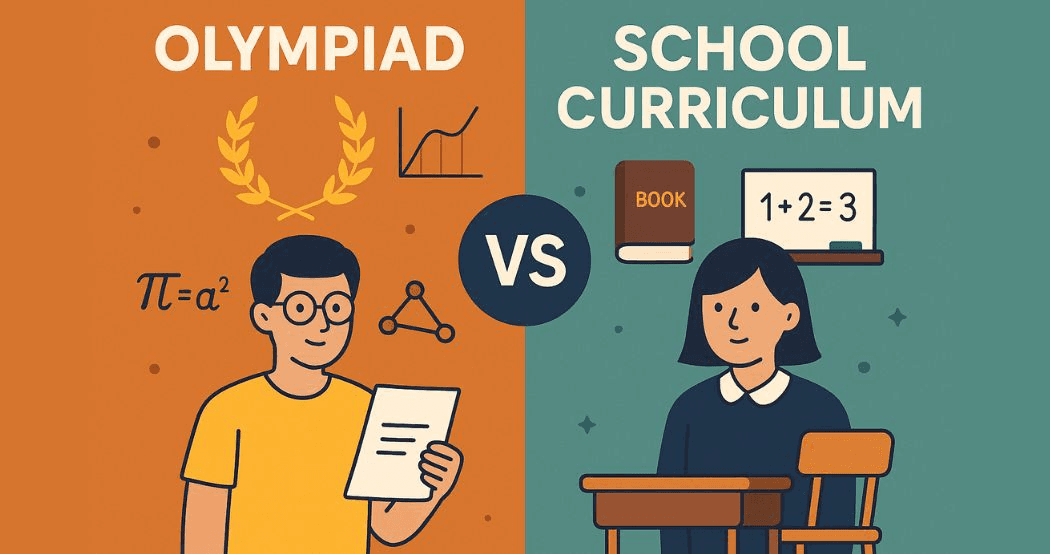
TL;DR: This post answers a question many high school students ask when planning their academic profile: how does Science Olympiad compare to conducting and publishing original research? It is written for students in grades 9 through 12 who want to understand what each path actually develops and what each signals to colleges and the broader academic community. After reading, you will know which activities build which skills, and what to do when your research is ready for peer review. Students with completed original work can submit it to the Princeton Journal of Pre-Collegiate Research for consideration.
Why the Science Olympiad vs original research question matters
Science Olympiad vs original research is one of the most common strategic questions high school students face when building an academic record. Both are rigorous. Both signal intellectual seriousness. But they develop entirely different skills, produce different outputs, and carry different weight in different contexts. Treating them as interchangeable is a mistake that costs students time and clarity.
Science Olympiad is a team-based academic competition run by Science Olympiad Inc., a nonprofit organisation that hosts invitational, regional, state, and national tournaments. Students compete in 23 events covering biology, chemistry, physics, engineering, earth science, and more. The events test content knowledge, lab technique, and problem-solving under timed conditions. It is genuinely demanding.
Original research is something different. It means designing a study, collecting or analysing data, drawing conclusions, and producing a written paper that contributes something new to a field. The output is not a competition score. It is a document that can be submitted to a peer-reviewed journal, evaluated by expert reviewers, and published for the academic community to read and cite.
Both paths have real value. Neither replaces the other. But understanding the distinction clearly will help you make better decisions about where to invest your time.
What are the key differences between Science Olympiad and original research?
Science Olympiad tests mastery of existing knowledge through competitive events. Original research creates new knowledge through a defined methodology. The core difference is reproduction versus contribution: Olympiad asks you to demonstrate what science has already established, while original research asks you to add something to what science does not yet know. A student can excel at both, but the skills involved are distinct.
Science Olympiad vs original research: what each activity actually builds
Science Olympiad develops breadth. Competitors study across multiple disciplines simultaneously, often rotating through different events each season. The skills it builds are real: content recall under pressure, collaborative problem-solving, experimental technique within constrained lab formats, and the ability to work efficiently with a team toward a shared goal. National-level competitors have typically mastered content equivalent to an introductory university course in several science disciplines.
Original research develops depth. A student working on a research project in one area for six to twelve months builds skills that competition formats cannot replicate: identifying a genuine gap in existing literature, designing a methodology that controls for confounding variables, interpreting ambiguous results honestly, and communicating findings in the structured format that academic journals require. These are skills that transfer directly to university-level research and professional scientific work.
The output also differs in permanence. A Science Olympiad medal or ranking exists in a record. A published research paper exists in the permanent academic record. It receives a DOI (Digital Object Identifier), which means it is citable, findable through academic databases, and readable by anyone in the world indefinitely.
Science Olympiad results are competitive and comparative: your ranking depends on how others perform on the same day. A published paper is evaluated against an absolute standard: does this work meet the criteria for original, rigorous, peer-reviewed scholarship? That distinction matters when you consider what each credential communicates to a reader who encounters your academic profile years later.
What does the research process actually involve at the high school level?
Many students assume original research requires a university laboratory or a faculty supervisor. That assumption eliminates options that are genuinely available. Original research at the high school level takes many forms. Computational research in mathematics, computer science, or data analysis requires only a laptop and access to public datasets. Literature-based research in history, philosophy, economics, or social science requires access to academic databases, many of which are freely available through public libraries. Survey-based research in psychology or sociology can be conducted with appropriate ethical planning and institutional guidance. Experimental research in biology or chemistry is more constrained without lab access, but secondary analysis of published datasets is a legitimate and publishable methodology.
What all of these have in common is a research question, a defined method, an honest engagement with existing literature, and a written output that follows the conventions of academic publishing. That is what reviewers at peer-reviewed journals evaluate. They are not evaluating the prestige of the institution where the work was conducted.
For students who want to understand how to approach research without access to original experiments, the guide on how to do secondary research without original experiments covers this methodology in practical detail.
What happens after you complete original research that does not happen after Science Olympiad?
After a Science Olympiad tournament, you receive a result. After completing original research, you begin a process. That process is peer review, and it is the mechanism that separates academic publishing from every other student achievement format.
When you submit a research paper to a peer-reviewed journal, qualified reviewers who are experts in the relevant field read your work without knowing your name, your school, or your background. They evaluate the methodology, the quality of the argument, the accuracy of the claims, and the contribution to the field. They return detailed feedback. That feedback either leads to revisions and eventual acceptance, or to rejection with an explanation of why the work did not meet the publication standard.
This process is not a formality. Rejection rates at selective journals are high. Desk rejection (where a paper is declined before it even reaches peer review) is common when submissions do not meet basic formatting or scope requirements. Revision requests are the norm, not the exception. A student who navigates this process successfully has demonstrated something that no competition result can demonstrate: the ability to produce work that meets an independent expert standard.
That is the credential that peer-reviewed publication creates. It is not a prize. It is a record of external validation by people who had no obligation to accept the work.
What are the most common misconceptions students have about original research vs Science Olympiad?
The four misconceptions below account for most of the confusion students bring to this comparison. Each one has a concrete consequence when left uncorrected.
The first misconception is that Science Olympiad experience makes original research easier. Science Olympiad builds content knowledge, which is useful background. But the skills of original research, specifically identifying a gap, designing a methodology, and writing a paper that meets journal standards, are not practiced in Olympiad formats. Students who assume their Olympiad preparation transfers directly to research often underestimate how much the writing and methodological components require separate, deliberate development.
The second misconception is that original research requires institutional access. As described above, many publishable research methodologies are available to students working independently or with a school-based supervisor. The barrier is not access to a university lab. The barrier is understanding what a research question looks like and how to answer it rigorously.
The third misconception is that a published paper is automatically more impressive than a Science Olympiad result. Context matters. A national-level Science Olympiad placement is a genuine achievement. A published paper in a journal that does not conduct real peer review is not. The quality of the peer review process is what determines the value of a publication credential. Students should verify that any journal they submit to conducts genuine double-blind peer review with qualified reviewers before treating acceptance as a meaningful credential.
The fourth misconception is that these two paths are mutually exclusive. They are not. Many students compete in Science Olympiad in their junior year while developing a research project, then submit that project for publication as a senior. The content knowledge from Olympiad preparation can directly inform the research question. The paths complement each other when sequenced well.
How to decide between Science Olympiad and original research, step by step
This is not a binary choice for most students, but if time is limited and a decision is required, the following framework applies.
Identify your goal. If your goal is to build a team-based competition record and develop broad science content knowledge, Science Olympiad is well-suited to that goal. If your goal is to produce a permanent, citable academic output that demonstrates independent intellectual contribution, original research is the path.
Assess your current year. Original research takes six to twelve months from question to submission-ready paper. If you are in grade 12 with a college application deadline approaching, a competition record is more immediately achievable. If you are in grade 9, 10, or 11, you have time to develop a research project fully.
Identify a research question you genuinely want to answer. Original research done without genuine interest in the question produces weak papers. The research question should come from curiosity, not from a desire to have a publication. Reviewers can tell the difference.
Check what methodologies are available to you. Review the realistic options: computational analysis, secondary data analysis, literature review, survey research, or experimental work. Match your question to a method you can actually execute.
Draft the paper and get feedback before submitting. A teacher, school librarian, or subject-matter expert can review a draft before formal submission. Journals that conduct real peer review will return detailed feedback regardless, but submitting a polished draft reduces the likelihood of desk rejection.
Browse research vs science fair for college applications to understand how each credential reads in an admissions context before finalising your strategy.
When your paper is ready, submit it for peer review. Review the best science journals for high school students to identify the right publication destination for your discipline and methodology.
PJPCR publishes original research across all academic disciplines, from STEM to humanities to social sciences. If your work is ready for peer review, review the submission guidelines at princeton-jpcr.org.
Frequently asked questions about Science Olympiad vs original research
What is the difference between Science Olympiad and a research competition like Regeneron ISEF?
Science Olympiad tests knowledge of established science through competitive events. Research competitions like ISEF evaluate original student research projects judged by expert panels. The key difference is that ISEF and similar competitions require students to produce new findings, not demonstrate existing knowledge. Both are competitive formats, but the output and the skills they develop are fundamentally different from each other.
How long does it take to complete and publish an original research paper in high school?
From initial question to published paper, most high school research projects take six to twelve months. The peer review and publication process at a selective journal adds two to three months on top of the time spent conducting the research and writing the paper. A fast-track option is available for students who need a quicker turnaround, which can bring the review timeline to two to four weeks. Planning the full timeline before starting is essential, particularly for students with college application deadlines in view.
Do I need a university mentor to publish original research as a high school student?
No. A university mentor is not a requirement for submission to most peer-reviewed student journals. What reviewers evaluate is the quality of the research question, the rigour of the methodology, and the accuracy of the conclusions. Research conducted independently, with school-based supervision, or through secondary data analysis is fully eligible for peer review and publication. Mentorship can strengthen a project, but its absence does not disqualify a submission.
What makes a high school research paper publishable rather than just well-written?
A publishable paper makes an original contribution to its field, however small. It identifies a specific gap in existing literature, applies a defined methodology to address that gap, and draws conclusions that are supported by the data or analysis. A well-written paper that summarises existing research without adding anything new is a literature review, not original research. Reviewers at selective journals look for the contribution first, before evaluating the writing quality.
What kinds of research does PJPCR publish?
The Princeton Journal of Pre-Collegiate Research publishes original research by high school students across more than 50 academic disciplines, including STEM, humanities, social sciences, and interdisciplinary fields. Submissions go through double-blind peer review. Accepted papers are published open-access with a DOI. A publication fee applies for accepted papers. You can review the submission guidelines and browse published work at princeton-jpcr.org.
What to take away from this comparison
Science Olympiad and original research are both legitimate, demanding academic pursuits. They are not the same thing, and they should not be treated as substitutes for each other. Science Olympiad builds competitive content knowledge across disciplines. Original research builds the capacity to generate new knowledge independently, communicate it in the format that the academic community uses, and have it validated by expert reviewers who have no stake in the outcome.
If you have completed original research and your paper is ready for peer review, the next step is clear. Submit your research to PJPCR by reviewing the submission guidelines at princeton-jpcr.org.
Read More

APA format for high school research papers: complete guide
By
RISE Research
Read more

MLA format for research papers: when and how
By
RISE Research
Read more

APA vs MLA vs Chicago: which to use for your paper
By
RISE Research
Read more

How to cite a dataset
By
RISE Research
Read more

In-text citations vs footnotes: how each works
By
RISE Research
Read more

What is a p-value, explained for high school researchers
By
RISE Research
Read more

What is regression analysis and when do you use it
By
RISE Research
Read more

What is standard deviation and why it matters
By
RISE Research
Read more

What is a t-test and when do you need one
By
RISE Research
Read more

What is effect size and why reviewers care
By
RISE Research
Read more

Common statistical mistakes in student papers
By
RISE Research
Read more

Research for biology majors: what to publish before applying
By
https://princeton-jpcr.org/
Read more

Research for economics majors
By
https://princeton-jpcr.org/
Read more

Research for political science majors
By
https://princeton-jpcr.org/
Read more

Research for English and humanities majors
By
https://princeton-jpcr.org/
Read more

Research for neuroscience majors
By
https://princeton-jpcr.org/
Read more
Undecided major: what research keeps your options open
By
https://princeton-jpcr.org/
Read more

Summer research timeline: June to August week by week
By
Princeton Journal of Pre-Collegiate Research
Read more

Research goals to set at the start of the school year
By
Princeton Journal of Pre-Collegiate Research
Read more

How to finish your research paper before finals season
By
Princeton Journal of Pre-Collegiate Research
Read more

New year research resolutions that actually stick
By
Princeton Journal of Pre-Collegiate Research
Read more