How to Present Your Research in a Science Poster
Princeton Journal of Pre-Collegiate Research
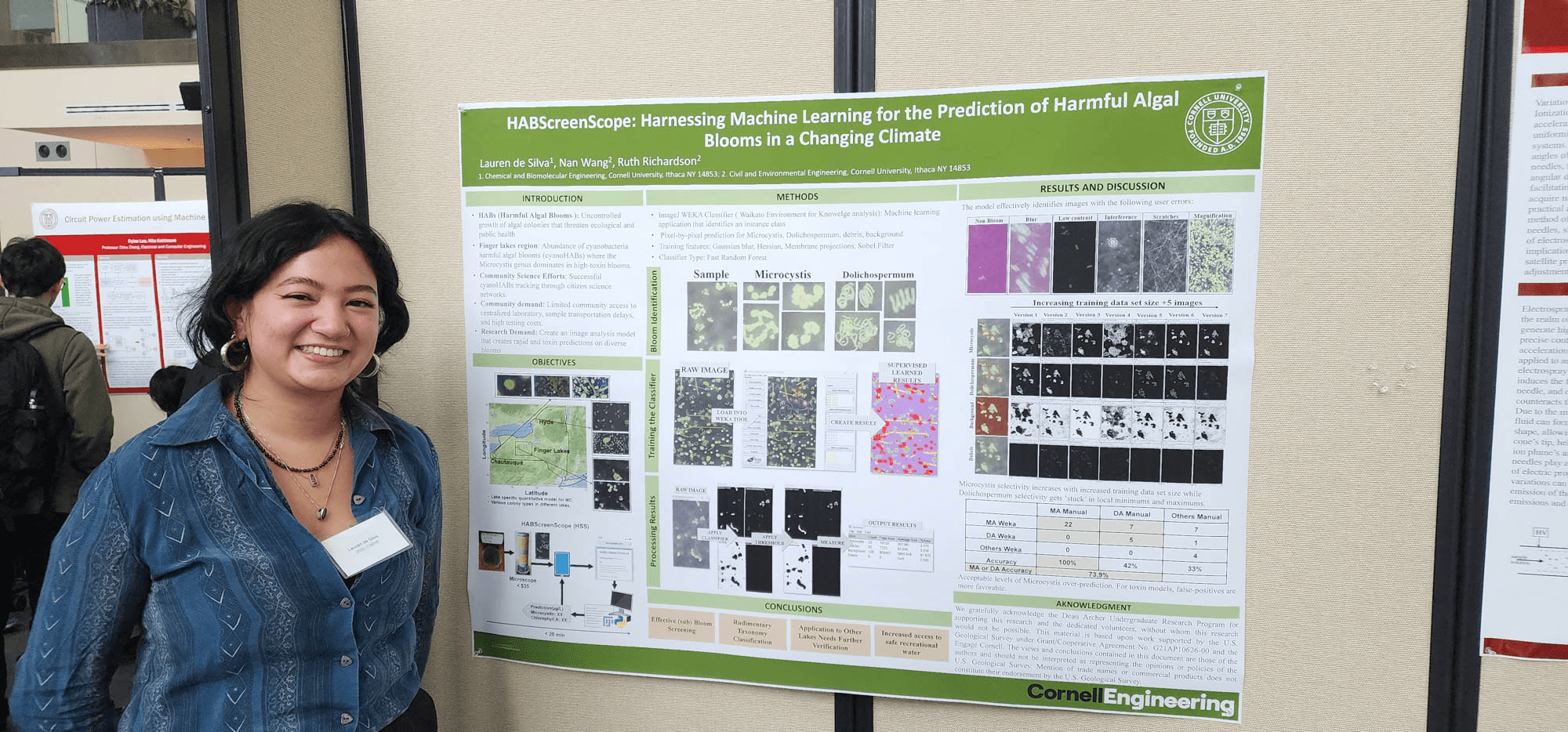
This post answers one specific question: how do you turn completed original research into a science poster that communicates your findings clearly and credibly? It is written for high school students who have finished or nearly finished a research project and need to present it, whether at a school symposium, regional science fair, or academic conference. After reading this, you will know how to structure your poster, what each panel must contain, and what separates a poster that earns serious attention from one that gets a polite nod. When your research is ready for peer review and publication, the Princeton Journal of Pre-Collegiate Research publishes original work across all academic disciplines.
Introduction
The most common reason science posters fail is not poor research. It is poor translation. A student who spent four months designing a controlled experiment and analysing results will frequently compress everything into a wall of text that a viewer cannot parse in under two minutes. Research presented at the 2019 Annual Biomedical Research Conference for Minoritized Scientists found that poster viewers spend an average of three minutes at each poster, with most decisions about engagement made in the first thirty seconds. That constraint is not a flaw in the format. It is the format. Knowing how to present your research in a science poster means designing for that three-minute window, not fighting it.
How do you present your research in a science poster?
A science poster presents original research through six core panels: title and author information, introduction or background, methods, results, discussion or conclusions, and references. Each panel serves one function. The viewer should be able to read any single panel and understand it without reading the others first. A well-structured poster takes a reader from question to finding in under three minutes.
The six panels are not optional sections you can reorder or merge. They map directly onto the structure of a peer-reviewed paper, which is intentional. A poster is a visual abstract of your full research, and reviewers at conferences, competitions, and journals all use the same logical sequence: why this question, how you investigated it, what you found, and what it means.
Here is what each panel must contain.
Title and author block. Your title should state the research question or finding in plain language. Avoid abbreviations. Include your name, school, grade, and the name of any supervising mentor. If you are submitting the underlying paper to a journal, the title on your poster and your manuscript should match.
Introduction or background. State the problem your research addresses. Cite two to four peer-reviewed sources that establish the existing knowledge. End this panel with your specific research question or hypothesis. This is not a literature review. It is a focused argument for why your question matters. If you need help constructing that argument, the guide on how to write an introduction for a research paper covers the same logic in full.
Methods. Describe what you did in enough detail that someone could replicate your procedure. Include your sample size, any instruments or tools used, and how you controlled for confounding variables. If your study used human participants, note whether IRB or equivalent ethical review was obtained. Reviewers at selective journals and competitions treat missing methodological detail as a disqualifying flaw.
Results. Present your data visually. One clear graph or table per finding. Label every axis. Include units. State your key finding in one sentence below each figure. Do not interpret here. Report. If your project involved statistical analysis, include your significance values. The post on what is statistical significance in high school research explains how to report these values correctly.
Discussion or conclusions. Interpret your results. Do they support your hypothesis? What do they mean in the context of the existing literature you cited in your introduction? Acknowledge limitations honestly. A poster that identifies its own methodological constraints reads as more credible, not less.
References. List every source you cited, formatted consistently. APA or ACS format is standard in most STEM disciplines. Three to six citations is typical for a poster. More than ten suggests your introduction panel is trying to do too much.
What happens after you have the content right?
Visual design is where most students lose points they have already earned through good research. The content of your poster can be rigorous and original, but if a viewer cannot navigate it in under three minutes, the work is effectively invisible.
The single most important design principle is visual hierarchy. Your title should be the largest text on the poster, readable from three metres away. Section headings should be clearly distinguishable from body text. Body text should be no smaller than 24 points for a standard 48-by-36 inch poster. Anything smaller requires the viewer to step forward and squint, and most viewers will not.
Use a three-column or two-column layout. Reading order should follow left to right, top to bottom, matching how a viewer naturally scans a page. Number your panels if the sequence is not obvious from placement alone.
Colour should serve clarity, not decoration. Use one accent colour for headings and one neutral background. High contrast between text and background is not optional. White text on a dark background is readable. Light grey text on white is not. The National Institutes of Health poster guidelines recommend a minimum 4.5:1 contrast ratio for accessibility.
Figures must be publication quality. A graph exported from a spreadsheet at 72 DPI will look pixelated when printed at poster size. Export all figures at 300 DPI minimum. If you are unsure how to produce clean figures from your data, the guide on how to use Excel and Google Sheets for research data covers figure formatting in practical terms.
One more rule that is violated constantly: white space is not wasted space. A poster with breathing room between panels reads as confident. A poster crammed to every edge reads as anxious. If you feel compelled to fill every centimetre, cut text, not margins.
What are the most common mistakes students make when presenting research on a science poster?
The four mistakes below account for the majority of weak poster presentations. Each one is specific, each one is avoidable, and each one has a direct fix.
Mistake 1: Copying the paper onto the poster. A poster is not a printed manuscript. Students who paste full paragraphs from their written report produce posters that no one reads. The fix: reduce every prose section to its single most important sentence, then support it with one visual. Your written paper belongs in the journal submission, not on the poster board. If you are working toward publication, the guide on how to write a research methods section will help you produce the full written version separately.
Mistake 2: Presenting results without context. A graph with no reference to what was expected or what the literature predicted is just a picture. Viewers cannot evaluate it. The fix: one sentence in your results panel that states what the prior literature predicted, followed by one sentence that states what you found. This framing takes ten seconds to read and makes your data meaningful.
Mistake 3: Ignoring the oral component. A poster presentation is not a silent exhibit. You will be asked to walk a judge or viewer through your work verbally. Students who have not prepared a two-minute spoken summary of their poster are consistently rated lower by competition judges, regardless of the quality of their research. The fix: prepare and practise a two-minute spoken version of your poster before the event. It should follow the same six-panel sequence.
Mistake 4: Presenting incomplete or unanalysed data. Showing raw data tables without analysis tells a viewer nothing. According to guidelines published by the American Educational Research Association for student research presentations, results panels should always show processed, analysed findings, not raw data files. The fix: complete your data analysis before designing the poster. If your analysis is not finished, the poster is not ready. The post on how to analyse data in a high school research project walks through this process step by step.
How to prepare your science poster, step by step
Confirm your research question, hypothesis, and key finding before opening any design software. You cannot design a poster around incomplete conclusions.
Draft the text for all six panels in a plain document first. Write each panel as if it will be read independently. Keep each panel under 150 words.
Identify one figure or table for each results finding. Export all figures at 300 DPI or higher.
Choose a poster template in your design tool (PowerPoint, Google Slides, or Canva all work) set to the required dimensions. Standard conference size is 48 by 36 inches. Confirm the required dimensions with your event organiser before you begin.
Place panels in reading order: left to right, top to bottom. Use consistent fonts. Title at 72 points minimum. Headings at 36 points minimum. Body at 24 points minimum.
Apply a single accent colour for headings. Use white or light grey as the background. Check contrast ratios.
Ask someone unfamiliar with your research to read the poster without your explanation. If they cannot state your research question and main finding after two minutes, revise.
Practise your two-minute oral summary until you can deliver it without looking at the poster.
If the underlying research paper is complete and original, review the what makes a research paper get rejected checklist before submitting it for peer review.
PJPCR publishes original research across all academic disciplines. If your written paper is ready for peer review alongside your poster presentation, review the submission guidelines at princeton-jpcr.org.
Frequently asked questions about how to present your research in a science poster
What is a science poster and how is it different from a research paper?
A science poster is a visual summary of original research, typically printed on a single large-format sheet and presented in person at a conference, symposium, or competition. It follows the same logical structure as a research paper (introduction, methods, results, discussion) but compresses each section to its essential point and relies heavily on figures. A research paper is a full written document; a poster is its visual translation for a three-minute audience.
How long should each section of a science poster be?
Each panel should contain no more than 100 to 150 words of prose. The results panel should prioritise figures over text. Total word count across the entire poster should stay under 800 words. Viewers at conferences and competitions spend an average of two to three minutes per poster, which means every word must earn its place. Cut anything that does not directly support your main finding.
Do I need a mentor or supervisor to present a science poster?
No. A mentor is not required to create or present a science poster. Many students present independent research without institutional supervision. That said, if your research involved human subjects, laboratory chemicals, or data collection from a school or organisation, ethical review or faculty sign-off may be required by your event organiser. Check the specific requirements of the conference or competition you are entering.
What makes a science poster strong enough to get noticed by judges?
Judges at research competitions evaluate four things: the originality and clarity of the research question, the rigour of the methodology, the quality of the data analysis, and the student's ability to explain their work verbally. Visual design matters for initial engagement but does not substitute for methodological depth. A clearly stated hypothesis, a replicable method, and an honest discussion of limitations will outperform a visually polished poster built on thin research every time. Understanding what a research gap is and how to find one is the foundation of an original, competitive project.
What kinds of research does PJPCR publish, and can I submit the paper behind my poster?
PJPCR publishes original, peer-reviewed research by high school students across STEM, humanities, social sciences, and interdisciplinary fields. If you have a completed written paper behind your poster, you can submit it for consideration. Submission and peer review are free. The standard review and publication timeline is 2 to 3 months. A fast-track option is available for students who need a quicker turnaround. A publication fee applies for accepted papers. Review the full process at what happens after you submit your research paper.
Conclusion
A strong science poster does three things: it states your research question without ambiguity, it presents your findings visually so a viewer can evaluate them in under three minutes, and it demonstrates that your methodology was sound. Those three things are achievable regardless of your school's resources or your graphic design experience. The structure is fixed. The discipline is what you bring to it.
Get the content right before you touch the design. Draft every panel in plain text first. Cut until each panel contains only what is necessary. Then build the visual layer around that clarity, not instead of it.
If the research behind your poster is original and complete, it may be ready for peer review and publication. Submit your work to PJPCR at princeton-jpcr.org.
Read More

APA format for high school research papers: complete guide
By
RISE Research
Read more

MLA format for research papers: when and how
By
RISE Research
Read more

APA vs MLA vs Chicago: which to use for your paper
By
RISE Research
Read more

How to cite a dataset
By
RISE Research
Read more

In-text citations vs footnotes: how each works
By
RISE Research
Read more

What is a p-value, explained for high school researchers
By
RISE Research
Read more

What is regression analysis and when do you use it
By
RISE Research
Read more

What is standard deviation and why it matters
By
RISE Research
Read more

What is a t-test and when do you need one
By
RISE Research
Read more

What is effect size and why reviewers care
By
RISE Research
Read more

Common statistical mistakes in student papers
By
RISE Research
Read more

Research for biology majors: what to publish before applying
By
https://princeton-jpcr.org/
Read more

Research for economics majors
By
https://princeton-jpcr.org/
Read more

Research for political science majors
By
https://princeton-jpcr.org/
Read more

Research for English and humanities majors
By
https://princeton-jpcr.org/
Read more

Research for neuroscience majors
By
https://princeton-jpcr.org/
Read more
Undecided major: what research keeps your options open
By
https://princeton-jpcr.org/
Read more

Summer research timeline: June to August week by week
By
Princeton Journal of Pre-Collegiate Research
Read more

Research goals to set at the start of the school year
By
Princeton Journal of Pre-Collegiate Research
Read more

How to finish your research paper before finals season
By
Princeton Journal of Pre-Collegiate Research
Read more

New year research resolutions that actually stick
By
Princeton Journal of Pre-Collegiate Research
Read more