How to cite AI tools in academic work
Princeton Journal of Pre-Collegiate Research
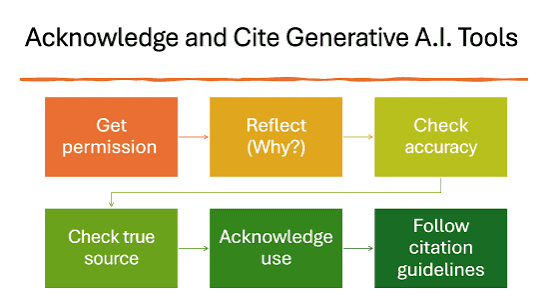
How to cite AI tools in academic work: a guide for student researchers
TL;DR: This post answers the specific question of how to cite AI tools in academic work, written for high school and pre-collegiate students who use AI assistants during the research or writing process. After reading, you will know the correct citation format for tools such as ChatGPT, Claude, and Gemini across major style guides, and you will understand when citation is required versus when AI use must be disclosed differently. Students whose research is ready for peer review can submit original work to the Princeton Journal of Pre-Collegiate Research.
Why citing AI tools in academic work is not straightforward
AI-generated text cannot be retrieved by a third party in the way a journal article or book can. When you cite a source in academic work, the citation serves two functions: it credits the originator of an idea, and it allows a reader to verify the claim independently. AI tools satisfy neither function reliably. A query submitted to ChatGPT on one day may produce a different response the next day, and the output is not archived in any publicly accessible repository. This is the core problem that makes learning how to cite AI tools in academic work more complex than citing a standard source. Major style organisations, including the American Psychological Association (APA), the Modern Language Association (MLA), and the Chicago Manual of Style, have each issued specific guidance on this, and the formats differ in important ways.
How do you cite AI tools in academic work?
Citing an AI tool requires identifying the tool by name and version, the organisation that produced it, the date of the query, and the prompt or a description of the interaction. Because AI outputs are not retrievable, most style guides treat them as personal communications or non-recoverable sources, which affects where and how the citation appears. The APA, MLA, and Chicago formats each handle this differently, and the correct format depends on the style your submission requires.
APA format for citing AI tools in academic work
The American Psychological Association published official guidance on AI citation in 2023. Under APA 7th edition, an AI tool is cited similarly to software. The in-text citation names the tool and the year. The reference list entry includes the developer organisation, the year, the tool name and version in italics, and a URL to the tool's homepage. Because the output is not retrievable, APA recommends including the prompt and the full response as a supplementary appendix when the AI output is central to the argument. An example reference entry for ChatGPT reads: OpenAI. (2024). ChatGPT (GPT-4o, May 2024 version) [Large language model]. https://chat.openai.com. The in-text citation would appear as (OpenAI, 2024).
MLA format for citing AI tools in academic work
The Modern Language Association updated its guidance in 2023 to address generative AI. MLA treats AI-generated text as a quotation from a source that cannot be independently verified. The Works Cited entry lists the prompt as the title, in quotation marks, followed by the tool name, the developer, the date of the response, and the URL. An example entry reads: "Explain the difference between correlation and causation." ChatGPT, OpenAI, 15 March 2024, chat.openai.com. MLA also requires that the student describe the AI interaction in the body of the paper, not simply append a citation.
Chicago format for citing AI tools in academic work
The Chicago Manual of Style, 17th edition, treats AI-generated content as a personal communication because it is not recoverable. Under Chicago author-date style, this means the interaction is cited in a footnote or endnote rather than in a full bibliography entry. The note should identify the tool, the version, the prompt, the date, and a statement that the response is on file with the author. Chicago advises against including AI tools in the bibliography unless the content is central to the paper's argument and the full exchange is reproduced in an appendix.
What happens when you submit a paper that uses AI tools without proper disclosure?
Undisclosed AI use in academic work is treated as a form of academic dishonesty by most journals and educational institutions. The consequences range from desk rejection without review to permanent disqualification from a journal. Understanding what counts as academic dishonesty in student research is essential before any submission. The distinction that matters most is between using AI as a research aid, which may be permitted with disclosure, and submitting AI-generated text as original writing, which is not permitted in peer-reviewed academic publishing. A student who uses an AI tool to summarise literature, check grammar, or brainstorm research questions is using it as a tool. A student who submits AI-generated paragraphs as their own analysis is misrepresenting authorship. These are different acts, and academic journals treat them differently. The citation or disclosure requirement applies in both cases, but the nature of the disclosure differs.
What are the most common mistakes students make when citing AI tools?
The most frequent error is omitting the citation entirely on the assumption that AI use is invisible or inconsequential. This is incorrect. Many journals now use AI detection tools as part of their editorial screening process, and undisclosed AI use identified after publication can result in retraction. Students who want to understand the consequences of post-publication corrections should read about what a retraction in academic publishing involves before submitting any work.
The second common mistake is citing the AI tool as if it were a human author with expertise. AI tools do not have credentials, institutional affiliations, or verifiable expertise. Attributing a factual claim to ChatGPT as if it were a citable authority is methodologically incorrect. AI output should be treated as a starting point for investigation, not as a source of verified information.
The third mistake is failing to record the exact prompt and response at the time of use. Because AI outputs vary across sessions and model versions, a citation that does not include the prompt and date cannot be verified or reproduced. Students should copy and save every AI interaction they intend to cite or disclose, immediately after the session.
The fourth mistake is applying the wrong style guide format. APA, MLA, and Chicago formats for AI citation differ in structure and placement. Submitting a paper with MLA-formatted AI citations to a journal that requires APA will require revision. Confirm the required style guide before formatting any citation.
How to handle AI citation in a research paper, step by step
Confirm your journal or institution's policy on AI use before beginning the writing process. Policies vary. Some journals prohibit AI-generated text entirely. Others permit AI use for editing or translation with disclosure.
Record every AI interaction you intend to reference. Save the exact prompt, the full response, the tool name, the version, and the date. Store these in a dedicated document for the paper.
Identify the correct citation style for your submission. Confirm whether your journal requires APA, MLA, Chicago, or another format. Consult the official style guide, not a secondary summary.
Format the in-text citation and reference list entry according to the confirmed style guide, using the examples above as a starting template.
Write a brief disclosure statement in your paper's methods section or acknowledgements section. State what AI tools were used, for what purpose, and at what stage of the research process.
Review your paper to confirm that no AI-generated text appears as original analysis without attribution. Every sentence in the paper should represent the student's own reasoning, synthesis, and argument.
If your original research is ready for peer review, review the submission guidelines to confirm formatting and disclosure requirements before submitting.
PJPCR publishes original research across all academic disciplines. If your work is ready for peer review and you have followed proper disclosure practices for any AI tools used, review the submission guidelines at princeton-jpcr.org/submit.
Frequently asked questions about how to cite AI tools in academic work
What is the correct way to cite ChatGPT in a research paper?
Under APA 7th edition, cite ChatGPT as: OpenAI. (Year). ChatGPT (version) [Large language model]. URL. In-text, use (OpenAI, year). Under MLA, list the prompt as the title in quotation marks, followed by the tool name, developer, date, and URL in the Works Cited. Under Chicago, treat the interaction as a personal communication cited in a footnote with the prompt, date, and a note that the response is on file with the author. Always record the exact prompt and response date at the time of use, as AI outputs are not retrievable later.
How long does it take to get a research paper peer reviewed if it uses AI tools?
The use of AI tools does not affect the peer review timeline, provided the use is properly disclosed. At PJPCR, the standard review and publication timeline is 2 to 3 months from submission. A fast-track option is available for students who need a quicker turnaround. Papers that omit required AI disclosure may be returned for revision before entering peer review, which can extend the timeline. Confirm the journal's AI use policy before submitting to avoid delays.
Do I need to cite an AI tool if I only used it to check grammar?
Most journals require disclosure of any AI tool use, including grammar checking, though the format of disclosure may differ from a full citation. Using an AI tool solely for grammar or proofreading is generally treated as equivalent to using editing software, and many journals permit this with a brief acknowledgement rather than a formal citation. However, policies vary by journal. Always check the specific journal's author guidelines before submitting. Consulting resources on how to write clearly and concisely in academic research can reduce reliance on AI editing tools.
What makes a student research paper that uses AI tools publishable?
A publishable paper demonstrates original analysis, a clear research question, and a methodology the student executed independently. AI tools may support the process, but the intellectual contribution must be the student's own. Reviewers assess whether the argument, interpretation, and conclusions reflect genuine engagement with the research question. A paper in which AI has generated the analysis or written the core argument is not publishable in a peer-reviewed journal, regardless of how well the AI citation is formatted. The student's original thinking is the standard against which publishability is judged.
Does PJPCR accept papers that used AI tools during research or writing?
The peer review process at PJPCR evaluates the originality and rigour of the submitted research. Papers must represent the student's own original work. AI tools used during the research or writing process must be disclosed in accordance with the submission guidelines. AI-generated text submitted as original analysis is not acceptable. Students considering submission should review the submission guidelines for the current AI use and disclosure policy before preparing their manuscript. Browse published issues to understand the standard of work PJPCR accepts across disciplines.
Citing AI tools correctly is a matter of academic integrity
The rules for how to cite AI tools in academic work are still developing, but the underlying principle is not. Academic writing requires that every source of information and assistance be identified so that readers can assess the work accurately. AI tools are a new category of source, but the obligation to disclose their use is the same obligation that governs every other citation decision a researcher makes. Students who record their AI interactions carefully, apply the correct style guide format, and write disclosure statements that accurately describe their AI use are meeting that obligation. Students who omit disclosure are not, regardless of how minor the AI contribution appears to them. The ethical use of AI tools for literature review is a related skill worth developing early in the research process. If your original research is complete and properly documented, submit it to PJPCR at princeton-jpcr.org/submit.
Read More

How to write a grant proposal as a student
By
Princeton Journal of Pre-Collegiate Research
Read more

Free resources that replace research funding
By
Princeton Journal of Pre-Collegiate Research
Read more
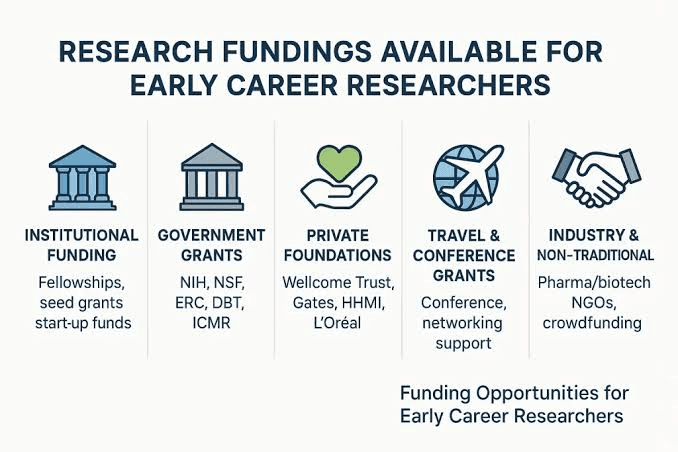
Corporate and nonprofit programs that fund student research
By
Princeton Journal of Pre-Collegiate Research
Read more

Science fair grants and material stipends explained
By
Princeton Journal of Pre-Collegiate Research
Read more

Crowdfunding a student research project: does it work
By
Princeton Journal of Pre-Collegiate Research
Read more

How much does a research project actually cost
By
Princeton Journal of Pre-Collegiate Research
Read more

How to ask your school to fund your project
By
Princeton Journal of Pre-Collegiate Research
Read more

Grants for high school research projects: what exists
By
Princeton Journal of Pre-Collegiate Research
Read more

How to start a research club at your school
By
Princeton Journal of Pre-Collegiate Research
Read more

How to organize a school research symposium
By
Princeton Journal of Pre-Collegiate Research
Read more

Turning a school club into a research pipeline
By
Princeton Journal of Pre-Collegiate Research
Read more

How to start a student research journal at your school
By
Princeton Journal of Pre-Collegiate Research
Read more

How to find a faculty sponsor for a research club
By
Princeton Journal of Pre-Collegiate Research
Read more

How to propose an independent study for research credit
By
Princeton Journal of Pre-Collegiate Research
Read more

Running a peer-review workshop at your school
By
Princeton Journal of Pre-Collegiate Research
Read more

How to get school funding for student research
By
Princeton Journal of Pre-Collegiate Research
Read more

How to do research as a team of students
By
Princeton Journal of Pre-Collegiate Research
Read more

Dividing work fairly in a group research project
By
Princeton Journal of Pre-Collegiate Research
Read more

Group research vs solo research: pros and cons
By
Princeton Journal of Pre-Collegiate Research
Read more

Resolving disagreements in group research
By
Princeton Journal of Pre-Collegiate Research
Read more
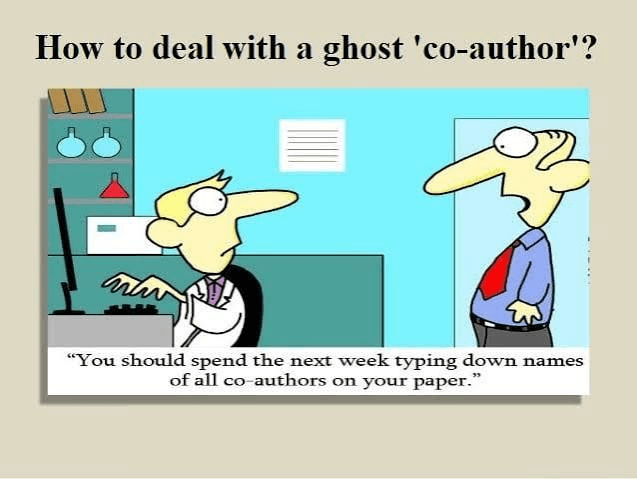
What to do when a co-author stops contributing
By
Princeton Journal of Pre-Collegiate Research
Read more