Fear of rejection: submitting anyway
Princeton Journal of Pre-Collegiate Research

Fear of rejection: submitting your research paper anyway
Fear of rejection stops more high school researchers from submitting their work than poor methodology does. This post is written for students in grades 9 through 12 who have completed original research and are hesitating to submit it for peer review. It explains what rejection actually means in academic publishing, why it is not a reflection of a student's ability, and how to move forward. When your work is ready, the Princeton Journal of Pre-Collegiate Research accepts original research submissions across all academic disciplines.
Why fear of rejection keeps student researchers from submitting
Most high school students who have completed original research never submit it anywhere. The most common reason is not that the work is unfinished. It is that the student believes the work is not good enough, and that a rejection letter will confirm that belief. This fear is understandable, but it is based on a misreading of what peer review rejection actually means.
Rejection in academic publishing is not a verdict on a researcher's intelligence or potential. It is an editorial decision, often based on factors that have nothing to do with the quality of the underlying research. Understanding this distinction is the first step toward submitting anyway.
What does fear of rejection mean for student researchers, and why does it matter?
Fear of rejection in academic publishing is the reluctance to submit completed research because the student anticipates a negative editorial outcome. It matters because it creates a systematic gap: students who conduct genuine original research never receive the feedback, credential, or experience that submission provides, regardless of the outcome. Submitting is itself a research skill, and withholding a paper guarantees the outcome the student feared.
The fear is particularly acute at the high school level because most students have no frame of reference for how journals actually work. They assume that submission is a high-stakes, one-chance event. In reality, academic publishing is iterative. Researchers at every level, including faculty at research universities, receive rejections regularly. A 2018 study published in PLOS ONE found that the majority of eventually published papers were rejected at least once before acceptance. The submission process is not a single audition. It is a cycle of refinement.
For high school students specifically, the fear of rejection is compounded by the belief that their work will be judged against professional academic standards they cannot meet. This is a misconception. Peer-reviewed student journals evaluate submissions within the context of pre-collegiate research. Reviewers assess whether the methodology is sound, whether the argument is supported by evidence, and whether the work contributes something original, not whether it matches a doctoral dissertation.
The practical consequence of not submitting is significant. A student who completes a rigorous research project but never submits it loses the opportunity to receive structured expert feedback, to demonstrate intellectual initiative, and to build the kind of documented academic record that reflects genuine scholarly engagement. The paper exists, but it has no audience and no formal standing.
What actually happens after you submit a research paper?
After submission, a paper undergoes an initial editorial screening before it reaches peer reviewers. Editors check whether the paper meets basic formatting requirements, falls within the journal's scope, and presents an original contribution. Papers that pass this screening are assigned to qualified reviewers. Reviewers return written evaluations, which editors use to make one of four decisions: accept, accept with revisions, reject with invitation to resubmit, or reject. The standard timeline at PJPCR is 2 to 3 months. A fast-track option is available for students who need a quicker turnaround.
Understanding this process removes some of the fear because it makes the outcome less binary. Most papers that are not accepted outright receive detailed reviewer comments. Those comments are themselves valuable. A student who receives two pages of specific, expert feedback on their methodology has gained something that a classroom assignment rarely provides.
Desk rejection, which occurs during initial screening before peer review, is the most common form of rejection and the least personal. It typically means the paper did not match the journal's scope or did not meet formatting requirements, not that the research is flawed. Students who receive a desk rejection should review the guidance on whether a rejected paper is worth resubmitting before drawing conclusions about their work.
A rejection with detailed reviewer comments is, in many respects, a more useful outcome than a superficial acceptance. It tells the student exactly what a qualified reader found unclear, unsupported, or underdeveloped. Revising in response to that feedback produces a substantially stronger paper.
What are the most common mistakes students make when facing fear of rejection?
The most damaging mistake is waiting for the paper to be perfect before submitting. A paper that is never submitted cannot be improved through peer review. Students who spend months revising in isolation, without external feedback, often produce a paper that addresses problems they imagined rather than problems a reviewer would actually identify. The fix is to seek structured feedback before submission and then submit. Getting feedback on a research paper before submitting is a concrete step that reduces uncertainty without delaying the process indefinitely.
The second mistake is interpreting selectivity as a signal that the student does not belong. Selective journals reject papers from experienced researchers regularly. Selectivity is a function of editorial standards and volume of submissions, not a personal assessment of the submitter. A student who submits to a rigorous journal and receives a rejection has participated in the same process that every published academic has navigated.
The third mistake is conflating the paper with the person. A reviewer who finds a methodological weakness in a study design is identifying a technical problem, not making a judgment about the student's intelligence or potential. Students who understand this distinction are better equipped to read reviewer comments productively rather than defensively.
A fourth mistake is assuming that only exceptional or unusual research is worth submitting. Original research does not require a novel laboratory discovery or a groundbreaking theoretical framework. A well-designed survey study, a careful textual analysis, or a replication study with a new population can all constitute original contributions at the pre-collegiate level. Students frequently underestimate the value of work they have already completed.
How to move from hesitation to submission, step by step
Read the submission guidelines for the journal you are targeting before revising your paper further. Many students revise extensively and then discover their paper does not meet basic formatting or scope requirements. Review the submission guidelines at PJPCR first.
Ask one person who has not read your paper to read the introduction and methods section and tell you what they do not understand. This is not a full peer review. It is a clarity check. Confusion at this stage is fixable before submission.
Identify the single weakest part of your paper and address it specifically. Do not attempt a full rewrite. One targeted revision is more effective than a general polish.
Check that your abstract accurately describes what the paper actually contains. Reviewers read the abstract first. An abstract that overstates the findings or understates the limitations sets up a negative first impression.
Format the paper according to the journal's stated requirements before you submit, not after. Formatting errors are among the most common reasons for desk rejection and are entirely preventable.
Submit the paper. Set a specific date and treat it as a fixed commitment. Indefinite revision is not a strategy. It is a form of avoidance.
After submission, begin thinking about your next research question. Students who treat submission as the end of the process are more affected by rejection than students who treat it as one step in an ongoing research practice.
PJPCR publishes original research across all academic disciplines, including the sciences, social sciences, humanities, and interdisciplinary fields. If your work is ready for peer review, review the submission guidelines at princeton-jpcr.org/submit.
Frequently asked questions about fear of rejection and submitting research
What does it mean when a research paper is rejected by a journal?
A rejection means the editorial team determined the paper did not meet the journal's criteria at that time. It does not mean the research is without value. Rejection can reflect a mismatch in scope, a methodological concern that is addressable, or simply a high volume of submissions in a competitive review cycle. Most published researchers have received multiple rejections before acceptance.
How long does peer review take at a student journal?
The standard peer review and publication timeline at PJPCR is 2 to 3 months from submission to final decision. This includes initial editorial screening, reviewer assignment, and the return of written evaluations. A fast-track option is available for students who need a quicker turnaround. Review the peer review process at PJPCR for a full explanation of each stage.
Do I need a faculty mentor or teacher to submit a research paper to a journal?
No. A faculty mentor or teacher supervisor is not required to submit to most student journals, including PJPCR. What is required is that the research is original, that the methodology is sound, and that the paper meets the journal's formatting and scope requirements. A mentor can strengthen a submission, but the absence of one is not a barrier to submitting.
What makes a high school research paper strong enough to submit for peer review?
A paper is ready to submit when it presents an original question, describes a replicable methodology, reports findings accurately, and situates those findings within existing literature. It does not need to be groundbreaking. It needs to be honest, rigorous, and clearly written. Reviewers at pre-collegiate journals evaluate work within the context of high school research, not doctoral standards. Understanding what makes a journal worth submitting to can also help students assess fit before they submit.
What kinds of research does PJPCR publish, and is it peer reviewed?
PJPCR publishes original research by pre-collegiate students across all academic disciplines, including the natural sciences, social sciences, humanities, mathematics, and interdisciplinary fields. All submissions undergo a rigorous peer review process conducted by qualified reviewers. PJPCR does not guarantee acceptance. Published work is freely accessible to the public as an open-access journal. Submission and peer review are free. A publication fee applies for accepted papers. Full details are available on the submission guidelines page.
Conclusion
Fear of rejection is a predictable response to a process that feels high-stakes and unfamiliar. The most useful reframe is a practical one: rejection provides information, and withholding a paper provides none. Students who submit their work, regardless of the outcome, gain structured expert feedback, experience with the publication process, and a documented record of scholarly engagement that students who do not submit never acquire.
The three most actionable points from this post are these. First, rejection in academic publishing is common, iterative, and not a verdict on ability. Second, the most productive use of fear is to direct it toward preparation: read the guidelines, seek feedback, and address the one weakest element before submitting. Third, submission is a skill that improves with practice, and the only way to develop it is to submit.
If your research is ready for peer review, submit it to the Princeton Journal of Pre-Collegiate Research at princeton-jpcr.org/submit.
Read More
How to write a grant proposal as a student
By
Princeton Journal of Pre-Collegiate Research
Read more
Free resources that replace research funding
By
Princeton Journal of Pre-Collegiate Research
Read more
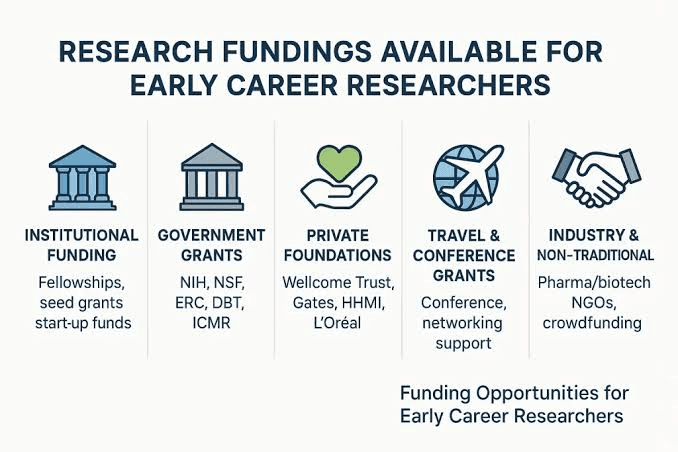
Corporate and nonprofit programs that fund student research
By
Princeton Journal of Pre-Collegiate Research
Read more

Science fair grants and material stipends explained
By
Princeton Journal of Pre-Collegiate Research
Read more

Crowdfunding a student research project: does it work
By
Princeton Journal of Pre-Collegiate Research
Read more

How much does a research project actually cost
By
Princeton Journal of Pre-Collegiate Research
Read more

How to ask your school to fund your project
By
Princeton Journal of Pre-Collegiate Research
Read more

Grants for high school research projects: what exists
By
Princeton Journal of Pre-Collegiate Research
Read more

How to start a research club at your school
By
Princeton Journal of Pre-Collegiate Research
Read more

How to organize a school research symposium
By
Princeton Journal of Pre-Collegiate Research
Read more

Turning a school club into a research pipeline
By
Princeton Journal of Pre-Collegiate Research
Read more

How to start a student research journal at your school
By
Princeton Journal of Pre-Collegiate Research
Read more

How to find a faculty sponsor for a research club
By
Princeton Journal of Pre-Collegiate Research
Read more

How to propose an independent study for research credit
By
Princeton Journal of Pre-Collegiate Research
Read more

Running a peer-review workshop at your school
By
Princeton Journal of Pre-Collegiate Research
Read more

How to get school funding for student research
By
Princeton Journal of Pre-Collegiate Research
Read more

How to do research as a team of students
By
Princeton Journal of Pre-Collegiate Research
Read more

Dividing work fairly in a group research project
By
Princeton Journal of Pre-Collegiate Research
Read more

Group research vs solo research: pros and cons
By
Princeton Journal of Pre-Collegiate Research
Read more

Resolving disagreements in group research
By
Princeton Journal of Pre-Collegiate Research
Read more
What to do when a co-author stops contributing
By
Princeton Journal of Pre-Collegiate Research
Read more