What to do when a co-author stops contributing
Princeton Journal of Pre-Collegiate Research
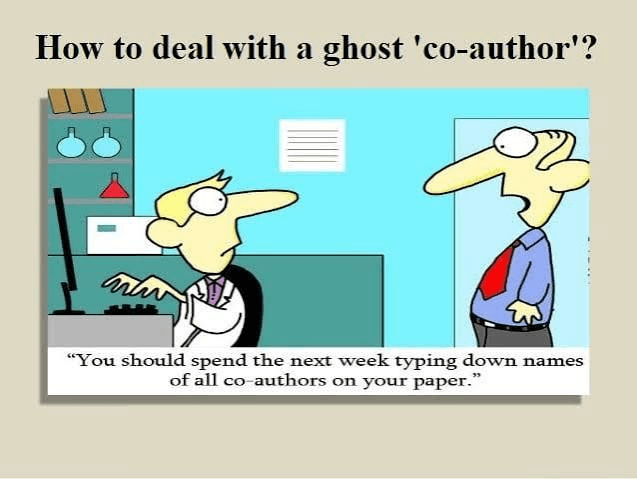
What to do when a co-author stops contributing to your research paper
When a co-author stops contributing, the practical and ethical consequences affect the entire paper: authorship credit, submission timelines, and the integrity of the published record. This post is written for high school researchers who have conducted original work with a partner and now face an unequal collaboration. It explains how to document the situation, how to resolve it, and how to make a defensible authorship decision before submission. Students whose work is ready for peer review may submit to the Princeton Journal of Pre-Collegiate Research, which publishes original research across all academic disciplines.
What to do when a co-author stops contributing to your research
When a co-author stops contributing, the first step is to document what work each person has completed, attempt direct communication in writing, and then reassess authorship credit based on actual intellectual contribution. Most authorship standards, including those defined by the International Committee of Medical Journal Editors (ICMJE), require that each author contribute substantially to conception, data collection, analysis, or drafting. A co-author who has not met those criteria should not retain authorship credit.
The situation is more common than most students expect, and the resolution is procedural, not personal. The following steps provide a clear path through it.
Stop and document immediately. Before any conversation or confrontation, create a written record of what each collaborator has contributed to date. This means listing specific tasks: who designed the methodology, who collected data, who wrote which sections, and who conducted the analysis. Commit this to a shared document or a dated email. Without documentation, any later dispute about authorship becomes a matter of competing claims rather than verifiable fact.
Attempt direct written communication. Send your co-author a clear, specific message that names the outstanding tasks, states a reasonable deadline for completion, and asks whether they intend to continue. Written communication creates a record. A phone call does not. Keep the message factual and avoid accusatory language. The goal is to determine intent, not to assign blame.
Wait for a response before making any decisions. Life circumstances, including illness, family obligations, and school pressure, can cause a temporary withdrawal that does not reflect a permanent exit. Give the co-author a defined window, typically one to two weeks, to respond. If they respond and re-engage with specific deliverables, the collaboration can continue with adjusted expectations. If they do not respond or confirm they are withdrawing, proceed to the next step.
Reassess authorship based on actual contribution. Authorship in academic publishing is not a courtesy. The ICMJE criteria, which are the most widely adopted standard across scientific journals, require that each author: (a) make a substantial contribution to conception or design, or to acquisition, analysis, or interpretation of data; (b) draft or critically revise the work; (c) approve the final version; and (d) be accountable for all aspects of the work. A co-author who has completed none of these criteria should be moved to the acknowledgements section, not listed as an author. This is not a punitive decision. It is an accurate one.
Revise the author list before submission, not after. Changing authorship after a paper has been submitted or accepted is significantly more complicated. Most journals require a formal authorship change request, written consent from all listed authors, and editorial approval. Making the correction before submission avoids this process entirely. Review the implications of accepted-for-publication status before assuming a late change will be straightforward.
If a mentor or supervisor is involved, inform them. A faculty advisor, teacher, or research supervisor has a legitimate interest in the authorship composition of work they have overseen. Informing them of the situation, in writing, creates an additional layer of accountability and may result in practical assistance in resolving the dispute.
Submit with an accurate author list and contribution statement. Many journals now require a contributor roles statement alongside the author list. Review the submission guidelines for the journal you are targeting and confirm whether a contribution statement is required. If it is, write one that accurately reflects who did what. This statement protects all parties.
What happens to authorship credit when one person does all the work?
Authorship credit in academic publishing is not determined by who initiated the project or who was originally listed on a proposal. It is determined by who made substantive intellectual contributions to the final work. This distinction matters because authorship carries both credit and responsibility: a listed author is accountable for the integrity of the work, not merely a beneficiary of its publication.
When one collaborator completes the majority of the intellectual work, the appropriate resolution is to adjust the author list to reflect that reality. The non-contributing collaborator may be listed in the acknowledgements section, which recognises participation that did not rise to the level of authorship. This is a standard academic practice, not an unusual or hostile act.
The more difficult scenario arises when the non-contributing co-author objects to being removed from the author list. In this case, the contributing author should present the documented record of contributions and, where possible, involve a supervising adult. If the paper is being submitted to a journal, the journal's editorial office can advise on how to handle a disputed authorship claim. Most journals have policies for this. Submitting with a disputed author list and resolving it post-publication is far more damaging to all parties than resolving it before submission.
Ghost authorship, in which a person who made substantial contributions is omitted from the author list, and gift authorship, in which a person who made no substantial contributions is included, are both considered forms of research misconduct by major academic bodies including the Committee on Publication Ethics (COPE). Both errors are avoidable with accurate documentation and honest communication before submission.
What are the most common mistakes students make when a co-author stops contributing?
The most consequential mistakes in this situation are not strategic errors but procedural ones, and they almost always stem from avoiding a difficult conversation rather than engaging with it directly.
The first mistake is keeping the non-contributing co-author on the author list to avoid conflict. Students frequently assume that removing a co-author will damage a friendship or create a confrontation they are not equipped to handle. The consequence is that the published paper lists an author who did not meet the criteria for authorship, which is a form of research misconduct regardless of the intent behind it. The fix is to separate the personal relationship from the academic record: the author list is a factual statement, not a social gesture.
The second mistake is failing to document contributions in real time. Most students do not keep records of who did what during a collaboration because the work feels informal and the relationship feels stable. When a dispute arises, the absence of documentation makes it nearly impossible to demonstrate what actually occurred. The fix is to use a shared document, a project management tool, or dated email threads to record task completion as it happens, not retrospectively.
The third mistake is attempting to resolve the situation verbally rather than in writing. A verbal agreement to withdraw from a paper, or a verbal acknowledgement that one collaborator did more work, is not a reliable record. If the situation escalates, only written communication will be usable as evidence. The fix is to conduct all authorship-related discussions by email or another platform that timestamps and archives messages.
A fourth mistake is waiting until after submission to address the issue. Once a paper enters peer review, changing the author list requires formal editorial intervention. Review the peer review process at any journal you are targeting to understand what post-submission changes are permitted and how they are handled.
How to handle a co-author dispute before submission: a step-by-step checklist
Create a written contribution log listing every task completed by each collaborator, with dates where possible.
Send a written message to the co-author naming the outstanding tasks and asking for a response within a defined timeframe, typically seven to fourteen days.
If the co-author re-engages with specific commitments, document those commitments and set a follow-up date.
If the co-author confirms withdrawal or does not respond, apply the ICMJE authorship criteria to the existing contribution record and determine whether the co-author qualifies for authorship or acknowledgement.
Inform any supervising adult, such as a teacher or research mentor, of the situation and the decision in writing.
Revise the author list and, if required, draft a contributor roles statement that accurately reflects each person's involvement.
If your paper involves human subjects research, confirm that consent and ethical compliance documentation reflects the actual research team. For guidance on this, review what informed consent requires and when your research needs it.
Submit the paper with the corrected author list. For discipline-specific guidance on what a complete submission looks like, browse the published issues of journals in your field to assess how author and contributor information is presented.
PJPCR publishes original student research across all academic disciplines. If your paper is ready for peer review and your author list accurately reflects the contributions made, review the submission guidelines at princeton-jpcr.org/submit.
Frequently asked questions about what to do when a co-author stops contributing
What counts as a substantial contribution for authorship credit?
A substantial contribution, as defined by the ICMJE, includes: meaningful involvement in the conception or design of the study, acquisition or analysis of data, or drafting or critically revising the manuscript. All four ICMJE criteria must be met for authorship. A student who attended early planning meetings but did not complete any of these tasks does not qualify as an author under this standard.
How long should I wait before removing a co-author who has gone silent?
A waiting period of one to two weeks after a written communication attempt is a reasonable standard for most student research timelines. If the co-author has not responded within that window and has not completed any assigned tasks, it is appropriate to reassess their authorship status. Longer delays risk pushing the resolution past the submission date, which makes the correction procedurally more difficult.
Do I need my co-author's permission to remove them from the paper?
Best practice, and the policy of most academic journals, requires that all listed authors consent to the final submission and that any change to the author list after submission be approved by all parties. Before submission, the contributing author has the right to correct an inaccurate author list, but informing the co-author of the change in writing before submitting is both ethically sound and practically advisable. It reduces the risk of a post-submission dispute.
What makes a high school research paper strong enough to survive peer review with one author instead of two?
A paper's strength in peer review is determined by the rigor of its methodology, the clarity of its analysis, and the accuracy of its claims, not by the number of authors. Single-author papers are common across all disciplines. Reviewers assess whether the research question is well-defined, whether the data supports the conclusions, and whether the limitations are honestly acknowledged. For guidance on statistical reporting, which is a frequent source of reviewer critique, review what a p-value means and how to report it correctly.
Does PJPCR accept single-author submissions, and how does it handle authorship disputes?
PJPCR accepts single-author submissions across all disciplines. Authors are responsible for ensuring that the author list submitted accurately reflects the contributions made to the work. The journal's submission guidelines specify the information required at submission, including author details and, where applicable, contributor roles. Disputes regarding authorship that arise after submission should be communicated to the editorial office directly.
The core takeaways for students navigating a co-author dispute
When a co-author stops contributing, the path forward is procedural: document what has been done, communicate in writing, apply the established authorship criteria, and correct the author list before submission. These steps are not punitive. They are the standard by which academic publishing maintains integrity across all levels of research.
The most important action is the earliest one: keeping a written record of contributions from the beginning of the collaboration. That record makes every subsequent decision easier and every later dispute resolvable. Students who have completed original research and are ready to submit should ensure their author list is accurate before they approach any journal.
If your research is ready for peer review, submit it to PJPCR at princeton-jpcr.org/submit.
Read More
How to write a grant proposal as a student
By
Princeton Journal of Pre-Collegiate Research
Read more
Free resources that replace research funding
By
Princeton Journal of Pre-Collegiate Research
Read more
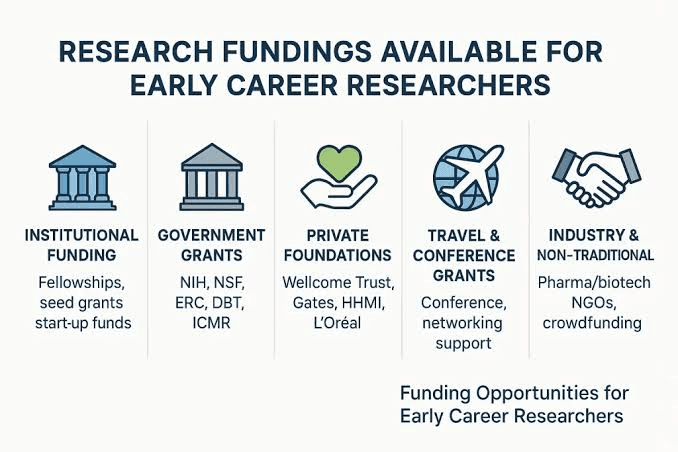
Corporate and nonprofit programs that fund student research
By
Princeton Journal of Pre-Collegiate Research
Read more

Science fair grants and material stipends explained
By
Princeton Journal of Pre-Collegiate Research
Read more

Crowdfunding a student research project: does it work
By
Princeton Journal of Pre-Collegiate Research
Read more

How much does a research project actually cost
By
Princeton Journal of Pre-Collegiate Research
Read more

How to ask your school to fund your project
By
Princeton Journal of Pre-Collegiate Research
Read more

Grants for high school research projects: what exists
By
Princeton Journal of Pre-Collegiate Research
Read more

How to start a research club at your school
By
Princeton Journal of Pre-Collegiate Research
Read more

How to organize a school research symposium
By
Princeton Journal of Pre-Collegiate Research
Read more

Turning a school club into a research pipeline
By
Princeton Journal of Pre-Collegiate Research
Read more

How to start a student research journal at your school
By
Princeton Journal of Pre-Collegiate Research
Read more

How to find a faculty sponsor for a research club
By
Princeton Journal of Pre-Collegiate Research
Read more

How to propose an independent study for research credit
By
Princeton Journal of Pre-Collegiate Research
Read more

Running a peer-review workshop at your school
By
Princeton Journal of Pre-Collegiate Research
Read more

How to get school funding for student research
By
Princeton Journal of Pre-Collegiate Research
Read more

How to do research as a team of students
By
Princeton Journal of Pre-Collegiate Research
Read more

Dividing work fairly in a group research project
By
Princeton Journal of Pre-Collegiate Research
Read more

Group research vs solo research: pros and cons
By
Princeton Journal of Pre-Collegiate Research
Read more

Resolving disagreements in group research
By
Princeton Journal of Pre-Collegiate Research
Read more
What to do when a co-author stops contributing
By
Princeton Journal of Pre-Collegiate Research
Read more